
Photo: Wikipedia
Strategic Assessment of Boyertown, PA
Multiple tactical vulnerabilities. Population density, target proximity, or disaster risk are likely compounding. A retreat property and exit planning is required.
What does the Strategic Assessment tell us?
Our Strategic Assessment grades tactical survivability of an area. Major population centers, military targets, fallout zones, natural disasters, and border exposure all drive risk — lower exposure means a more defensible position in a crisis.
This is heavily inspired by Joel Skousen's Strategic Relocation book. Highly recommended you checkout the book ($)What does this tell us?
Our Strategic Assessment grades tactical survivability of an area. Major population centers, military targets, fallout zones, natural disasters, and border exposure all drive risk — lower exposure means a more defensible position in a crisis.
This is heavily inspired by Joel Skousen's Strategic Relocation book. Highly recommended you checkout the book ($)Strategic Pillars

Key Distances
Regional Safe Places
Below is our recommended "safe zones" in Pennsylvania and the surrounding area based on our strategic heuristics. For most people, it's unrealistic to live in a “safe zone” full-time due to work, family or other personal reasons. They tend to be more rural. However, many of these areas are perfect for second homes and retreat properties that double as a vacation home or even a short-term rental.
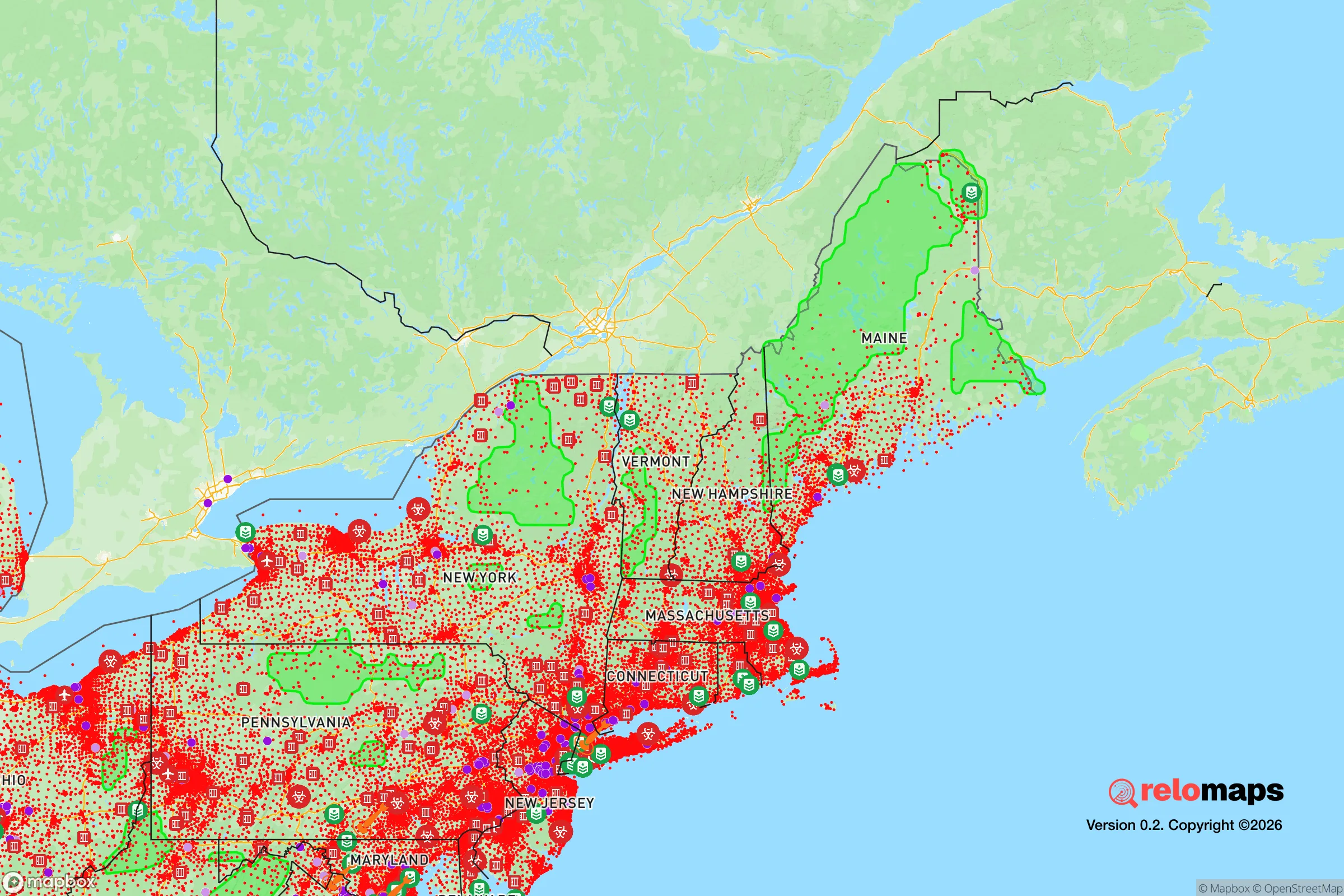


Important Note: For informational purposes only. This does not mean nothing bad ever happens in the green zones. Please use common sense. This is based on public data and modeled with AI. We tried to take a conservative approach but mistakes happen. We update this regularly as new information becomes available.
Solar Generator Recommendations
Backup power matters more here than in safer locations. We've picked three solar generators across budgets and capacity tiers — start with the budget unit if you only need a few essentials, or step up if you want to run a fridge and HVAC for days at a time.

Jackery Portable Power Station Explorer 300
Budget OptionPower on the Go: Weighing only 11 lbs, it's convenient to set up and store with book-sized foldable solar panels

BLUETTI Portable Power Station AC180
Designed for both indoor and outdoor scenarios, AC180 is highly capable as it has a robost capacity and continuous output power.

EF ECOFLOW DELTA Pro Ultra Power Station
Upgraded PickEcoFlow DELTA Pro Ultra is a whole-home energy system designed to grow with your family. Integrated with the Smart Home Panel 2, it scales to meet your evolving energy needs — keeping your home powered, intelligent, and secure through every stage of life.
We earn a commission, at no additional cost to you.
Strategic Assessment Analysis
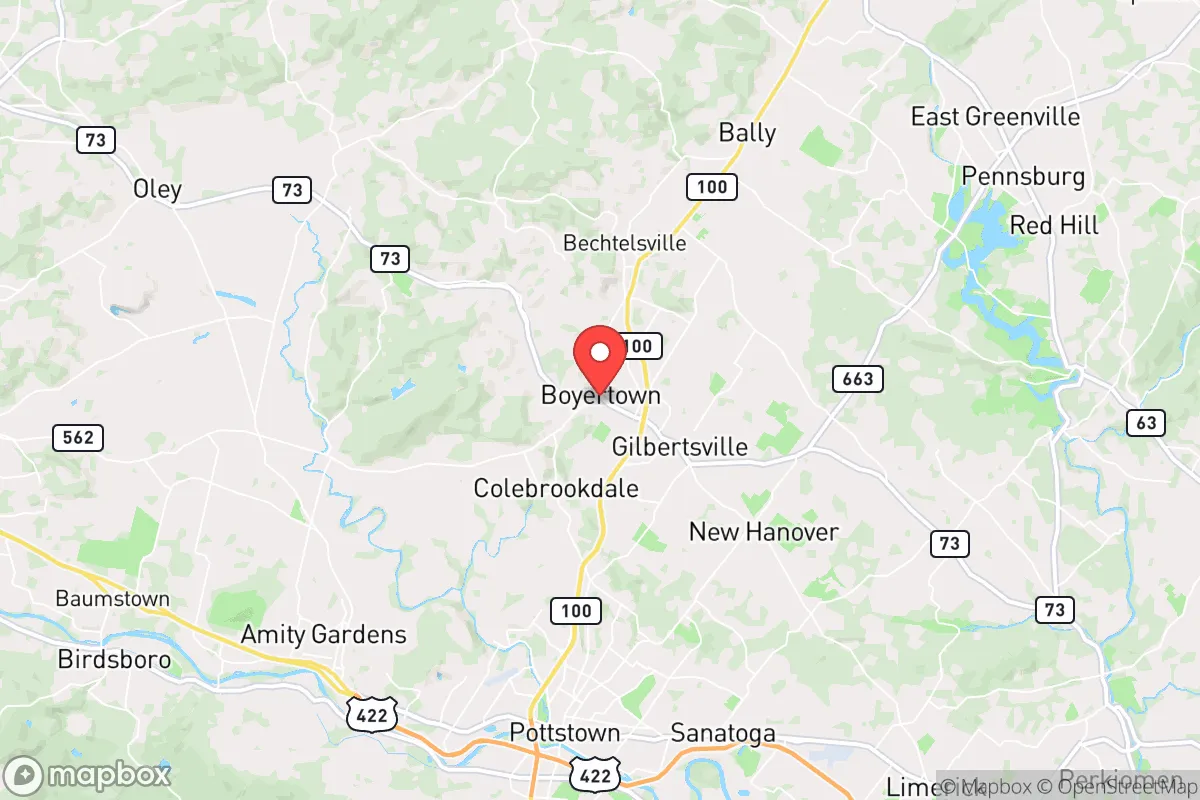
Boyertown, Pennsylvania, offers a compelling blend of small-town stability and strategic positioning for the relocation-minded reader focused on resilience and self-sufficiency. Nestled in southeastern Berks County, roughly 15 miles northeast of Pottstown and 45 miles northwest of Philadelphia, the borough sits at a meaningful inflection point: close enough to major urban centers for supply runs and employment, yet far enough to avoid the immediate blast radius of a major metropolitan or military target. Its location along the Schuylkill River corridor, combined with a historic downtown and a surrounding landscape of rolling farmland and wooded hills, provides a baseline of geographic and infrastructural advantages that merit serious consideration for anyone prioritizing disaster readiness and long-term sustainability.
Geographic position and natural advantages for long-term stability
Boyertown’s primary resilience asset is its position within the Pennsylvania Piedmont, a region characterized by fertile soils, moderate topography, and a temperate climate that supports year-round agriculture. The borough itself sits at an elevation of roughly 400 feet, with surrounding hills rising to 600–800 feet, offering natural drainage and reducing flood risk compared to low-lying areas along the Schuylkill River proper. The area is part of the larger Oley Valley, a historically rich agricultural basin that remains one of the most productive farming regions in the state. For a relocator, this means local food production capacity is high: within a 10-mile radius, you’ll find dozens of working farms, orchards, and livestock operations, many of which sell directly at the Boyertown Farmers Market or through community-supported agriculture (CSA) programs. The region’s groundwater resources are generally reliable, with the underlying Brunswick Formation providing adequate well yields for rural properties, though municipal water in the borough comes from the Boyertown Water Authority, sourced from the Schuylkill River and local reservoirs. The climate is four-season but not extreme: average January lows hover around 20°F, and July highs rarely exceed 90°F, reducing the likelihood of catastrophic weather events like hurricanes or prolonged droughts. Snowfall averages 30 inches annually, manageable with basic preparedness. The area’s distance from the Atlantic coast (roughly 100 miles inland) and the Appalachian spine to the west provides a buffer against storm surges and seismic activity, both of which are negligible risks here. For a family or individual seeking a base that can sustain itself through regional disruptions, Boyertown’s combination of arable land, moderate climate, and water availability is a strong foundation.
Risks, exposures, and proximity to fallout-relevant landmarks
No strategic assessment is complete without a clear-eyed look at vulnerabilities, and Boyertown has several that a relocator must weigh. The most significant is its proximity to the Philadelphia metropolitan area, a Tier 1 urban center that would be a primary target in any large-scale conflict or terrorist event. At 45 miles from Center City, Boyertown sits outside the likely blast and thermal damage zones for a nuclear detonation (typically 5–10 miles for a 10–20 kt weapon), but it falls within the moderate-to-high fallout risk zone depending on wind patterns. Prevailing winds in southeastern Pennsylvania are from the west-northwest, meaning fallout from a strike on Philadelphia would likely drift east-northeast, away from Boyertown—a favorable detail, but not a guarantee. The area is also within 20 miles of the Limerick Generating Station, a nuclear power plant in Pottstown that operates two reactors. While the plant has a strong safety record, any major incident there—whether from accident, sabotage, or attack—would place Boyertown in the plume exposure pathway, with evacuation zones extending 10 miles and ingestion zones out to 50 miles. The borough is also roughly 30 miles from the Willow Grove Naval Air Station (now a mixed-use development but still hosting some military reserve operations) and 40 miles from the Defense Logistics Agency’s distribution depot in New Cumberland. These are not primary targets, but they add to the area’s risk profile. On the natural disaster front, the region is low-risk for tornadoes (average 1–2 per year in Berks County, typically EF0–EF1), earthquakes (rare, <2.0 magnitude), and wildfires (wooded areas exist but are not in a high-severity zone). Flooding is the most common natural hazard, particularly along the Manatawny Creek and Schuylkill River tributaries, but Boyertown’s higher elevation largely mitigates this. The borough’s aging infrastructure—some water mains date to the early 1900s—is a chronic but manageable concern. Overall, the risk picture is moderate: not a safe haven from all threats, but far better than a dense suburb or city center.
Practical resilience for a relocator: food, water, energy, and defensibility
For the reader serious about self-sufficiency, Boyertown offers a practical, if not perfect, environment. Food security is the strongest category. Berks County has over 1,200 farms, and the Boyertown area is ringed by producers of vegetables, poultry, beef, and dairy. The nearby Frecon Farms (just east in Boyertown) and the Oley Valley’s numerous organic operations mean a relocator can source fresh food locally without relying on national supply chains. Home gardening is viable: the growing season runs from April to October, and soil quality in the Oley Valley is excellent for staples like tomatoes, corn, beans, and squash. Water security is more variable. Municipal water users in the borough depend on a centralized system vulnerable to power loss or contamination; a backup plan—such as a Berkey filter, rainwater catchment, or a private well if you buy outside the borough—is essential. Rural properties on wells are more resilient, with typical depths of 100–300 feet and yields of 5–15 gallons per minute, sufficient for a family. Energy resilience is a mixed picture. The grid is served by PPL Electric Utilities, which has a moderate reliability record; outages occur a few times a year, typically from storms, lasting 2–12 hours. Solar potential is decent: the region averages 4.2 peak sun hours per day, enough for a grid-tied or off-grid system with battery storage. Natural gas is available in the borough and many surrounding areas, providing a backup heating option. Wood heating is also practical, with ample hardwood forests within a 30-minute drive. Defensibility is where Boyertown shows its small-town character. The borough is compact—roughly 1.2 square miles—with a grid street layout and a historic core that could be secured with limited chokepoints (Main Street, Philadelphia Avenue, and a few bridges over the Manatawny Creek). Surrounding rural areas offer more space and concealment, with winding roads, farm lanes, and wooded parcels that provide natural cover. The local police force is small (about 12 officers), and response times in outlying townships can exceed 20 minutes, meaning a relocator should plan for self-defense and community mutual aid. The broader Berks County population (about 430,000) is politically and culturally diverse, with a strong Amish and Mennonite presence in the northern part of the county—a community that already practices a high degree of self-sufficiency and could be a resource or a point of tension depending on approach. Overall, Boyertown scores well on food and moderate on water and energy, with defensibility that depends heavily on whether you choose an in-town or rural property.
The strategic picture for Boyertown is one of balanced opportunity. It is not a remote bunker location—it sits within a two-hour drive of 10 million people and is exposed to the risks that come with that proximity. But for a relocator who wants a genuine small-town base with access to productive farmland, reliable water, and a community that still values neighborly self-reliance, it offers a realistic middle path. The key is to treat it as a starting point: buy a property with a well and south-facing roof, stock supplies for two weeks minimum, and build relationships with local farmers and tradespeople. Boyertown won’t save you from a direct hit on Philadelphia or a Limerick meltdown, but it gives you a fighting chance to ride out most regional disruptions with your family intact and your pantry full. That’s more than most places in the Northeast corridor can claim.

* Values derived from national, state, county, city and local statistics and may differ in a specific area. Last updated: 2026-09-22T23:38:45.000Z
Narrative content on this page is AI-generated and may contain mistakes. Verify any details that matter before acting on them.
ReloMaps may earn a commission from affiliate links at no extra cost to you.

