Photo: Wikipedia
Political ClimatePolitical Climate in Boxford, MA
District shown is the primary district for this city’s centroid. Cities may span multiple districts.
Local Political AnalysisPolitical Analysis of Boxford, MA
Boxford, Massachusetts, leans solidly Democratic, but with a notable rightward tilt compared to the rest of the state. The area’s Cook Partisan Voting Index of D+11 is a full four points more Republican than the statewide D+15, reflecting a longstanding, subtle conservatism that’s baked into the town’s character. While you won’t find many yard signs for hardline national figures, there’s a quiet, independent streak here—folks who vote Democratic for governor but might split their ticket for local selectman or state rep races. Over the last decade, that lean hasn’t shifted dramatically, though national polarization has made even local elections feel a bit more charged than they used to be back in the 2000s.
How it compares
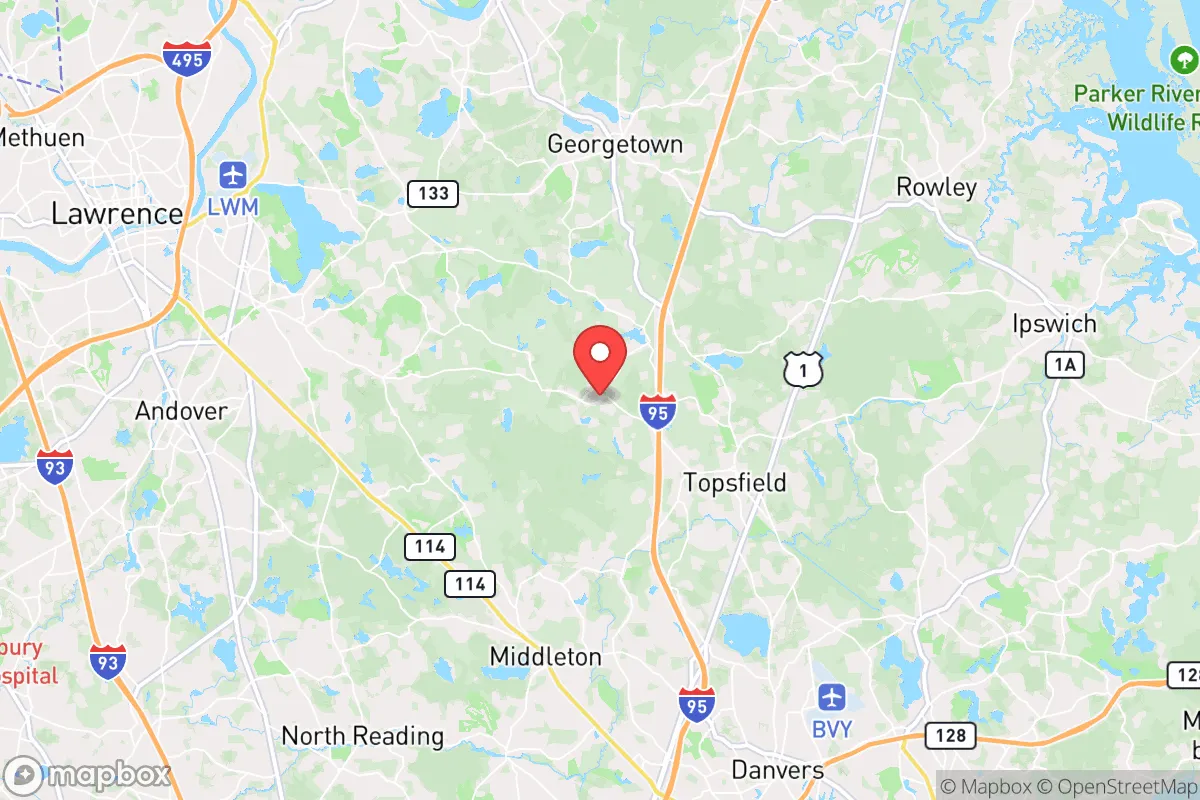
Boxford sits in a political sweet spot between the deep-blue suburbs of Boston and the more conservative rural towns to the north and west. Compared to Topsfield, its neighbor to the south, Boxford is more Republican-leaning; Topsfield trends closer to D+14 or D+15. Head west to Middleton, and you’ll find a similar D+12 vibe, while hopping over to Andover (D+16) or North Andover (D+15) shows a noticeable jump in Democratic registration. But it’s when you drive 15 minutes north to towns like Haverhill (D+10) or even further to Methuen (D+8) that you see the real contrast—Boxford looks positively blue next to those communities. The key distinction is that Boxford’s conservatism is of the classic, fiscal-and-local-control variety, not the culture-war sort you might find in central or western Massachusetts. The 2024 presidential race here saw roughly 58% for Harris, 40% for Trump, versus the statewide 63%–36% split, which feels about right for a town that prides itself on low property taxes and a hands-off approach to zoning.
What this means for residents
For conservative residents, daily life is generally comfortable but not triumphant. You can reliably find a like-minded neighbor at the transfer station or the local coffee shop, and town meetings rarely turn into ideological battlegrounds—potholes and school budgets dominate, not national politics. However, you will feel out of step with state-level policy: the Massachusetts Senate and House are firmly controlled by Democrats, so a conservative Boxford voter’s stance on things like the state’s new gun law or the MBTA Communities Act (which mandates multi-family zoning near transit) is usually a minority position at the State House. For liberal residents, it’s mostly smooth sailing; you’re in a comfortable majority, but not so dominant that you won’t occasionally hear a neighbor grumble about taxes or school spending. The practical effect is a town that votes reliably blue but governs pragmatically—your local select board will likely include a fiscal conservative or two, and development debates often split along “do we really need this?” lines rather than red-versus-blue ones.
Culturally, Boxford distinguishes itself from places like Lexington or Newton by its relative absence of political activism. You won’t see large protest rallies, routine campaign sign battles, or strident local op-eds. The town’s deep-rooted Yankee tradition values privacy and self-reliance over public posturing. Policy-wise, the school district (part of the Tri-Town system with Middleton and Topsfield) avoids hot-button curriculum fights, and the town’s zoning board has historically been slow to allow any new development, regardless of who’s pushing it. Looking ahead, as more families move from costlier towns like Carlisle or Weston, expect the D+11 lean to inch slightly leftward, but Boxford will likely remain the most Republican-friendly spot in an otherwise deep-blue corner of Essex County for the foreseeable future.

State Political ClimatePolitical Climate in Massachusetts
State Political AnalysisPolitical Environment in the State
Urban vs. rural divide
The political map of Massachusetts is a classic story of dense, liberal Boston and its immediate suburbs dominating the rest of the state. The Greater Boston area, including cities like Cambridge, Somerville, and Newton, delivers massive Democratic margins—often 70-80% of the vote—that cancel out any Republican strength elsewhere. The western part of the state, including Pittsfield and the Berkshires, leans left as well, driven by a progressive arts-and-academia base. The real GOP redoubts are in the central and southeastern exurbs and rural towns. Places like Wrentham, Carver, and Townsend reliably vote Republican, but they’re too small to swing statewide races. A notable exception is Fall River, a blue-collar city in the southeast that has trended rightward in recent cycles, flirting with Trump in 2016 and 2020, though it still votes Democratic downballot. The Cape Cod towns of Barnstable and Falmouth lean more moderate-to-Republican for the region, but overall the urban-rural gap is wider here than in any other New England state.
Policy environment
Massachusetts has a high-tax, high-service policy model that is deeply entrenched. The state income tax is a flat 5.0% as of 2024, down from 5.15% in 2020 due to a voter-approved gradual reduction, but a new 4% surtax on income over $1 million (passed in 2022 as "the millionaire's tax") now funds education and transportation. Property taxes are moderate on a per capita basis but high on higher-value homes, especially in Boston suburbs like Lexington and Wellesley. Sales tax is 6.25%, with no local option to raise it. The regulatory environment is among the most stringent in the country: rent control was banned statewide in 1994, but several cities—including Boston, Cambridge, and Somerville—are pushing for its return. Zoning is highly local, making housing construction slow and expensive. On education, Massachusetts consistently ranks #1 in K-12 outcomes, with strong school choice through inter-district enrollment and charter schools (though charter caps remain tight). Healthcare is near-universal; the state essentially implemented Obamacare before the federal version, with subsidized coverage and a mandate for individuals. Election laws are liberal: same-day voter registration, no-excuse mail-in voting, and early voting by mail are permanent fixtures after being expanded during COVID. There is no voter ID law for in-person voting—just a signature check—which conservatives often cite as a vulnerability, though fraud allegations have been minimal.
Recent policy direction
The last five years have seen Massachusetts push sharply left on social and regulatory issues, while making modest conservative-friendly changes on taxes. On gun and self-defense law, the state already has among the strictest rules in the nation—a 2014 law banned "assault weapons" by name, and a 2024 update further restricted magazine capacity to 10 rounds and mandated state-run licensing with a "suitable person" standard that gives police discretion. Self-defense outside the home is legally constrained; there is no "stand your ground" law, and the duty to retreat is strong. On parental and education rights, the state’s "Parent Bill of Rights" (2021) requires schools to notify parents of sexual health curriculum, but conservatives have lost fights over transgender student policies—school districts are required to affirm a student’s gender identity without parental notification, a flashpoint in suburbs like Andover and Needham. On speech, the state has no campus speech laws akin to those in red states, and public university campuses like UMass Amherst have seen periodic silencing controversies. Privacy and surveillance: Massachusetts has a strong state data privacy framework but also a statewide police body-camera program that is expanding. Medical and bodily autonomy is fully protected—abortion up to viability is codified into law (2020’s ROE Act), telehealth for out-of-state patients is legal, and gender-affirming care for minors remains protected despite national debate. Property rights: the state has a "right to farm" law that protects agricultural operations, but a new "transit-oriented housing" law (2024) forces towns near MBTA stations to allow denser development, overriding local zoning—a major property-rights curb that has inflamed tensions in bedroom communities like Bellingham and Franklin. Tax policy: as noted, the millionaire’s tax passed, but the flat rate continues to drop—an incremental shift toward fiscal conservatism. Voting access: permanent mail-in voting (2022) and automatic voter registration at the RMV make turnout easy, but GOP activists complain that the lack of an ID check and the ability to register on Election Day create opportunities for fraud, though no major cases have been prosecuted.
Civil unrest & political movements
Massachusetts has a history of organized protest, but the post-2020 flashpoints have been localized. Boston saw large Black Lives Matter protests in 2020, with some property damage and curfews, but no sustained civil unrest. The "Build the Wall" counter-protest movement was marginal; the state’s "sanctuary state" status—codified by the 2017 Trust Act, which limits local police cooperation with ICE—is a perennial issue. Immigration politics are heated in cities like Lawrence and Lowell, where a 2024 migrant surge overwhelmed shelters and led Governor Maura Healey to declare a state of emergency, sparking protests from both pro-immigrant activists and anti-sanctuary groups. Secession talk: a tiny "MassExit" movement exists among libertarians and far-right groups, but it has zero electoral traction. Election integrity controversies are lower-key than in swing states; the 2020 audit by the state found no significant issues, though a small group of "stop the steal" activists held rallies in Boston Common. A new resident would notice a visible left-leaning activist presence—bike lane advocates, housing YIMBYs, and climate groups are among the most vocal—while conservative activism tends to center on local school board and select board meetings, especially over curriculum and mask mandates.
Projection
Over the next 5-10 years, Massachusetts is likely to become even more Democratic, not less, despite in-migration from nearby blue states. The key demographic driver is the continued exodus of moderate Republicans and older conservatives from the state—many are retiring to Florida or New Hampshire—replaced by younger, more diverse, and more progressive populations moving in from New York, Connecticut, and abroad. The suburban drift leftward, seen in places like Hingham and Duxbury that voted for Biden after previously backing Romney, is likely irreversible. The two Republicans left in the state House (down from 30 in 2010) may zero out. However, there is a countertrend: the housing crisis is pushing some working-class families out to New Hampshire or Rhode Island, which could reduce the pool of Democratic voters slightly. On policy, expect continued leftward movement on housing (state override of local zoning), climate (already a 2050 net-zero mandate), and possibly a single-payer healthcare push. Tax rates are unlikely to rise much more because the millionaire’s tax satisfied the left, and further cuts are not on the 2026 ballot. Gun laws will likely tighten further with a safe-storage requirement that’s been proposed. A conservative relocating here in 2026 should plan for a decade of living under unified, unopposed Democratic control, with few brakes on liberal policy except the state supreme court and the occasional ballot question.
For a new resident—conservative or liberal—the bottom line is that Massachusetts is a state where politics matters less for daily life than for the cost of living. The high property taxes and housing prices are the real weights. Conservatives can find community in the rural towns and exurbs, but statewide elections will feel futile. Liberals will find a state where their views are mainstream, policy moves fast, and civil conversation with neighbors can still happen across the aisle—provided that aisle doesn’t involve state-level power. If you’re coming from a purple state, expect to trade political influence for world-class schools, functional infrastructure, and a deep bench of local culture.
* Values derived from national, state, county, city and local statistics and may differ in a specific area. Last updated: 2026-09-13T22:15:13.000Z
Narrative content on this page is AI-generated and may contain mistakes. Verify any details that matter before acting on them.
ReloMaps may earn a commission from affiliate links at no extra cost to you.

