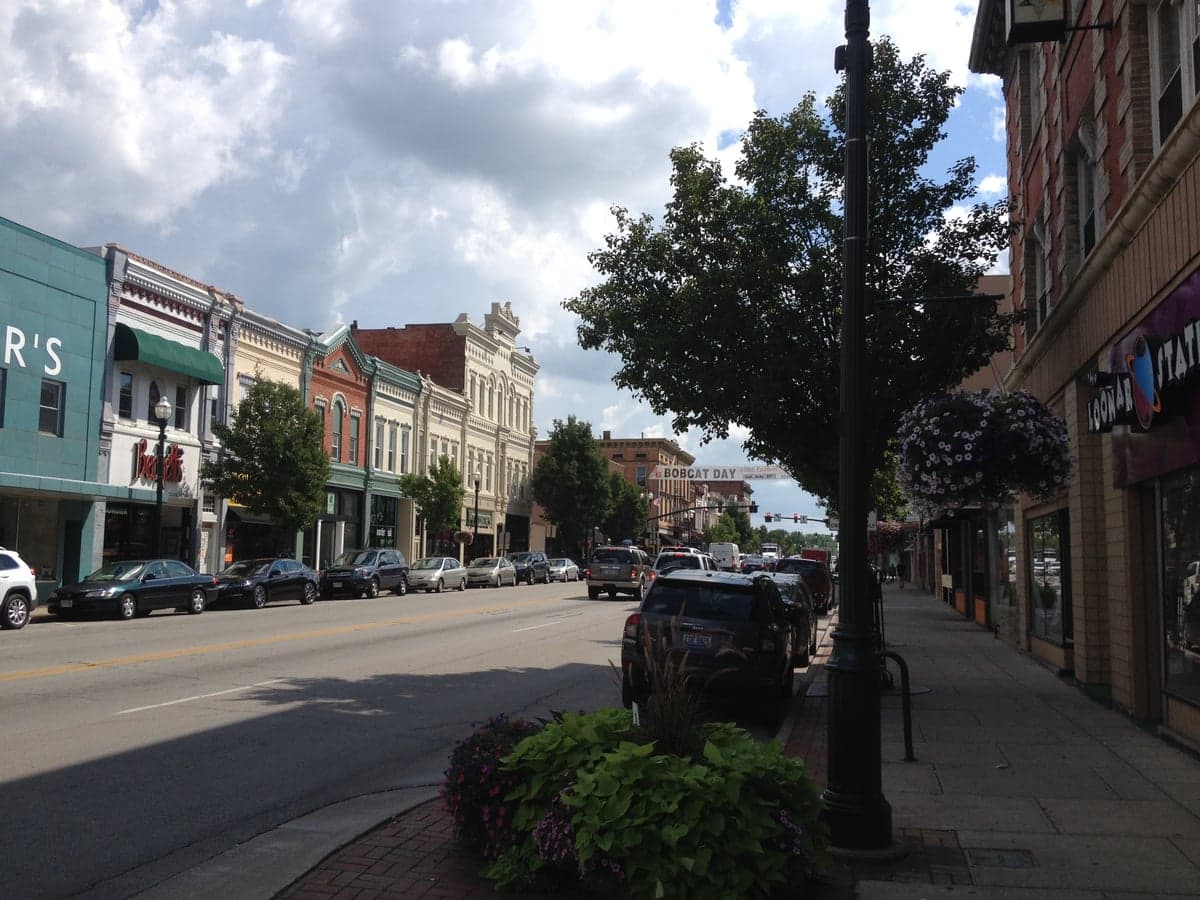
Photo: Wikipedia
Political ClimatePolitical Climate in Bowling Green, OH
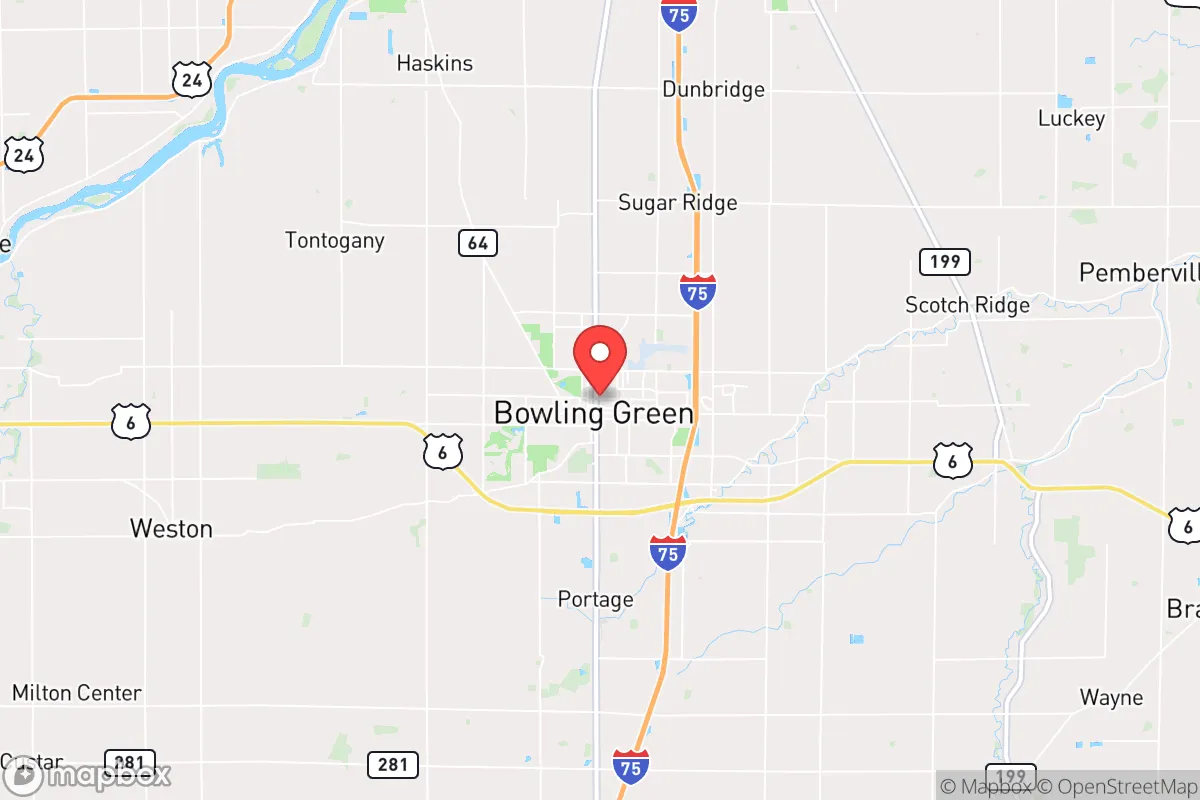
District shown is the primary district for this city’s centroid. Cities may span multiple districts.
Local Political AnalysisPolitical Analysis of Bowling Green, OH
Bowling Green, Ohio, sits in a pocket of Wood County that leans noticeably more conservative than the state as a whole, with a Cook PVI of R+14 compared to Ohio’s R+5. That’s not just a number—it reflects a community where traditional values and skepticism of government overreach still hold strong, even as the surrounding region shifts. Over the past decade, I’ve watched this town hold its ground while places like Toledo and Ann Arbor drift further left, and the trajectory here feels steadier, though not without pressure from outside influences.
How it compares
Statewide, Ohio has trended redder in recent cycles, but Bowling Green’s R+14 rating puts it well to the right of the state average. That gap matters: while Ohio as a whole might swing on a dime, Wood County’s rural and small-town character keeps the local politics grounded. Drive 20 minutes north to Perrysburg or Maumee, and you’ll find a similar conservative bent, but head east toward Toledo’s Lucas County—a D+15 area—and the contrast is stark. Even within Bowling Green itself, the university (Bowling Green State University) introduces a more progressive element, but the surrounding townships and outlying communities vote reliably red. The real story is how the county has resisted the kind of progressive policy pushes you see in Ohio’s bigger cities, like lax zoning or heavy-handed public health mandates.
What this means for residents
For folks living here, the political climate translates into fewer headaches from government overreach. Local officials tend to favor limited interference in personal freedoms—whether that’s business operations, property rights, or school choices. You don’t see the same push for mask mandates or vaccine passports that cropped up in Columbus or Cleveland. Property taxes stay reasonable, and there’s a general trust that the county commissioners won’t impose rules that don’t make sense for a community this size. That said, the university’s influence is creeping: student housing regulations and diversity initiatives sometimes feel like they’re imported from Ann Arbor. If you value being left alone to live your life without a bureaucrat looking over your shoulder, Bowling Green’s current balance is still good, but you have to keep an eye on city council elections.
Culturally, the area holds onto its agricultural roots and a strong sense of neighborly independence. You won’t find the same kind of progressive social engineering that’s taken hold in places like Yellow Springs or Oberlin. Instead, the local policy debates center on practical stuff—road maintenance, school funding, and keeping the downtown viable without turning it into a boutique experiment. The biggest distinction from the rest of Ohio is the sheer consistency: while the state wobbles between purple and red, Bowling Green stays reliably conservative, and that stability is exactly what keeps families and small businesses from packing up for Indiana or Tennessee.

State Political ClimatePolitical Climate in Ohio
State Political AnalysisPolitical Environment in the State
Ohio sits at a solid R+5 on the Cook PVI, but don’t let that single number fool you — this state is a political battlefield where the rural-urban split is as sharp as a plow blade. Over the last 20 years, Ohio has shifted from a classic bellwether (voting for the winner in every presidential election from 1964 to 2016) to a reliably red state in presidential races, with Trump winning it by 8 points in 2020 and by a similar margin in 2024. The blue strongholds — Cuyahoga County (Cleveland), Franklin County (Columbus), and Hamilton County (Cincinnati) — still pile up Democratic votes, but the rest of the state has moved decisively right. If you’re a conservative looking for a place where your vote actually counts and your values aren’t steamrolled, Ohio offers a mixed bag: strong red roots in the countryside, but growing progressive influence in the cities and some suburbs.
Urban vs. rural divide
The political map of Ohio is a tale of three metros and a whole lot of red. Columbus (Franklin County) is the fastest-growing blue hub, driven by Ohio State University, state government, and a booming tech sector — it’s reliably Democratic but not as far left as Cleveland. Cincinnati (Hamilton County) has trended blue in recent cycles, thanks to suburban shifts and a growing professional class, but its outer suburbs like West Chester and Mason lean red. Cleveland (Cuyahoga County) remains the deepest blue, with strong union and minority turnout. Meanwhile, the rest of the state is deeply Republican. Rural counties like Mercer (western Ohio) and Holmes (Amish country) routinely give Republicans 75-80% of the vote. The old industrial cities — Dayton, Toledo, Akron, Canton, Youngstown — are fading blue or turning purple; Youngstown’s Mahoning County, once a Democratic stronghold, went for Trump in 2020 and 2024. Suburbs are the real battleground: Delaware County (north of Columbus) is solidly red and growing fast, while Lake County (east of Cleveland) is a classic swing suburb that can tip a statewide race. If you’re moving to Ohio, your political experience will depend heavily on whether you land in a city, a suburb, or the countryside.
Policy environment
Ohio’s state-level policies lean conservative in many areas, but with notable exceptions that should give a freedom-minded resident pause. On taxes: Ohio has a progressive income tax (top rate around 3.5% after recent cuts) and no state property tax, but local property taxes can be high — especially in good school districts. The state has been cutting income tax rates steadily under Republican governors, but sales tax is moderate. On regulation: Ohio is not a right-to-work state, but it has a business-friendly climate with relatively low corporate taxes. Education policy is a bright spot for conservatives: Ohio has one of the strongest school choice programs in the country, with the EdChoice voucher system allowing students in low-performing districts to attend private schools. Parental rights got a boost with HB 616 (the Parents’ Bill of Rights), which requires schools to notify parents about curriculum changes and health services. Healthcare is a mixed bag: Ohio expanded Medicaid under then-Governor John Kasich, and that expansion remains in place, but the state has passed restrictions on abortion (the “heartbeat bill” in 2019) — though voters overturned those restrictions via Issue 1 in 2023, enshrining abortion rights in the state constitution. Election laws have tightened: a voter ID law (SB 23) passed in 2023 requires photo ID for in-person voting, and early voting windows have been slightly reduced. Overall, the policy environment is more conservative than many Midwestern states, but the 2023 abortion vote shows that direct democracy can override the legislature — a double-edged sword for conservatives who want to limit government overreach but also fear progressive ballot initiatives.
Trajectory & freedom
Is Ohio becoming more or less free? It depends on the issue. On gun rights, Ohio took a big step forward with HB 228 in 2022, which eliminated the requirement for a permit to carry a concealed handgun — constitutional carry is now law. That’s a clear win for personal liberty. On parental rights, HB 616 gave parents more say in their children’s education, but it’s being challenged in court by progressive groups. On medical autonomy, the 2023 Issue 1 vote was a setback for pro-life conservatives, but it also reflected a desire to keep government out of personal medical decisions — a nuanced point. On taxation, the trend is positive: income tax rates have been cut multiple times under Governor Mike DeWine, and there’s talk of further reductions. On property rights, Ohio has some protections against eminent domain abuse, but local zoning can still be restrictive. The biggest concern for a conservative moving here is the growing influence of progressive ballot initiatives — Issue 1 (abortion) and a 2024 marijuana legalization measure (which also passed) show that Ohioans are willing to bypass the legislature on social issues. That means freedom is expanding in some areas (guns, school choice) but contracting in others (abortion restrictions, drug policy). The trajectory is mixed, but the legislature remains solidly Republican, so the overall direction is moderately conservative — as long as voters don’t keep using ballot initiatives to undo it.
Civil unrest & political movements
Ohio has seen its share of political flashpoints. The 2020 George Floyd protests were intense in Columbus, Cincinnati, and Cleveland, with some property damage and curfews. On the right, the Ohio Patriot movement and “Stop the Steal” rallies drew thousands in Columbus after the 2020 election, and election integrity remains a hot topic — the state conducted a post-2020 audit that found no widespread fraud, but many conservatives remain skeptical. Immigration politics are less visible than in border states, but there have been debates over “sanctuary city” policies in Columbus and Cleveland, with the state legislature passing a law (HB 180 in 2024) that penalizes cities that refuse to cooperate with federal immigration enforcement. School board meetings became battlegrounds over COVID mandates and critical race theory, especially in suburban districts like Olentangy (near Columbus) and Lakota (near Cincinnati). The 2023 Issue 1 campaign was the most visible political movement in recent memory, with massive spending from both sides — it exposed a deep divide between the Republican-controlled legislature and the voters on social issues. A new resident would notice that Ohioans are politically engaged but not as polarized as in some states; you can still have civil conversations with neighbors across the aisle in most places, though the urban-rural divide is real.
Projection
Over the next 5-10 years, Ohio is likely to remain a red-leaning state, but with growing tension between the rural conservative base and the urban/suburban progressive drift. Demographics are shifting: rural counties are losing population, while suburbs like Delaware, Union, and Warren counties are booming with families and professionals — many of whom are conservative but not as hardline as the rural base. In-migration is modest; Ohio isn’t a Sun Belt magnet, but it does attract people from higher-cost states like California and New York who are looking for lower taxes and a slower pace. The wild card is the ballot initiative process: if progressives continue to use it to pass policies like abortion rights and marijuana legalization, the legislature may try to restrict the initiative process itself — a move that could backfire. Expect continued fights over school choice, parental rights, and local control. For a conservative moving in now, the next decade will likely bring more constitutional carry protections, more school choice expansion, but also ongoing battles over medical freedom and
* Values derived from national, state, county, city and local statistics and may differ in a specific area. Last updated: 2026-05-14T18:54:49.000Z
Narrative content on this page is AI-generated and may contain mistakes. Verify any details that matter before acting on them.
ReloMaps may earn a commission from affiliate links at no extra cost to you.

