Photo: Wikipedia
Political ClimatePolitical Climate in Boonsboro, MD
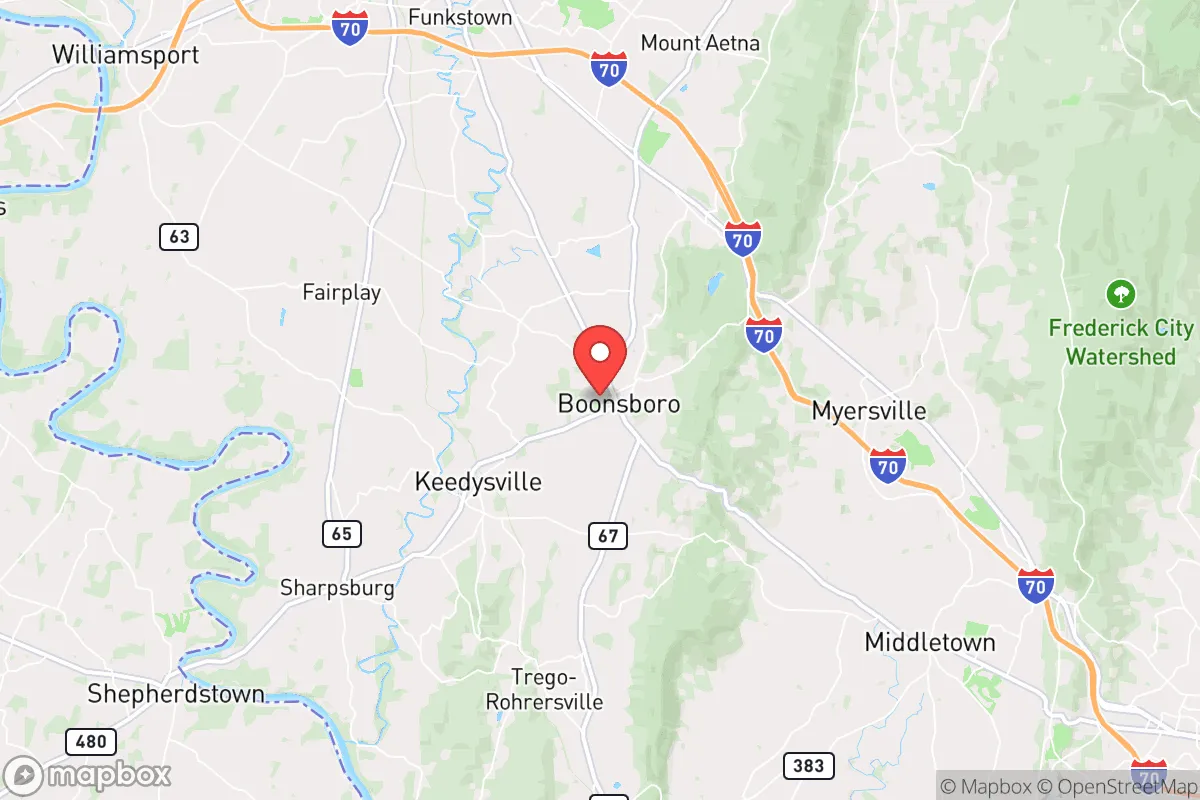
District shown is the primary district for this city’s centroid. Cities may span multiple districts.
Local Political AnalysisPolitical Analysis of Boonsboro, MD
Boonsboro sits in a unique political pocket within deep-blue Maryland. While the state as a whole carries a Cook PVI of D+17, Boonsboro and the surrounding Washington County lean significantly more conservative, with the town’s own PVI at D+3. That’s a 14-point gap from the state average, and it reflects a community that has been slowly shifting leftward over the past decade, but still feels more like a border town between red and blue than a suburb of Baltimore or D.C. If you’ve lived here a while, you’ve seen the change: the old farm families are still around, but more commuters from Frederick and Hagerstown have moved in, bringing a different set of priorities.
How it compares to the rest of Maryland
The contrast between Boonsboro and the state at large is stark. Maryland’s D+17 rating is driven by the massive Democratic majorities in Montgomery County, Prince George’s County, and Baltimore City. Boonsboro, by contrast, is closer to the political center of gravity you’d find in nearby towns like Sharpsburg or Keedysville, both of which also lean right of the state average. Head east to Frederick, and you’ll hit a D+10 area that feels more like a college town. Head west to Hagerstown, and you’re in a D+5 zone that’s still purple but trending blue. Boonsboro’s D+3 means it’s a genuine swing area—neither reliably red nor safely blue. In the 2024 presidential race, Washington County as a whole voted for Trump by about 12 points, but Boonsboro’s precincts were closer to a 5-point margin, showing the town’s moderation relative to its rural surroundings.
What this means for residents
For conservative residents, Boonsboro still feels like home. You’ll see Trump signs in yards during election season, and the local gun club and VFW posts are active. The county school board and town council elections tend to be won by candidates who emphasize fiscal conservatism and local control. But liberals here aren’t isolated either. The shift to D+3 means progressive candidates can win local races if they turn out, and issues like renewable energy incentives and affordable housing get real airtime at town meetings. In practice, this creates a live-and-let-live atmosphere. You won’t get the intense political pressure you’d feel in a deep-red county like Garrett, nor the uniform blue of a place like Takoma Park. Most residents just want good schools, safe streets, and reasonable taxes—and both parties have to work for those votes.
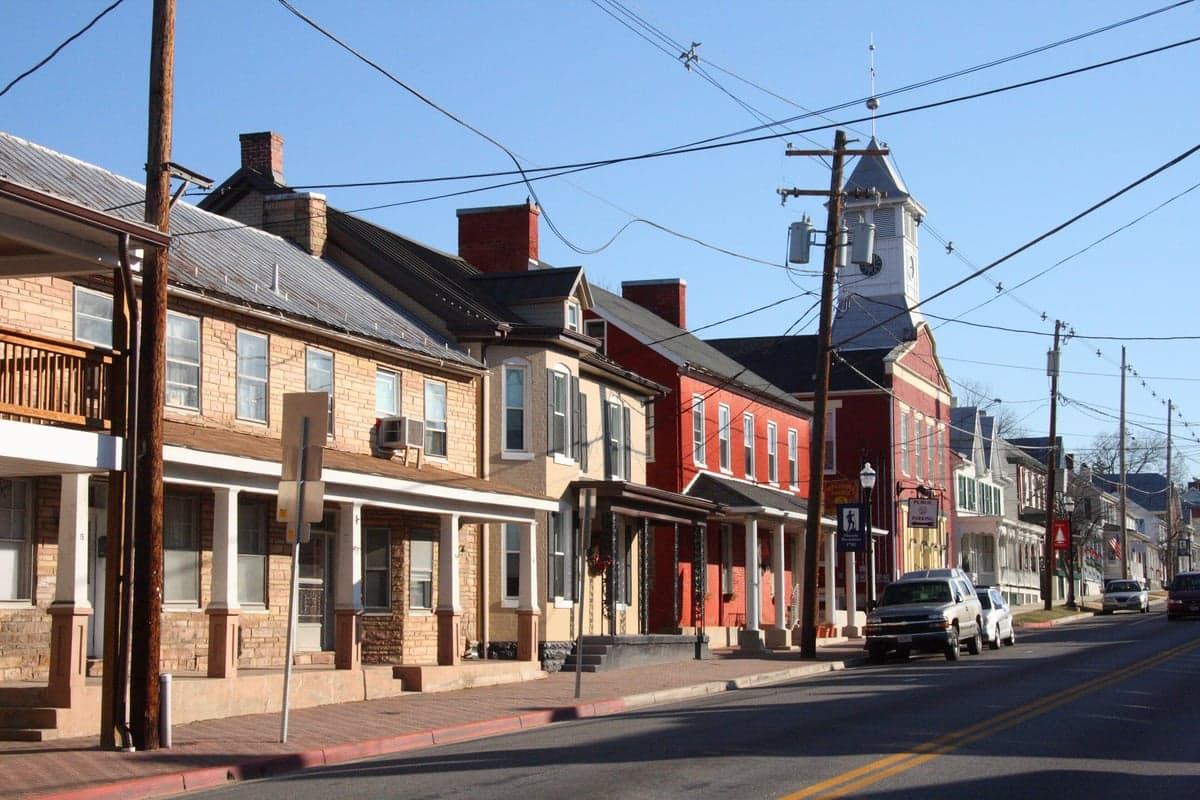
Culturally, Boonsboro retains a small-town feel that transcends party lines. The annual Boonsboro Heritage Day and the town’s historic district draw people together regardless of how they vote. The biggest policy distinction from the rest of Maryland is probably land use: Washington County is more permissive with agricultural zoning and less aggressive on environmental regulations than the state’s more urban counties. That’s a point of pride for many locals, whether they lean left or right. Looking ahead, the trajectory is clear: Boonsboro will continue to drift toward the state average as more people move in from Frederick and the D.C. suburbs. But it’ll take another decade or two before it feels like a true blue town. For now, it’s one of the few places in Maryland where a Republican and a Democrat can have a beer together at the Old South Mountain Inn and actually enjoy the conversation.

State Political ClimatePolitical Climate in Maryland
State Political AnalysisPolitical Environment in the State
Maryland is one of the most reliably Democratic states in the country, with a Cook Partisan Voting Index of D+17, meaning it votes about 17 points more Democratic than the national average in presidential elections. The state hasn’t voted for a Republican presidential candidate since George H.W. Bush in 1988, and Democrats hold supermajorities in both chambers of the General Assembly. Over the last 10-20 years, the state’s political trajectory has been a steady march leftward, driven by explosive population growth in the Washington, D.C. suburbs and the consolidation of the Baltimore metro area as a Democratic stronghold, while the rural eastern and western parts of the state have become more Republican and more politically isolated.
Urban vs. rural divide
The political map of Maryland is a textbook case of the urban-rural split. The entire state’s Democratic margin is generated by two powerhouse counties: Montgomery County (just north of D.C.) and Prince George’s County (east of D.C.). Together, they cast over a third of the state’s votes and deliver margins of 70-80% for Democrats. Baltimore City and Baltimore County add another massive blue bloc. The rest of the state—the Eastern Shore, Western Maryland, and the rural southern counties—votes solidly Republican. For example, Garrett County in the far west voted +40 for Trump in 2024, while Carroll County (northwest of Baltimore) is a reliably red suburban-exurban area. The divide is stark: drive 30 minutes west from D.C. into Frederick County, and you’ll see a purple-to-red shift as the suburban sprawl gives way to farmland and small towns. The Eastern Shore counties like Queen Anne’s and Talbot are deeply conservative, but their populations are too small to offset the D.C. suburbs. The result is a state where a conservative living in Hagerstown or Salisbury feels like they’re in a different country from someone in Bethesda or Columbia.
Policy environment
Maryland’s policy environment is shaped by one-party Democratic control, and it shows in the tax code and regulatory posture. The state has a progressive income tax with rates from 2% to 5.75%, plus a local “piggyback” tax that can push the top combined rate over 9% in places like Montgomery County. Property taxes are high, especially in the D.C. suburbs, and the state has a 6% sales tax. On the regulatory side, Maryland is a leader in environmental regulation, with strict vehicle emissions standards (following California’s lead) and a ban on hydraulic fracturing for natural gas. Education policy is dominated by the Blueprint for Maryland’s Future, a massive 2021 law that pours billions into K-12 education, expands pre-K, and raises teacher salaries—but has also sparked debate over its cost and implementation. Healthcare is heavily regulated, with a state-run insurance exchange and strong Medicaid expansion. Election laws are among the most liberal in the country: no-excuse mail-in voting, same-day registration, and early voting are all standard. For a conservative relocator, the policy environment means higher taxes, more regulation, and a government that actively intervenes in housing, energy, and education.
Recent policy direction
Over the last five years, Maryland’s Democratic supermajority has pushed a series of laws that signal a clear leftward direction. On gun and self-defense law, the state passed the Gun Safety Act of 2023, which bans the open carry of firearms in most public places, requires a permit for concealed carry, and expands the list of “sensitive places” where guns are prohibited—including hospitals, public transit, and establishments that serve alcohol. This came after the Supreme Court’s Bruen decision, and it’s been challenged in court. On parental and education rights, the state has moved to expand LGBTQ+ inclusive curriculum and require schools to adopt policies supporting transgender students, including allowing them to use preferred names and pronouns without parental consent—a flashpoint for conservative families. On speech and privacy, Maryland passed the Online Data Privacy Act of 2024, which restricts how companies can collect and sell personal data, but also includes provisions that critics say could chill online speech. On medical and bodily autonomy, the state has codified abortion rights into law (the Abortion Care Access Act of 2022) and expanded Medicaid coverage for gender-affirming care. On property rights, the state has a strong “eminent domain” framework and has passed laws to encourage affordable housing development, which can override local zoning in some cases. On taxation, the trend is toward higher taxes on the wealthy, with a new “millionaire’s tax” bracket proposed in 2025. On voting and ballot access, the state has made it easier to vote, with automatic voter registration and mail-in ballots sent to all active voters. For a conservative, the direction is clear: more regulation, higher taxes, and a government that prioritizes individual rights in areas like abortion and gender identity over traditional family and religious values.
Civil unrest & political movements
Maryland has a history of civil unrest, most notably the 2015 Baltimore riots following the death of Freddie Gray in police custody, which led to a state of emergency and National Guard deployment. That event reshaped local politics, leading to a reformist prosecutor (Marilyn Mosby) and a shift in policing policy. More recently, the state has seen organized protests on both sides. On the left, groups like Showing Up for Racial Justice and the Maryland Poor People’s Campaign have been active, pushing for police reform and economic justice. On the right, the Maryland Republican Party has been energized by grassroots groups like Moms for Liberty and No Left Turn in Education, which have organized school board protests over curriculum and parental rights. Immigration politics are a flashpoint: Maryland is a “sanctuary state” under a 2017 executive order by Governor Larry Hogan (a Republican) that was later codified into law by the Democratic legislature, limiting cooperation between local law enforcement and federal immigration authorities. This has led to tensions in counties like Frederick and Harford, where some local sheriffs have pushed back. Election integrity controversies have been muted compared to other states, but there were protests in 2020 over mail-in voting procedures, and the state’s automatic voter registration system has been criticized by conservatives as prone to errors. A new resident would notice the political activism mostly in the D.C. suburbs, where yard signs and bumper stickers are common, and in the rural areas, where “Don’t Tread on Me” flags and Trump banners are still flying.
Projection
Over the next 5-10 years, Maryland’s political trajectory is likely to continue leftward, driven by demographic shifts. The D.C. suburbs are growing faster than the rest of the state, with Montgomery County and Prince George’s County adding tens of thousands of new residents, many of them young, diverse, and liberal. The rural areas are aging and losing population, which will further reduce their political influence. In-migration from other states is mostly from the Northeast and California, bringing more progressive voters. The Republican Party in Maryland is increasingly confined to the rural and exurban counties, and its statewide candidates—like Larry Hogan, who was a popular moderate—are a dying breed. The next decade will likely see more progressive legislation on climate, housing, and social issues, and the state’s tax burden will probably increase. For a conservative moving in now, the expectation should be that the political environment will become more, not less, challenging for their views. However, the state’s strong economy, excellent schools, and proximity to D.C. will continue to attract people of all political stripes, so the culture war will remain a live issue.
For a new resident, the bottom line is this: Maryland is a blue state that is getting bluer, and that has real consequences for your wallet and your way of life. If you’re a conservative, you’ll find like-minded communities in the rural counties and some exurbs, but you’ll be fighting an uphill battle on taxes, regulation, and cultural issues. If you’re a liberal, you’ll find a state that largely aligns with your values, with strong public services and a government that is actively expanding rights and protections. Either way, the political climate is something you’ll feel every day—in your property tax bill, in your child’s school curriculum, and in the conversations you have with neighbors. It’s not a state for the politically indifferent.
* Values derived from national, state, county, city and local statistics and may differ in a specific area. Last updated: 2026-07-22T02:15:17.000Z
Narrative content on this page is AI-generated and may contain mistakes. Verify any details that matter before acting on them.
ReloMaps may earn a commission from affiliate links at no extra cost to you.

