Photo: Wikipedia
Demographics of Boonsboro, MD
Affluence Level in Boonsboro, MD
A middle-class area roughly in line with national averages across income, home values, education, and employment.
People of Boonsboro, MD
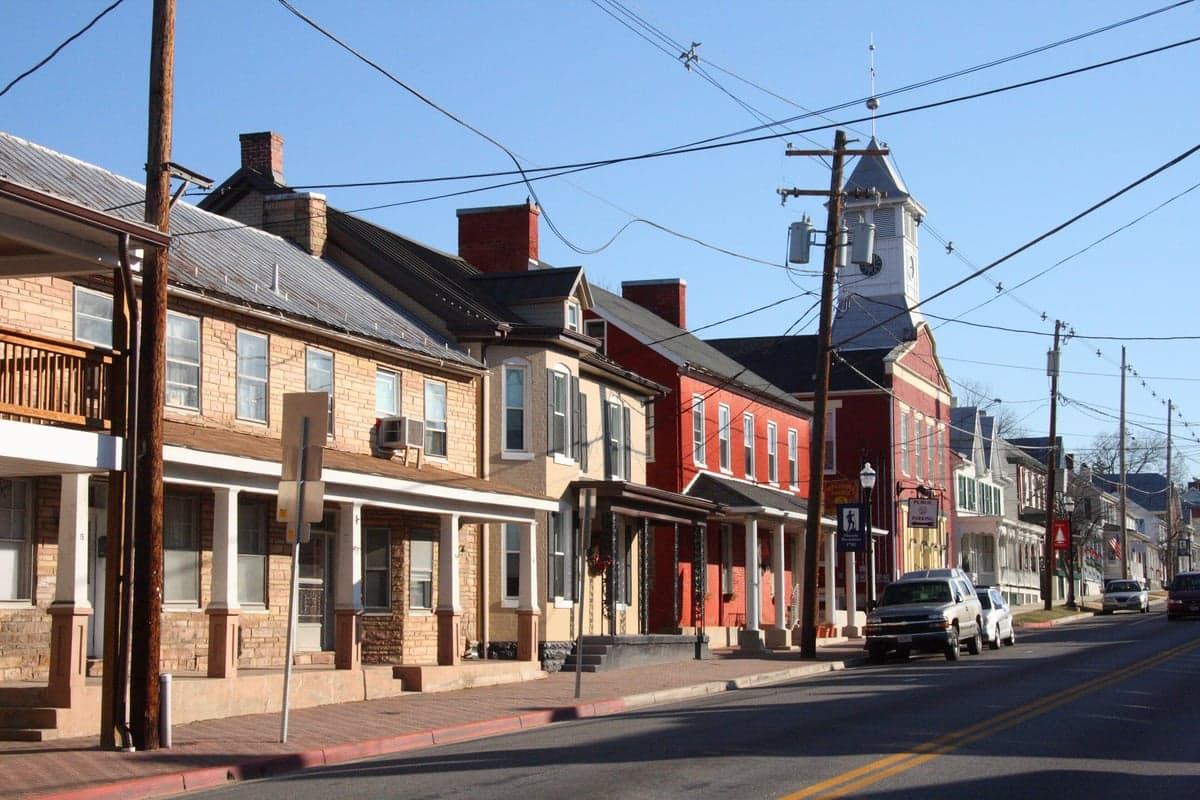
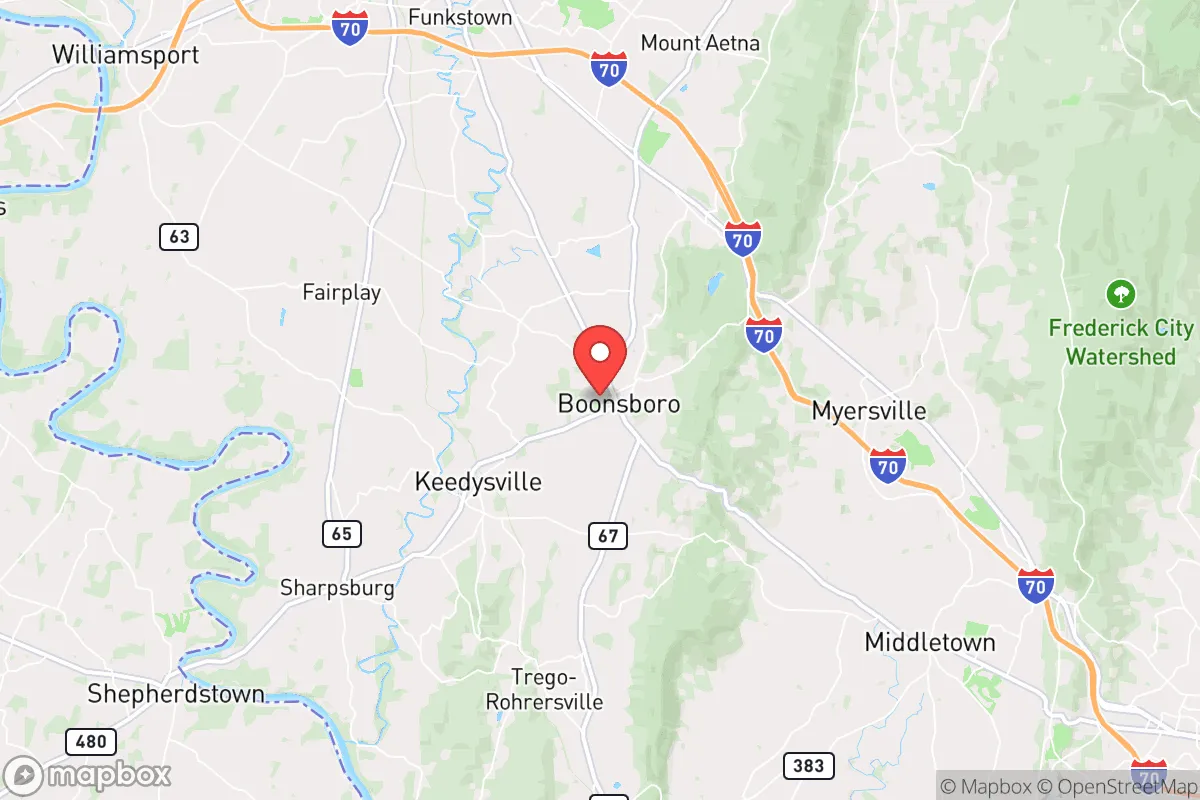
The people of Boonsboro, Maryland, today number 3,799, forming a tight-knit, predominantly white community with a strong sense of local heritage and a distinctly small-town character. The population is 91.1% White, with a Black population of 5.4% and a Hispanic population of 1.6%, while the foreign-born share is a very low 0.6%. This is a place where generational roots run deep, and the community’s identity is shaped by its historic downtown, its proximity to the Appalachian Trail, and a quiet, family-oriented lifestyle that appeals to those seeking a slower pace within commuting distance of Hagerstown and Frederick.
How the city was settled and grew
Boonsboro’s human history begins with its founding in 1792 by George and William Boone, cousins of the famed frontiersman Daniel Boone. The original settlers were primarily of English, German, and Scots-Irish descent, drawn by the promise of fertile farmland and the strategic location along the Great Wagon Road, a major thoroughfare for westward migration. The town’s early economy was built on agriculture, milling, and the iron industry, with the nearby Antietam Iron Works providing a key source of employment. The original settlement clustered around the town square, with the Historic District—centered on Main Street and Potomac Street—containing many of the original stone and brick homes built by these early families. A second wave of growth came in the mid-19th century with the construction of the National Road (now U.S. Route 40), which brought German and Irish laborers who settled in the National Pike District, a working-class area along the road’s corridor. The town’s population remained small and overwhelmingly white through the early 20th century, with the Shafer’s Mill neighborhood emerging as a cluster of homes for mill workers and tradesmen.
Modern era (post-1965)
Following the 1965 Immigration and Nationality Act, Boonsboro saw virtually no new foreign-born influx—the current foreign-born share of 0.6% is among the lowest in Washington County. Instead, the modern era has been defined by domestic in-migration, particularly from the Baltimore-Washington metropolitan area. Starting in the 1980s, families seeking affordable housing and a rural lifestyle began moving into new subdivisions like Greenbrier and Highland Hills, which were developed on former farmland east of the historic core. These neighborhoods attracted a mix of white-collar commuters and blue-collar workers, reinforcing the town’s predominantly white character. The Black population, which stands at 5.4%, is largely concentrated in the Rohrersville Road area and the older Benevola neighborhood, reflecting historical settlement patterns from the early 20th century when African American families worked on local farms and in the nearby quarries. The Hispanic population (1.6%) and East/Southeast Asian population (0.4%) are small and dispersed, with no single ethnic enclave forming. The Indian subcontinent population (0.5%) is similarly scattered, with families typically living in newer subdivisions like Highland Hills.
The future
Boonsboro’s population is projected to grow slowly, with the 2020 census showing a 3.5% increase from 2010. The town is becoming slightly more diverse, but the pace is glacial. The Hispanic and Asian populations are expected to increase modestly as the broader Washington County region attracts more service-sector and healthcare workers, but the town’s low housing inventory and lack of rental options will likely limit significant demographic change. New development is concentrated in the Greenbrier and Highland Hills areas, where single-family homes on large lots continue to appeal to families moving from the D.C. suburbs. The cultural identity is likely to remain rooted in its historic, small-town character, with the town’s annual events—like the Boonsboro Days festival and the Independence Day parade—reinforcing a sense of community that is resistant to rapid change. The college-educated share (24.5%) is below the national average, suggesting that the population skews toward trades and service industries rather than professional-class transplants.
For someone moving in now, Boonsboro offers a stable, safe, and historically grounded community where the population is slowly diversifying but remains overwhelmingly white and native-born. The town is becoming a bedroom community for commuters, but its cultural identity remains rooted in its agricultural and industrial past. New residents will find a place where neighborly connections are strong, but where the pace of change is measured and the demographic profile is unlikely to shift dramatically in the next decade.

* Values derived from national, state, county, city and local statistics and may differ in a specific area. Last updated: 2026-07-22T02:15:17.000Z
Narrative content on this page is AI-generated and may contain mistakes. Verify any details that matter before acting on them.
ReloMaps may earn a commission from affiliate links at no extra cost to you.

