 Popular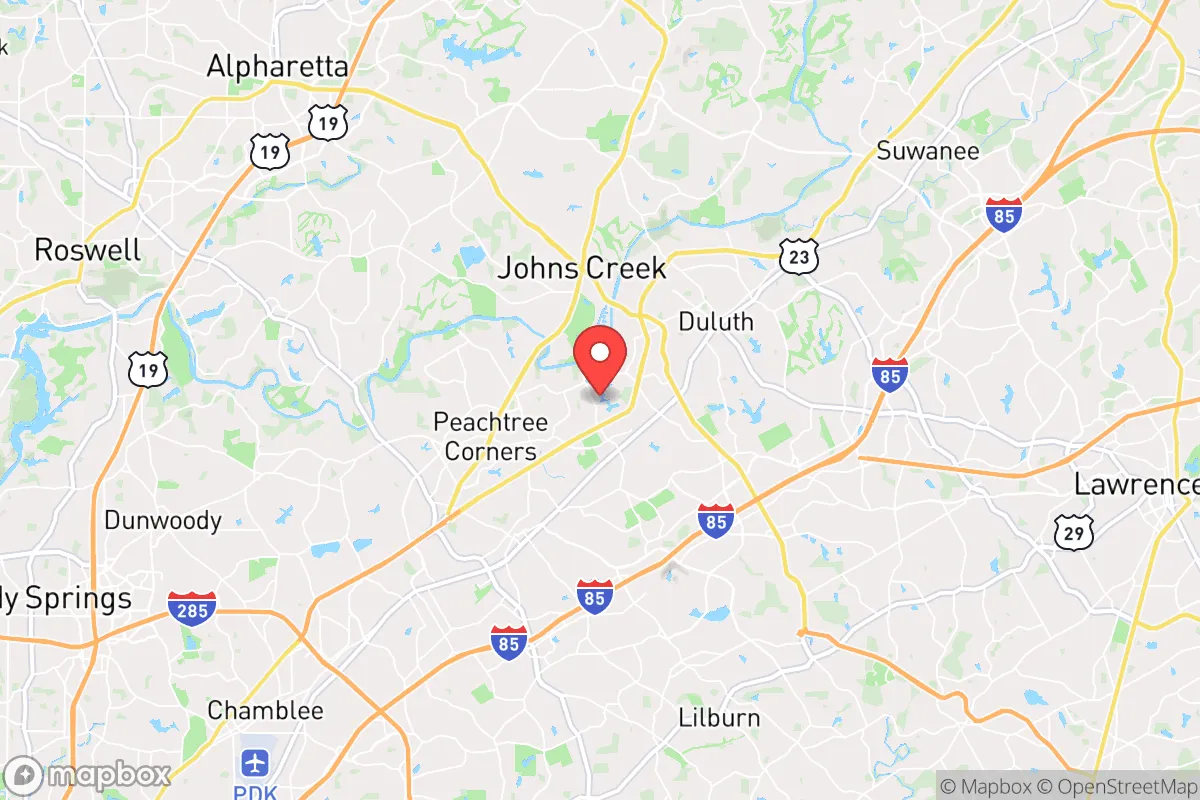
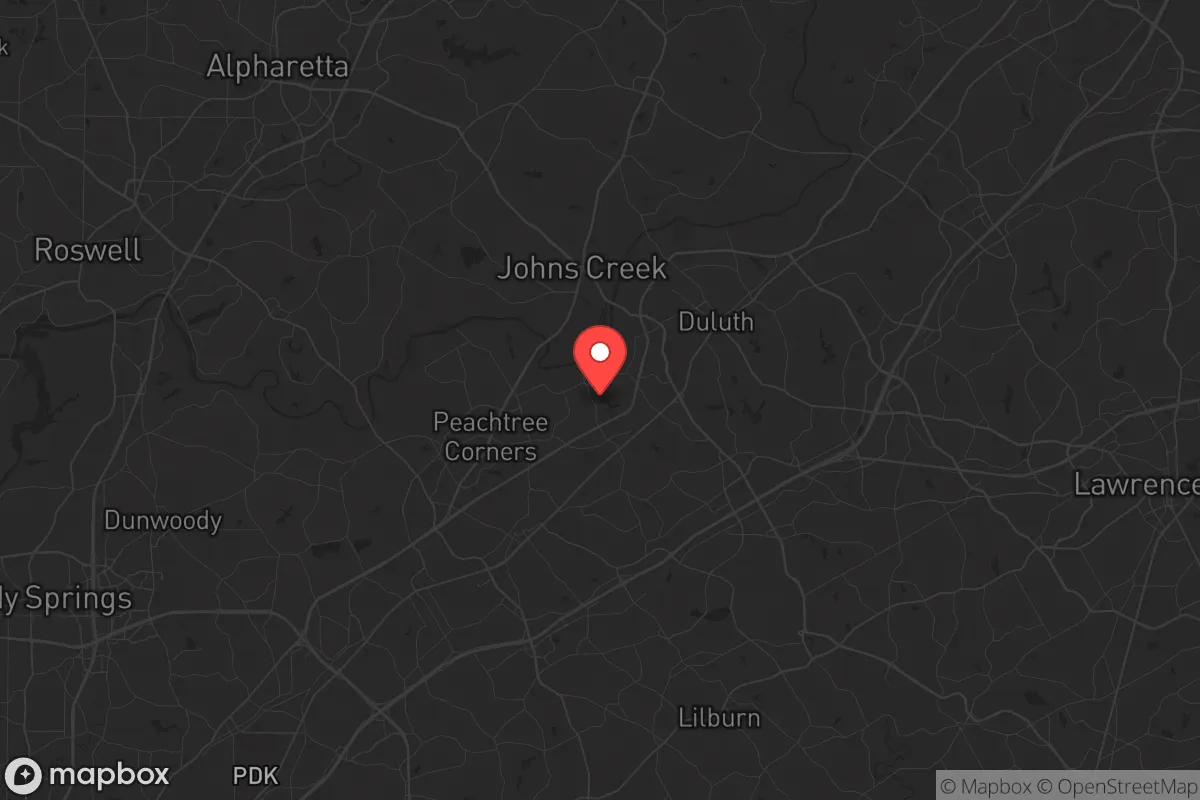
Photo: Wikipedia
Strategic Assessment of Berkeley Lake, GA
Meaningful friction. Expect exposure to either population pressure, blast zones, or natural disaster risk. Consider buying a retreat property.
What does the Strategic Assessment tell us?
Our Strategic Assessment grades tactical survivability of an area. Major population centers, military targets, fallout zones, natural disasters, and border exposure all drive risk — lower exposure means a more defensible position in a crisis.
This is heavily inspired by Joel Skousen's Strategic Relocation book. Highly recommended you checkout the book ($)What does this tell us?
Our Strategic Assessment grades tactical survivability of an area. Major population centers, military targets, fallout zones, natural disasters, and border exposure all drive risk — lower exposure means a more defensible position in a crisis.
This is heavily inspired by Joel Skousen's Strategic Relocation book. Highly recommended you checkout the book ($)Strategic Pillars

Key Distances
Regional Safe Places
Below is our recommended "safe zones" in Georgia and the surrounding area based on our strategic heuristics. For most people, it's unrealistic to live in a “safe zone” full-time due to work, family or other personal reasons. They tend to be more rural. However, many of these areas are perfect for second homes and retreat properties that double as a vacation home or even a short-term rental.
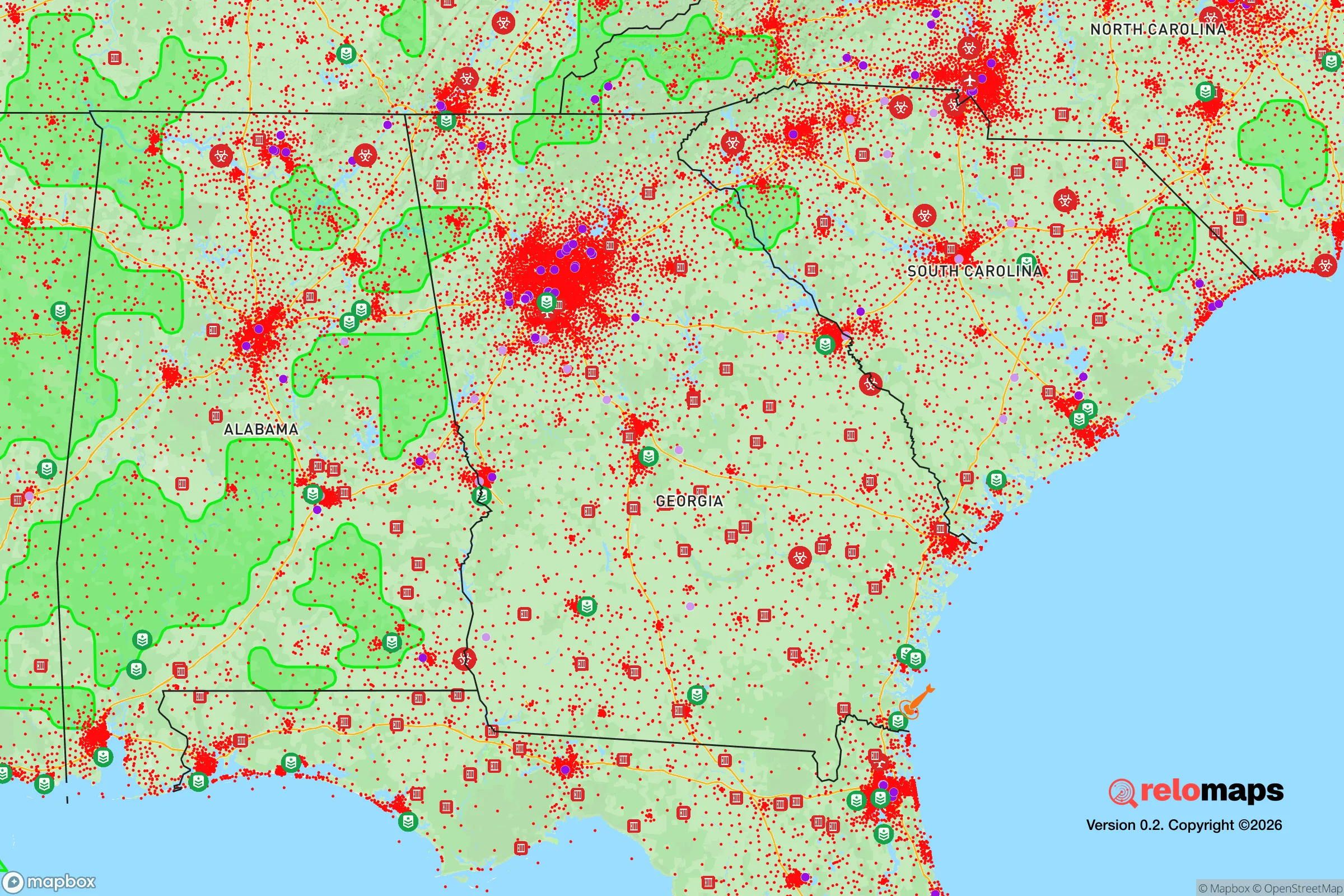
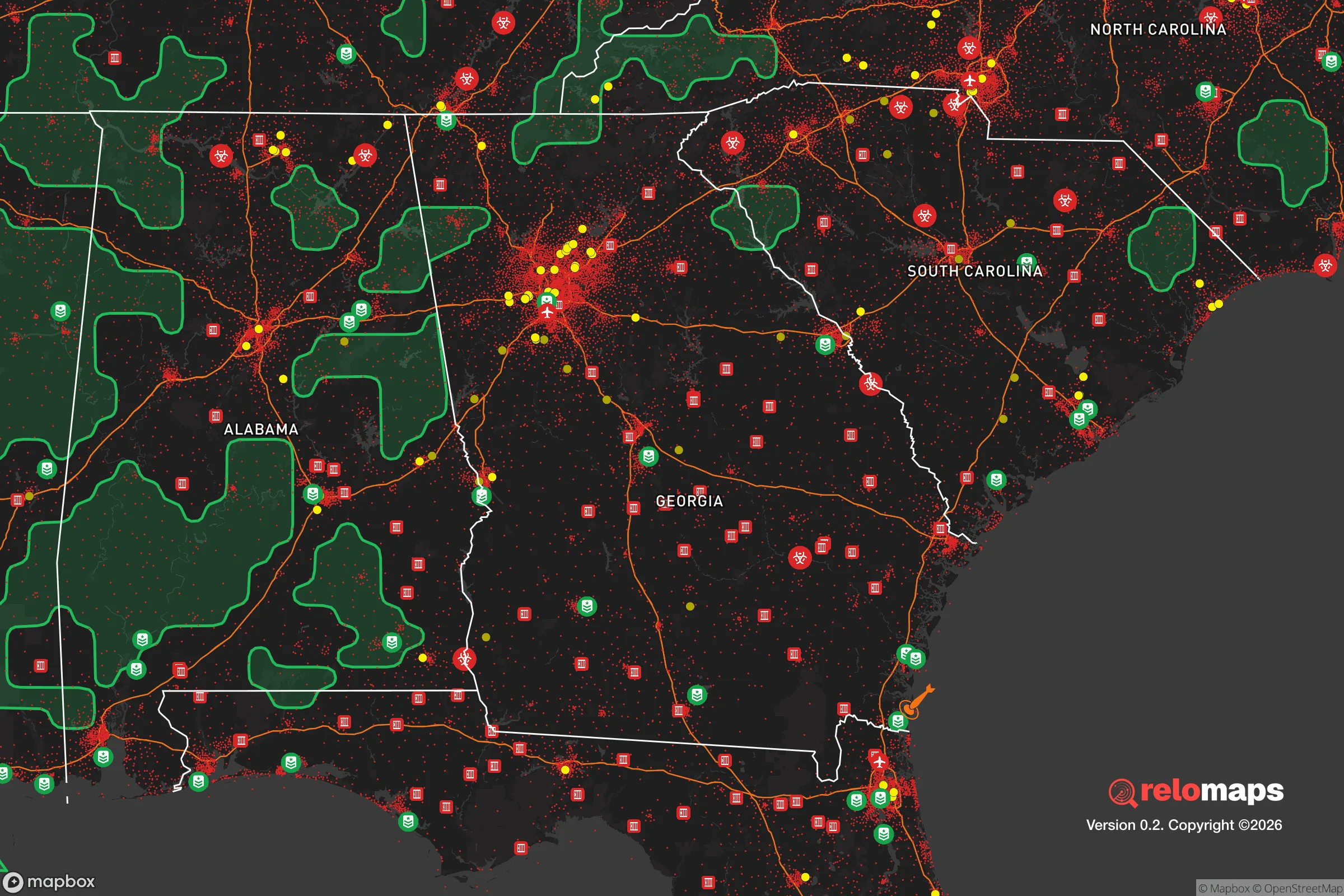


Important Note: For informational purposes only. This does not mean nothing bad ever happens in the green zones. Please use common sense. This is based on public data and modeled with AI. We tried to take a conservative approach but mistakes happen. We update this regularly as new information becomes available.
Solar Generator Recommendations
Backup power matters more here than in safer locations. We've picked three solar generators across budgets and capacity tiers — start with the budget unit if you only need a few essentials, or step up if you want to run a fridge and HVAC for days at a time.

Jackery Portable Power Station Explorer 300
Budget OptionPower on the Go: Weighing only 11 lbs, it's convenient to set up and store with book-sized foldable solar panels

BLUETTI Portable Power Station AC180
Designed for both indoor and outdoor scenarios, AC180 is highly capable as it has a robost capacity and continuous output power.

EF ECOFLOW DELTA Pro Ultra Power Station
Upgraded PickEcoFlow DELTA Pro Ultra is a whole-home energy system designed to grow with your family. Integrated with the Smart Home Panel 2, it scales to meet your evolving energy needs — keeping your home powered, intelligent, and secure through every stage of life.
We earn a commission, at no additional cost to you.
Strategic Assessment Analysis
Berkeley Lake, Georgia, presents a deceptively strong strategic position for those prioritizing resilience, but only if you understand its specific trade-offs. Tucked into Gwinnett County roughly 25 miles northeast of downtown Atlanta, this small, incorporated city of roughly 1,600 residents offers a rare combination: proximity to the economic engine of the Southeast without being swallowed by its chaos. The city's namesake 88-acre lake and its surrounding wooded, low-density neighborhoods create a natural buffer zone that most suburban Atlanta communities simply lack. For a relocator thinking in terms of decades, not just next year, Berkeley Lake's physical layout and governance structure offer genuine defensive advantages—provided you're clear-eyed about what lies just beyond its borders.
Geographic position and natural defensive advantages
Berkeley Lake sits on the Chattahoochee River watershed, specifically within the upper reaches of the Peachtree Creek basin, which gives it reliable surface water access—a non-negotiable for long-term self-sufficiency. The city itself is a tree-canopied enclave of winding roads and large lots, with many homes sitting on an acre or more. This low-density pattern is a major strategic asset: it limits the number of approach vectors for any unwanted foot traffic and makes the area naturally harder to surveil or overwhelm. The lake itself, a private body managed by the Berkeley Lake Property Owners Association, provides a controlled water source that isn't dependent on municipal treatment plants. In a grid-down scenario, that's a difference-maker. The surrounding terrain is gently rolling Piedmont forest, not mountainous, but the heavy tree cover and lack of through-streets create a natural maze that discourages casual transit. From a prepper perspective, this is a defensible pocket—not a fortress, but far more secure than a typical subdivision with a single entrance and exit.
Risks, exposures, and proximity to fallout-relevant landmarks
Here's where the analysis gets sobering. Berkeley Lake's greatest strength—its proximity to Atlanta's economic and logistical infrastructure—is also its greatest vulnerability. The city lies roughly 10 miles from the eastern edge of the Atlanta metropolitan core, placing it well within the blast and fallout radius of any major event targeting Hartsfield-Jackson Atlanta International Airport, the Centers for Disease Control and Prevention (CDC) headquarters in DeKalb County, or the numerous data centers and telecom hubs along the I-85 corridor. The CDC is about 20 miles southwest; the airport is about 30 miles. In a worst-case scenario involving a nuclear detonation or large-scale EMP, Berkeley Lake would experience significant secondary effects—panic-driven evacuation traffic on Peachtree Industrial Boulevard and GA-141, potential looting from displaced populations moving northeast, and likely loss of grid power for weeks or months. The city's small population works in its favor here: there are fewer targets within the immediate area, and the local police force (contracted through Gwinnett County) is professional but thin. The real risk isn't a direct strike—it's the cascading collapse of the surrounding region and the pressure that puts on this quiet enclave. Proximity to major highways (I-85, I-285, GA-400) means that in a crisis, Berkeley Lake becomes a potential choke point or refuge zone for people fleeing Atlanta proper. That's a double-edged sword: it could bring resources, but it could also bring threats.
Practical resilience for a relocator: food, water, energy, and defensibility
For a relocator serious about self-sufficiency, Berkeley Lake offers a mixed but workable baseline. The lake itself is the crown jewel: a private, 88-acre body of water that supports fish populations (bass, bream, catfish) and can be used for irrigation, cleaning, and drinking with proper filtration. The Berkeley Lake Property Owners Association enforces strict rules on watercraft and shoreline use, which in a crisis could be leveraged to control access. Most homes in the city are on well water or municipal water from Gwinnett County; those on wells have a distinct advantage if the grid goes down, provided they have backup power for the pump. Solar panels are viable here—Georgia gets about 218 sunny days per year, slightly above the national average—and the tree cover means you'll need to clear a southern-facing roof section for optimal generation. Food production is limited by lot size; most properties have room for a substantial garden, but few have acreage for livestock. The city's zoning allows for chickens but not larger animals, so plan accordingly. Defensibility is good but not great: the winding roads and heavy foliage create natural chokepoints, but there are multiple entry points from Peachtree Industrial Boulevard and Berkeley Lake Road. A small, organized group could secure the main intersections, but a determined force could bypass them. The nearest major medical facility is Northside Hospital Gwinnett in Lawrenceville, about 12 miles east—close enough for routine care, but potentially overwhelmed in a mass casualty event. Stockpile your own trauma supplies and antibiotics.
The overall strategic picture for a conservative relocator
Berkeley Lake is not a bug-out location. It's not a remote mountain retreat where you can disappear and wait out the collapse. What it is, is a strategically positioned, low-profile community that offers a realistic middle ground for someone who needs to stay within commuting distance of Atlanta's economy but wants a defensible, resource-rich home base. The conservative-leaning governance of Gwinnett County has shifted in recent years—the county voted for Biden in 2020 and Harris in 2024—but Berkeley Lake itself remains a small, incorporated city with a strong homeowners' association and a history of resisting overdevelopment. That local control matters. The city's tax base is solid, schools are top-tier (Berkeley Lake Elementary feeds into the highly rated Duluth High School cluster), and property crime is low. For a single individual or family willing to invest in off-grid water, solar, and food storage, Berkeley Lake provides a foundation that most suburban Atlanta communities cannot match. The key is to treat it as a base of operations, not a final redoubt. Build your networks in the surrounding rural areas of Hall and Jackson counties to the north, keep a low profile, and understand that in a true SHTF scenario, you'll need to hold this ground against pressure from the south and west. If you can do that, Berkeley Lake is one of the better bets in the metro Atlanta region for long-term strategic relocation.

* Values derived from national, state, county, city and local statistics and may differ in a specific area. Last updated: 2026-04-23T05:08:37.000Z
Narrative content on this page is AI-generated and may contain mistakes. Verify any details that matter before acting on them.
ReloMaps may earn a commission from affiliate links at no extra cost to you.

