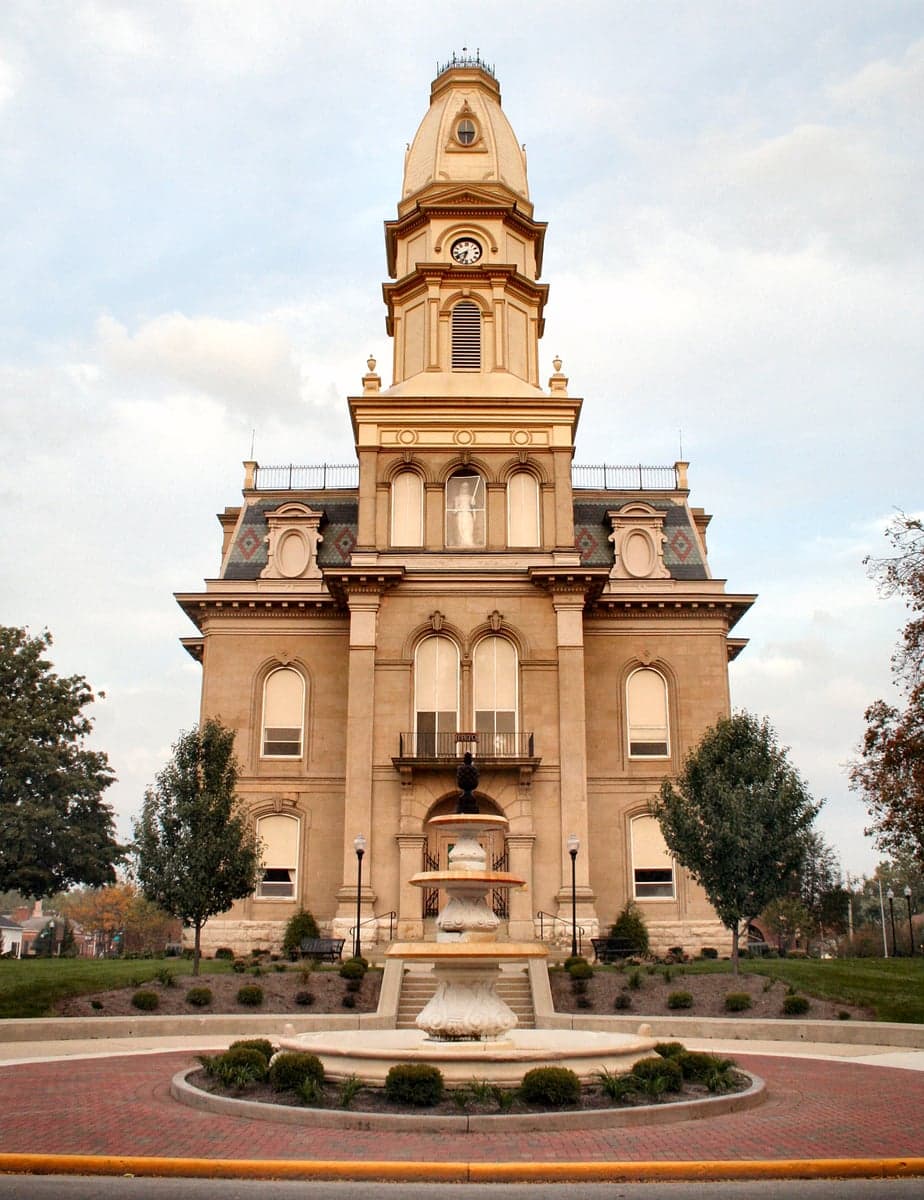
Photo: Wikipedia
Quality of Life in Bellefontaine, OH
A high quality of life with strong walkability, manageable living costs, healthy neighborhood signals, and solid amenity access.
What does Quality of Life tell us?
Quality of Life blends cost of living, nearby amenities, socioeconomic signals, and neighborhood character. City-level scores represent the whole municipality; individual neighborhoods can differ.
What does this tell us?
Quality of Life blends cost of living, nearby amenities, socioeconomic signals, and neighborhood character. City-level scores represent the whole municipality; individual neighborhoods can differ.
Cost of Living
34% below national average
The Real Cost of Living in Bellefontaine, OH for 2026
| Tier | Individual | Family (4) |
|---|---|---|
| Survival | $13k | $25k |
| Comfortable | $32k | $47k |
| Luxury | $89k+ | $138k+ |
| Elite (Top 5%) | $105k+ | $163k+ |
129%
The Area Signal
A metric tracking the socioeconomic signals of the area.
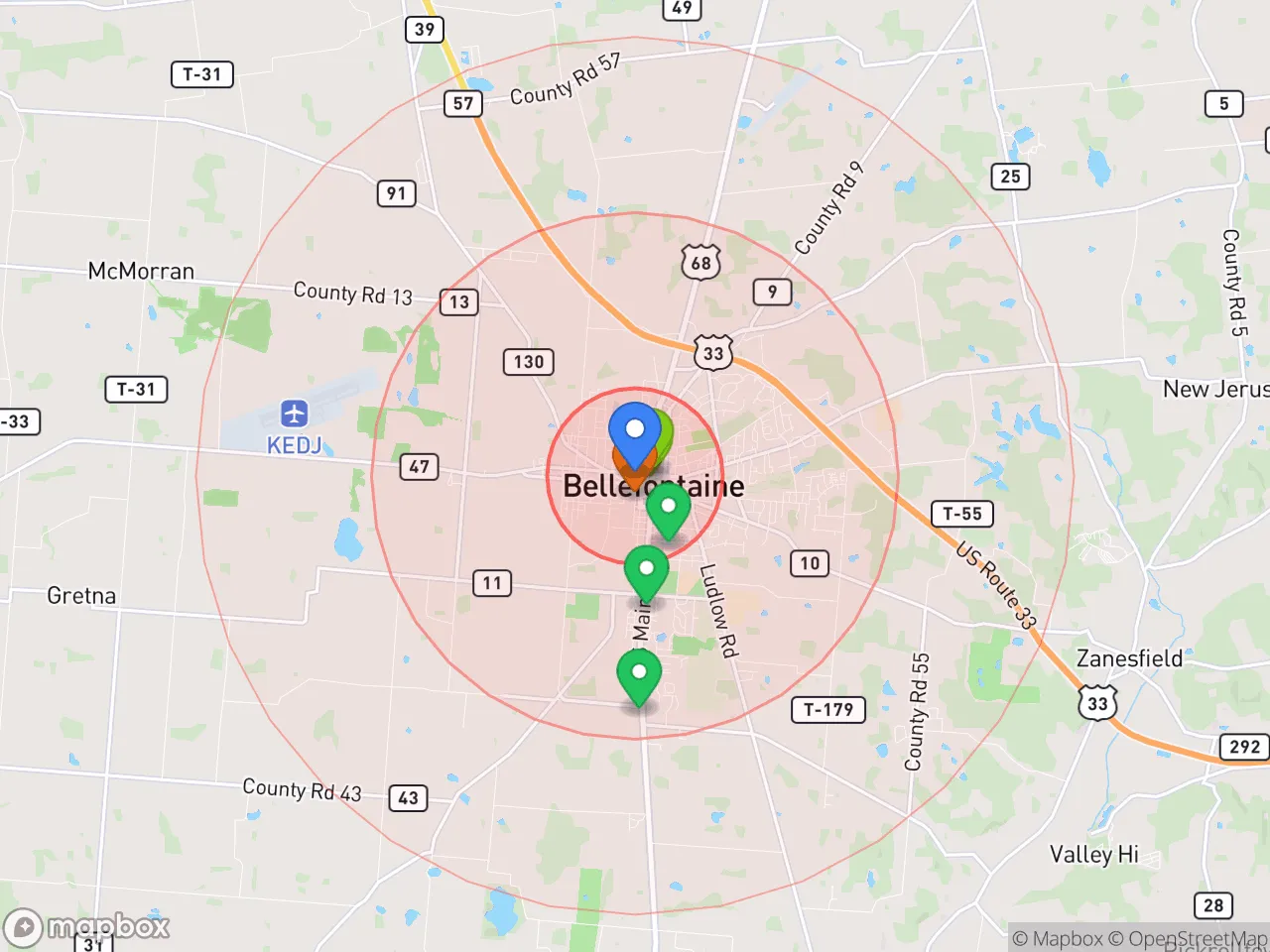
Hobbies
Explore the areaGroceries
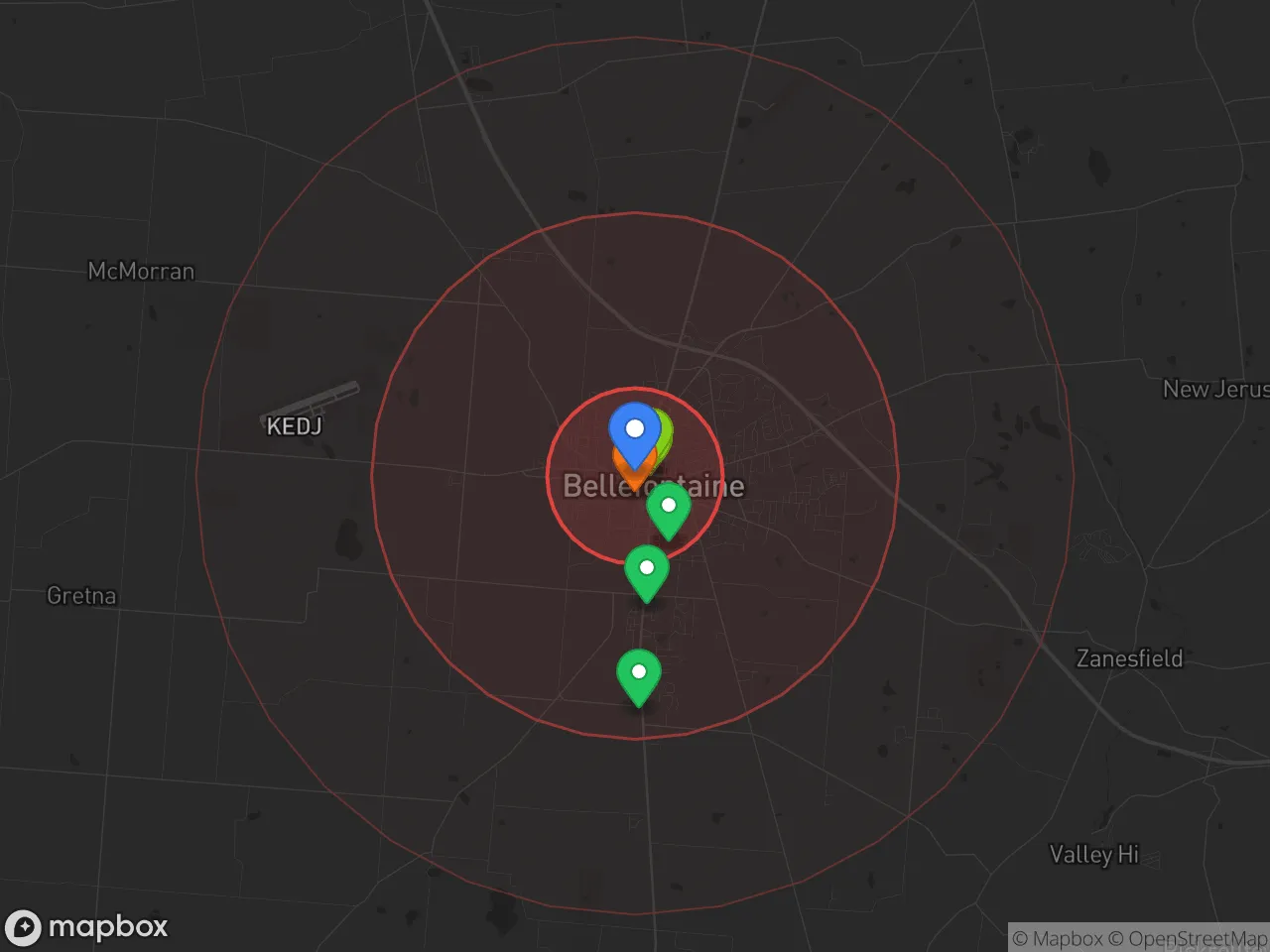
0 within 10 miles
Gas
0 within 10 miles
Hospital
0 within 20 miles
Airport
John Glenn Columbus International Airport
Post Office
Critical Amenities
Quality-of-Life Analysis
Bellefontaine, Ohio, offers a notably affordable quality of life with a cost of living index of 66 — roughly one-third below the U.S. average — making it one of the more budget-friendly small cities in west-central Ohio. The community of roughly 13,500 residents skews toward working families, retirees, and manufacturing employees who value low housing costs and short commutes over big-city amenities. With a median home value of $163,500 and median rent of $836, the city attracts first-time buyers and long-term renters alike, many of whom work at local employers like Honda Transmission Manufacturing or the Logan County government complex.
Housing costs and affordability compared to nearby cities
Bellefontaine's housing market sits well below Ohio's statewide median home value of roughly $215,000, and it undercuts nearby Columbus (median around $310,000) by nearly half. The $163,500 median home value translates to a monthly mortgage payment near $1,100 at 2026 rates — often less than the $836 median rent, which pushes many renters toward homeownership. Compared to Marysville (median ~$340,000) or Dublin (~$480,000), Bellefontaine offers a 50–70% price discount, though with a smaller job base and fewer retail options. Renters fare equally well: the $836 median rent is about 30% below the national figure, and two-bedroom units commonly list between $750 and $950. Utilities and groceries also run below national averages, reinforcing the overall 66 cost-of-living index. The trade-off is a slower property-appreciation rate — roughly 4–5% annually since 2020 versus 8–10% in Columbus suburbs — but for cash-flow-focused buyers, the entry point is hard to beat.
Schools, amenities, and the daily rhythm of life
Daily life in Bellefontaine centers on the Logan County Courthouse square, the Ohio Hi-Point Career Center, and a compact downtown with independent cafes and the historic Holland Theatre. The Bellefontaine City School District enrolls about 2,800 students, with Benjamin Logan and Riverside local districts serving the surrounding townships; graduation rates hover near 90%, and the district's levy history has been stable since 2018. For recreation, residents use the 40-acre Zane Shawnee Caverns park system, the Bellefontaine City Pool, and the paved 6-mile Prairie Trail that connects to Indian Lake State Park, a 5,800-acre lake 15 minutes north. The average commute of 18.4 minutes is a standout — roughly 10 minutes shorter than the national average — and most residents reach work in Bellefontaine, Marysville, or Urbana without touching interstate traffic. Shopping is utilitarian: a Walmart Supercenter and Kroger anchor the retail base, while serious dining or entertainment requires a 50-minute drive to Columbus or a 35-minute trip to Springfield. The rhythm is quiet and predictable — church suppers, high school football at AcuSport Stadium, and seasonal events like the Logan County Fair fill the calendar.
Retirees on fixed incomes, remote workers seeking a low-cost base, and manufacturing employees at Honda or the nearby Nestlé plant will find Bellefontaine's economics compelling. Families should weigh the modest school funding against the short commutes and safe streets, while young professionals may find the social scene thin. For anyone prioritizing affordability, a sub-20-minute commute, and a slower pace, Bellefontaine delivers a stable, low-stress quality of life that wealthier Ohio suburbs cannot match on price.

Crime in Bellefontaine, OH
Generally safer than 70% of comparable U.S. locations.
Violent CrimeViolent Crime Analysis
Property CrimeProperty Crime Analysis
Crime Analysis
Bellefontaine, Ohio, reports a violent crime rate of 177.3 incidents per 100,000 residents and a property crime rate of 439.8 per 100,000, placing it in a moderate safety tier for a small Midwestern city. While these figures are not alarmingly high, they warrant careful consideration, particularly for those relocating from safer suburban or rural environments. The overall safety picture is one of manageable risk, but specific crime types and local justice system dynamics deserve closer scrutiny.
Crime in context
Bellefontaine’s violent crime rate of 177.3 per 100,000 is roughly half the national average of approximately 380 per 100,000, but it sits slightly above the Ohio state average of around 165 per 100,000. Property crime at 439.8 per 100,000 is significantly lower than the national figure of about 1,950 per 100,000, though it aligns closely with the Ohio state average of roughly 1,800 per 100,000. These comparisons show that while violent crime is a relative concern locally, property crime is less of a factor. However, context matters: Bellefontaine is not a large metro area with progressive prosecutors, so the risk of systemic leniency driving repeat offenses is lower than in major cities like Columbus or Cleveland. Readers should note that in jurisdictions where liberal judicial philosophies prioritize offender rehabilitation over public safety, crime rates often climb; Bellefontaine’s more traditional approach likely helps keep its numbers in check.
What residents experience
Daily life in Bellefontaine involves typical small-city precautions. The violent crime rate translates to roughly 1-2 incidents per month in a city of about 13,000 people, with aggravated assault being the most common violent offense. Property crime is less frequent, with theft and burglary occurring sporadically rather than as a pervasive issue. Residents report feeling safe in most neighborhoods during daylight hours, though caution is advised after dark in areas near the downtown core or along major thoroughfares like US Route 33. The local police department maintains a visible presence, and community engagement programs help foster trust. Unlike in larger, progressive-run cities where catch-and-release policies can erode public confidence, Bellefontaine’s justice system appears to prioritize accountability, which contributes to a more stable safety environment.
Neighborhood-level variation is modest but notable. The eastern and southern residential areas, including the vicinity of Bellefontaine High School and the historic district near the Logan County Courthouse, tend to have lower crime rates than the northern and western sections near industrial zones and apartment complexes. The area around the Bellefontaine City Park and the downtown business district sees occasional petty theft and vandalism but remains generally safe. Prospective residents should drive through specific blocks at different times of day to gauge comfort levels, as block-by-block differences can be more pronounced than citywide averages suggest. Overall, Bellefontaine offers a reasonably safe environment, especially when compared to larger, more politically progressive urban centers where crime is often exacerbated by soft-on-crime policies.
* Values derived from national, state, county, city and local statistics and may differ in a specific area. Last updated: 2026-10-29T02:10:18.000Z
Narrative content on this page is AI-generated and may contain mistakes. Verify any details that matter before acting on them.
ReloMaps may earn a commission from affiliate links at no extra cost to you.

