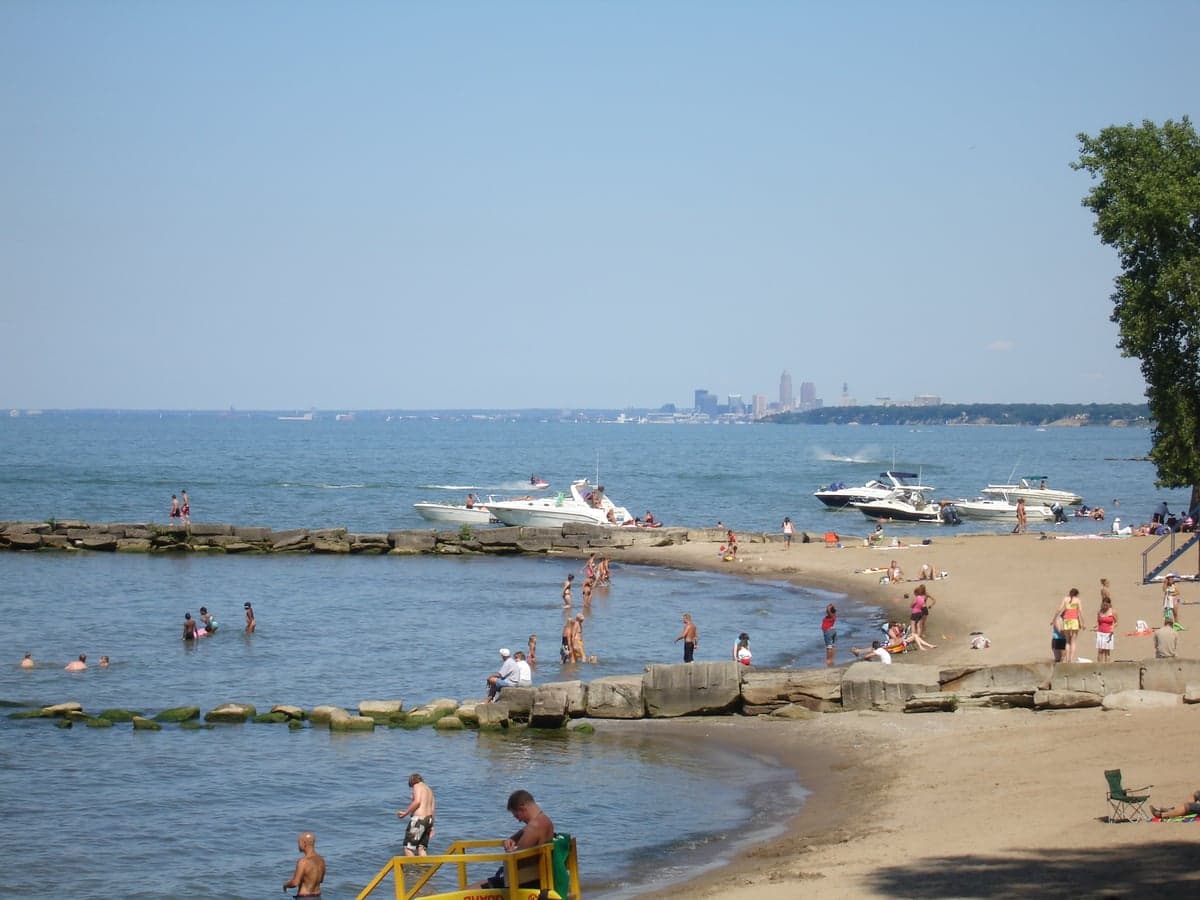
Photo: Wikipedia
Political ClimatePolitical Climate in Bay Village, OH
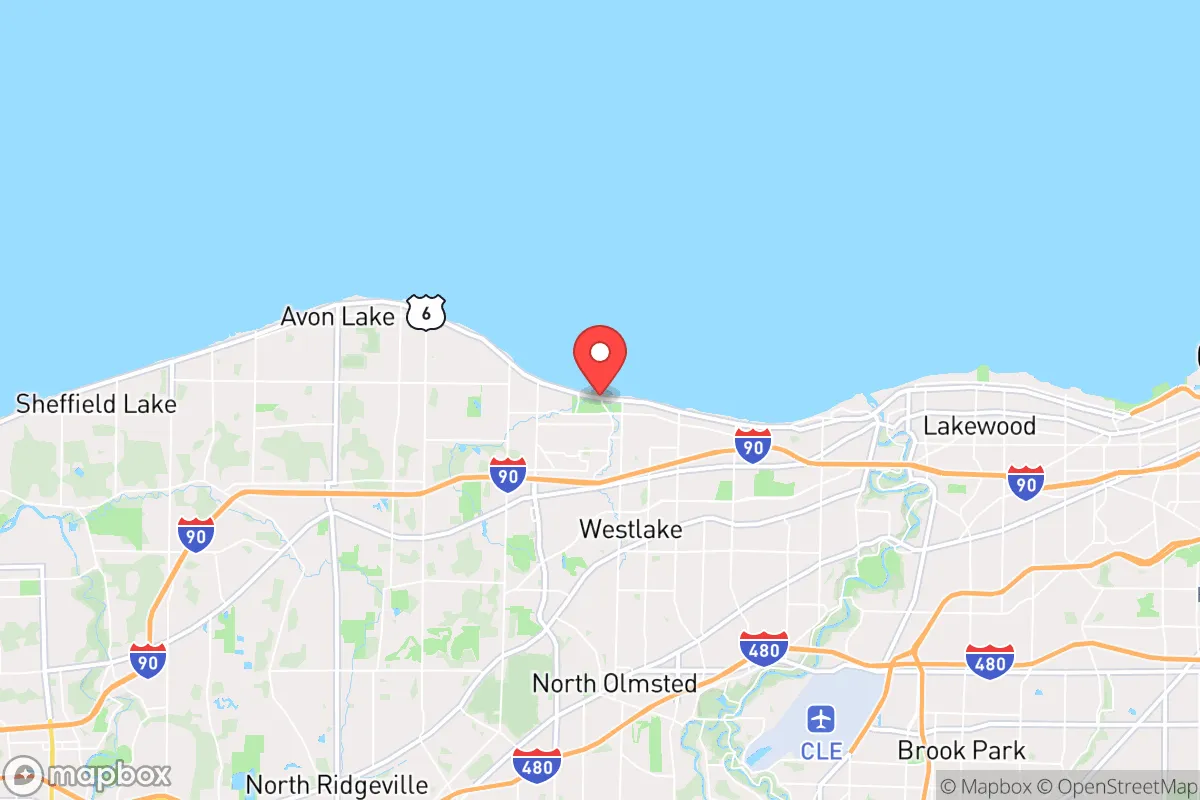
District shown is the primary district for this city’s centroid. Cities may span multiple districts.
Local Political AnalysisPolitical Analysis of Bay Village, OH
Bay Village has long been a reliably Republican suburb on Cleveland’s West Side, and that hasn’t changed much. The city’s Cook Partisan Voting Index (PVI) sits at R+5, meaning it votes about five points more Republican than the national average. That’s exactly the same as Ohio’s statewide PVI of R+5, so Bay Village is a pretty good mirror of the state’s overall political lean. But if you look closer, the city has been drifting slightly leftward in presidential elections, even as the surrounding county and state have held steady or moved right. In 2020, Donald Trump still won Bay Village, but by a noticeably smaller margin than in 2016, and the city’s vote share for Joe Biden was higher than in many neighboring suburbs. That shift is subtle but real, and it mirrors what’s happening in other affluent, educated suburbs across the country.
How it compares
Compared to the rest of Ohio, Bay Village is more moderate than its R+5 PVI might suggest. The city sits in Cuyahoga County, which is a Democratic stronghold thanks to Cleveland and its inner-ring suburbs. That means Bay Village is a bit of a blue island in a red county? Actually, it’s the opposite: the city is one of the more conservative parts of a liberal county. Drive 10 minutes east into Lakewood or Rocky River, and you’ll find communities that lean Democratic, with PVIs closer to D+5 or D+10. Head west into Lorain County, and places like Avon and Avon Lake are more Republican-leaning, though not as red as rural areas further out. So Bay Village sits right on a political dividing line: it’s the western edge of Cuyahoga County’s Democratic corridor, but still votes Republican. That makes it a bellwether of sorts for Ohio’s broader suburban shift. The city’s politics are shaped by its demographics: mostly white, well-educated, upper-middle-class, and older, but with a growing number of younger families moving in from Cleveland and other suburbs.
What this means for residents
For conservative residents, Bay Village is a comfortable place to live. You’ll find plenty of neighbors who share your views, and local elections tend to be won by Republicans or conservative-leaning independents. The city council and school board are generally center-right, and issues like taxes, development, and public safety are handled with a pragmatic, business-friendly approach. For liberal residents, the city is still welcoming, but you’ll be in the minority. That said, the political climate is not hostile; most people are polite and avoid heated arguments. The real tension isn’t between neighbors but between the city and the county. Cuyahoga County’s Democratic leadership often pushes policies that Bay Village residents oppose, like higher taxes or more regional transit spending. That creates a dynamic where the city feels like a small conservative outpost in a liberal county, which can be frustrating for both sides.
One cultural distinction worth noting: Bay Village is more focused on local issues than national politics. The big debates are about school funding, lakefront development, and zoning laws, not culture war flashpoints. That’s partly because the city is small and tight-knit, and partly because the political divide here is less about ideology and more about pragmatism. Both conservatives and liberals tend to agree on keeping the city safe, well-funded, and family-friendly. The trajectory is toward a slow moderation, with younger residents leaning slightly more Democratic, but the city will likely remain R+5 for the foreseeable future. If you’re moving here, you’ll find a place where politics matter, but they don’t dominate daily life.

State Political ClimatePolitical Climate in Ohio
State Political AnalysisPolitical Environment in the State
Ohio is a classic battleground state that has shifted from a true toss-up to a solid Republican lean (Cook PVI R+5) over the past two decades, driven by a steady rightward march in rural and exurban areas while its major metros have become Democratic strongholds. The state voted for Donald Trump by 8 points in both 2016 and 2020, and by 11 points in 2024, a stark contrast from the 2000s when it was the ultimate swing state, deciding the presidency in 2004 by just 2 points. This trajectory reflects a national realignment, but Ohio’s version is particularly sharp because of deindustrialization, population loss in the northeast, and explosive growth in the conservative southwestern and central regions.
Urban vs. rural divide
The political map of Ohio is a textbook case of the urban-rural chasm. The Democratic vote is concentrated in the "Three C's": Cleveland (Cuyahoga County), Columbus (Franklin County), and Cincinnati (Hamilton County). Cuyahoga County alone delivers about 300,000 Democratic votes, while Franklin County has grown increasingly blue, flipping from a 5-point Obama win in 2012 to a 20-point Biden win in 2020. Meanwhile, the rural and exurban counties that ring these metros—like Delaware County (north of Columbus), Warren County (northeast of Cincinnati), and Medina County (southwest of Cleveland)—have become some of the most reliably Republican in the nation. Delaware County, once a swing suburb, now votes R+30. The real story is in the Appalachian southeast and the rural northwest, places like Muskingum County (Zanesville) and Mercer County (Celina), where Trump won by 40-50 points. The only major metro that has bucked the trend is Toledo (Lucas County), which remains a Democratic stronghold but is shrinking, while Dayton (Montgomery County) has become a true bellwether, flipping from Obama to Trump to Biden and back to Trump in 2024.
Policy environment
Ohio’s policy environment is a mix of conservative governance on fiscal and social issues, with some notable populist and moderate exceptions. The state has a flat income tax rate of 3.5% (down from 4.8% in 2020), a 5.75% sales tax, and no tax on Social Security benefits, making it attractive for retirees. Property taxes are moderate but vary wildly by district—expect $2,500-$4,000 annually on a $300,000 home in suburban Columbus versus $1,500 in rural areas. The regulatory posture is business-friendly, with a right-to-work law (though not a full right-to-work state), and the state has preempted local minimum wage and paid leave ordinances. On education, Ohio has a robust school choice system: the EdChoice voucher program allows students in underperforming public schools to attend private or parochial schools, and the state has over 300 charter schools. Higher education is dominated by Ohio State University, but the state has also seen a push for vocational and trade school funding. Healthcare is a mixed bag: the state expanded Medicaid under the Affordable Care Act, but the legislature has passed restrictions on abortion (a six-week ban that was later blocked by a 2023 constitutional amendment protecting abortion rights). Election laws have been tightened: voter ID is now required (with a list of acceptable IDs), early voting is limited to 28 days, and drop boxes are restricted to one per county. The state also purges inactive voters regularly, a practice upheld by the Supreme Court.
Recent policy direction
Ohio’s recent legislative direction is a clear shift toward conservative priorities, but with notable voter-driven exceptions. In 2023, voters passed Issue 1, a constitutional amendment enshrining abortion rights (57% to 43%), and Issue 2, legalizing recreational marijuana (57% to 43%), both of which the Republican-controlled legislature had refused to pass. This has created a tension between the legislature and the electorate. On gun rights, Ohio became a permitless carry state in 2022 (HB 99), allowing any adult 21 or older to carry a concealed firearm without a license. The "Stand Your Ground" law was also expanded in 2021 (SB 175), removing the duty to retreat in any place where a person is lawfully present. On parental rights, the state passed the "Parents Bill of Rights" (HB 8) in 2023, requiring schools to notify parents of any changes to a student’s health or well-being and banning instruction on sexual orientation or gender identity in grades K-3. On property rights, the state has limited local control over oil and gas drilling (SB 165), preempting local fracking bans. On privacy, Ohio has no comprehensive data privacy law, but it does have a biometric privacy law (HB 33) that restricts how companies collect fingerprints and facial recognition data. On voting, the legislature passed HB 458 in 2023, which shortened the absentee ballot application window and banned the use of private funding for election administration. The overall direction is one of legislative conservatism tempered by direct democracy—a dynamic that keeps the state from swinging too far in either direction.
Civil unrest & political movements
Ohio has seen its share of political flashpoints, though it has avoided the large-scale unrest of some coastal states. The 2020 George Floyd protests in Columbus and Cincinnati were significant but largely peaceful, with some property damage in the Short North district of Columbus. The state has a strong and visible pro-life movement, with annual March for Life events in Columbus drawing thousands, but the 2023 abortion rights amendment has shifted the energy to the pro-choice side, with groups like Ohioans for Reproductive Freedom now well-organized. On the right, the "Ohio Freedom Alliance" and local Tea Party groups remain active, particularly in school board races and county GOP central committees. Immigration politics are less heated than in border states, but the city of Sandusky saw a controversy in 2023 when a local meatpacking plant hired a large number of Haitian immigrants, leading to a city council resolution opposing "sanctuary city" policies (though Sandusky has no such policy). Election integrity remains a live issue: the 2020 and 2024 elections were certified without major controversy, but the Secretary of State’s office has been aggressive in purging voter rolls, leading to lawsuits from the ACLU. The most visible political movement in recent years has been the "Issue 1" campaign in 2023, which saw massive grassroots organizing on both sides, with door-knocking and TV ads that rivaled a presidential race. A new resident would notice yard signs for local school board candidates and issue campaigns far more than for national races, reflecting Ohio’s hyper-local political culture.
Projection
Over the next 5-10 years, Ohio is likely to become more Republican at the state level, but the margin of victory may shrink as Columbus and Cincinnati continue to grow and diversify. The 2024 election showed Trump winning by 11 points, but down-ballot races were closer—the Republican Senate candidate won by only 3 points. The demographic trends favor the GOP: the population is aging (median age 40), and the fastest-growing counties are the exurban ones like Delaware and Warren, which are deeply red. However, the influx of younger, college-educated workers to Columbus and the inner-ring suburbs of Cincinnati (like Oakley and Hyde Park) could slowly shift the urban vote even further left. The wildcard is the state’s direct democracy mechanism: if the legislature continues to push conservative policies that are out of step with the electorate (like the six-week abortion ban), expect more ballot initiatives on issues like minimum wage, marijuana (already passed), and redistricting reform. The 2023 abortion amendment showed that Ohioans are willing to cross party lines on specific issues, which could lead to a more moderate policy environment even as the state’s partisan lean solidifies. A relocator moving in now should expect a state that is reliably Republican in presidential elections, but with a lively and unpredictable political culture where local issues and ballot measures can upend the status quo.
For a new resident, the bottom line is that Ohio offers a stable, low-tax environment with a strong conservative tilt on fiscal and gun policy, but with a pragmatic streak that has preserved abortion access and legalized marijuana through direct democracy. You’ll find a state where your vote matters more than in deep-blue or deep-red states—local races are often decided by a few hundred votes, and your city council or school board can have a real impact on your daily life. The political climate is serious but not hostile; you can have a Trump flag in your yard and a Harris sign next door without fear of confrontation in most suburbs. Just don’t expect the state to swing back to being a toss-up anytime soon—the rural-urban divide is now a canyon, and the rural side is growing faster.
* Values derived from national, state, county, city and local statistics and may differ in a specific area. Last updated: 2026-08-10T17:36:25.000Z
Narrative content on this page is AI-generated and may contain mistakes. Verify any details that matter before acting on them.
ReloMaps may earn a commission from affiliate links at no extra cost to you.

