Photo: Wikipedia
Political ClimatePolitical Climate in Basin, WY
District shown is the primary district for this city’s centroid. Cities may span multiple districts.
Inherited from parent state — no local data available.
Local Political AnalysisPolitical Analysis of Basin, WY
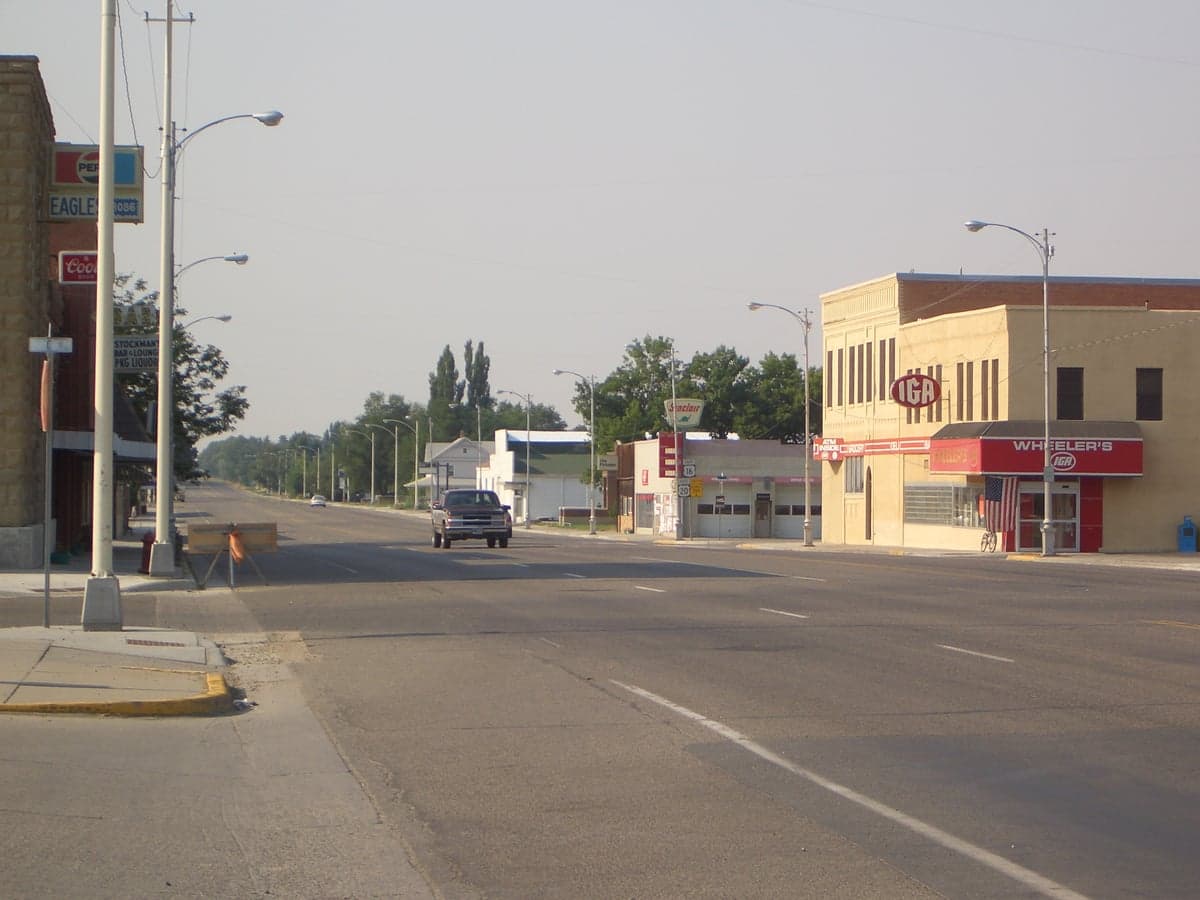
Basin, Wyoming, is about as rock-ribbed conservative as it gets, and that’s not changing anytime soon. The Cook PVI clocks the area at R+23, which means Republicans have a 23-point advantage over the national average—and in practice, it feels even stronger. You won’t find many yard signs for the other side here, and the local elections are usually decided in the GOP primary. The trajectory has been steady for decades, with no real shift toward the left, though there’s been a quiet uptick in folks moving in from places like Colorado or California who bring different ideas. Most of them either adapt fast or leave, because Basin’s way of life doesn’t bend easily.
How it compares
If you drive 30 miles east to Greybull, you’ll find a similar conservative vibe, but it’s a bit more blue-collar and less tied to agriculture. Cody, about 45 miles west, is also conservative but has a stronger tourism and recreation economy, which brings in more seasonal workers and a slightly younger crowd. The real contrast is with towns like Jackson Hole, three hours west, which is a progressive island in a red state—think high taxes, strict land-use rules, and a lot of out-of-state money. Basin residents see Jackson as a cautionary tale of what happens when government overreach and progressive policies take hold. Locals here remember when Wyoming was more independent, and they’re wary of any trend that looks like it’s heading that direction.
What this means for residents
For daily life, the conservative tilt means low taxes, minimal regulation, and a government that mostly stays out of your business. Property taxes are among the lowest in the nation, and there’s no state income tax. You can build a shop on your land, hunt on public ground without a ton of red tape, and carry a firearm without jumping through hoops. The downside is that services are limited—roads get patched slowly, and the nearest hospital with serious specialists is in Billings, Montana, about 90 minutes away. Politically, you’ll feel like your vote actually counts in local races, but national elections can feel like a foregone conclusion. Any push toward progressive policies—like zoning changes, renewable energy mandates, or diversity initiatives in schools—is met with fierce resistance because people here see it as a slippery slope toward losing their freedoms.
Culturally, Basin is still a place where neighbors help each other without a government program. The Big Horn County Fair and the local rodeo are the big events, and church attendance is high. There’s a strong distrust of federal land management, especially around grazing and energy development, because locals remember when the feds tried to lock up more public land. The long-term concern is that as Wyoming’s population slowly ages and younger people leave for cities, the political balance could shift if enough newcomers arrive. But for now, Basin remains a stronghold of traditional values, where personal responsibility and limited government are the default—and that’s exactly how most residents want it to stay.

State Political ClimatePolitical Climate in Wyoming
State Political AnalysisPolitical Environment in the State
Wyoming is, and has long been, one of the most reliably Republican states in the Union, with a partisan lean that is both deep and broad. In the 2024 presidential election, Donald Trump carried the state by a staggering 46 points, a margin that has only widened over the past two decades. The dominant coalition is a mix of rural ranchers, energy-sector workers, and a growing number of conservative transplants fleeing blue states, all united by a fierce commitment to limited government, individual liberty, and traditional values. However, the state is not monolithic, and the political trajectory is shaped by a tension between its deeply entrenched libertarian-conservative culture and the subtle pressures of demographic change, particularly in the state’s few population centers.
Urban vs. rural divide
The political map of Wyoming is a study in contrasts, but not in the way you might expect from a coastal state. The real divide isn’t between left and right, but between the deep-red rural counties and the moderate-red small cities. Laramie County, home to the state capital Cheyenne, is the most populous county and leans Republican, but it’s also the most politically diverse, with a noticeable pocket of government employees and university-adjacent voters who can swing a primary. Natrona County (Casper) is reliably conservative, driven by the energy industry. The real firepower comes from the vast, sparsely populated counties like Sublette, Lincoln, and Park (home to Cody and Powell), where Trump routinely pulls 80%+ of the vote. The only real outlier is Teton County (Jackson Hole), which is a liberal island of wealthy second-home owners and ski-bum transplants. Teton County voted for Joe Biden in 2020 and Kamala Harris in 2024, but its influence is limited to local politics and a few state legislative seats. The rest of the state is a sea of red, with no major Democratic strongholds outside of Jackson and a few precincts in Laramie (home to the University of Wyoming).
Policy environment
Wyoming’s policy environment is a dream for those seeking minimal government interference. There is no state income tax, and the sales tax is a low 4% (with local options pushing it to around 6%). Property taxes are among the lowest in the nation, though they have been creeping up in fast-growing areas like Gillette and Sheridan. The regulatory posture is aggressively pro-business, particularly for the energy sector (coal, oil, gas, and now uranium and rare earth minerals). Education policy is a mixed bag: the state has a school choice program (the Wyoming Freedom Scholarship Account) that allows parents to use public funds for private or homeschool expenses, but the state’s rural districts often struggle with funding and teacher shortages. Healthcare is a hot-button issue; Wyoming refused to expand Medicaid under the ACA, and the state legislature has passed laws to protect medical freedom, including a 2023 law prohibiting vaccine mandates by private employers. Election laws are among the most secure in the nation: voter ID is required, same-day registration is not allowed, and the state has banned private funding of election administration. There is no mail-in voting unless you have a valid excuse. The state also passed a law in 2022 making it a crime for election officials to send unsolicited mail ballots.
Trajectory & freedom
Wyoming is arguably becoming more free in the areas that matter most to conservatives, but the trajectory is not without friction. The state has been a national leader in expanding gun rights: in 2023, it passed a constitutional carry law (no permit needed to carry a concealed firearm), and in 2024 it passed a law prohibiting the enforcement of federal gun bans that violate the Second Amendment. Parental rights have been strengthened with a 2023 law requiring school districts to notify parents of any curriculum involving sexuality or gender identity, and a 2024 law banning transgender athletes from girls’ sports. Medical autonomy saw a win with the 2023 law banning COVID-19 vaccine mandates for employment. However, there are concerning trends. The state’s reliance on federal mineral royalties and tourism revenue makes it vulnerable to federal overreach, particularly on public lands. The Biden administration’s moratorium on new oil and gas leases on federal land was a direct attack on Wyoming’s economy, and the state has fought back with lawsuits and a push for state control of federal lands. Property rights are generally strong, but the influx of out-of-state buyers (especially in Teton County and the Bighorn Mountains) is driving up land prices and creating a tension between long-time ranchers and wealthy newcomers who want to lock up land for conservation.
Civil unrest & political movements
Wyoming is not a state known for street protests or civil unrest. The political culture is more about quiet defiance and legal action than public demonstrations. The most visible political movements are on the right: the Wyoming Freedom Caucus has become a powerful force in the state legislature, pushing for even lower taxes, school choice expansion, and nullification of federal overreach. There was a significant flashpoint in 2023 when the legislature passed a bill to create a state-run cryptocurrency (the “Wyoming Stable Token”), reflecting a libertarian streak that embraces financial freedom. On the left, the only organized activism is in Jackson and Laramie, where groups like the Wyoming Democratic Party and local environmental organizations push for renewable energy and public land preservation. Immigration politics are relatively quiet, as Wyoming has a very small foreign-born population (under 4%), but the state has passed laws requiring local law enforcement to cooperate with ICE. There is no sanctuary city movement. Election integrity controversies are minimal; the state’s system is widely trusted, though the 2020 election saw a brief push for an audit by some grassroots groups. The most notable recent flashpoint was the 2024 debate over a bill to ban the use of “forever chemicals” (PFAS), which pitted environmental concerns against the state’s pro-business posture.
Projection
Over the next 5-10 years, Wyoming will likely become even more conservative in its state-level politics, but the demographic shifts are worth watching. The state is seeing a steady influx of remote workers and retirees from California, Colorado, and the Pacific Northwest, many of whom are fleeing high taxes and progressive policies. These newcomers tend to be conservative, but they often bring a more “libertarian” or “live-and-let-live” attitude that can clash with the traditional, community-oriented conservatism of long-time residents. The population is growing fastest in Sheridan, Gillette, and Laramie, while rural counties are losing population. This will likely shift political power toward the small cities, which are still deeply red but may become more pragmatic on issues like education funding and healthcare access. The biggest wildcard is the energy transition: if the federal government continues to restrict fossil fuel development, Wyoming’s economy will take a hit, and the state will be forced to diversify. That could lead to a push for more tech-friendly policies (the state already has a “blockchain sandbox” law) or a doubling down on coal and oil. Either way, the state’s core political identity—individual freedom, low taxes, and resistance to federal control—is unlikely to change.
For a new resident, the bottom line is this: Wyoming offers one of the last true bastions of personal liberty in the United States. You will not find a state that respects your gun rights, your parental rights, or your wallet more. But you should also be prepared for a place where the government is small but the community is tight-knit, and where the politics are not just conservative but deeply rooted in a culture of self-reliance. If you are moving here to escape government overreach, you will find allies. If you are moving here expecting a libertarian paradise with no rules, you will be disappointed—Wyoming’s freedom comes with a strong expectation of personal responsibility and neighborly obligation. The key is to pick your location wisely: Sheridan and Cody are booming with like-minded transplants, while Cheyenne offers more amenities with a slightly more moderate vibe. Avoid Jackson unless you are a millionaire who doesn’t mind liberal local politics. Overall, Wyoming is a safe bet for anyone looking to live free, but keep an eye on the state legislature—the fight against federal overreach is far from over.
* Values derived from national, state, county, city and local statistics and may differ in a specific area. Last updated: 2026-04-21T11:27:52.000Z
Narrative content on this page is AI-generated and may contain mistakes. Verify any details that matter before acting on them.
ReloMaps may earn a commission from affiliate links at no extra cost to you.

