
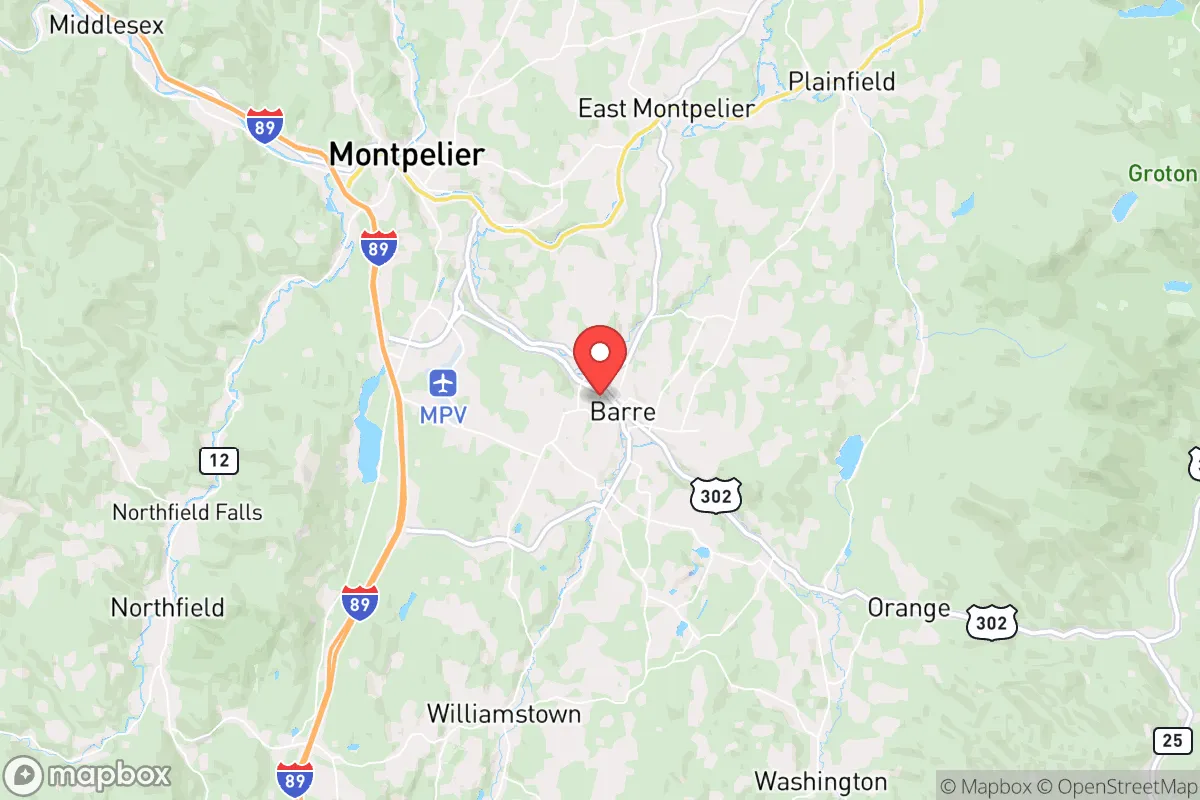
Political ClimatePolitical Climate in Barre, VT
District shown is the primary district for this city’s centroid. Cities may span multiple districts.
Inherited from parent state — no local data available.
Local Political AnalysisPolitical Analysis of Barre, VT
Barre, Vermont, is a place where the political landscape has shifted noticeably over the years, and not necessarily for the better if you value personal freedoms and a hands-off government. The town sits in a county with a Cook PVI of D+17, which tells you right off the bat that progressive policies have a stronghold here. While Barre used to be a working-class granite town where folks kept their politics to themselves and focused on family and hard work, the last decade has seen a steady march toward more government involvement in daily life—from zoning rules to local mandates that feel less like guidance and more like overreach. It’s a trend that’s concerning for anyone who believes the best government is the one that stays out of your business.
How it compares
If you drive just a few miles outside of Barre, you’ll start to see a different story. Towns like Williamstown and Northfield still have a more independent, live-and-let-live vibe, where neighbors are more likely to wave than to enforce a new ordinance. Even nearby Montpelier, the state capital, is a whole different animal—it’s even more progressive, with a heavy focus on climate mandates and social programs that come with a price tag. Barre sits in the middle, but it’s leaning hard toward the Montpelier side of things. The contrast is stark: in the rural outskirts, you’ll find folks who still value their right to hunt, heat with wood, and run a small business without a stack of permits. In Barre proper, the city council and local boards have been increasingly willing to adopt state-level progressive ideas, from land use restrictions to new fees that squeeze the middle class. It’s a reminder that the political climate here isn’t just about voting—it’s about how much of your daily life is managed by people who don’t know you.
What this means for residents
For the average person living in Barre, this shift means you’re likely dealing with more rules and less say in how things are run. Property taxes have crept up to fund programs that sound good on paper but often miss the mark in practice, and there’s a growing sense that local government is more interested in checking boxes than listening to residents. If you’re a small business owner or a tradesperson, you’ve probably felt the pinch of new regulations that make it harder to get work done without a lawyer or a permit. The school system, too, has leaned into progressive curricula that some parents find out of step with their values. It’s not that Barre is a bad place to live—it’s still got a strong sense of community and plenty of good people—but the political direction is one that chips away at personal responsibility and freedom. Long-term, if this trend continues, you can expect more of the same: higher costs, more bureaucracy, and a government that sees itself as your caretaker rather than your servant.
One thing that sets Barre apart culturally is its deep-rooted working-class identity, which still pushes back against the progressive tide in quiet ways. You’ll hear folks at the local diner grumble about new bike lanes or energy mandates, and there’s a stubborn streak of independence that hasn’t been fully stamped out. The annual Labor Day parade and the granite heritage are reminders of a time when the town was more about making things than making rules. But the long-term outlook is uncertain—if the state continues to push its agenda, and Barre’s local leaders keep falling in line, the character of the town could change even more. For now, it’s a place where you can still find your own path, but you’ve got to keep one eye on the town hall meetings.

State Political ClimatePolitical Climate in Vermont
State Political AnalysisPolitical Environment in the State
Vermont has long been a deep blue state, but the reality on the ground is far more complex than its statewide voting record suggests. Over the past 20 years, the state has shifted from a quirky, libertarian-leaning New England independent streak to a reliably progressive stronghold, with Democrats controlling the governorship, both legislative chambers, and the entire congressional delegation. However, this shift is not uniform—the state’s political geography is a tale of two Vermonts, and the trajectory is increasingly concerning for anyone who values fiscal restraint, gun rights, or local control.
Urban vs. rural divide
The political map of Vermont is starkly divided between the urbanized Chittenden County corridor and the rest of the state. Burlington, the state’s largest city, is the epicenter of progressive politics, routinely electing self-described democratic socialists like U.S. Representative Bernie Sanders and state-level officials who push for universal healthcare, rent control, and sanctuary city policies. The surrounding towns of South Burlington, Winooski, and Essex Junction vote similarly, creating a dense blue bloc that drives statewide election results. In contrast, the rural counties of Orleans, Essex, and Franklin in the Northeast Kingdom and along the Canadian border vote reliably Republican, often by margins of 20-30 points. Rutland and Bennington counties are more competitive but still lean left, while Addison County (home to Middlebury College) is a liberal enclave in an otherwise agricultural region. The divide is not just ideological—it’s cultural. Rural towns like St. Johnsbury and Newport feel increasingly alienated from Montpelier’s policy priorities, which they see as urban-centric and out of touch with their way of life.
Policy environment
Vermont’s policy environment is among the most progressive in the nation, and it shows no signs of moderating. The state has a progressive income tax with a top rate of 8.75%, one of the highest in the country, and a statewide property tax that funds education—meaning homeowners in rural areas often pay more per pupil than those in wealthier towns. The regulatory climate is dense: Vermont was the first state to ban fracking, has strict Act 250 land-use laws that make development costly and slow, and recently passed a clean heat standard that effectively mandates home heating fuel transitions. In education, Vermont was an early adopter of universal pre-K and has a school choice system that includes public, independent, and home-study options—though homeschooling regulations have tightened in recent years. Healthcare is dominated by the state-run Green Mountain Care system, which offers a public option and has pushed for a single-payer model (though it was abandoned in 2014 due to cost). Election laws are among the most accessible in the nation: automatic voter registration, same-day registration, no-excuse absentee voting, and a mail-in ballot system for all elections. For a conservative-leaning newcomer, the policy environment feels like a one-way ratchet toward higher taxes, more mandates, and less local autonomy.
Trajectory & freedom
The trajectory in Vermont is unmistakably toward less personal freedom, particularly in areas conservatives care about most. On gun rights, Vermont was once the most permissive state in the union—no permit required to carry, no waiting periods, no magazine limits. That changed dramatically after the 2018 school shooting in Parkland, Florida, when the legislature passed Act 94, which banned magazines over 10 rounds, raised the purchase age to 21, and required background checks on private sales. In 2023, Act 45 banned carrying firearms in public buildings, hospitals, and schools, and created a “red flag” law that allows police to seize weapons without a criminal conviction. On parental rights, Vermont was one of the first states to pass a law requiring schools to affirm a student’s chosen gender identity without parental notification—a direct challenge to family authority. On medical autonomy, the state has a vaccine mandate for schoolchildren with very narrow exemptions, and during COVID, Governor Phil Scott imposed some of the longest-lasting emergency orders in the country, including a mask mandate that extended into 2022. Property rights are constrained by Act 250, which gives regional commissions veto power over large developments, and by a new land use bill (S.100) that mandates “climate-friendly” zoning in every town. The cumulative effect is a state where the government increasingly dictates how you heat your home, what you can build, what you can carry, and how you raise your children.
Civil unrest & political movements
Vermont is not known for widespread civil unrest, but there are visible flashpoints. Burlington has seen periodic protests over police funding, racial justice, and housing policy, including a 2020 occupation of a city park that led to a controversial police clearing. The Rutland area has been a site of tension over refugee resettlement—the city accepted Syrian refugees in 2016, sparking a local backlash that included a failed lawsuit and ongoing debates about immigration policy. Vermont is a sanctuary state by practice, with state law limiting cooperation between local police and federal immigration authorities. The Yellow Vests of Vermont, a loose coalition of gun rights and limited-government activists, have held rallies at the Statehouse, but they remain a fringe movement. More organized is the Vermont Progressive Party, which holds seats in the legislature and pushes for Medicare for All, rent control, and a wealth tax. Election integrity has not been a major controversy here—Vermont’s mail-in system is widely trusted—but the state’s same-day voter registration and lack of voter ID laws would concern anyone who prioritizes election security. A new resident would notice the ubiquity of “Black Lives Matter” signs in Burlington and the near-total absence of Trump flags in most towns, but in the Northeast Kingdom, you’ll still see “Don’t Tread on Me” plates and the occasional “Live Free or Die” bumper sticker.
Projection
Over the next 5-10 years, Vermont is likely to become even more progressive, driven by two demographic trends. First, in-migration from out of state—particularly from New York, Massachusetts, and Connecticut—has accelerated since COVID, with many newcomers bringing urban, left-leaning sensibilities. These transplants are concentrated in Chittenden County and the ski towns of Stowe, Killington, and Manchester, further diluting rural conservative influence. Second, the state’s aging population is shrinking the rural tax base, forcing the legislature to raise taxes or cut services—and they’ve consistently chosen the former. The Vermont Climate Council is already drafting mandates that will require all new cars to be electric by 2035 and all heating systems to be fossil-fuel-free by 2050, which will drive up living costs. The gun control lobby is pushing for a state-level assault weapons ban, which could pass in the next session. On the positive side for conservatives, the Vermont Republican Party has shown some life in rural districts, and Governor Scott—a moderate Republican—has vetoed some of the most extreme bills, though his vetoes are often overridden. The realistic projection is that Vermont will continue its march toward a European-style social democracy, with higher taxes, tighter regulations, and less individual autonomy. Anyone moving in now should expect to pay more, be told what to do more often, and have less say in their children’s education or their own healthcare choices.
For a conservative-leaning individual or family, Vermont offers breathtaking natural beauty, low crime rates, and a strong sense of community in its rural towns—but the political cost is steep. You will be funding a government that actively works against your values on guns, taxes, education, and personal liberty. If you’re willing to fight for your rights at the town meeting and the ballot box, places like Derby, Barton, or Hardwick in the Northeast Kingdom still offer a taste of old Vermont independence. But if you want a state where your freedoms are respected rather than managed, you’ll find yourself increasingly swimming against a very strong tide.
* Values derived from national, state, county, city and local statistics and may differ in a specific area. Last updated: 2026-04-22T22:58:48.000Z
Narrative content on this page is AI-generated and may contain mistakes. Verify any details that matter before acting on them.
ReloMaps may earn a commission from affiliate links at no extra cost to you.

