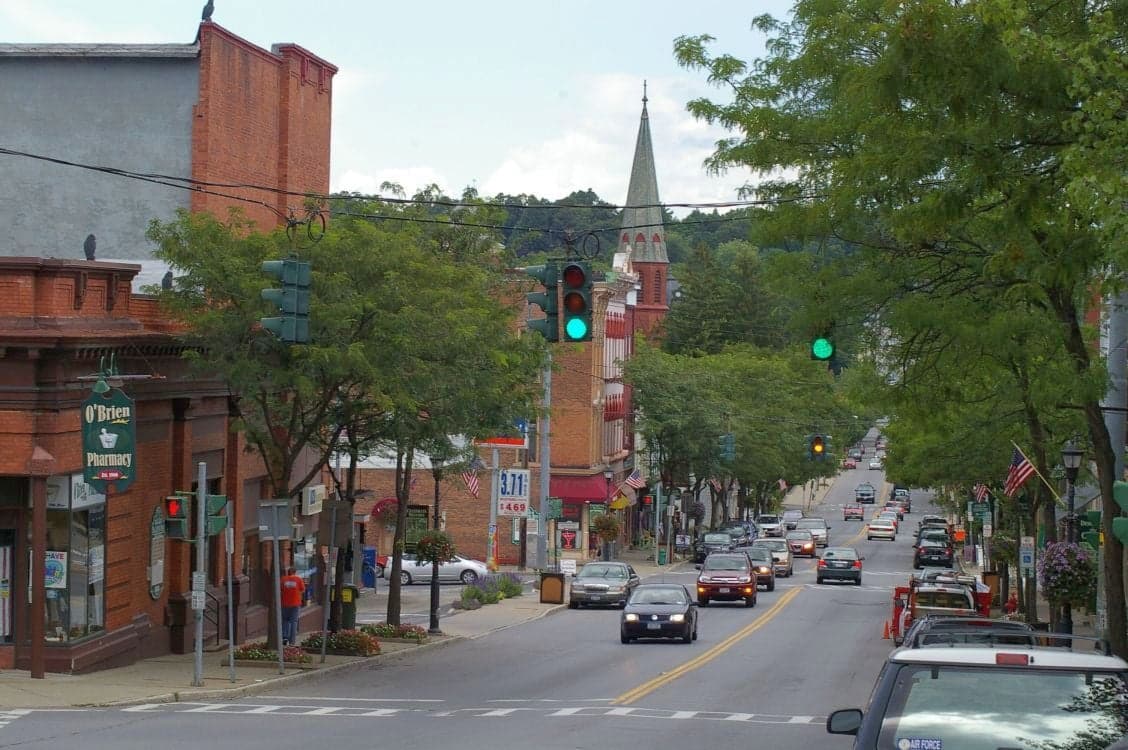
Photo: Wikipedia
Strategic Assessment of Ballston Spa, NY
Meaningful friction. Expect exposure to either population pressure, blast zones, or natural disaster risk. Consider buying a retreat property.
What does the Strategic Assessment tell us?
Our Strategic Assessment grades tactical survivability of an area. Major population centers, military targets, fallout zones, natural disasters, and border exposure all drive risk — lower exposure means a more defensible position in a crisis.
This is heavily inspired by Joel Skousen's Strategic Relocation book. Highly recommended you checkout the book ($)What does this tell us?
Our Strategic Assessment grades tactical survivability of an area. Major population centers, military targets, fallout zones, natural disasters, and border exposure all drive risk — lower exposure means a more defensible position in a crisis.
This is heavily inspired by Joel Skousen's Strategic Relocation book. Highly recommended you checkout the book ($)Strategic Pillars

Key Distances
Regional Safe Places
Below is our recommended "safe zones" in New York and the surrounding area based on our strategic heuristics. For most people, it's unrealistic to live in a “safe zone” full-time due to work, family or other personal reasons. They tend to be more rural. However, many of these areas are perfect for second homes and retreat properties that double as a vacation home or even a short-term rental.
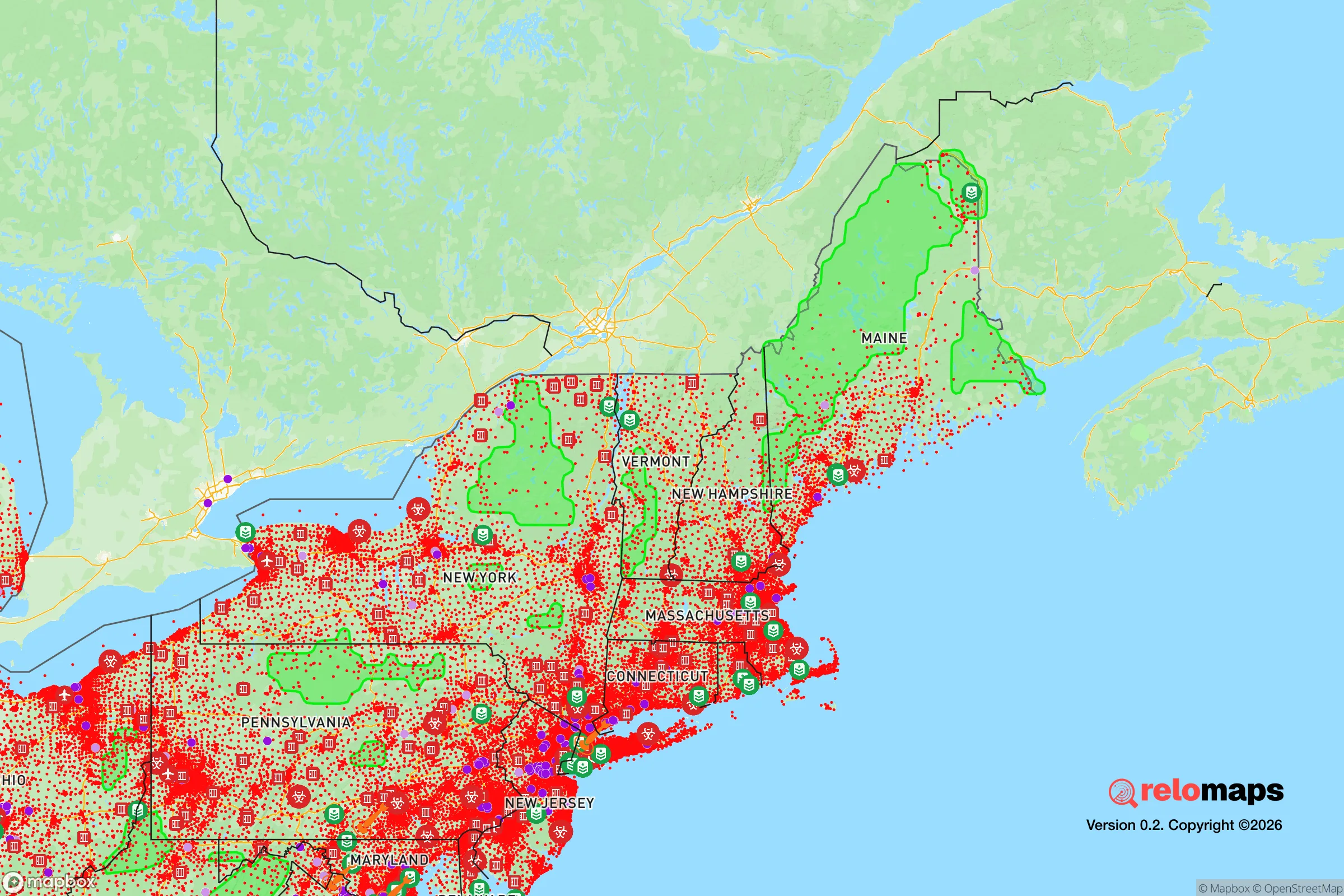
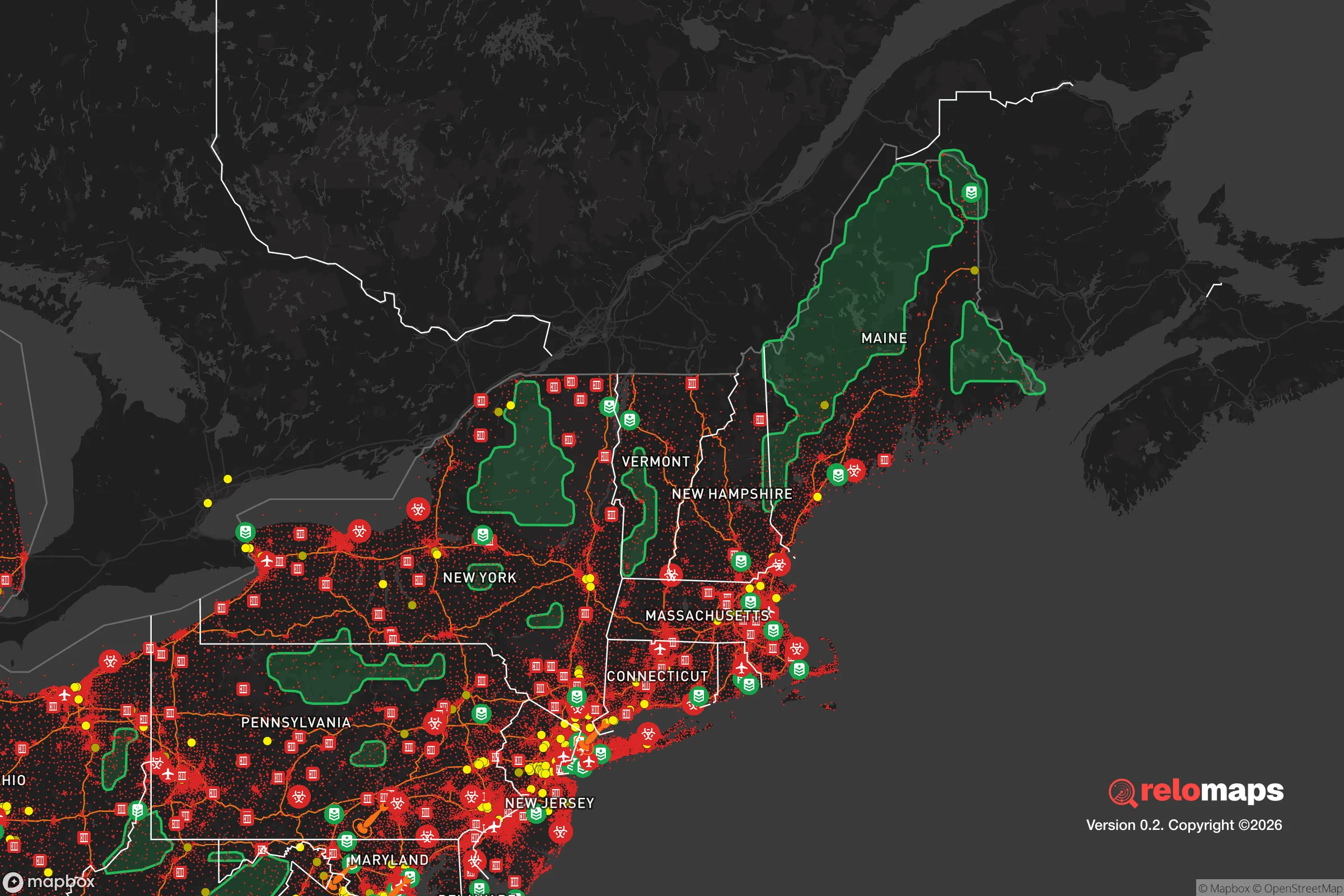


Important Note: For informational purposes only. This does not mean nothing bad ever happens in the green zones. Please use common sense. This is based on public data and modeled with AI. We tried to take a conservative approach but mistakes happen. We update this regularly as new information becomes available.
Solar Generator Recommendations
Backup power matters more here than in safer locations. We've picked three solar generators across budgets and capacity tiers — start with the budget unit if you only need a few essentials, or step up if you want to run a fridge and HVAC for days at a time.

Jackery Portable Power Station Explorer 300
Budget OptionPower on the Go: Weighing only 11 lbs, it's convenient to set up and store with book-sized foldable solar panels

BLUETTI Portable Power Station AC180
Designed for both indoor and outdoor scenarios, AC180 is highly capable as it has a robost capacity and continuous output power.

EF ECOFLOW DELTA Pro Ultra Power Station
Upgraded PickEcoFlow DELTA Pro Ultra is a whole-home energy system designed to grow with your family. Integrated with the Smart Home Panel 2, it scales to meet your evolving energy needs — keeping your home powered, intelligent, and secure through every stage of life.
We earn a commission, at no additional cost to you.
Strategic Assessment Analysis
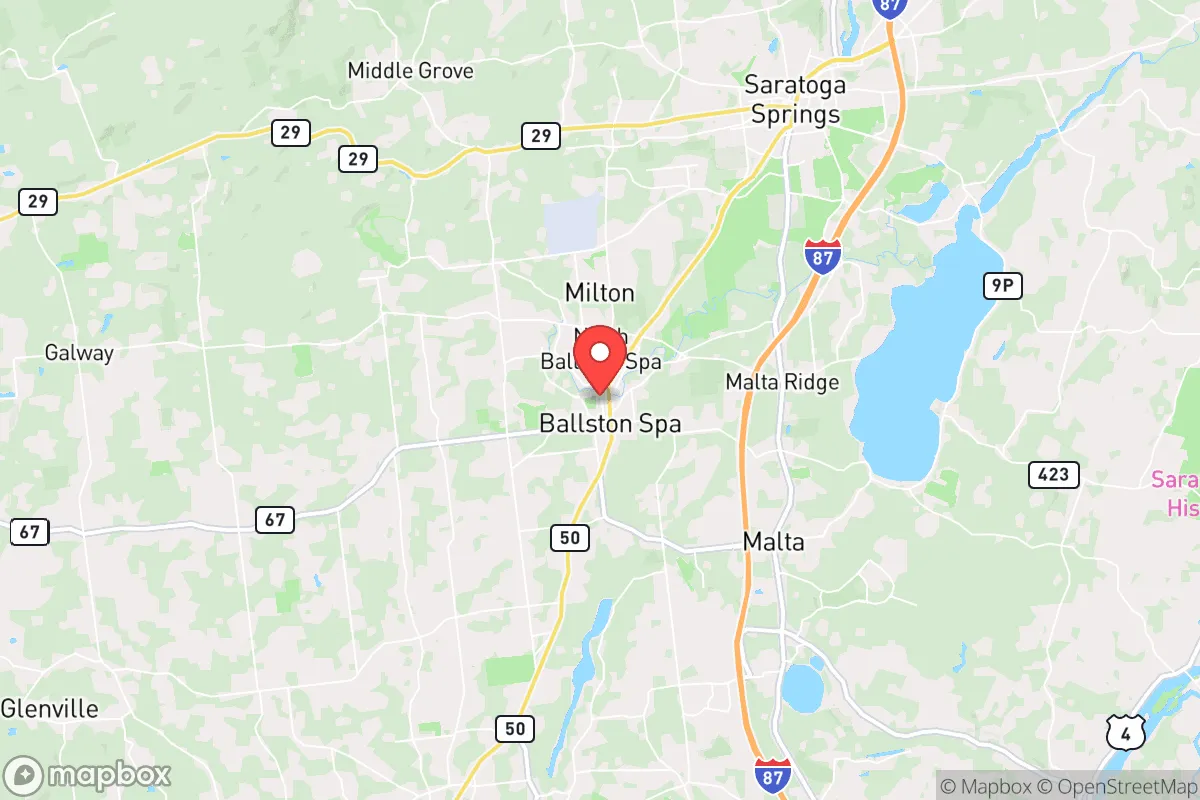
Ballston Spa, New York, offers a strategic balance of proximity to critical infrastructure and natural buffering that makes it a serious contender for relocation-minded individuals focused on resilience and self-sufficiency. Situated in Saratoga County, roughly 25 miles north of Albany, the village sits at the edge of the Capital District’s suburban sprawl while retaining a distinct small-town character and access to the Adirondack foothills. Its location along the Kayaderosseras Creek and near the Saratoga National Historical Park provides both water resources and a degree of geographic insulation, though the area is not without exposure to risks that demand careful consideration for anyone prioritizing disaster readiness.
Geographic position and natural advantages for self-sufficiency
Ballston Spa’s position in the Mohawk River Valley corridor gives it a dual advantage: it is close enough to Albany’s medical, logistical, and supply-chain hubs to access resources in a crisis, yet far enough from the urban core to avoid the worst of a metropolitan collapse scenario. The village is surrounded by a mix of active farmland, state forests, and the 12,000-acre Saratoga Spa State Park, which provides a natural buffer and potential foraging or hunting grounds. The Kayaderosseras Creek and the nearby Hudson River offer surface water sources, though treatment would be required for potable use. The region’s rolling hills and mixed hardwood forests provide natural cover and defensible terrain, with numerous dirt roads and logging trails that could serve as secondary routes if primary highways become clogged. The area’s elevation—roughly 300 to 500 feet above sea level—keeps it above the floodplain of the Hudson, reducing the risk of catastrophic flooding that plagues lower-lying communities along the river. Winters are cold and snowy, which can be a hardship for the unprepared but also a natural barrier to movement and a resource for water storage if managed properly.
Risks, exposures, and proximity to fallout-relevant landmarks
The most significant strategic vulnerability for Ballston Spa is its proximity to the Capital District’s critical infrastructure, which could become a target or a liability during a major conflict or systemic collapse. The village lies roughly 20 miles from the Albany International Airport, a dual-use civilian and military facility that hosts the New York Air National Guard’s 109th Airlift Wing. It is also within 30 miles of the Port of Albany, a major inland port handling hazardous materials including petroleum, chemicals, and fertilizers. The nearby GlobalFoundries semiconductor fabrication plant in Malta—less than 10 miles southeast—is a high-value industrial asset that could attract attention in a geopolitical crisis. While Ballston Spa itself is not a primary target, its location in the broader Capital Region means it sits within the fallout plume zone of any strike on Albany or Schenectady, depending on prevailing winds. The area is also within 50 miles of the Indian Point Energy Center (now decommissioned but still storing spent fuel) and the Nine Mile Point Nuclear Station near Oswego, though prevailing winds typically carry fallout eastward, away from Saratoga County. Natural risks are moderate: the region is in Seismic Zone 2, meaning minor earthquakes are possible but rare, and the primary weather threats are lake-effect snow, ice storms, and occasional nor’easters that can knock out power for days. Tornadoes are uncommon but not unheard of, with Saratoga County averaging one or two weak touchdowns per decade.
Practical resilience for a relocator: food, water, energy, and defensibility
For a relocator serious about self-sufficiency, Ballston Spa offers a workable but not ideal baseline. The surrounding farmland—particularly in the towns of Malta, Charlton, and Galway—produces dairy, corn, hay, and some vegetables, but the region is not a major food surplus area. The growing season is short (roughly 140 frost-free days), limiting year-round home food production without greenhouse infrastructure. Local farmers’ markets operate from May through October, and the Saratoga Farmers’ Market provides a reliable source of fresh produce, meat, and eggs during that window. For long-term storage, the area has several feed-and-seed stores and a Tractor Supply in nearby Wilton, but bulk grain and dry goods would need to be sourced from Albany or via mail order. Water is more promising: the village draws from the Kayaderosseras Creek and the Saratoga Lake aquifer, and many rural properties have private wells with depths of 100 to 300 feet, providing a resilient water source independent of municipal systems. The area’s average annual precipitation of 40 inches means rainwater catchment is viable, though winter freezing requires insulated storage. Energy resilience is mixed. The region is served by National Grid, with above-ground power lines that are vulnerable to ice storms and wind; the 2021 ice storm left parts of Saratoga County without power for up to 10 days. Solar potential is moderate—the area gets about 200 sunny days per year, below the national average—but south-facing slopes in the surrounding hills can support off-grid solar arrays with battery storage. Wood heating is common and practical, with abundant hardwood forests providing fuel, though air quality regulations in the village limit outdoor wood boilers. Defensibility is decent: the village’s compact layout with narrow streets and a central green makes it hard to approach unseen, and the surrounding rural properties offer good fields of fire and natural chokepoints on the two-lane roads leading in. However, the area’s proximity to the Northway (I-87) means that any large-scale evacuation or refugee flow from Albany would pass within a few miles, potentially drawing unwanted attention.
Overall, Ballston Spa presents a moderate-to-strong strategic picture for a relocator who values proximity to resources without being embedded in a high-risk urban center. Its natural water availability, defensible terrain, and access to farmland and forest make it a viable base for a prepared household, but the short growing season, moderate solar potential, and proximity to high-value infrastructure in the Capital District are real constraints. For a family or individual willing to invest in greenhouse infrastructure, a well, and a wood-burning backup system, the area offers a realistic path to resilience. The key trade-off is between the convenience of being near Albany’s hospitals, supply chains, and transportation hubs and the risk of being caught in the fallout zone of a regional crisis. For those who prioritize self-sufficiency over urban access, the deeper Adirondack communities to the north—like Lake George or Warrensburg—offer greater isolation, but at the cost of harsher winters and thinner supply lines. Ballston Spa is a middle-ground option: not a fortress, but a defensible outpost with a solid foundation for those who plan ahead.

* Values derived from national, state, county, city and local statistics and may differ in a specific area. Last updated: 2026-09-05T03:06:35.000Z
Narrative content on this page is AI-generated and may contain mistakes. Verify any details that matter before acting on them.
ReloMaps may earn a commission from affiliate links at no extra cost to you.

