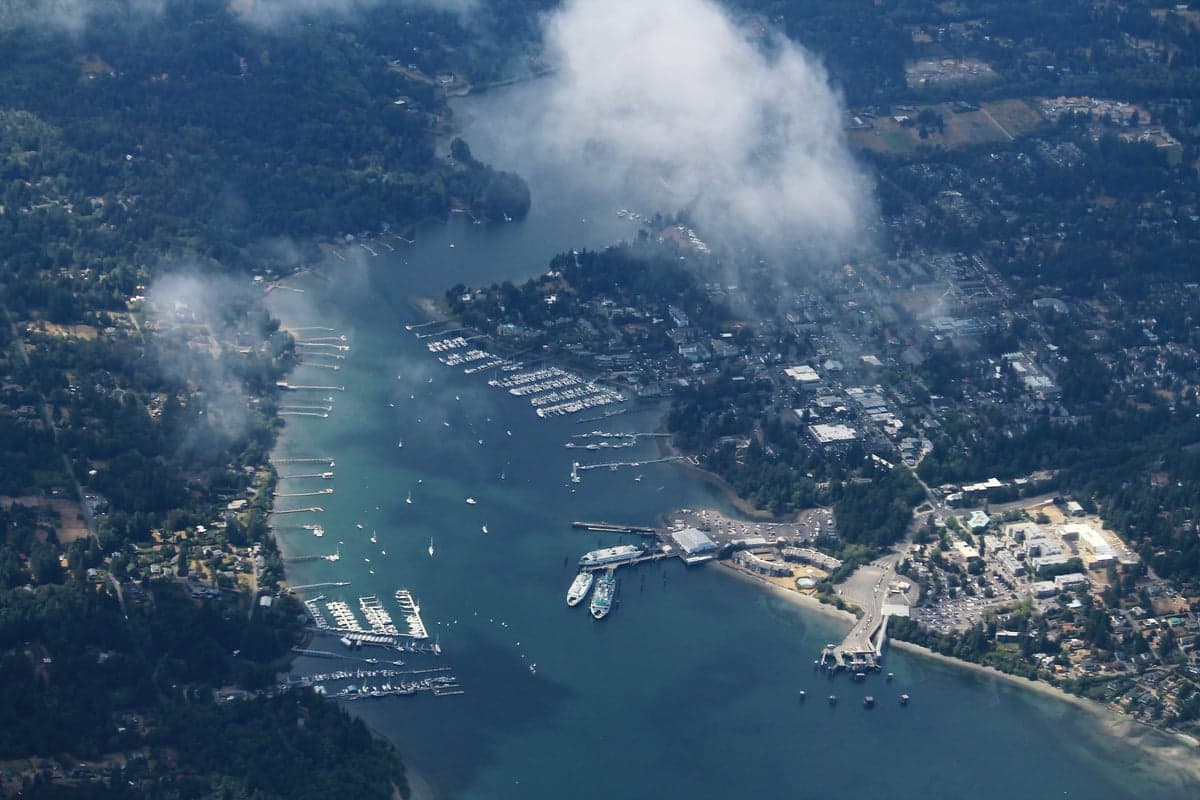
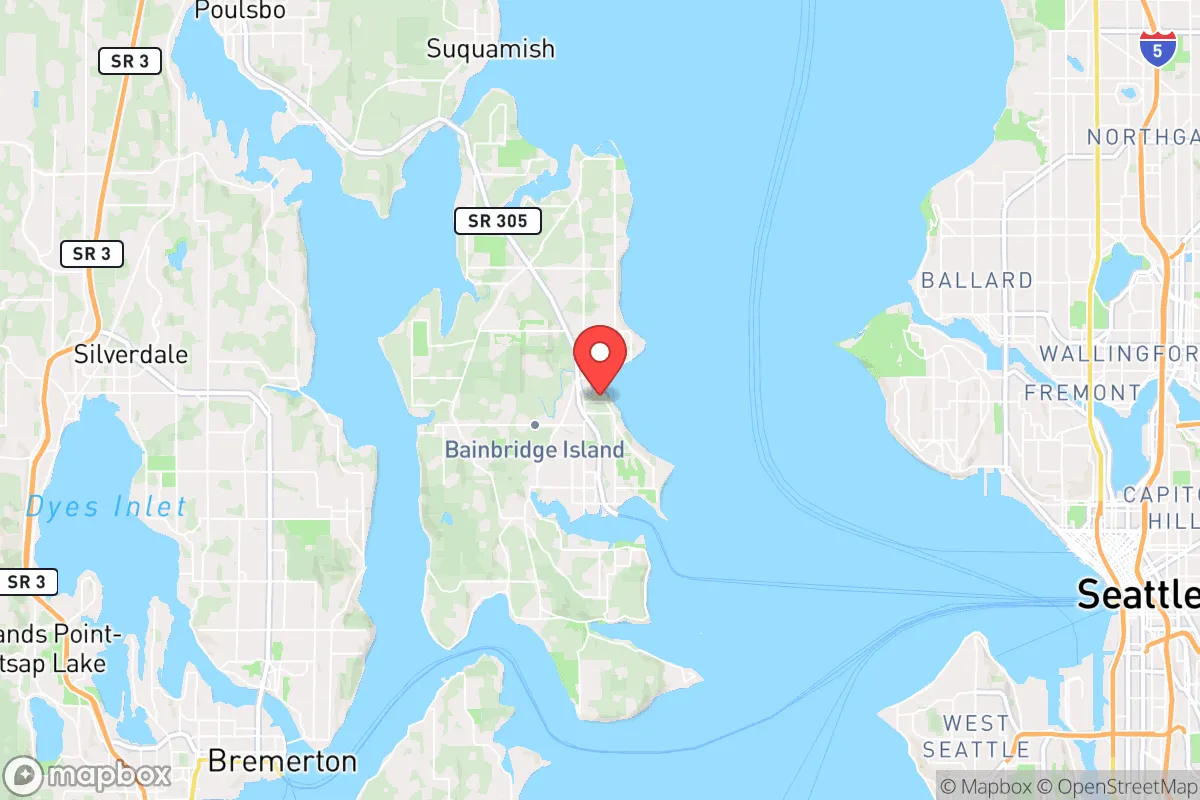
Photo: Wikipedia
Demographics of Bainbridge Island, WA
Affluence Level in Bainbridge Island, WA
A wealthy area with high-earning, well-educated households. Incomes, home values, and educational attainment meaningfully outpace national averages.
People of Bainbridge Island, WA
Today, Bainbridge Island’s 24,607 residents form one of the most highly educated and racially distinct communities in Washington State, with 75.0% holding a college degree and a population that is 83.3% white. The island is known for its progressive-leaning politics, strong environmental ethos, and a density of artists and tech commuters that sets it apart from the rest of Kitsap County. Despite its small size, the population carries a layered history of indigenous displacement, Japanese American farming, and a recent wave of affluent in-migration from Seattle.
How the city was settled and grew
The original inhabitants were the Suquamish people, who maintained seasonal camps and shellfish harvesting sites along the island’s shoreline for thousands of years before European contact. The first permanent white settlers arrived in the 1850s, drawn by the Donation Land Claim Act, which granted 320 acres to married couples. These early homesteaders cleared land for farms and logged the dense old-growth forests, establishing the island’s first commercial center at Winslow, the historic downtown core that remains the island’s commercial and ferry hub. By the 1880s, a second wave of immigrants—primarily Japanese laborers recruited to work in the island’s strawberry fields and sawmills—had settled in the Eagledale neighborhood, building a tight-knit community around the Eagledale Buddhist Temple. The Japanese American population grew to roughly 10% of the island by 1940, concentrated in Eagledale and the Fletcher Bay area, before the forced removal and internment of 1942 emptied those neighborhoods overnight. Post-war, the island’s population remained small and predominantly white, with a mix of farmers, fishermen, and a growing number of Seattle commuters drawn by the newly expanded Washington State Ferries service.
Modern era (post-1965)
The 1965 Hart-Cellar Act had a limited direct effect on Bainbridge Island, as the island’s foreign-born population today is just 3.1%, far below the national average. Instead, the major demographic shift after 1965 was domestic: the completion of the Agate Pass Bridge in 1950 and the rise of Seattle’s tech economy in the 1990s transformed the island into a bedroom community for Amazon and Microsoft employees. This wave of affluent, college-educated in-migration concentrated in the Winslow core and the newer subdivisions of Wing Point and Manzanita Bay, where large waterfront homes replaced older cottages. The island’s racial composition shifted only modestly during this period. The white share remains high at 83.3%, while Hispanic residents make up 4.3%, and East/Southeast Asian communities (Chinese, Japanese, Korean, Filipino) account for 2.3%. The Indian subcontinent population stands at 1.6%, a small but notable presence concentrated among tech professionals living in the Lynwood Center and Rolling Bay areas. The Black population remains negligible at 0.2%. The island’s Japanese American community, though much smaller than before the war, has maintained a cultural presence through the Bainbridge Island Japanese American Exclusion Memorial in Eagledale.
The future
The population is projected to grow slowly, constrained by the island’s limited land supply and strict growth-management policies that cap new housing units. The white share is likely to decline gradually as the island’s high housing costs—median home prices above $1 million—continue to attract a narrow demographic of wealthy, mostly white professionals from Seattle, while younger and more diverse families are priced out. The East/Southeast Asian and Indian subcontinent populations may grow slightly as tech-adjacent professionals seek the island’s schools and quality of life, but these groups will likely remain small and dispersed rather than forming new ethnic enclaves. The Hispanic population, concentrated in service-industry roles, faces the greatest housing pressure and may decline if affordable housing is not expanded. The island’s cultural identity is becoming more polarized: a long-standing progressive, environmentalist ethos clashes with newer residents who commute to high-paying tech jobs and demand more services. The next 10–20 years will likely see Bainbridge Island become even more economically and educationally stratified, with a smaller, wealthier, and whiter core population, while the surrounding Kitsap County absorbs the region’s demographic diversity.
For someone moving to Bainbridge Island now, the bottom line is this: you are joining a community that is highly educated, overwhelmingly white, and deeply shaped by its history of Japanese American farming and recent tech-driven affluence. The island offers excellent schools, low crime, and a strong sense of place, but it comes with a high cost of entry and limited racial or economic diversity. If you value a tight-knit, politically engaged, and environmentally conscious community—and can afford the price of admission—Bainbridge Island remains one of the most distinctive small cities in the Pacific Northwest.

* Values derived from national, state, county, city and local statistics and may differ in a specific area. Last updated: 2026-10-29T04:38:01.000Z
Narrative content on this page is AI-generated and may contain mistakes. Verify any details that matter before acting on them.
ReloMaps may earn a commission from affiliate links at no extra cost to you.

