Photo: Wikipedia
Quality of Life in Union County
A livable area that tracks near national norms for affordability, walkability, and neighborhood health.
What does Quality of Life tell us?
Quality of Life measures an area by evaluating factors like cost of living, nearby amenities, country club access, airport proximity, socioeconomic signals and neighborhood character. For large states, this is a general average — quality of life can vary dramatically between metro areas, suburbs, and rural communities within the same state.
What does this tell us?
Quality of Life measures an area by evaluating factors like cost of living, nearby amenities, country club access, airport proximity, socioeconomic signals and neighborhood character. For large states, this is a general average — quality of life can vary dramatically between metro areas, suburbs, and rural communities within the same state.
Cost of Living
41% below national average
145%
The Real Cost of Living in Union County for 2026
| Tier | Individual | Family (4) |
|---|---|---|
| Survival | $13k | $25k |
| Comfortable | $24k | $35k |
| Luxury | $91k+ | $141k+ |
| Elite (Top 5%) | $127k+ | $197k+ |
Quality-of-Life Analysis
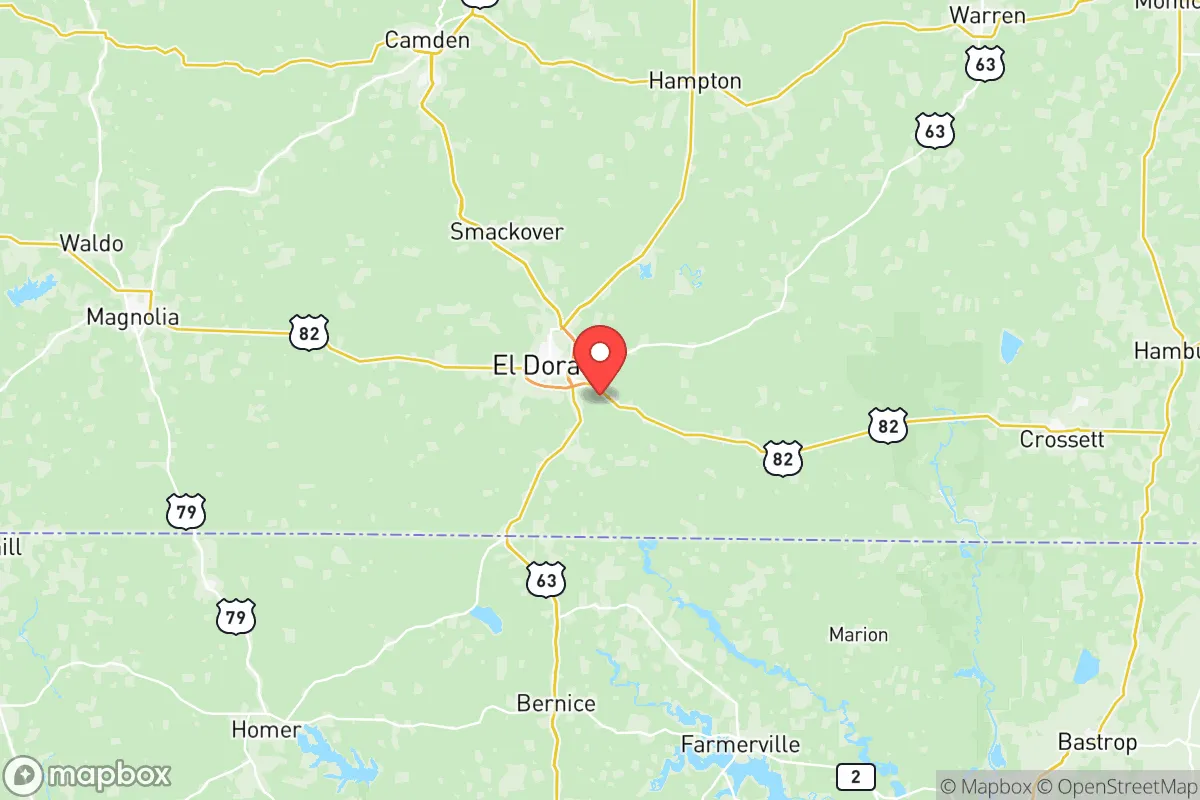
Union County in southern Arkansas offers a distinct quality-of-life spectrum anchored by the oil-and-timber hub of El Dorado, then fanning out into quiet small towns and deep-river bottomlands. The county attracts retirees and workers drawn to its ultra-low cost of living (cost-of-living index 59, well below the U.S. average of 100), outdoor enthusiasts who hunt and fish along the Ouachita River, and families seeking the safety and space of rural communities. Life here ranges from the modest urban amenities of the county seat to the near-total solitude of wooded hamlets like Huttig or Calion.
Largest town(s) & population centers
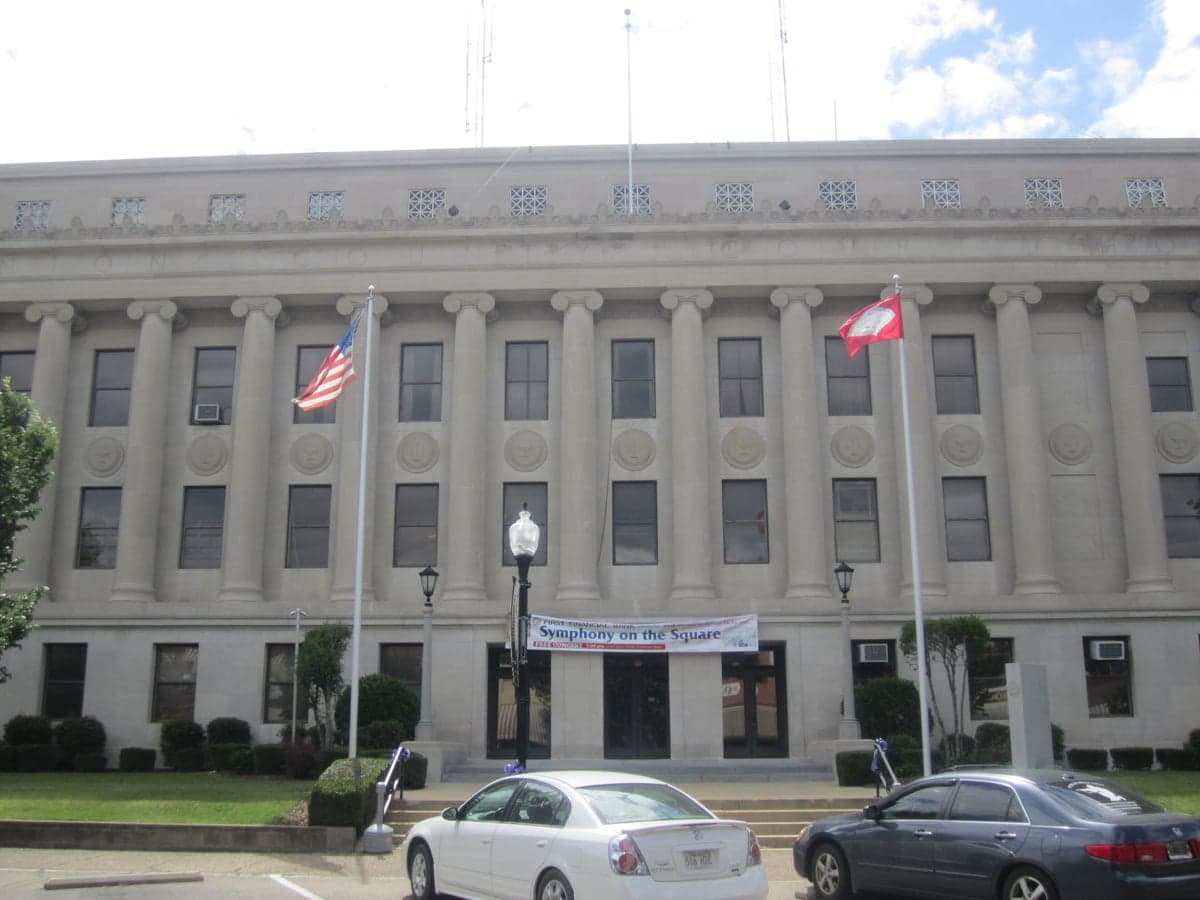
El Dorado is the county’s undisputed population center and economic engine, home to roughly 17,000 residents. Daily life there revolves around the historic downtown Courthouse Square, the South Arkansas Arts Center, and a handful of local employers like Murphy USA (corporate headquarters) and medical facilities such as the Medical Center of South Arkansas. The town offers a compact retail strip along North West Avenue, a Walmart Supercenter, and regional dining options. Commute times average about 19 minutes across the county, and in El Dorado most errands are within a 10-minute drive. The median home value in the county sits at $114,700, and median rent is $825 – figures that reflect El Dorado’s affordable housing stock of 1940s bungalows, 1970s ranch homes, and newer subdivisions on the outskirts.
Smaller towns & rural pockets
South of El Dorado, Smackover (population ~1,800) is a former oil-boom town with a strong sense of history, anchored by the Arkansas Museum of Natural Resources and the annual Oil Town Festival. Northeast, Norphlet (population ~800) offers a quiet, tree-lined community with a K-12 school and proximity to the Ouachita River. East along Highway 82, Junction City sits on the Louisiana line as a small cross-border hamlet with a few gas stations and a Dollar General. Deep in the timberlands, Huttig (population ~500) and Calion (population ~400) are unincorporated-adjacent communities where most homes are manufactured or older stick-built, and residents rely on El Dorado for groceries and medical care. Strong (population ~500) lies north on Highway 63, a crossroads with a post office and a handful of churches. These smaller towns offer very low home prices – often under $80,000 – but limited job opportunities beyond forestry, oil-field work, and small-scale retail.
Cost & lifestyle range
The cost of living in Union County is 41% below the U.S. average, but material differences exist between the county’s ends. In El Dorado, a three-bedroom home in a middle-class neighborhood like Hillsboro or the Country Club area runs $120,000–$150,000, while a comparable property in Smackover or Norphlet might cost $90,000–$110,000. At the cheapest end, rural properties in Huttig or Calion can be found for under $60,000, often with acreage. Renters in El Dorado pay $750–$900 for a two-bedroom apartment; in smaller towns, the rental pool is thin but often under the county median of $825. Amenities follow the same gradient: El Dorado has a public library, a YMCA, a movie theater, and two grocery chains (Brookshire’s and Walmart), while Smackover has a single grocery store and a hardware store, and Huttig has no grocery store at all, forcing a 20- to 30-minute drive for food. The tradeoff is space and quiet – retirees and remote workers who can tolerate the longer drive to El Dorado for essentials often choose the rural pockets for the lower taxes and larger lots.
The county is best suited for people who value low overhead, a slow pace, and no traffic – particularly retirees, oil-and-gas workers, teachers, and remote professionals who don’t need big-city amenities. Families who prefer a walkable downtown with schools within walking distance will gravitate toward El Dorado’s central neighborhoods, while those who want acreage and privacy will find their niche in the surrounding timber communities. Union County offers one of Arkansas’s most affordable housing markets, but its limited retail and entertainment options mean residents must be self-sufficient or willing to make a 40-minute drive to Monroe, Louisiana, for wider choices.

Crime in Union County
Crime rates similar to the national median for U.S. locations.
Violent CrimeViolent Crime Analysis
Property CrimeProperty Crime Analysis
Crime Analysis
Union County, Arkansas, experiences violent and property crime rates that exceed both state and national averages, creating a safety landscape that demands careful attention from potential residents. The county's violent crime rate stands at 523.1 incidents per 100,000 residents, while property crime occurs at a rate of 1,634.7 per 100,000, figures that place it among the higher-risk areas in southern Arkansas. These numbers reflect a community where crime patterns are heavily influenced by the economic and demographic dynamics of its largest city, El Dorado, as well as smaller towns like Smackover, Huttig, and Junction City.
Crime in context
Union County's violent crime rate of 523.1 per 100,000 is roughly 40% higher than the national average and significantly above the Arkansas state rate of approximately 540 per 100,000, placing it in the upper tier of counties statewide. Property crime at 1,634.7 per 100,000 is also elevated, exceeding the national average by about 15%. For comparison, neighboring counties like Ouachita and Columbia report lower violent crime rates, while urban centers such as Little Rock and Pine Bluff post even higher figures. The data suggests that Union County's crime problem is concentrated rather than uniform, with El Dorado—the county seat and economic hub—driving a disproportionate share of incidents. Smackover, a smaller oil-and-gas community, typically reports lower crime volumes, while Huttig and Junction City, which border Louisiana, see periodic spikes tied to regional drug trafficking routes.
What residents experience
Residents of Union County most frequently encounter property crimes—burglary, larceny-theft, and motor vehicle theft—which account for roughly three-quarters of all reported incidents. In El Dorado, neighborhoods near the downtown core and along major corridors like North West Avenue and South College Avenue see higher rates of break-ins and vehicle theft, while outlying subdivisions and rural areas report fewer incidents. Violent crime, though less common, is a serious concern: aggravated assault makes up the majority, with robbery and homicide occurring at rates that alarm local safety advocates. The county's judicial system, overseen by the 13th Judicial District, has faced criticism for what some residents describe as lenient sentencing, particularly in drug-related and property crime cases. Progressive-leaning policies in the district attorney's office, which emphasize diversion programs and reduced incarceration for nonviolent offenders, have been cited by community watch groups as contributing to repeat offenses and a perception that criminals face insufficient consequences. This approach, while intended to reduce recidivism, has left some victims feeling that justice is incomplete, especially in El Dorado where property crime recidivism is notable.
Neighborhood-level variation and safer areas
Safety in Union County varies sharply by location. El Dorado's historic districts, such as the Fairview and College Heights neighborhoods, are generally considered safer, with lower crime rates than the city's central and southern sections. Smackover, with its tight-knit community and smaller population, reports violent crime rates roughly half the county average, making it a preferred option for families. Huttig and Junction City, both economically distressed, see elevated property crime and occasional violent incidents linked to cross-border activity from Louisiana. Rural areas outside El Dorado, particularly along Highway 167 and near the Felsenthal National Wildlife Refuge, experience minimal crime, though response times from the Union County Sheriff's Office can be longer. For those considering relocation, focusing on the northern and western parts of the county, or smaller towns like Norphlet and Calion, offers a notably safer daily experience than the El Dorado core.
* Values derived from national, state, county, city and local statistics and may differ in a specific area. Last updated: 2026-06-24T22:33:45.000Z
Narrative content on this page is AI-generated and may contain mistakes. Verify any details that matter before acting on them.
ReloMaps may earn a commission from affiliate links at no extra cost to you.

