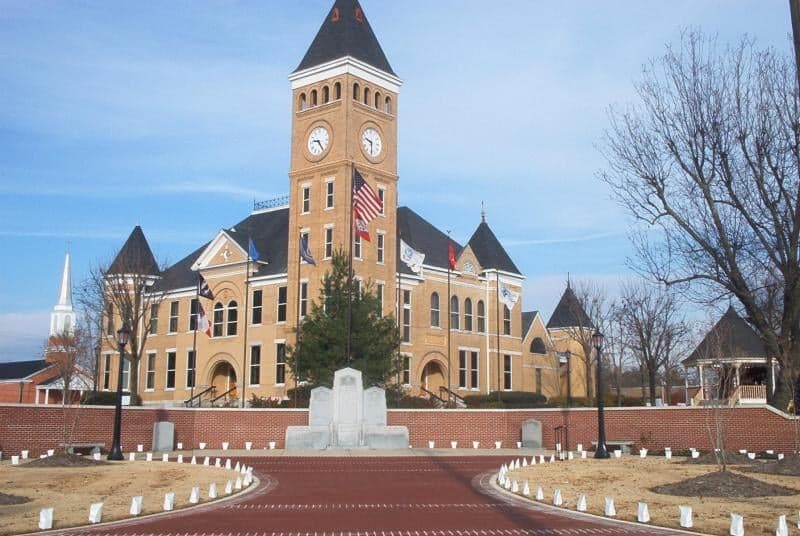
Photo: Wikipedia
Quality of Life in Saline County
A livable area that tracks near national norms for affordability, walkability, and neighborhood health.
What does Quality of Life tell us?
Quality of Life measures an area by evaluating factors like cost of living, nearby amenities, country club access, airport proximity, socioeconomic signals and neighborhood character. For large states, this is a general average — quality of life can vary dramatically between metro areas, suburbs, and rural communities within the same state.
What does this tell us?
Quality of Life measures an area by evaluating factors like cost of living, nearby amenities, country club access, airport proximity, socioeconomic signals and neighborhood character. For large states, this is a general average — quality of life can vary dramatically between metro areas, suburbs, and rural communities within the same state.
Cost of Living
19% below national average
127%
The Real Cost of Living in Saline County for 2026
| Tier | Individual | Family (4) |
|---|---|---|
| Survival | $16k | $29k |
| Comfortable | $41k | $60k |
| Luxury | $117k+ | $181k+ |
| Elite (Top 5%) | $137k+ | $213k+ |
Quality-of-Life Analysis
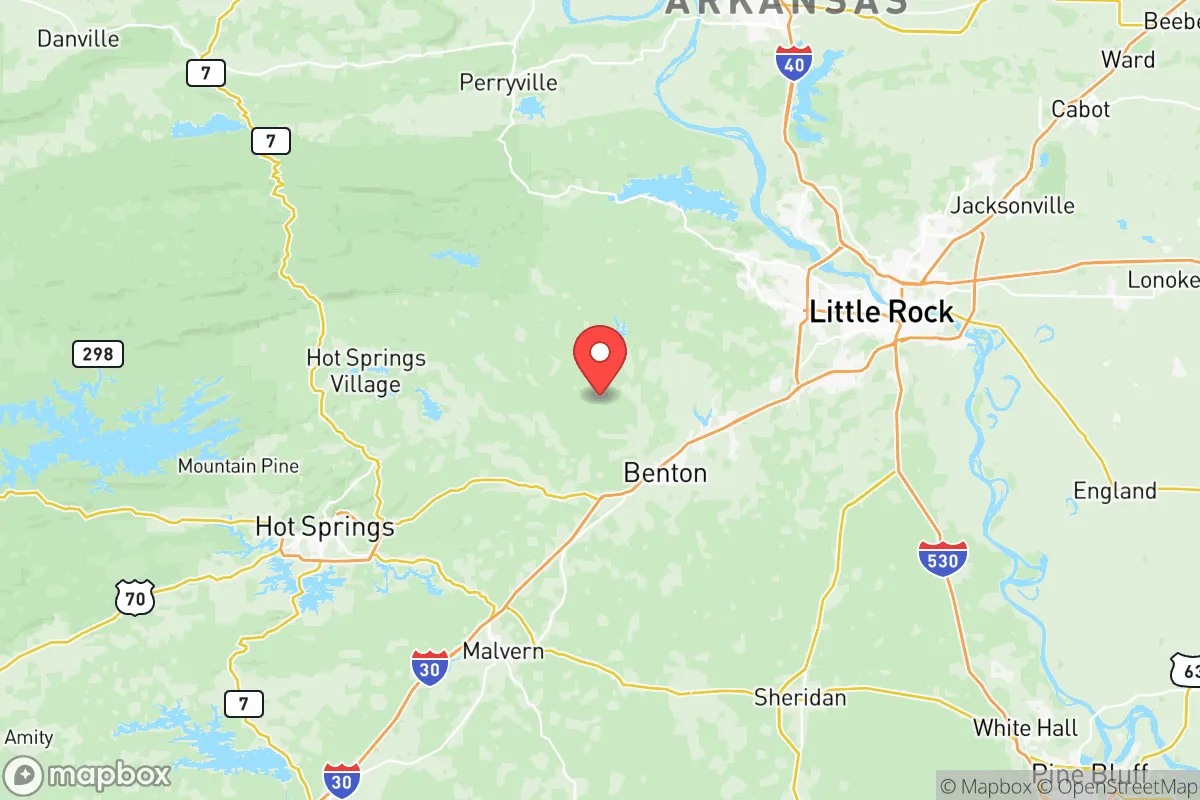
Saline County, Arkansas, offers a broad quality-of-life spectrum that ranges from the suburban convenience of its largest city, Benton, to the quiet, unincorporated crossroads of communities like Paron and Lonsdale, making it a county where both commuters and rural homesteaders find their footing. The county’s character is defined by this internal contrast: the southern and central corridors along Interstate 30 and U.S. Highway 67 pulse with retail, schools, and medical services, while the northern and western reaches—toward the Ouachita National Forest—thin out into timberland, pasture, and small clusters of homes. This mix draws families seeking good schools and reasonable home prices, retirees looking for lake-adjacent property, and workers who want a short commute to Little Rock without paying Pulaski County prices.
Largest town(s) & population centers
Benton, the county seat, is the largest population center with roughly 36,000 residents, and it functions as the county’s commercial and governmental hub. Daily life here revolves around the I-30 corridor, where big-box retail, chain restaurants, and the Saline County Courthouse anchor a typical suburban routine. The city’s school system is consistently rated among the top in central Arkansas, and the nearby Saline River and Lake Norrell provide outdoor recreation without leaving the city limits. Just north of Benton, Bryant (population about 21,000) is the county’s second-largest town and arguably its fastest-growing suburb, with new housing developments, a strong public school system, and a direct 20-minute commute to downtown Little Rock. Bryant’s lifestyle is distinctly family-oriented, with youth sports leagues, a growing downtown dining scene, and easy access to the Arkansas River Trail system. Together, Benton and Bryant form a continuous suburban corridor that offers the most amenities in the county, including the Saline Memorial Hospital, multiple grocery options, and the Central Arkansas Library System’s Saline County branches.
Smaller towns & rural pockets
Outside the Benton-Bryant axis, the county’s smaller communities offer a markedly different pace. Shannon Hills, a town of about 3,500 residents, sits just south of Little Rock and retains a small-town feel with limited commercial development, appealing to those who want proximity to the capital without the density. To the west, the unincorporated community of Paron (population roughly 500) is a gateway to the Ouachita National Forest, where homes sit on acreage and the nearest grocery store is a 20-minute drive. Lonsdale, another unincorporated area near the Hot Spring County line, is even more sparsely populated, with a single general store and a volunteer fire department serving a scattering of houses on winding county roads. The town of Haskell (population about 4,000) sits along Highway 70 west of Benton and offers a middle ground: a few local restaurants, a post office, and a public school, but no major retail, so residents commute to Benton for most shopping. These smaller pockets are where the county’s rural character is most pronounced, with residents often relying on well water, septic systems, and gravel driveways.
Cost & lifestyle range
The cost of living across Saline County is uniformly low compared to national averages—the county’s overall cost-of-living index sits at 81 (100 is the U.S. average)—but the range of housing costs and lifestyle trade-offs is significant. At the higher end, Benton and Bryant offer median home values around $211,700 and median rents of $980, with newer subdivisions, sidewalks, and HOA amenities. At the lower end, rural properties in Paron or Lonsdale can be found for under $150,000, though buyers must factor in longer commutes (the county average commute is 25.4 minutes, but residents in the far west often drive 35–40 minutes one way to Benton or Little Rock) and the lack of municipal services like trash pickup or street lighting. The lifestyle range is equally broad: a family in Bryant can walk to a neighborhood park and drive five minutes to a Walmart, while a household in rural Haskell might have a 15-acre lot, a private pond, and no neighbors within sight. The trade-off is clear—amenities and convenience in the towns versus space and quiet in the countryside—and both options are affordable by national standards.
Saline County is best suited for people who value a low cost of living and want a clear choice between suburban convenience and rural privacy, all within a 30-minute drive of a major city. Families who prioritize schools and short commutes will gravitate toward Benton and Bryant, while those seeking acreage, hunting land, or a slower pace will find their niche in the county’s western and northern reaches. The county’s internal diversity means that a single household can move from a subdivision to a farmstead without leaving the same school district, making it a flexible option for a wide range of Arkansas-bound relocators.

Crime in Saline County
Crime rates similar to the national median for U.S. locations.
Violent CrimeViolent Crime Analysis
Property CrimeProperty Crime Analysis
Crime Analysis
Saline County, Arkansas, presents a mixed safety picture for potential residents. The county’s violent crime rate of 496.8 per 100,000 residents and property crime rate of 1,552.8 per 100,000 place it above national averages, though significant variation exists between communities like Benton, Bryant, and the more rural areas of the county. Understanding these numbers requires a close look at how local law enforcement and the judicial system handle crime, particularly in a county that sits adjacent to the more progressive and crime-challenged Pulaski County (Little Rock).
Crime in context
Saline County’s violent crime rate is roughly 40% higher than the national average of approximately 370 per 100,000, while its property crime rate exceeds the national figure by about 15%. However, these county-wide statistics mask a critical dynamic: the county’s proximity to Little Rock. As a bedroom community for the state capital, Saline County absorbs some of the spillover crime from Pulaski County, where violent crime rates have historically been among the highest in the state. The 22nd Judicial District, which covers Saline County, has generally maintained a more conservative approach to prosecution compared to the 6th Judicial District covering Little Rock, where progressive district attorneys have been criticized for lenient plea deals and reduced sentencing. This contrast matters: while Saline County’s rates are elevated, they remain substantially lower than those in Pulaski County, where violent crime often exceeds 1,000 per 100,000.
What residents experience
Property crime, particularly vehicle break-ins and residential burglaries, is the most common safety concern for Saline County residents. The towns of Benton and Bryant, which together form the county’s commercial and population core, see the highest concentration of property offenses due to their retail density and highway access along Interstate 30. Residents in these areas report that unlocked vehicles and visible valuables are frequent targets, with thefts often tied to transient offenders moving along the I-30 corridor from Little Rock. Violent crime, while less common, is not evenly distributed. Benton records the majority of the county’s aggravated assaults and robberies, many of which are concentrated near apartment complexes and commercial strips rather than in established subdivisions. In contrast, the smaller communities of Shannon Hills, Haskell, and Traskwood report far fewer incidents, with violent crime rates that are a fraction of the county average. The city of Alexander, which straddles the Saline-Pulaski county line, experiences a higher incidence of crime than other Saline County towns, reflecting its proximity to Little Rock’s higher-crime zones.
Neighborhood-level variation within Saline County is pronounced. The eastern side of the county, closest to the Pulaski County line, sees more crime spillover, while the western and southern areas—including the rural stretches around Paron and Lonsdale—remain very safe. The presence of the Saline County Sheriff’s Office and local police departments in Benton and Bryant provides responsive law enforcement, but the judicial philosophy of the 22nd Judicial District is a key factor for residents to consider. Unlike the progressive prosecutor offices found in larger urban counties, Saline County’s district attorney has maintained a focus on securing convictions and meaningful sentences for violent offenders. This conservative approach to criminal justice means that while property crime remains a nuisance, violent offenders are less likely to be quickly returned to the streets—a dynamic that directly impacts the safety of families and the public. For those considering a move, choosing a home in the western half of the county or in smaller towns like Haskell offers the best balance of low crime rates and proximity to the Little Rock metro’s employment base.
* Values derived from national, state, county, city and local statistics and may differ in a specific area. Last updated: 2026-07-27T17:51:05.000Z
Narrative content on this page is AI-generated and may contain mistakes. Verify any details that matter before acting on them.
ReloMaps may earn a commission from affiliate links at no extra cost to you.

