Photo: Wikipedia
Demographics of Saline County
Affluence Level in Saline County
A middle-class area roughly in line with national averages across income, home values, education, and employment.
People of Saline County
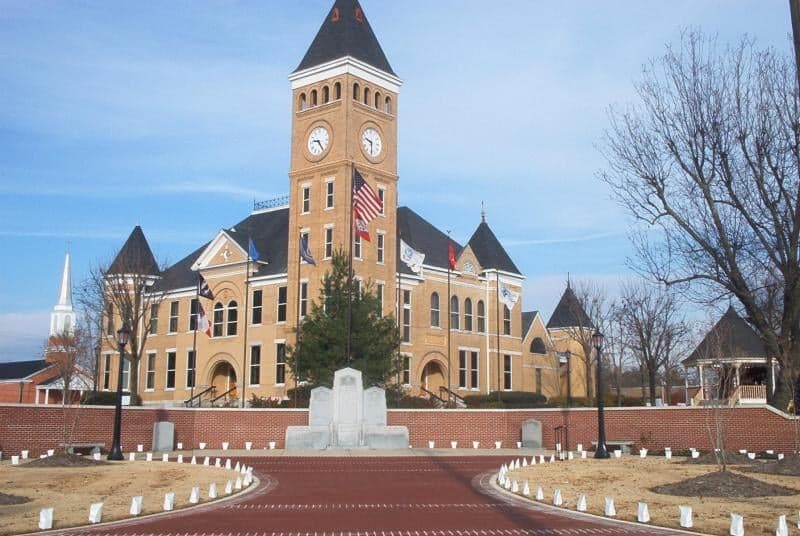
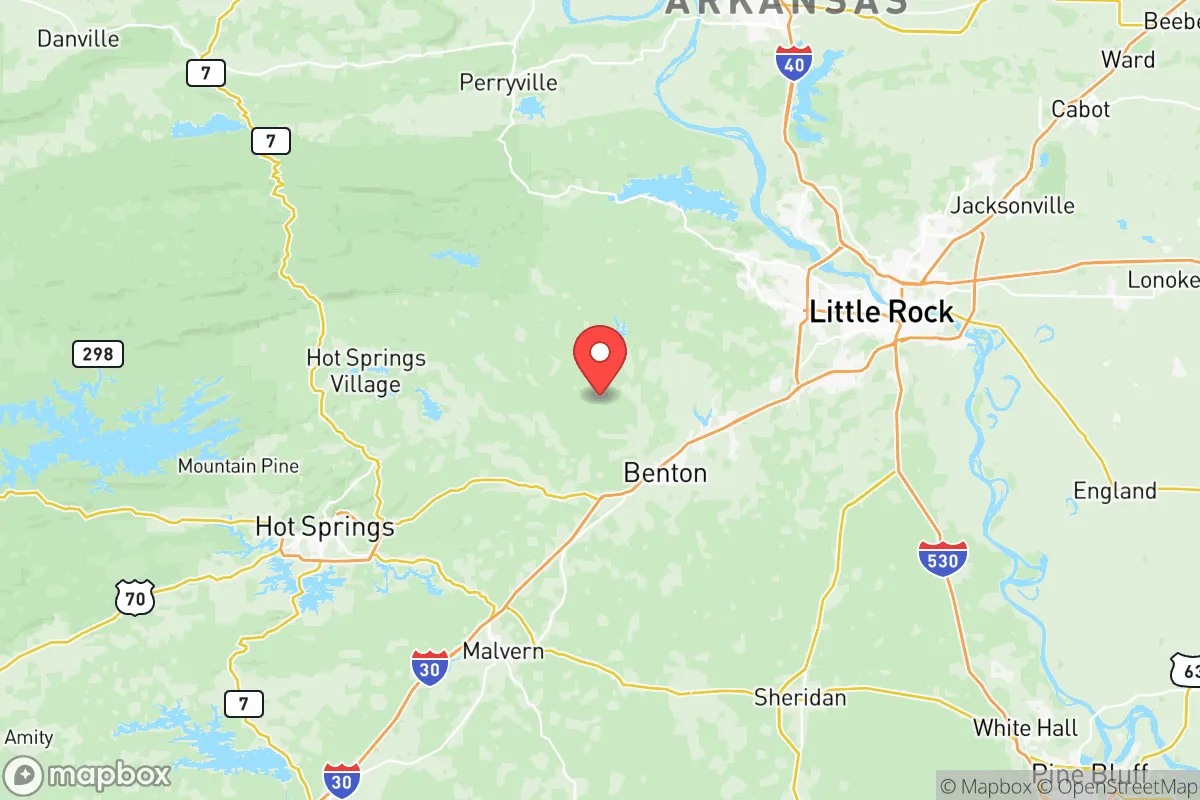
Today, Saline County, Arkansas, is home to roughly 125,724 residents, a population that is predominantly white (79.4%) with a growing Hispanic (7.0%) and Black (8.3%) presence, and a notably low foreign-born share of just 2.2%. The county’s character is shaped by its position as a suburban and exurban extension of Little Rock, blending a historically rural, working-class identity with newer commuter-oriented subdivisions. Residents often describe the area as a quieter, more conservative alternative to the capital, with a strong sense of local community centered around the county seat of Benton and the growing city of Bryant.
Settlement & growth (pre-1960)
Before American settlement, the land that is now Saline County was part of the traditional territory of the Quapaw and Caddo peoples, who used the region’s abundant timber and waterways for hunting and fishing. French and Spanish explorers passed through during the 17th and 18th centuries, but no permanent European colonies were established. The area remained sparsely populated until after the Louisiana Purchase (1803) and the subsequent forced removal of Native nations under the Indian Removal Act of 1830.
The first major wave of American settlers arrived in the 1830s and 1840s, primarily Scots-Irish and English families moving west from Tennessee, Kentucky, and the Carolinas. They were drawn by cheap land and the promise of subsistence farming in the Ouachita foothills. These early settlers founded the communities of Benton (1836) and Bryant (originally called "Bryant's Station" in the 1850s), establishing a pattern of small, dispersed farmsteads. The county was officially formed in 1835, and its name—derived from the salt springs in the area—reflected the early economy of salt production, which was a critical industry for preserving food.
After the Civil War, the economy shifted toward timber and agriculture, with cotton and corn as primary crops. A small number of freed Black families settled in the county, mostly in rural pockets near Bauxite, a town that would later boom due to the discovery of the mineral that gave it its name. The arrival of the railroad in the 1880s connected Saline County to larger markets, spurring growth in Benton and Bryant and attracting a modest influx of German and Irish laborers who worked on the rail lines and in the timber camps. By 1900, the population was still under 20,000, overwhelmingly native-born white, with a Black population of around 15%—a share that would decline over the following decades due to outmigration during the Great Migration.
The most transformative pre-1960 event was the discovery of bauxite—the ore used to produce aluminum—in the 1890s. By World War I, the Bauxite area became a company town for the Aluminum Company of America (ALCOA), drawing thousands of workers from across the South and Midwest. This industrial boom created a rare multi-ethnic enclave in rural Arkansas, with a workforce that included Black laborers from the Delta, white Appalachian migrants, and a small number of European immigrants. The town of Bauxite peaked at around 7,000 residents during World War II, but the industry declined sharply after the war, and the population dispersed to Benton and Bryant or left the county entirely.
Modern era (post-1965)
The post-1965 era in Saline County is defined not by international immigration—which remains minimal—but by domestic migration from other parts of Arkansas and the broader Sun Belt. The 1965 Hart-Cellar Act had little direct effect here; the foreign-born population today is just 2.2%, far below the national average. Instead, the county’s growth has been driven by white and Black families moving outward from Little Rock, seeking lower taxes, newer housing, and a slower pace of life.
Suburbanization accelerated in the 1980s and 1990s as Interstate 30 and Highway 67/167 made commuting to Little Rock feasible. The city of Bryant became the primary destination for these movers, transforming from a small farming town into a fast-growing bedroom community. Its population surged from roughly 2,000 in 1970 to over 20,000 by 2020. Benton also grew steadily, maintaining its role as the county seat and commercial hub, while Alexander and Shannon Hills attracted a more working-class demographic, including a growing Black middle class.
Hispanic growth is a more recent phenomenon, beginning in the 2000s and accelerating after 2010. The Hispanic share of the population rose from 2.5% in 2000 to 7.0% today, driven largely by Mexican and Central American families moving into construction, poultry processing, and service jobs. This population is concentrated in Benton and Bryant, with smaller clusters in Bauxite and Traskwood. The Black population, at 8.3%, is more dispersed but has a visible presence in Shannon Hills and southern Benton. East and Southeast Asian communities (0.9%) and Indian-subcontinent residents (0.2%) are very small, mostly professionals working in healthcare or technology in Little Rock who choose Saline County for its schools and housing prices.
The county’s educational attainment reflects its suburban character: 28.5% of adults hold a bachelor’s degree or higher, below the national average but above rural Arkansas. The economy has shifted away from timber and mining toward healthcare, education, retail, and commuting to Little Rock. Major employers include the Saline Memorial Hospital in Benton, the Bryant and Benton school districts, and the nearby Little Rock Air Force Base in Jacksonville.
The future
Saline County is projected to continue growing at a moderate pace, driven by ongoing suburban expansion from Little Rock and natural increase. The population is likely to become slightly more diverse, with the Hispanic share expected to rise toward 10-12% over the next two decades, while the white share gradually declines. The Black population may also grow modestly, particularly if Shannon Hills and Alexander continue to attract Black families seeking affordable suburban housing.
New communities are forming along the Interstate 30 corridor, with developments spreading south and west of Bryant and Benton. The town of Haskell and the unincorporated area around Lonsdale are seeing increased residential construction, though these remain predominantly white and lower-density. The county’s cultural identity is evolving from its rural, timber-and-mining roots toward a more generic Sun Belt suburban character, but it retains a distinctly conservative, family-oriented ethos that appeals to movers from both the Rust Belt and coastal California.
For someone moving in now, Saline County offers a stable, growing community with good schools, relatively low crime, and easy access to Little Rock’s amenities. The population is still overwhelmingly native-born and English-speaking, with a social fabric built around churches, youth sports, and local festivals. The county is becoming more diverse slowly, but its core identity as a white, conservative, family-centered suburb is likely to persist for the foreseeable future.

* Values derived from national, state, county, city and local statistics and may differ in a specific area. Last updated: 2026-07-27T17:51:05.000Z
Narrative content on this page is AI-generated and may contain mistakes. Verify any details that matter before acting on them.
ReloMaps may earn a commission from affiliate links at no extra cost to you.

