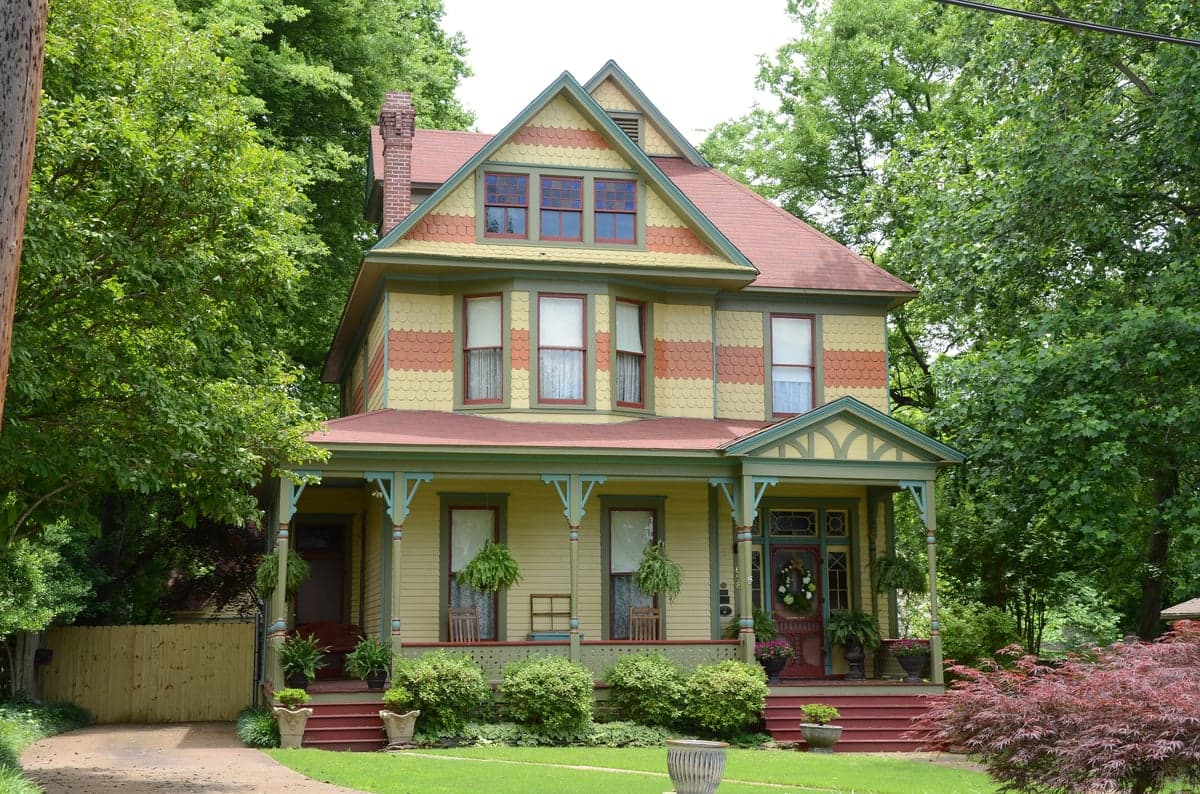
Photo: Wikipedia
Political ClimatePolitical Climate in Independence County
Showing district-level results — no local-only data available.
Local Political AnalysisPolitical Analysis of Independence County
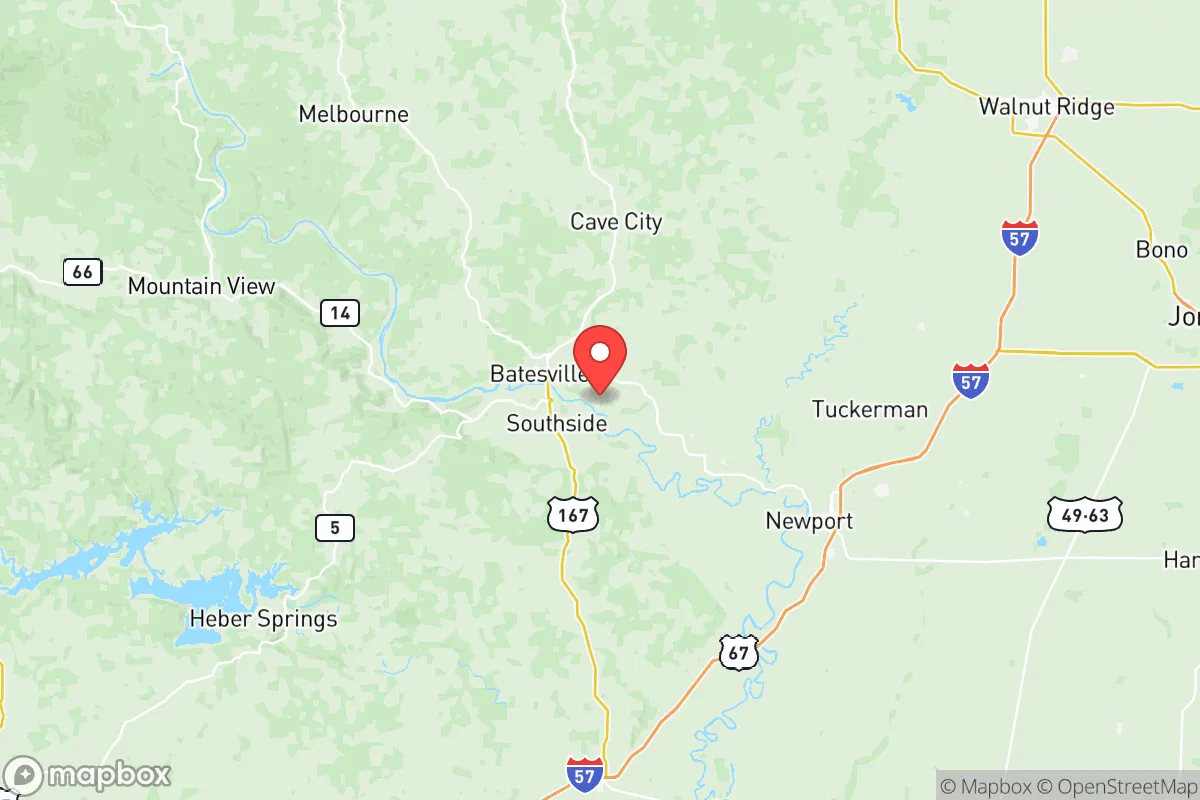
Independence County, Arkansas, is as red as the clay it’s built on—politically, it leans heavily Republican with a Cook PVI of R+23. That’s a solid seven points more conservative than the state of Arkansas as a whole (R+16), which itself has moved sharply rightward over the past couple of decades. The county has been trending redder for a generation, driven by the same rural-urban divide you see across the South, but it’s not a monolith. If you drive from the courthouse square in Batesville, the county seat and largest town, out toward the more rural communities like Newark, Oil Trough, or Sulphur Rock, the Republican margin gets even wider. Meanwhile, in Batesville itself—home to the University of Arkansas Community College and a small manufacturing base—you’ll find a few more blue-leaning precincts, especially around the historic downtown and the hospital corridor. It’s not a swing county, but those pockets of purple give the place texture.
How it compares
Compared to Arkansas at large, Independence County is a bellwether for the state’s rural conservative shift but a stepper version. The state’s R+16 PVI already reflects an Arkansas that has vacated its post-1970s Democratic-in-name-only tradition; Independence County, with its R+23, is like that trend turned up to eleven. For context, while neighboring counties like Stone or Izard are just as red, Independence County’s political profile is closer to those more isolated areas than to the increasingly competitive counties around Northwest Arkansas (Washington and Benton, which lean Republican but with more moderate edges). The biggest difference for the county is that it lacks a major urban anchor: Batesville (pop. ~10,500) is the only town of size, and it still voted roughly 60-65% Trump in 2020. In contrast, the state’s overall number gets slightly bluer from Pulaski County (home to Little Rock) and the Fayetteville-Springdale-Rogers corridor. So Independence County is a microcosm of rural Arkansas, but it’s a bit more resistant to the suburban drift you see down in central Arkansas or across the Ozarks.
What this means for residents
For conservatives, this political climate means you’re in the majority at every level of local government: the county judge, quorum court, school boards, and state legislative seats are all held by Republicans. Policies like limited zoning, low property taxes, and a strong local emphasis on gun rights and religious liberty are the baseline. For liberals or Democratic-leaning residents, the reality is that you’re a minority voice, but not an invisible one—Batesville’s blue precincts and the university community create a small but persistent counterweight. It’s not unusual to see competing yard signs, and the local Democratic party remains active, though it rarely wins countywide races. What this means in daily life is that political conversations are usually respectful but not neutral—this is a place where people know their neighbors’ leanings, and the local newspaper, the Batesville Guard, covers local issues with a conservative lens but will still run a letter to the editor from a progressive. There’s a live-and-let-live quality to it, as long as you don’t try to change the zoning code or push for a tax hike.
The cultural and policy distinctions here stem from the county’s blend of traditional rural conservatism and a touch of small-city progressivism. For example, Batesville has an active Main Street program and a historic preservation commission—not typical for a deep-red county—while the outlying towns focus on farming and church life. The county is dry by default (no alcohol sales in unincorporated areas), though Batesville and a few other towns have opted in for beer and wine. That tension between old-school prohibition-era attitudes and modern convenience is a perfect symbol of the county’s political character: it’s moving toward the future, but with plenty of local control and a long memory. For a native, it feels steady; for a newcomer, it’s a place where you can have a say if you show up, but you won’t change the fundamentals overnight.

State Political ClimatePolitical Climate in Arkansas
State Political AnalysisPolitical Environment in the State
Arkansas is a solidly Republican state with a Cook PVI of R+16, meaning it typically votes about 16 points more Republican than the nation as a whole. Over the past 10-20 years, the state has shifted decisively from a competitive Southern Democratic past to a deep-red stronghold, driven largely by the realignment of rural and exurban voters. While Democrats still hold some local offices and have a base in the Delta and Little Rock, the dominant coalition is a conservative blend of evangelical Christians, rural voters, and business interests that has delivered every statewide election to the GOP since 2014.
Urban vs. rural divide
The political map of Arkansas is a classic story of a few blue islands in a sea of red. The largest metro, Little Rock (Pulaski County), is the state's Democratic anchor, consistently voting blue in presidential elections and sending Democrats like State Senator Linda Chesterfield to the legislature. Fayetteville and Bentonville in Northwest Arkansas form a growing purple-to-blue corridor, driven by the University of Arkansas and the headquarters of Walmart, Tyson Foods, and J.B. Hunt. Washington County (Fayetteville) has trended left in recent cycles, though it still leans Republican in statewide races. Meanwhile, the rest of the state—places like Jonesboro, Fort Smith, Texarkana, and the vast rural counties of the Ozarks and Arkansas River Valley—vote overwhelmingly Republican. A notable example is Cleburne County, which often posts some of the highest Republican margins in the nation. The Delta region, including Helena-West Helena and Pine Bluff, remains a Democratic stronghold due to its majority-Black population, but turnout there is lower than in the booming, conservative Northwest.
Policy environment
Arkansas's policy environment is among the most conservative in the country. The state has a flat income tax that was recently cut to 4.4% (with a path to 3.9% by 2027), no statewide property tax (counties set their own rates), and a sales tax of 6.5% that can be higher with local add-ons. The regulatory posture is business-friendly, with right-to-work laws and weak environmental regulations. Education policy includes a robust school choice program: the Arkansas LEARNS Act (2023) created universal Education Freedom Accounts (vouchers) for private school tuition, expanded charter schools, and raised teacher minimum salaries to $50,000. Healthcare is a mixed bag: the state expanded Medicaid under the private-option "Arkansas Works" model, but also passed some of the strictest abortion laws in the nation, including a near-total ban with no exceptions for rape or incest (only to save the mother's life). Election laws have tightened, with voter ID requirements and restrictions on absentee ballot drop boxes.
Recent policy direction
Recent legislation in Arkansas has pushed the state further right across multiple fronts. On gun and self-defense law, Arkansas became a "constitutional carry" state in 2021, allowing permitless carry of handguns. On parental and education rights, the LEARNS Act also banned the teaching of "critical race theory" and restricted transgender students' participation in sports. On speech and privacy, the state passed a law requiring public libraries to create policies for removing "obscene" materials, which critics argue could chill access to LGBTQ+ content. On medical and bodily autonomy, the near-total abortion ban is the most prominent example, but the state also restricted gender-affirming care for minors in 2023. On property rights, Arkansas has strong eminent domain protections and is a "Dillon's Rule" state, meaning local governments have only powers explicitly granted by the state. On taxation, the trajectory is toward lower income taxes, with the goal of eliminating the income tax entirely over the long term. On voting and ballot access, the state has tightened rules, including a 2021 law that shortened the absentee ballot application window and required more frequent purges of voter rolls.
Civil unrest & political movements
Arkansas has not seen the large-scale protests of coastal states, but it has its share of political flashpoints. In 2020, Little Rock and Fayetteville saw Black Lives Matter protests, with some property damage in the capital. The state's immigration politics are relatively low-key, as the foreign-born population is small (about 5%), but there is a vocal anti-sanctuary movement that pushed a 2023 law requiring local law enforcement to cooperate with federal immigration authorities. Secession or nullification rhetoric is rare, though some rural county officials have floated "Second Amendment sanctuary" resolutions. Election integrity controversies have been minimal compared to states like Georgia or Arizona, but the 2022 gubernatorial race saw former President Trump's endorsement of Sarah Huckabee Sanders, who won by a landslide. A visible flashpoint for new residents might be the tension between the growing, diverse Northwest Arkansas and the more traditional, rural south and east—a cultural divide that plays out in debates over library books, drag shows, and school curriculum.
Projection
Over the next 5-10 years, Arkansas is likely to remain solidly Republican, but the internal dynamics will shift. The Northwest Arkansas corridor (Bentonville, Fayetteville, Springdale, Rogers) is the fastest-growing region in the state, attracting a younger, more educated, and slightly more diverse population. This area could become a swing region within the state, potentially making statewide races more competitive in the long run. However, the rural and exurban areas are also growing in population and are becoming more conservative. The Delta, by contrast, is shrinking and aging, which will reduce the Democratic base. In-migration is largely from other red states (Texas, Oklahoma, Missouri), reinforcing the conservative tilt. Expect continued tax cuts, further expansion of school choice, and a hardening of cultural conservative policies on abortion and transgender rights. A new resident moving in now should expect a state that is deeply conservative in its governance, but with a growing, dynamic urban corridor in the northwest that offers a more moderate, business-oriented flavor of Republicanism.
For a new resident, the bottom line is that Arkansas offers a low-tax, business-friendly environment with strong gun rights and a culturally conservative social fabric. If you lean conservative, you'll find your values reflected in state law and local communities. If you lean liberal, you'll find like-minded people in Little Rock, Fayetteville, and pockets of the Delta, but you'll be in a clear minority in statewide politics. The state's trajectory is toward more of the same—lower taxes, more school choice, and tighter cultural regulations—so your decision should hinge on whether that aligns with your priorities for raising a family or building a career.
* Values derived from national, state, county, city and local statistics and may differ in a specific area. Last updated: 2026-06-22T03:30:56.000Z
Narrative content on this page is AI-generated and may contain mistakes. Verify any details that matter before acting on them.
ReloMaps may earn a commission from affiliate links at no extra cost to you.

