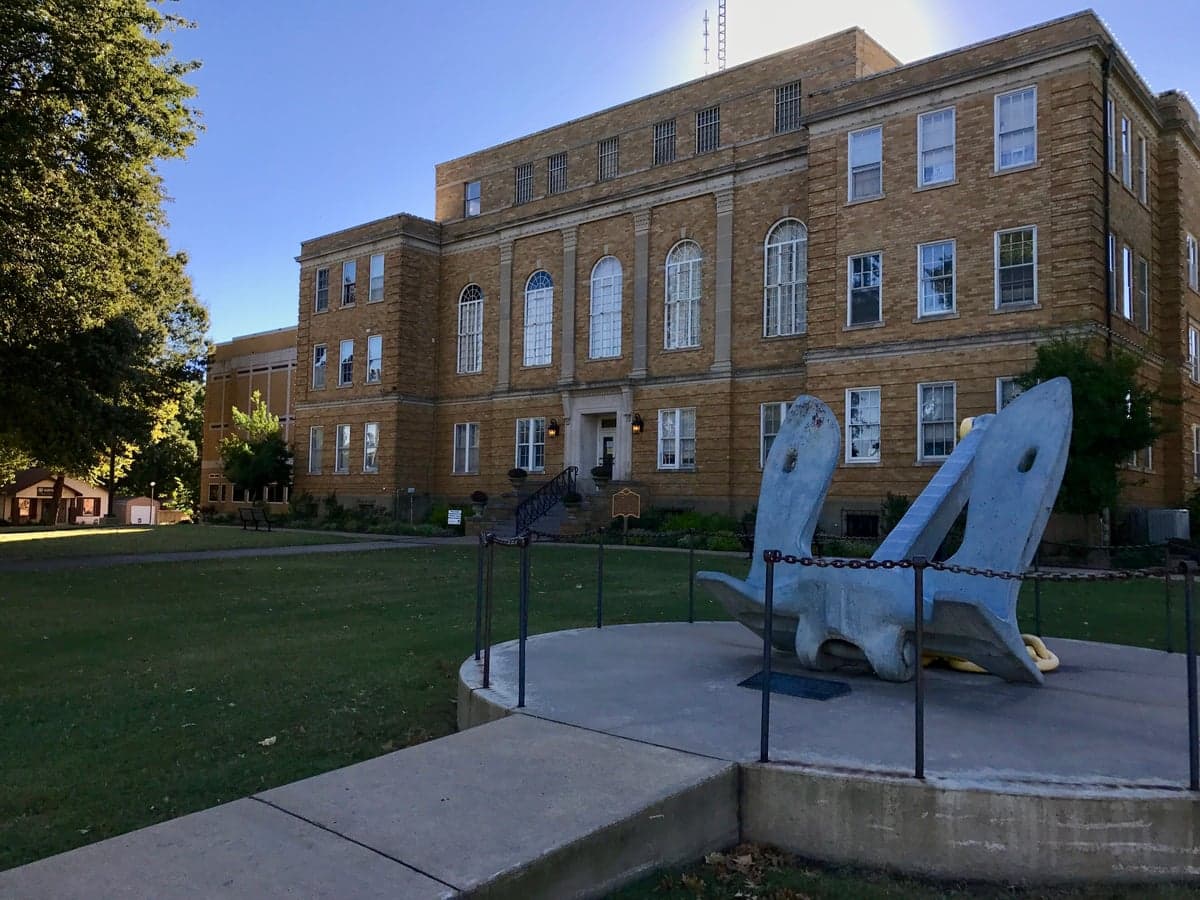
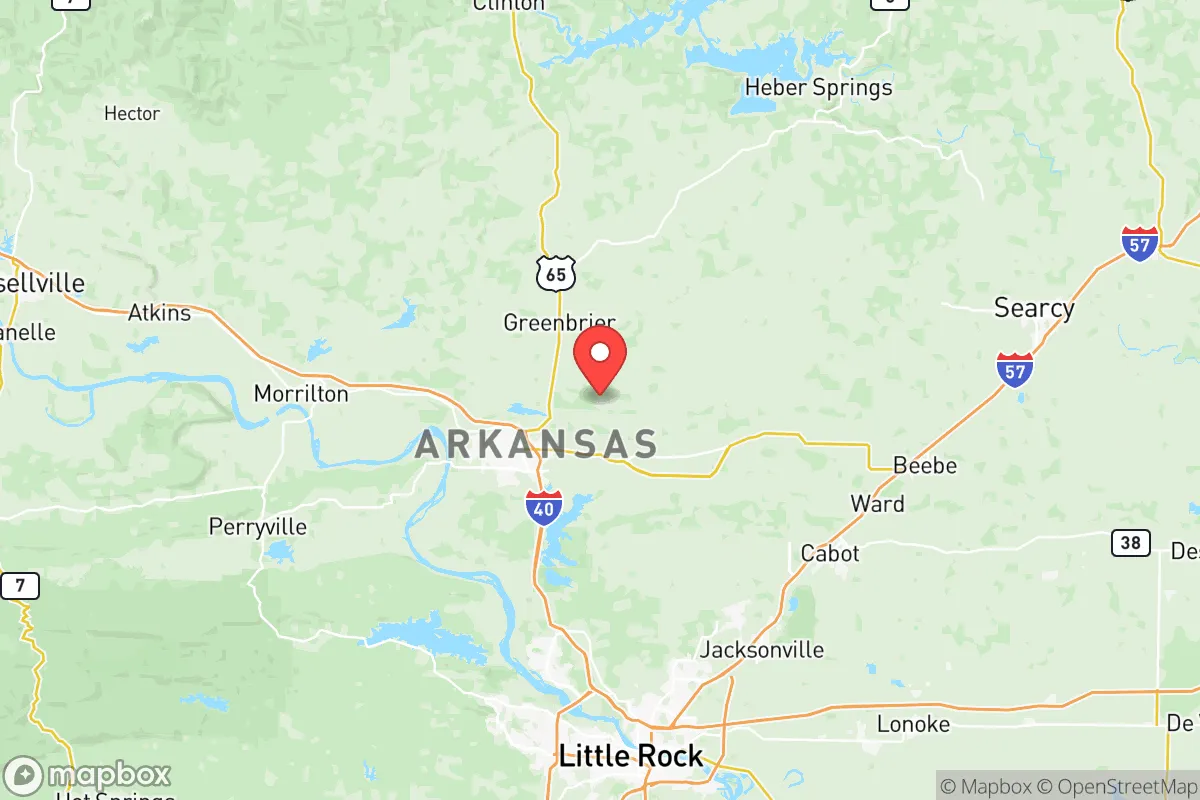
Photo: Wikipedia
Political ClimatePolitical Climate in Faulkner County
Showing district-level results — no local-only data available.
Local Political AnalysisPolitical Analysis of Faulkner County
Faulkner County, anchored by Conway, has long been a reliably Republican area, but it's not quite as deep red as the rest of Arkansas. The county’s Cook Partisan Voting Index (PVI) of R+8 is a full 8 points more moderate than the state’s R+16 rating, a gap that reflects the influence of Conway’s large university and healthcare workforce. This isn't a place that flipped overnight; it's been a steady, slow drift rightward, but with a noticeable pocket of blue in the college precincts that keeps the overall numbers from matching the state's rural extremes. If you're looking at the 2024 presidential race, expect Faulkner County to go Republican by a comfortable margin, but not by the 30+ point landslides you see in neighboring Van Buren or Cleburne counties.
How it compares
The difference between Faulkner County and Arkansas as a whole boils down to Conway. The city itself, home to the University of Central Arkansas (UCA) and Hendrix College, consistently produces precincts that vote Democratic or lean competitive. For example, the area around UCA’s campus and the downtown historic district often sees Democratic candidates pull 55-60% of the vote in local races. Drive 15 minutes south to Mayflower or west to Vilonia, and you'll find precincts that vote 75-80% Republican. This urban-rural split is the key. The rest of Arkansas, outside of Pulaski County (Little Rock) and Washington County (Fayetteville), is far more uniformly conservative. The state’s R+16 PVI is driven by vast, sparsely populated counties where Democratic votes are scarce. Faulkner County’s R+8 is a truer reflection of a suburban-urban mix, making it a bellwether for how the state might shift if Conway’s growth continues to outpace its rural neighbors.
What this means for residents
For conservative residents, life is comfortable. The county commission, sheriff's office, and most city councils outside of Conway are solidly Republican. You'll see "Trump 2024" signs in yards from Greenbrier to Guy without a second thought. For liberal residents, the picture is more nuanced. You can find your community in Conway—the Faulkner County Democrats have a visible presence, and local issues like affordable housing and public transit get real traction there. But you'll also feel the weight of a state legislature that passes conservative laws on abortion, gun rights, and education. The practical reality is that your vote in a countywide race won't swing the outcome, but your voice in Conway city council elections can be decisive. The county's trajectory suggests this split will persist: Conway's growth (adding about 1,500 people a year) is slowly pulling the county's overall lean toward the center, while the rural towns hold firm.
Culturally, Faulkner County stands apart from the rest of Arkansas in a few ways. It's one of the few places in the state where you can find a thriving indie music scene (thanks to UCA) alongside a major gun show at the Conway Expo Center. The county has a higher-than-average number of residents with bachelor's degrees (about 30%, compared to the state's 24%), which shows up in local policy debates—there's more vocal support for public library funding and parks than in neighboring counties. But don't mistake that for a liberal stronghold. The county's school board elections are often won by conservative candidates, and the "family values" messaging still dominates local politics. The bottom line: Faulkner County is a place where a Democrat can win a city council seat in Conway, but a Republican will win the county judge race every time. That's the balance, and it's not changing fast.

State Political ClimatePolitical Climate in Arkansas
State Political AnalysisPolitical Environment in the State
Arkansas is a solidly Republican state with a Cook PVI of R+16, meaning it votes about 16 points more Republican than the national average in presidential elections. This wasn't always the case — as recently as the 1990s, Arkansas was a Democratic stronghold, backing Bill Clinton twice and electing Democrats to nearly every statewide office. The shift began in earnest around 2000, accelerated through the Obama years, and has now settled into a deep red hue where Republicans hold supermajorities in both chambers of the state legislature and all seven of the state's constitutional offices. For a relocator, this means conservative policies are the baseline, but the state's political culture is more pragmatic and less ideologically rigid than places like Texas or Oklahoma.
Urban vs. rural divide
The political map of Arkansas is a textbook case of the urban-rural split. Northwest Arkansas — the corridor from Fayetteville through Springdale and Rogers to Bentonville — is the state's economic engine and its most politically interesting region. Fayetteville, home to the University of Arkansas, is a blue dot in a red state, voting Democratic by double digits in recent cycles. But the surrounding suburbs and exurbs of Washington and Benton counties are reliably Republican, though with a more moderate, business-friendly flavor than rural areas. Little Rock and its inner suburbs in Pulaski County are the other Democratic stronghold, with the city itself voting heavily blue while the outer ring of Conway and Bryant leans right. The rest of the state — the Arkansas Delta in the east, the Ozarks in the north, and the southern timberlands — is deeply Republican. Counties like Stone and Van Buren routinely vote 80%+ Republican. The divide is stark: the two metro areas (Northwest Arkansas and Little Rock) generate most of the state's economic output and cultural diversity, while the rural counties drive the state's conservative legislative agenda.
Policy environment
Arkansas's policy environment is defined by low taxes and limited government. The state has a flat income tax rate of 4.4% (down from 7% in 2015, with further cuts scheduled), a sales tax of 6.5% that applies to most goods and some services, and property taxes that average about 0.6% of assessed value — among the lowest in the nation. There is no estate tax. The regulatory posture is business-friendly, with right-to-work laws and a tort reform system that caps noneconomic damages in medical malpractice cases at $500,000. Education policy is a mixed bag: the state has school choice through charter schools and a limited voucher program for special needs students, but public school funding remains a perennial issue. Healthcare is dominated by the state's expansion of Medicaid under the private option model (Arkansas Works), which covers about 300,000 low-income adults — a policy that has survived multiple Republican attempts to repeal it. Election laws are moderately restrictive: voter ID is required, early voting is available for 15 days, and absentee voting requires an excuse. The state does not have automatic voter registration.
Recent policy direction
The last five years have seen Arkansas move decisively to the right on a broad range of issues. On gun and self-defense law, the state passed constitutional carry in 2021, allowing permitless carry of concealed handguns for anyone 21 or older. Stand-your-ground laws are on the books. On parental and education rights, the LEARNS Act of 2023 created a universal school voucher program, banned "critical race theory" and "indoctrination" in public schools, and restricted transgender students' participation in sports and use of bathrooms matching their gender identity. On speech and privacy, the state passed a law in 2023 requiring social media platforms to verify the age of users and obtain parental consent for minors, though it's been challenged in court. On medical and bodily autonomy, Arkansas has one of the strictest abortion bans in the country, with no exceptions for rape or incest, only to save the mother's life. The state also passed a law in 2021 banning gender-affirming care for minors, which is currently blocked by court order. On property rights, the state has strong eminent domain protections and no statewide rent control. On taxation, the trend is toward elimination: the state is phasing out the income tax entirely, with a goal of reaching zero by 2030. On voting and ballot access, the state passed a law in 2021 requiring absentee ballots to be returned by the close of polls on Election Day (rather than postmarked by that date), and it has tightened rules on ballot harvesting.
Civil unrest & political movements
Arkansas is not a hotbed of civil unrest. The most visible political movements are on the right: the state has a strong gun rights culture, with regular rallies at the state capitol, and the anti-abortion movement is well-organized and politically influential. On the left, the most active groups are centered around racial justice (particularly in Little Rock, where the 1957 Central High crisis still echoes) and LGBTQ+ rights, though these movements are smaller and less visible than in neighboring states. Immigration politics are relatively low-key — Arkansas has a small but growing immigrant population, concentrated in Northwest Arkansas's poultry and logistics industries, and there are no sanctuary cities. Secession or nullification rhetoric is rare; the state's political culture is more about practical governance than ideological posturing. Election integrity controversies have been minimal, though the 2020 election saw some local disputes over absentee ballot procedures. A new resident would notice that political signs are common in yards and that local politics can be intensely personal, but actual street-level conflict is rare.
Projection
Over the next 5-10 years, Arkansas is likely to become even more Republican, but with a growing moderate wing in the suburbs. The state's population is growing fastest in Northwest Arkansas, which is attracting younger, more educated, and slightly more diverse residents from California, Texas, and the Midwest. This influx is already shifting the political center of gravity: Benton County, once solidly red, is now competitive in local races, and Fayetteville's blue vote is growing. The rural counties will continue to vote heavily Republican, but their share of the population is shrinking. The state's tax-cutting trajectory will likely continue, with the income tax possibly eliminated by 2030. The biggest wildcard is the state's healthcare system: if the Medicaid expansion is repealed or restructured, it could create a political backlash in rural areas that depend on it. A relocator moving in now should expect to find a state that is reliably conservative but not uniformly so, with a growing urban-suburban divide that mirrors the national trend. The state's politics will remain pragmatic on economic issues and culturally conservative on social issues, with the main tension being between the business-friendly moderates of Northwest Arkansas and the more populist conservatives of the rural areas.
For a new resident, the bottom line is straightforward: Arkansas offers a low-tax, limited-government environment with a strong conservative cultural tilt. If you're a conservative, you'll find your values reflected in state law and local norms. If you're a liberal, you'll find your political voice in Fayetteville or Little Rock, but you'll be in the minority statewide. The state's politics are stable, not volatile, and the trajectory is toward more of the same — lower taxes, more school choice, and continued cultural conservatism. The practical takeaway is that Arkansas is a place where your vote matters less in statewide races (which are safely Republican) but can matter a lot in local elections, where the urban-rural divide creates real competition in certain districts.
* Values derived from national, state, county, city and local statistics and may differ in a specific area. Last updated: 2026-07-17T05:50:27.000Z
Narrative content on this page is AI-generated and may contain mistakes. Verify any details that matter before acting on them.
ReloMaps may earn a commission from affiliate links at no extra cost to you.

