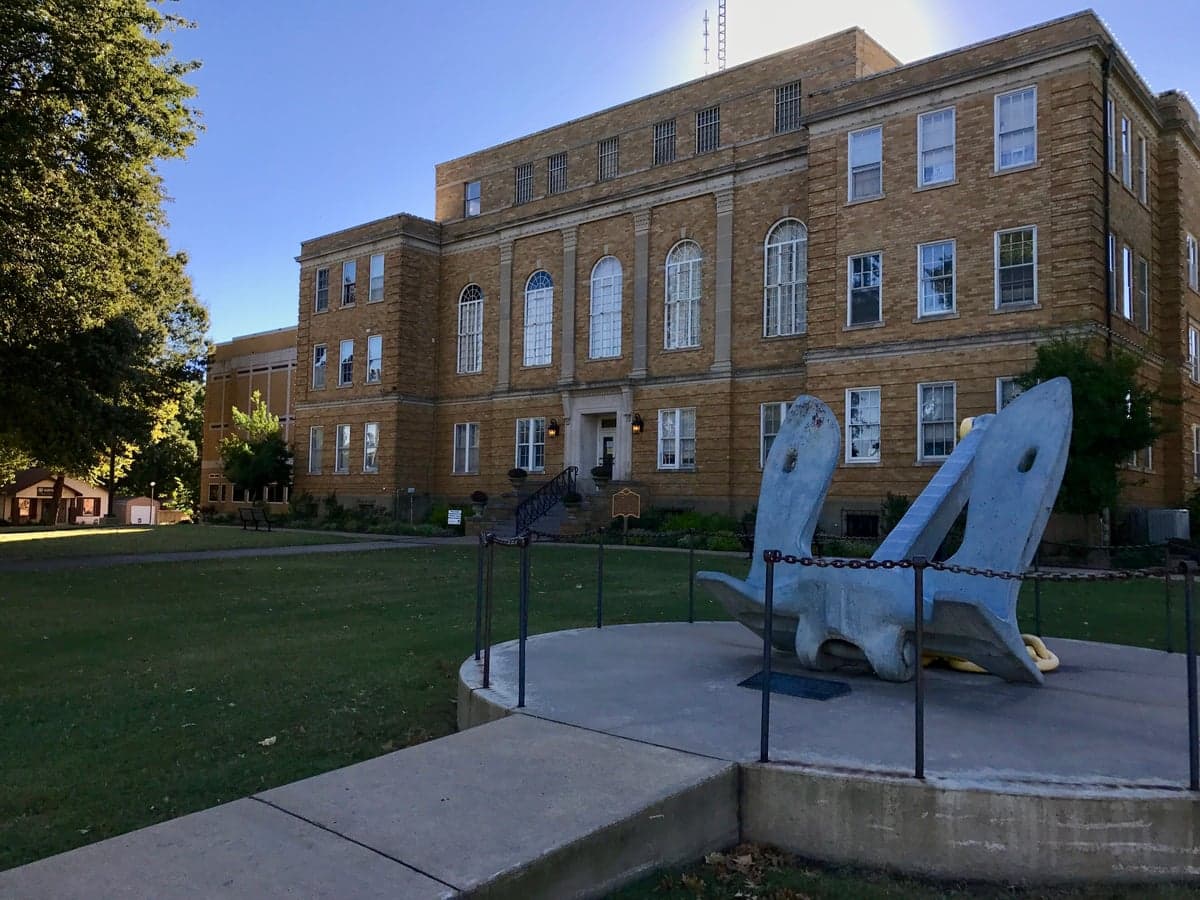
Photo: Wikipedia
Demographics of Faulkner County
Affluence Level in Faulkner County
A middle-class area roughly in line with national averages across income, home values, education, and employment.
People of Faulkner County
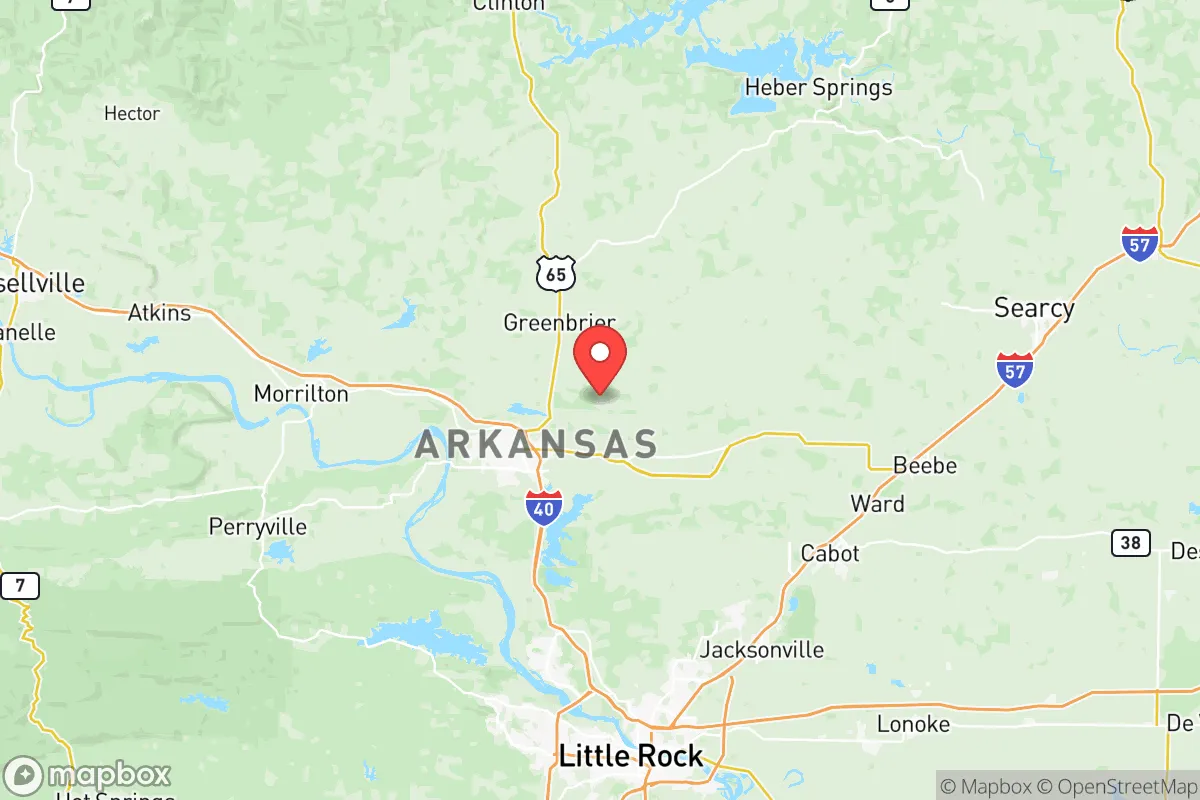
The people of Faulkner County, Arkansas, today number 126,001 and are predominantly white (77.7%), with a notable Black minority (11.7%) and a growing Hispanic population (5.5%). The county's character is shaped by its position as a suburban and exurban extension of the Little Rock metro area, anchored by the city of Conway, a major university town and regional employment hub. Distinctive identity markers include a strong Baptist and evangelical Christian presence, a relatively young median age driven by college students, and a political tilt that has shifted from reliably Democratic to reliably Republican over the past two decades.
Settlement & growth (pre-1960)
Before American settlement, the area now known as Faulkner County was part of the traditional territory of the Quapaw and Osage nations. The Quapaw, a Siouan-speaking people, occupied villages along the Arkansas River, while the Osage used the region for hunting grounds. European contact was minimal until the Louisiana Purchase of 1803 brought the area under U.S. control. The first American settlers, primarily Scots-Irish and English migrants from the Upper South (Tennessee, Kentucky, and the Carolinas), began arriving in the 1820s and 1830s, drawn by cheap land and the promise of cotton cultivation along the Arkansas River floodplain. These early settlers established small farming communities like Conway (founded 1872), Greenbrier (settled 1850s), and Vilonia (established 1870s).
The arrival of the Cairo and Fulton Railroad in the 1870s transformed the county. The railroad, which connected St. Louis to Texas, made Conway a key shipping point for cotton, timber, and livestock. This spurred a second wave of settlement: German and Irish immigrants, who worked on railroad construction and later settled in Conway and Mayflower (founded 1880s). The timber industry also drew workers from the Ozarks and the Deep South, including a significant number of Black families who came as sharecroppers and tenant farmers after the Civil War. By 1900, Faulkner County's population was roughly 20,000, with a Black population of about 15%—a share that would remain stable for decades.
The early 20th century saw the rise of the dairy and poultry industries, which replaced cotton as the county's economic backbone. The creation of the Arkansas State Teachers College (now the University of Central Arkansas) in Conway in 1907 brought a new class of residents: educators, administrators, and their families. The Dust Bowl of the 1930s pushed a small number of "Okie" and "Arkie" migrants into the county, but Faulkner County was not a major destination for that wave. World War II and the post-war boom accelerated suburbanization, with Conway growing as a bedroom community for Little Rock workers. The construction of Interstate 40 in the 1960s cemented this role, linking the county directly to the state capital.
Modern era (post-1965)
The 1965 Hart-Cellar Act had a limited direct impact on Faulkner County, as the region did not attract large numbers of post-1965 immigrants. The foreign-born population today stands at just 2.1%, well below the national average. However, the county has experienced significant domestic migration since the 1970s. The primary driver has been the growth of the University of Central Arkansas (UCA), which expanded from a teachers' college to a comprehensive university with over 12,000 students. This brought a steady influx of faculty, staff, and students from across Arkansas and the South, diversifying the county's educational and professional base.
The most notable demographic shift since 1965 has been the growth of the Hispanic population. From a negligible base in 1970, the Hispanic share rose to 5.5% by 2020, driven by employment in poultry processing plants in Greenbrier and Guy, as well as construction and service jobs in Conway. This community is largely Mexican-American, with smaller numbers from Central America. The Black population, which had declined slightly during the Great Migration (when many Black families left for Northern industrial cities), stabilized and grew modestly after 1970, reaching 11.7% today. Black residents are concentrated in Conway, particularly in the older neighborhoods near the UCA campus and along the I-40 corridor.
Suburbanization reshaped the county's geography. Conway grew from a town of 15,000 in 1970 to over 68,000 today, absorbing much of the county's population growth. New subdivisions and master-planned communities like Mayflower and Vilonia attracted white middle-class families from Little Rock and other parts of central Arkansas. The county's Asian population remains small (0.8% East/Southeast Asian, 0.2% Indian subcontinent), concentrated among UCA faculty and medical professionals at Conway Regional Health System. The Indian community, while tiny, includes a notable number of physicians and engineers.
Politically, Faulkner County has shifted from a Democratic-leaning county (voting for Bill Clinton in 1992 and 1996) to a solidly Republican one (voting +30 points for Trump in 2020). This shift reflects the broader realignment of white, college-educated suburban voters, as well as the growth of evangelical megachurches like New Life Church in Conway.
The future
Faulkner County is projected to continue growing, with the state forecasting a population of 140,000–150,000 by 2040. The Hispanic population is expected to rise to 8–10%, driven by natural increase and continued migration for agricultural and construction jobs. The Black population share is likely to remain stable or grow slightly, as Conway attracts Black professionals from Little Rock and other parts of the state. The Asian and Indian communities will likely grow slowly, tied to university and healthcare employment.
The county is becoming slightly more diverse, but it remains overwhelmingly white and native-born. New residential development is concentrated in Conway's western and southern fringes, as well as in Greenbrier and Mayflower, which are attracting families seeking larger lots and lower taxes. The cultural identity of the county is evolving from a rural, agricultural past to a suburban, college-town present, with a strong conservative Christian character. The University of Central Arkansas acts as a liberalizing influence, but the county's politics are likely to remain Republican for the foreseeable future.
For someone moving in now, Faulkner County offers a stable, family-oriented environment with good schools (particularly the Conway School District), a low cost of living, and proximity to Little Rock's amenities. The trade-off is limited racial and ethnic diversity, a dominant evangelical culture, and a political landscape that leans heavily conservative. The county is becoming more suburban and more educated, but it is not becoming a cosmopolitan or highly diverse place. It is a solid, middle-class, Sun Belt community where the pace of change is gradual and the character remains distinctly Arkansan.

* Values derived from national, state, county, city and local statistics and may differ in a specific area. Last updated: 2026-07-17T05:50:27.000Z
Narrative content on this page is AI-generated and may contain mistakes. Verify any details that matter before acting on them.
ReloMaps may earn a commission from affiliate links at no extra cost to you.

