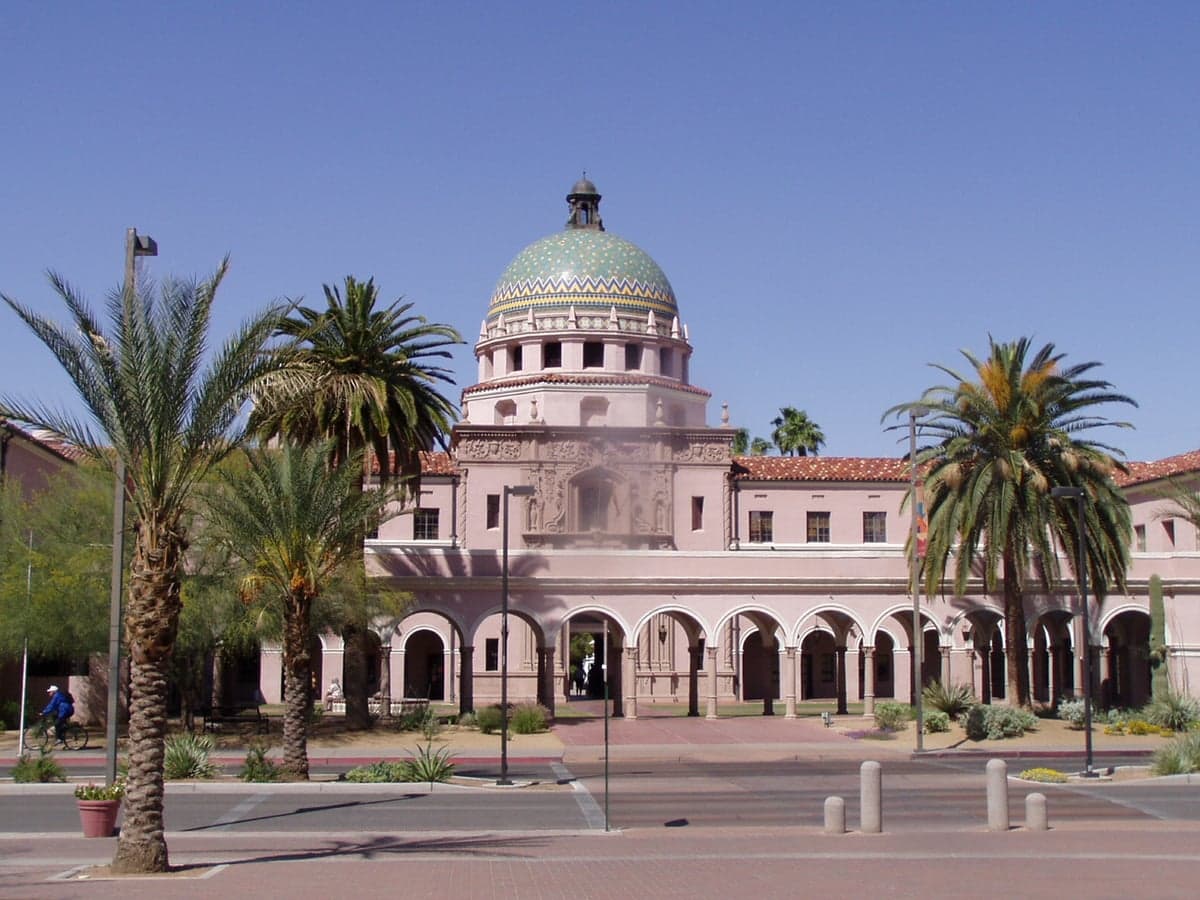
Photo: Wikipedia
Quality of Life in Pima County
A livable area that tracks near national norms for affordability, walkability, and neighborhood health.
What does Quality of Life tell us?
Quality of Life measures an area by evaluating factors like cost of living, nearby amenities, country club access, airport proximity, socioeconomic signals and neighborhood character. For large states, this is a general average — quality of life can vary dramatically between metro areas, suburbs, and rural communities within the same state.
What does this tell us?
Quality of Life measures an area by evaluating factors like cost of living, nearby amenities, country club access, airport proximity, socioeconomic signals and neighborhood character. For large states, this is a general average — quality of life can vary dramatically between metro areas, suburbs, and rural communities within the same state.
Cost of Living
83%
The Real Cost of Living in Pima County for 2026
| Tier | Individual | Family (4) |
|---|---|---|
| Survival | $18k | $35k |
| Comfortable | $56k | $82k |
| Luxury | $123k+ | $190k+ |
| Elite (Top 5%) | $149k+ | $232k+ |
Quality-of-Life Analysis
Pima County, Arizona, offers one of the most dramatic quality-of-life spectrums in the Southwest, ranging from the dense, amenity-rich urban core of Tucson to remote, off-grid homesteads in the Altar Valley and historic mining towns like Oracle. The county draws a diverse mix of residents: university academics and healthcare professionals anchor the city, while retirees, artists, and remote workers seek out the lower costs and open space of smaller communities like Green Valley and Sahuarita. With a countywide cost-of-living index of 100 (exactly at the U.S. average), a median home value of $286,900, and a median rent of $1,154, the primary variable is not affordability itself but what that money buys in terms of space, commute time, and access to services.
Largest town(s) & population centers
Tucson is the undisputed urban anchor, home to roughly 545,000 residents and the University of Arizona. Daily life here is defined by a mix of college-town energy, a growing aerospace and defense sector (Raytheon, Davis-Monthan Air Force Base), and a robust food and arts scene. The average commute across the county is a manageable 24.4 minutes, though cross-town drives from the far east side (Rita Ranch) to downtown can push closer to 40 minutes. Oro Valley, a master-planned suburb of about 47,000, sits north of Tucson and offers a more manicured lifestyle with higher-end shopping, golf courses, and top-rated schools, attracting families and affluent retirees. Marana, also in the northwest, has grown rapidly around the Tucson Premium Outlets and the Ritz-Carlton Dove Mountain resort, blending suburban subdivisions with luxury desert living. These three population centers provide the county's densest job markets, best healthcare (Tucson Medical Center, Banner-University Medical Center), and most diverse dining and entertainment options.
Smaller towns & rural pockets
South of Tucson, Green Valley is a massive, age-restricted retirement community (55+) with a population of roughly 43,000, offering golf courses, recreation centers, and a quiet, planned environment. Just east of Green Valley, Sahuarita has evolved from a rural crossroads into a fast-growing family suburb, with new housing developments and a growing retail corridor. Further south, the unincorporated communities of Amado and Arivaca are true rural pockets — Arivaca, near the border, is known for its artists, ranchers, and off-grid homesteaders. To the north, the historic mining town of Oracle (population ~3,600) sits at a higher elevation, offering cooler temperatures, pine-oak woodlands, and a quirky, low-key lifestyle popular with equestrians and those seeking solitude. Catalina, along the Oracle Road corridor, is a mix of older mobile home parks and newer subdivisions, serving as a bedroom community for north Tucson. These areas trade urban amenities for significantly more land, lower home prices (often well under the county median of $286,900), and a slower pace of life.
Cost & lifestyle range
The cost-of-living spread across Pima County is wide. At the high end, Oro Valley and the Catalina Foothills (an unincorporated area just north of Tucson) command median home prices well above the county average — often $450,000 to $700,000 — for newer homes, mountain views, and proximity to hiking trails like Pima Canyon. At the low end, the South Side of Tucson and the rural community of Three Points (west of the city) offer homes under $200,000 and rents below the county median of $1,154, but with longer commutes, fewer retail options, and higher property crime rates in some Tucson neighborhoods. The Drexel Heights and Flowing Wells areas, unincorporated but adjacent to Tucson, sit in the middle: older, modest homes on larger lots, with a working-class feel and commute times under 20 minutes. For renters, the county median of $1,154 is attainable in most areas, but newer apartment complexes in Marana and Oro Valley routinely exceed $1,400 for a one-bedroom.
Pima County is best suited for residents who value choice and are willing to trade off between urban energy and rural quiet. Professionals and academics thrive in Tucson's core, while retirees and remote workers find the best value in Green Valley, Sahuarita, or the foothills. Those seeking true solitude and land — and who can handle a 30- to 45-minute drive to the nearest grocery store — will find the most affordable options in the county's far-flung rural pockets like Arivaca and the San Rafael Valley. The county's 24.4-minute average commute is a strong selling point for a region of this geographic size, making even the rural options feasible for daily work in the city.

Crime in Pima County
Crime rates similar to the national median for U.S. locations.
Violent CrimeViolent Crime Analysis
Property CrimeProperty Crime Analysis
Crime Analysis
Pima County, Arizona, reports a violent crime rate of 372 incidents per 100,000 residents and a property crime rate of 1,496.4 per 100,000, placing it above national averages and making it one of the more challenging safety environments in the state. The county's overall safety picture is heavily influenced by the city of Tucson, which accounts for the majority of reported offenses, while outlying communities like Oro Valley and Sahuarita maintain significantly lower crime rates. Residents considering relocation should weigh these geographic disparities carefully, as neighborhood-level safety varies dramatically across the county's 9,200 square miles.
Crime in context
Pima County's violent crime rate of 372 per 100,000 is roughly 7% higher than the national average of approximately 380 per 100,000 and notably above the Arizona state average of about 430 per 100,000. Property crime in the county, at 1,496.4 per 100,000, exceeds the national benchmark of roughly 1,954 per 100,000 but remains a persistent concern for residents. Tucson, the county seat and largest city, drives these figures upward with concentrated crime in its central and south-side precincts, while the town of Marana reports rates roughly half the county average. The contrast is stark: Oro Valley, a northern suburb, consistently posts violent crime rates below 100 per 100,000, making it one of the safest jurisdictions in Southern Arizona. Sahuarita, a fast-growing community south of Tucson, also maintains property crime rates well under 1,000 per 100,000, offering a markedly different experience from the county's urban core.
What residents experience
Daily life for Pima County residents involves navigating a justice system shaped by progressive policies in Tucson and its surrounding areas. The Pima County Attorney's Office has adopted diversion programs and reduced prosecution for certain low-level offenses, a philosophy that critics argue prioritizes offender rehabilitation over public safety. This approach has contributed to repeat property crime offenders cycling through the system with minimal consequences, a frustration frequently voiced by residents in midtown and south Tucson neighborhoods. Auto theft and burglary remain the most common property crimes, with thieves targeting vehicles parked on streets and homes near major thoroughfares. Violent crime, while less frequent, concentrates in specific corridors: the area around South 6th Avenue and West 29th Street in Tucson sees disproportionate rates of aggravated assault and robbery. Residents in safer enclaves like Catalina Foothills and Green Valley report feeling secure, with neighborhood watch programs and private security patrols supplementing sheriff's office coverage. The contrast between these areas and Tucson's higher-crime districts underscores the importance of choosing a specific neighborhood rather than judging the entire county by its aggregate statistics.
Neighborhood-level variation in Pima County is extreme, driven by socioeconomic factors and law enforcement resource allocation. The Tucson Police Department's South Division, covering areas with higher poverty rates, handles a disproportionate share of violent crime calls, while the Northwest Division near Oro Valley and Marana sees far fewer incidents. Unincorporated areas of the county, patrolled by the Pima County Sheriff's Department, generally report lower crime rates than Tucson proper, though pockets of concern exist near Interstate 10 corridors. For prospective residents, the safest bets remain Oro Valley, Sahuarita, and the Catalina Foothills, where median home values exceed $400,000 and crime rates sit well below county averages. Those considering Tucson itself should research specific zip codes, as neighborhoods like Sam Hughes and the University area offer relatively low crime compared to the city's south and west sides. The county's progressive judicial philosophy, while intended to reduce incarceration, has created a two-tier safety reality: affluent areas enjoy low crime through private investment in security, while lower-income neighborhoods bear the brunt of lenient sentencing policies.
* Values derived from national, state, county, city and local statistics and may differ in a specific area. Last updated: 2026-07-11T13:23:28.000Z
Narrative content on this page is AI-generated and may contain mistakes. Verify any details that matter before acting on them.
ReloMaps may earn a commission from affiliate links at no extra cost to you.

