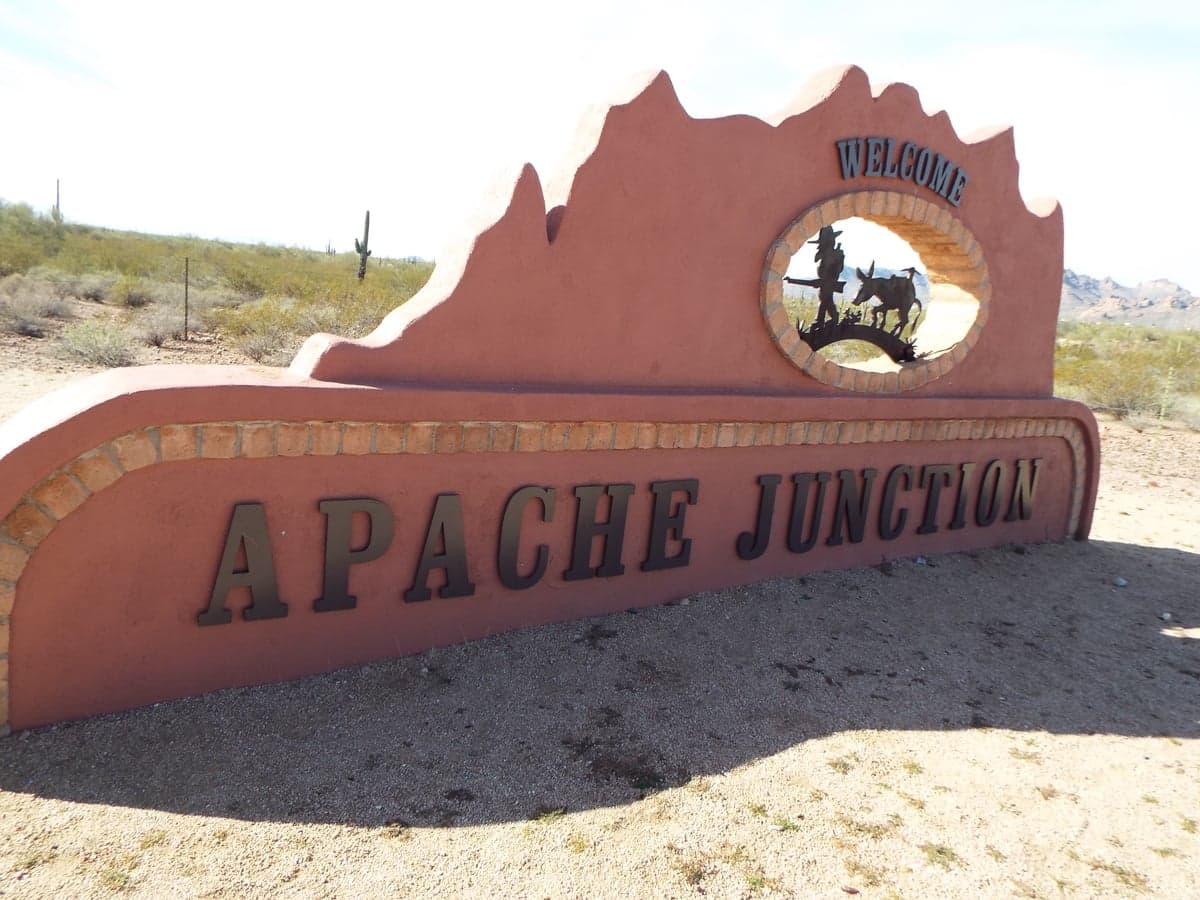
Photo: Wikipedia
Political ClimatePolitical Climate in Apache Junction, AZ
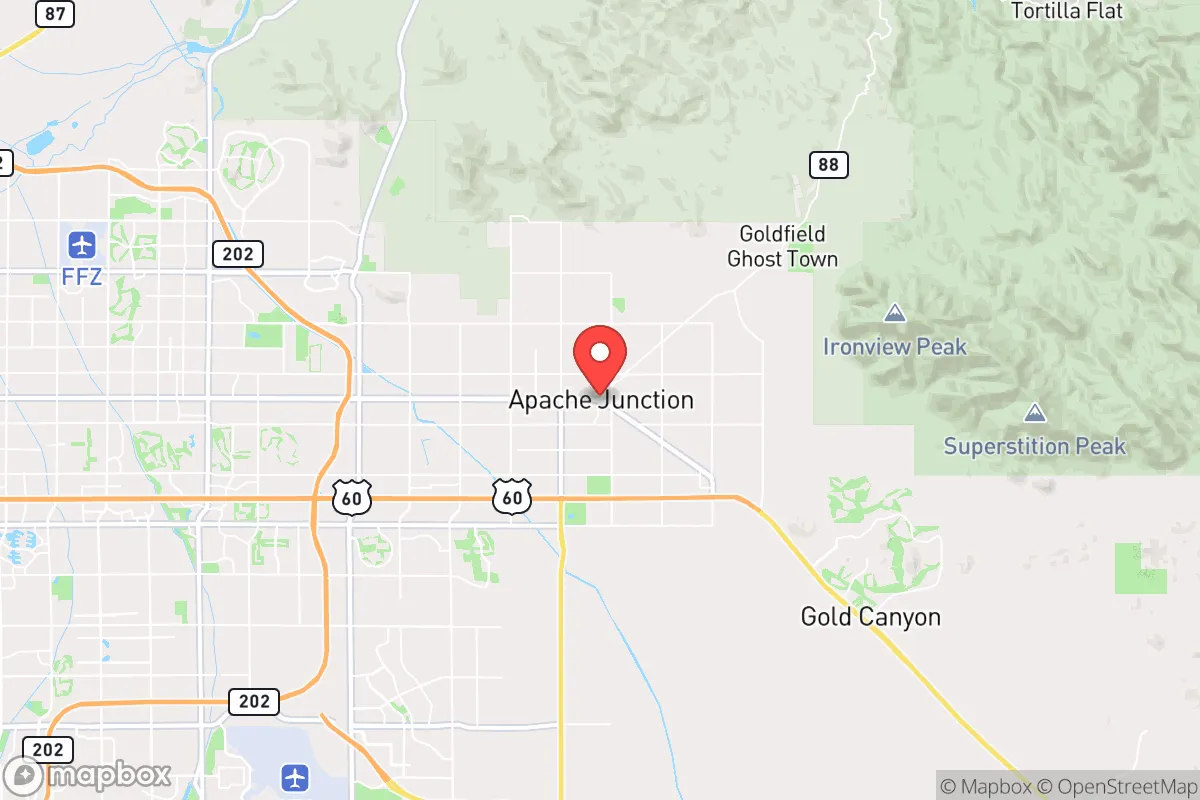
District shown is the primary district for this city’s centroid. Cities may span multiple districts.
Local Political AnalysisPolitical Analysis of Apache Junction, AZ
Apache Junction has long been a solidly conservative stronghold, and that hasn't changed much despite the waves of newcomers flooding the Valley. With a Cook PVI of R+10, this town leans about ten points more Republican than the national average, and in practice, it feels even redder than that number suggests. The local elections, the chatter at the feed store, and the general attitude toward government all point to a place that values personal liberty and wants to be left alone to live its own life.
How it compares
Drive ten miles west into Mesa, and you'll start to feel the shift—more transplants from California, more corporate transplants, and a noticeable uptick in progressive-leaning city council candidates. Head south toward Gold Canyon, and it's still conservative, but with a wealthier, more "country club" vibe that sometimes tolerates higher taxes for nicer amenities. Apache Junction, by contrast, is the working-class heart of the East Valley's conservative belt. It's closer in spirit to places like Queen Creek or San Tan Valley, where the motto is basically "keep the government out of my garage, my church, and my backyard." The contrast with Tempe or Scottsdale couldn't be starker—those cities have embraced density, light rail, and progressive social policies, while Apache Junction still fights to keep its rural character and low property taxes.
What this means for residents
For folks who value personal freedom, this political climate is a breath of fresh air. You won't see mask mandates or business shutdowns being enforced with any enthusiasm here—local leaders generally trust residents to make their own decisions. The city council has consistently pushed back against state-level overreach on zoning and property rights, and there's a healthy skepticism of any new tax or regulation that comes down from Phoenix or Washington. That said, the pressure is mounting. As more people move in from blue states, you can feel the cultural friction at school board meetings and city council hearings. The long-term concern is that if growth continues unchecked, Apache Junction could start to look more like suburban Mesa—more HOAs, more fees, more rules about what you can do with your own land. For now, though, the old guard still holds the line.
Cultural and policy distinctions worth knowing
One thing that sets Apache Junction apart is its fierce independence when it comes to land use. You can still own a few acres, keep horses, and run a small business out of your garage without a dozen permits. That's a dying breed in the Phoenix metro area. The city also has a strong Second Amendment culture—open carry is common, and there's no local appetite for "red flag" laws or magazine restrictions. On the social side, you'll find a lot of churches, a lot of flags, and a lot of folks who wave back when you pass them on the dirt road. The downside? If you're looking for a vibrant nightlife or a diverse restaurant scene, you'll be driving to Mesa or Gilbert. But if you want a place where your neighbor minds his own business and the government stays out of yours, Apache Junction still delivers. The trajectory is uncertain—growth is coming, and with it, change. But for now, this is still the kind of town where a handshake means something and the biggest political debate is whether the county should pave more roads or leave them gravel.

State Political ClimatePolitical Climate in Arizona
State Political AnalysisPolitical Environment in the State
Arizona has transformed from a reliably Republican stronghold into a genuine battleground state over the past two decades, with its partisan lean now hovering around a 50-50 split in statewide races. The dominant coalition is a tense standoff between a growing, diverse urban population that leans left and a deeply conservative rural and exurban base that remains the backbone of the state’s Republican identity. Over the last 10-20 years, the trajectory has been unmistakably leftward at the state level—Democrats won the presidency here in 2020 for the first time since 1996, flipped both U.S. Senate seats, and now control the Governor’s office—but the state legislature remains narrowly Republican, and the fight over the soul of Arizona is far from settled.
Urban vs. rural divide
The political map of Arizona is a textbook study in geographic polarization. Maricopa County, home to Phoenix and over 60% of the state’s population, is the decisive battleground—it voted for Biden by about 2 points in 2020 after going for Trump by 3 in 2016. Within Maricopa, the city of Phoenix itself is solidly Democratic, while suburbs like Mesa, Gilbert, and Chandler are more competitive but trending left as younger families and out-of-state transplants arrive. Scottsdale remains a Republican-leaning enclave, though its margins have shrunk. Meanwhile, Tucson (Pima County) is a Democratic stronghold, driven by the university and a growing Latino population. The rural counties tell a different story: Yavapai County (Prescott), Mohave County (Kingman, Lake Havasu City), and Coconino County (Flagstaff’s rural parts) are deeply red, often voting 65-70% Republican. Pinal County, between Phoenix and Tucson, is a swing area that has shifted rightward in recent cycles, helping Republicans hold the line in legislative races. The urban-rural divide is stark: drive 30 minutes outside any metro area, and you’re in Trump country.
Policy environment
Arizona’s policy environment is a mixed bag for conservatives. On the plus side, the state has a flat income tax rate of 2.5% (passed in 2021), one of the lowest in the nation, and no estate tax. Property taxes are moderate, and the state has a right-to-work law. However, the regulatory posture has shifted under Governor Katie Hobbs (D), who has used executive orders to expand Medicaid eligibility and push renewable energy mandates. Education policy is a flashpoint: the state has a robust school choice program (Empowerment Scholarship Accounts), but Hobbs has tried to limit funding for it. Election laws are a major concern for conservatives—Arizona has no-excuse mail-in voting and automatic voter registration, which many on the right view as ripe for fraud, though no systemic issues have been proven. The state also has a universal mail-in ballot system, which was expanded during COVID and remains in place. On the positive side, Arizona has a strong constitutional carry law (permitless carry since 2010) and a preemption law that prevents cities from enacting stricter gun ordinances than the state.
Trajectory & freedom
The trajectory of freedom in Arizona is a tug-of-war. On the liberty-expanding side, the state passed Proposition 207 in 2020, legalizing recreational marijuana, which many conservatives view as a states’ rights issue. More importantly, SB 1070 (the 2010 immigration enforcement law) was largely upheld, though key provisions were struck down. In 2022, the legislature passed a parental rights bill (HB 2161) that requires schools to notify parents of any health or emotional changes in their children, a clear win for family autonomy. However, the state has seen concerning expansions of government power: Hobbs signed an executive order in 2023 banning conversion therapy for minors, which some view as government overreach into private medical decisions. The Clean Elections Act and campaign finance restrictions have also been criticized as limiting free speech. On gun rights, Arizona remains a leader—no waiting periods, no magazine bans, and no red flag law—but there are ongoing efforts by Democrats to pass universal background checks. The biggest freedom concern is the rising property tax burden in fast-growing areas like Queen Creek and Buckeye, where assessments have skyrocketed, though the state lacks a homestead exemption to cap them.
Civil unrest & political movements
Arizona has been a hotbed of political activism on both sides. The 2020 election integrity controversy was centered here, with the controversial “audit” of Maricopa County ballots by Cyber Ninjas, which found no evidence of widespread fraud but inflamed partisan tensions. Immigration politics remain a constant flashpoint—the border is about 200 miles south of Phoenix, and the state has seen a surge in migrant crossings, leading to frequent protests and counter-protests in towns like Nogales and Yuma. On the left, groups like Living United for Change in Arizona (LUCHA) have organized for driver’s licenses for illegal immigrants and against SB 1070. On the right, the Arizona Freedom Caucus has been a vocal force in the legislature, pushing for election integrity reforms and opposing vaccine mandates. There have been periodic protests at the state capitol in Phoenix, including during the 2020 election certification and over abortion rights (Arizona has a 15-week ban, but a 2024 ballot measure could enshrine abortion access). New residents should expect a politically charged atmosphere, especially in Maricopa County, where lawn signs and bumper stickers are a year-round feature.
Projection
Over the next 5-10 years, Arizona is likely to become more competitive, not less. The in-migration from California (about 60,000 net new residents annually) is a double-edged sword: many are conservatives fleeing high taxes, but a significant number are left-leaning professionals who bring their politics with them. The Latino population, now about 32% of the state, is growing and trending Democratic, though not uniformly—many Latino voters in rural areas are conservative on social issues. The state’s legislative districts are drawn by an independent commission, which has kept the map relatively fair, but Democrats are within striking distance of flipping both chambers. Expect continued fights over election laws, school choice, and water rights (a looming crisis that could reshape growth patterns). If Republicans can hold the line on the legislature and win back the governor’s office, Arizona could remain a purple state with a conservative tilt. If not, it could become a blue state within a decade. For a new resident, the key takeaway is that your vote will matter more here than in almost any other state.
Bottom line for a new resident: Arizona offers low taxes, strong gun rights, and a growing economy, but you’re moving into a state that is politically contested at every level. Your personal freedoms—from school choice to property rights—are subject to the outcome of every election. If you value a conservative lifestyle, get involved locally, because the fight for Arizona’s soul is happening in your neighborhood, your school board, and your county commission. The state is still a good bet for freedom, but it’s no longer a sure thing.
* Values derived from national, state, county, city and local statistics and may differ in a specific area. Last updated: 2026-04-19T19:46:50.000Z
Narrative content on this page is AI-generated and may contain mistakes. Verify any details that matter before acting on them.
ReloMaps may earn a commission from affiliate links at no extra cost to you.

