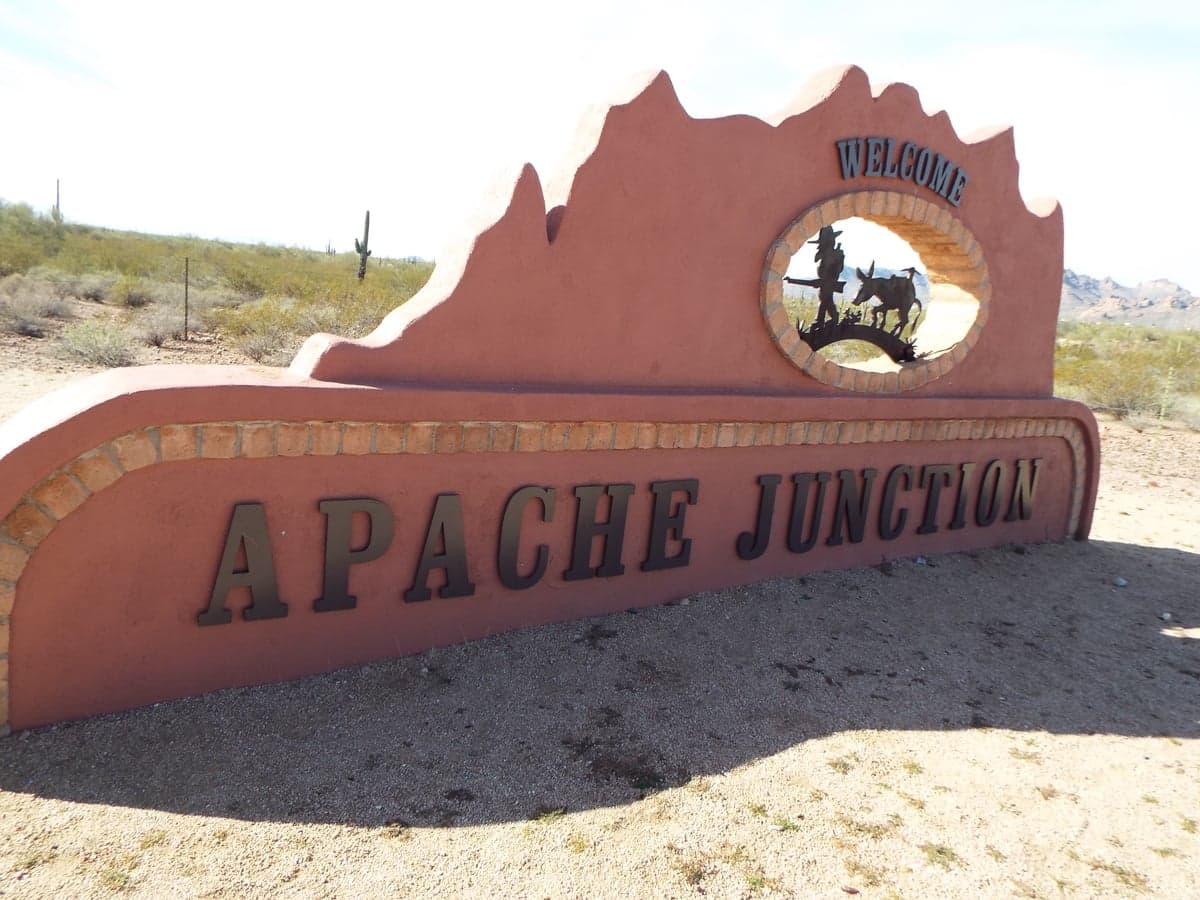
Photo: Wikipedia
Quality of Life in Apache Junction, AZ
Above-average quality of iife. The area offers a reasonable cost of living, decent mobility, and a mix of neighborhood amenities.
What does Quality of Life tell us?
Quality of Life blends cost of living, nearby amenities, socioeconomic signals, and neighborhood character. City-level scores represent the whole municipality; individual neighborhoods can differ.
What does this tell us?
Quality of Life blends cost of living, nearby amenities, socioeconomic signals, and neighborhood character. City-level scores represent the whole municipality; individual neighborhoods can differ.
Cost of Living
20% below national average
The Real Cost of Living in Apache Junction, AZ for 2026
| Tier | Individual | Family (4) |
|---|---|---|
| Survival | $16k | $31k |
| Comfortable | $38k | $56k |
| Luxury | $97k+ | $151k+ |
| Elite (Top 5%) | $115k+ | $178k+ |
104%
The Area Signal
A metric tracking the socioeconomic signals of the area.


Hobbies
Explore the areaGroceries
0 within 10 miles
Gas
0 within 10 miles
Hospital
3 within 20 miles
Airport
PHX — Phoenix Sky Harbor International
Post Office
USPS — Queen Creek, AZ
Critical Amenities
Quality-of-Life Analysis
Apache Junction offers a notably affordable quality of life relative to the broader Phoenix metro area, with a cost of living index of 80 (20% below the U.S. average) that attracts a mix of retirees, outdoor enthusiasts, and families seeking more space for their housing dollar. The city’s population skews older and more blue-collar than neighboring suburbs like Gold Canyon or Mesa, with a median age around 48 and a significant share of residents living in manufactured or mobile homes. This is a community where affordability and proximity to the Superstition Mountains define daily life, not high-end retail or corporate campuses.
Cost of living, housing affordability, and how it compares to nearby cities
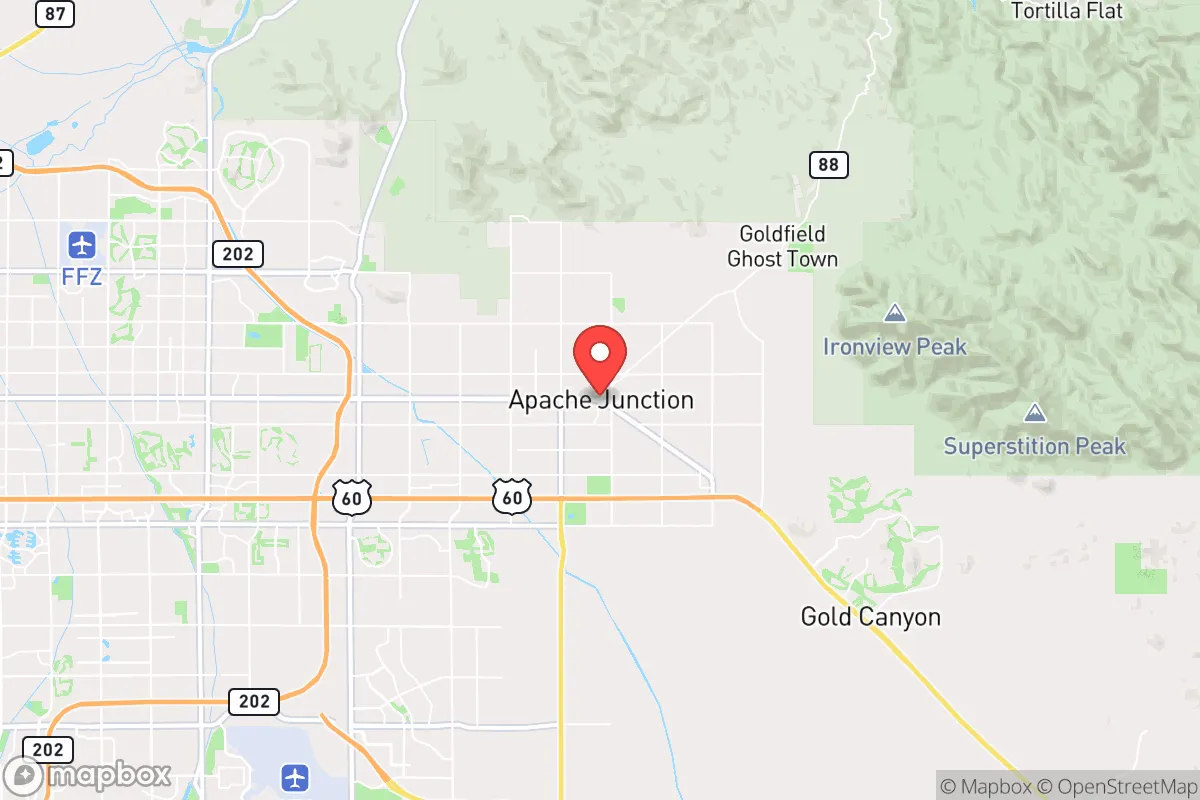
Apache Junction’s housing market is a clear outlier in the East Valley. The median home value sits at $196,700, roughly half the median in Mesa ($390,000) and less than a third of Scottsdale’s ($650,000). Median rent is $1,019, compared to $1,450 in Mesa and over $1,800 in Tempe. This affordability comes with trade-offs: the housing stock is older, with many homes built before 1990, and the city has a higher share of mobile homes (about 30% of units) than any other major Maricopa County municipality. Property taxes are low — around 0.6% of assessed value — but homeowners often face higher insurance premiums due to wildfire risk in the adjacent Tonto National Forest. The average commute of 28.5 minutes is slightly longer than the national average, reflecting the fact that most jobs are in Mesa, Tempe, or Phoenix, requiring a drive along U.S. 60 or State Route 88. For renters and first-time buyers priced out of central Phoenix, Apache Junction provides a viable entry point, though the lack of new construction and limited rental inventory can make finding a unit competitive.
Amenities, schools, and what daily life is like for residents
Daily life in Apache Junction revolves around outdoor recreation and small-town convenience. The city is the gateway to the Superstition Wilderness, with Lost Dutchman State Park and the Tonto National Forest offering hiking, horseback riding, and off-roading within a 10-minute drive. The local school district, Apache Junction Unified, serves about 4,500 students and includes three elementary schools, one middle school, and one high school; its graduation rate hovers around 85%, slightly below the state average of 89%. For shopping and dining, residents rely on the Superstition Springs Center in Mesa (15 minutes west) or local strip malls along Apache Trail, which feature fast-food chains, auto shops, and a few independent Mexican restaurants. Healthcare is limited: the nearest hospital is Banner Goldfield Medical Center in Gold Canyon (8 minutes away), while major trauma care requires a 30-minute drive to Banner Desert in Mesa. The city lacks a traditional downtown core, so social life centers on community events like the Lost Dutchman Days rodeo and the weekly farmers market at the Apache Junction Community Center. Public transit is minimal — Valley Metro bus service runs only along Apache Trail — so a car is essential.
Apache Junction is best suited for budget-conscious homebuyers, retirees on fixed incomes, and outdoor enthusiasts who prioritize mountain access over urban amenities. Families with school-age children may find the district’s academic performance underwhelming compared to Mesa or Chandler, but the lower housing costs can free up income for private school tuition. Professionals commuting to Phoenix or Tempe will accept a 30-minute drive in exchange for a mortgage under $1,500. The city’s character is unpretentious and self-reliant — a place where residents value space, quiet, and the desert landscape over nightlife or cultural institutions. For those who fit that profile, Apache Junction offers a quality of life that is both affordable and deeply connected to the Sonoran Desert.

Crime in Apache Junction, AZ
Lower crime rates than 76% of comparable U.S. locations.
Violent CrimeViolent Crime Analysis
Property CrimeProperty Crime Analysis
Crime Analysis
Apache Junction, Arizona, presents a mixed safety profile that requires careful consideration for potential residents. The city's violent crime rate of 301.1 incidents per 100,000 residents and property crime rate of 1,112.7 per 100,000 place it above national averages, with property crime being a particular concern. As a community situated within the Phoenix metropolitan area, Apache Junction is subject to the broader criminal justice policies of Maricopa County, where progressive prosecutorial approaches have been linked to reduced incarceration rates and, critics argue, increased recidivism.
Crime in context
Apache Junction's violent crime rate is roughly 15% lower than the Arizona state average but remains about 10% higher than the national median. Property crime, however, is a more acute issue: the rate is approximately 30% higher than both the state and national averages. This disparity is especially relevant given Maricopa County's recent shift toward diversion programs and reduced sentencing for property offenses under progressive district attorneys. While these policies aim to reduce jail overcrowding, they have been associated with a rise in repeat property offenses, as offenders face fewer consequences for theft, burglary, and vehicle break-ins. The city's proximity to major highways (US 60 and State Route 88) also facilitates quick getaways for transient criminal activity.
What residents experience
For daily life in Apache Junction, property crime is the most tangible threat. Residents commonly report vehicle break-ins, package theft, and burglaries of sheds or garages, particularly in neighborhoods near the Superstition Freeway corridor. Violent crime is less frequent but includes aggravated assaults and domestic incidents, with robbery rates roughly matching the national average. The city's police department maintains a visible presence, but response times can lag in outlying rural areas. A significant concern is the influence of Maricopa County's justice system: progressive policies that prioritize offender rehabilitation over incarceration have led to shorter sentences and more plea deals, which some residents believe emboldens criminals and undermines public safety. This is particularly problematic for victims, who may feel the system fails to deliver justice.
Neighborhood-level variation is notable. Areas east of Idaho Road and south of US 60 tend to have lower crime rates, while the downtown core and neighborhoods near the Apache Trail (State Route 88) experience higher property crime. Gated communities and homeowners' associations with private security offer a buffer, but renters in older apartment complexes near the city center face elevated risk. For those considering relocation, consulting the Apache Junction Police Department's annual report and local Nextdoor groups can provide granular insight into specific blocks. Overall, while the city offers affordable housing and scenic desert living, its crime landscape—exacerbated by lenient county-level justice policies—demands proactive safety measures and a clear-eyed assessment of risk.
* Values derived from national, state, county, city and local statistics and may differ in a specific area. Last updated: 2026-04-19T19:46:50.000Z
Narrative content on this page is AI-generated and may contain mistakes. Verify any details that matter before acting on them.
ReloMaps may earn a commission from affiliate links at no extra cost to you.

