Personal Sovereignty in Wrangell City And County
Viable for self-reliance. Generally workable, though some barriers may limit total independence.
What does Personal Sovereignty tell us?
Personal Sovereignty measures your capacity for self-reliance and independence with minimal government friction. Higher scores mean fewer barriers between you and the way you want to live... but it assumes you have the space you need and good neighbors.
What does this tell us?
Personal Sovereignty measures your capacity for self-reliance and independence with minimal government friction. Higher scores mean fewer barriers between you and the way you want to live... but it assumes you have the space you need and good neighbors.
State Policy
Energy independence: Net exporter (350% of energy produced in-state)
Personal Liberty
Homesteading

Personal Liberty Analysis
Wrangell City and County, Alaska, offers an autonomy environment shaped by its remote island geography and Alaska’s constitutional commitment to individual liberty. As a unified city-borough government, Wrangell combines municipal and county functions, resulting in a leaner administrative structure than most Lower 48 jurisdictions. The area’s small population—roughly 2,100 residents—and limited local revenue base mean that government services are minimal by design, and residents are expected to handle many aspects of daily life without heavy oversight. For those prioritizing personal sovereignty, Wrangell represents a place where the state’s hands-off ethos meets the practical realities of Southeast Alaska living.
Tax burden and regulatory posture in Wrangell’s unified government
Alaska has no state income tax and no state sales tax, and Wrangell City and County follows suit with a notably light local tax structure. The borough does not levy a local sales tax, which is unusual even by Alaska standards—many Southeast communities like Ketchikan and Juneau impose sales taxes of 5% or more. Property taxes in Wrangell are modest, with a mill rate of approximately 9.5 mills, translating to about $950 annually on a $100,000 home. There is no personal property tax on vehicles or boats, a significant advantage for residents who rely on watercraft for transportation and livelihood. The regulatory posture is similarly restrained: the borough’s code is thin compared to urban jurisdictions, with no zoning overlay districts, no historic preservation ordinances, and no rent control. Building permits are required for new construction, but the process is straightforward, with typical review times under two weeks. The unified city-borough structure eliminates the duplication of permits and fees that often occurs in separate city and county systems. For a conservative-leaning individual or family, the combination of no income tax, no sales tax, and low property tax creates a baseline of fiscal sovereignty that is difficult to match in the contiguous United States.
Self-defense and gun law specifics in Alaska’s constitutional carry state
Alaska is a constitutional carry state, meaning no permit is required to openly carry or conceal a firearm for anyone legally allowed to possess one. Wrangell City and County does not impose any local firearm ordinances beyond state law, so there are no additional waiting periods, magazine capacity limits, or registration requirements. The borough’s remote location and prevalence of bear and moose populations mean that firearm ownership is near-universal for practical reasons, not just recreational ones. Alaska law explicitly preempts local governments from regulating firearms, so Wrangell cannot enact the kind of restrictions seen in cities like Anchorage or Juneau, which have considered local gun control measures. Stand-your-ground laws are in effect, and there is no duty to retreat in any place where a person has a legal right to be. Use of deadly force is justified against threats of death, serious physical injury, or certain violent felonies. For residents who prioritize self-defense autonomy, Wrangell offers one of the most permissive legal environments in the United States, with no local barriers and a state-level framework that strongly favors the individual’s right to carry and use firearms for protection.
Self-reliance and homesteading viability: lot sizes, zoning, and off-grid feasibility
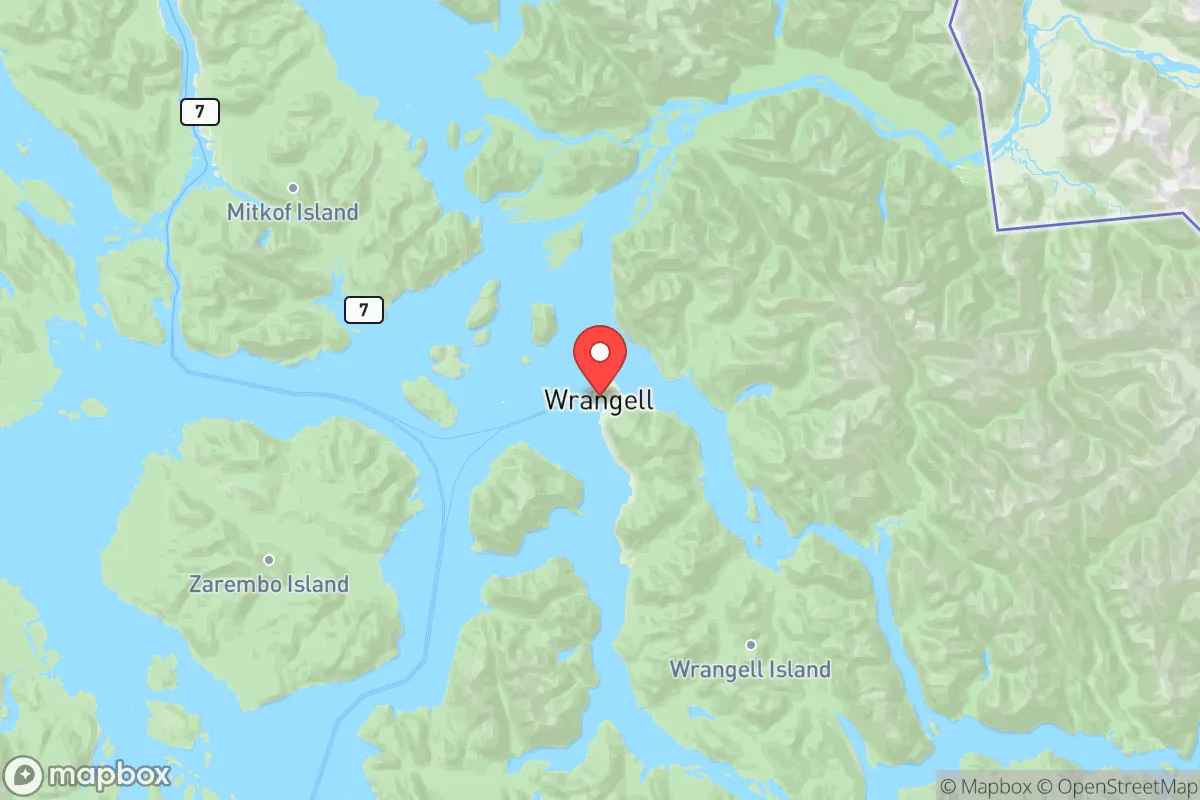
Wrangell’s geography and land-use policies make it one of the more viable locations in Alaska for off-grid living and homesteading. The borough’s zoning code is minimal, with most land outside the downtown core designated as rural or resource use, allowing for a wide range of activities without special permits. Minimum lot sizes in rural zones are 1 acre, but many parcels available for purchase are larger—5 to 40 acres—particularly along the Zimovia Highway corridor and on the mainland side of the borough near the Stikine River delta. Off-grid living is common and accepted: there are no building codes requiring connection to municipal water or sewer outside the downtown area, and many residents rely on rainwater catchment, propane, and solar or generator power. The borough does not enforce occupancy limits or restrict alternative housing types like yurts, cabins, or tiny homes on rural land. Areas like Thoms Place and Shoemaker Bay have clusters of off-grid homes, while Pat’s Creek and 11 Mile offer larger tracts suitable for subsistence gardening and small-scale livestock. The main constraint is access: many parcels are only reachable by boat or floatplane, which adds to the self-reliance requirement. For a family seeking to minimize dependence on utilities and government services, Wrangell’s combination of permissive zoning, affordable land, and a culture of self-sufficiency is among the strongest in Alaska.
Personal liberties: parental rights, medical autonomy, speech, and property
Alaska’s state constitution provides strong protections for personal liberties, and Wrangell’s local government does not add restrictions. Parental rights in education are robust: Alaska law requires parental consent for any medical treatment of minors, and the state does not mandate sex education or require specific curriculum content that overrides parental authority. Wrangell’s school district, serving roughly 300 students, operates with a conservative board that has resisted state-level pushes for comprehensive sex ed or critical race theory content. Medical autonomy is similarly broad: Alaska has no vaccine mandate for adults, and while school vaccine requirements exist, medical and religious exemptions are available and not subject to burdensome administrative hurdles. Telehealth and direct-primary-care arrangements are legal and growing, giving residents alternatives to the limited local healthcare system. Free speech protections are standard under the First Amendment, and Wrangell has no local noise ordinances, sign codes, or public assembly restrictions that would chill expression. Property rights are strongly protected: Alaska’s constitution requires just compensation for any regulatory taking, and Wrangell does not impose rent control, inclusionary zoning, or short-term rental bans. The borough’s planning department processes variance requests quickly, and there is no design review board or aesthetic committee. For a reader who values the ability to raise children according to their own values, make medical decisions without government interference, and use their property as they see fit, Wrangell’s legal environment is permissive by national standards.
Overall, Wrangell City and County ranks among the most sovereignty-friendly jurisdictions in the United States for individuals and families who prioritize personal freedom. The absence of income and sales taxes, constitutional carry with no local gun restrictions, permissive zoning for off-grid living, and strong protections for parental and property rights create a legal environment that is consistently light-touch. Compared to Southeast Alaska peers like Juneau or Ketchikan, Wrangell is notably less regulated and more affordable. The trade-off is that this autonomy comes with real isolation: limited healthcare, no big-box retail, and a climate that demands self-sufficiency. For those willing to accept those conditions, Wrangell offers a level of personal sovereignty that is increasingly rare in the modern United States.

* Values derived from national, state, county, city and local statistics and may differ in a specific area. Last updated: 2026-07-24T13:55:02.000Z
Narrative content on this page is AI-generated and may contain mistakes. Verify any details that matter before acting on them.
ReloMaps may earn a commission from affiliate links at no extra cost to you.

