Demographics of Wrangell City And County
Affluence Level in Wrangell City And County
A middle-class area roughly in line with national averages across income, home values, education, and employment.
People of Wrangell City And County
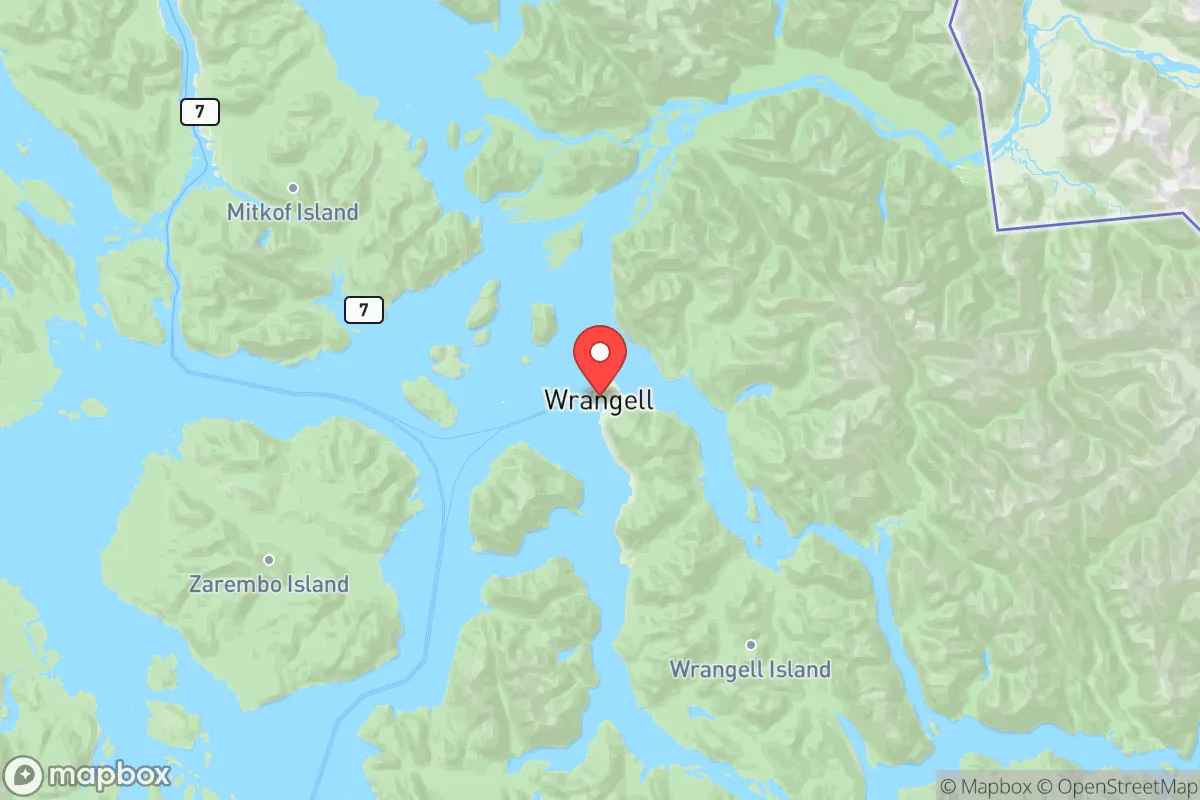
Wrangell City and County, Alaska, is home to roughly 2,106 residents, a population defined by its deep Indigenous Tlingit roots, a historic overlay of Euro-American settlers, and a small but growing East/Southeast Asian community. The population density is extremely low, and the county’s identity is shaped by its remote island geography, a working waterfront economy, and a strong sense of local self-reliance. Today, the population is older and less diverse than the state average, with a notable 54.2% white share and a 4.1% East/Southeast Asian presence, while the Black and Indian subcontinent populations remain negligible.
Settlement & growth (pre-1960)
The human history of Wrangell begins with the Tlingit people, who have inhabited the islands and mainland of Southeast Alaska for thousands of years. The Stikine Tlingit, specifically the Naa Kahídi Tlingit clans, established seasonal villages and fish camps around the mouth of the Stikine River and on Wrangell Island. The first European contact came in the late 18th century, when Russian fur traders explored the area, but permanent non-Native settlement did not begin until 1834, when the Russian-American Company built a fortified trading post called Redoubt Saint Dionysius on the site of present-day Wrangell. This post served as a hub for the fur trade with the Tlingit and for trade with the Hudson's Bay Company, which leased the post from 1840 to 1849. The Russian period left little demographic mark beyond a handful of traders and Creole (mixed Russian-Native) families.
The United States purchased Alaska in 1867, and the Army established a garrison at Wrangell in 1868, naming it Fort Wrangell. This military presence attracted a small wave of American merchants, prospectors, and missionaries. The discovery of gold in the Stikine River region in the 1870s and 1880s turned Wrangell into a supply and staging point for miners heading inland. This gold rush era brought a transient population of mostly white American and European men, as well as a small number of Chinese laborers who worked in mining camps and as domestic servants. The Chinese population, never large, largely dispersed after the gold rushes faded. By the 1890s, the permanent population of Wrangell was a mix of Tlingit families living in the village of Wrangell (now part of the city) and a small white merchant class.
The early 20th century saw the establishment of the salmon canning industry, which became the economic backbone of Wrangell for decades. Canneries along the Stikine River and on nearby islands employed seasonal workers, including Tlingit fishermen, white cannery workers, and a small number of Filipino and Japanese laborers who arrived as part of the broader Asian labor migration to the Pacific Northwest. The town of Wrangell remained the only significant settlement in what is now Wrangell City and County; the rest of the county is composed of rugged, uninhabited islands and mainland wilderness. The population grew slowly, reaching about 1,200 by 1950, and remained overwhelmingly white and Tlingit, with a small Filipino enclave. The Alaska Native Claims Settlement Act of 1971 would later formalize Tlingit land ownership through the Wrangell Cooperative Association, the local tribal government.
Modern era (post-1965)
The 1965 Hart-Cellar Act had a muted direct effect on Wrangell due to its remote location and limited economic opportunities. Unlike urban Alaska, Wrangell did not see large-scale immigration from Asia or Latin America. The foreign-born population today stands at just 3.4%, well below the national average. The most notable post-1965 demographic shift has been the arrival of a small but steady stream of East and Southeast Asian immigrants, primarily from the Philippines and Vietnam, who came to work in the fishing and seafood processing industries. These families have concentrated in the city of Wrangell, where they form a visible minority community, though no formal ethnic enclave exists. The Asian share of the population is 4.1%, a figure that has remained stable over the past two decades.
Domestic migration has been the larger force shaping modern Wrangell. The decline of the timber industry in the 1990s and early 2000s triggered a population exodus, as sawmills closed and jobs disappeared. The population peaked at around 2,400 in the 1980s and has since declined to 2,106. Out-migration has been disproportionately among younger, working-age adults, leaving an older population with a median age above the state average. The white population share has declined slightly from over 60% in 2000 to 54.2% today, partly due to out-migration and partly due to a small increase in Hispanic residents (5.5%), many of whom work in seasonal seafood processing. The Black population remains negligible at 0.1%, and the Indian subcontinent population is effectively zero. The Tlingit population, counted as part of the broader Native American category, remains a significant cultural and political force, concentrated in the Wrangell city area and the surrounding traditional villages of the Stikine River delta.
The future
The population of Wrangell City and County is projected to continue a slow decline or remain stagnant over the next 10-20 years, barring a major economic shift such as a new mining or tourism boom. The county's remote location, limited job base, and aging housing stock make it unlikely to attract significant domestic in-migration. The East/Southeast Asian community is expected to remain small and stable, sustained by family ties and the seafood industry, but not growing rapidly. The Hispanic population may increase modestly as seasonal processing workers settle permanently, but the overall foreign-born share is unlikely to rise above 5-6%.
The most significant demographic trend is the aging of the white and Tlingit populations, which will likely lead to a smaller, older county overall. The Tlingit community, through tribal governance and land holdings, will continue to play a central role in local politics and culture. The county is not becoming more diverse in the way that urban Alaska or the Lower 48 are; instead, it is becoming slightly less white and slightly more Hispanic and Asian, but at a very gradual pace. The cultural identity of Wrangell remains rooted in its Tlingit heritage, its fishing and logging history, and a conservative, self-sufficient ethos that values local control and resource extraction.
For someone moving in now, Wrangell is a place where community ties are strong, the pace of life is slow, and the population is stable but aging. New residents will find a predominantly white and Tlingit community with small but established Filipino and Hispanic minorities, a low cost of living by Alaska standards, and a lifestyle defined by the sea and the forest. The county is not growing, but it offers a tight-knit, historically grounded environment for those seeking a remote, resource-based way of life.

* Values derived from national, state, county, city and local statistics and may differ in a specific area. Last updated: 2026-07-24T13:55:02.000Z
Narrative content on this page is AI-generated and may contain mistakes. Verify any details that matter before acting on them.
ReloMaps may earn a commission from affiliate links at no extra cost to you.

