Strategic Assessment of Sitka City And County
Deep buffer from population centers and strategic targets. Low natural disaster risk and minimal exposure to border or coastal threats.
What does the Strategic Assessment tell us?
Our Strategic Assessment grades tactical survivability of an area. Major population centers, military targets, fallout zones, natural disasters, and border exposure all drive risk — lower exposure means a more defensible position in a crisis.
This is heavily inspired by Joel Skousen's Strategic Relocation book. Highly recommended you checkout the book ($)What does this tell us?
Our Strategic Assessment grades tactical survivability of an area. Major population centers, military targets, fallout zones, natural disasters, and border exposure all drive risk — lower exposure means a more defensible position in a crisis.
This is heavily inspired by Joel Skousen's Strategic Relocation book. Highly recommended you checkout the book ($)Strategic Pillars

Key Distances
Strategic Assessment Analysis
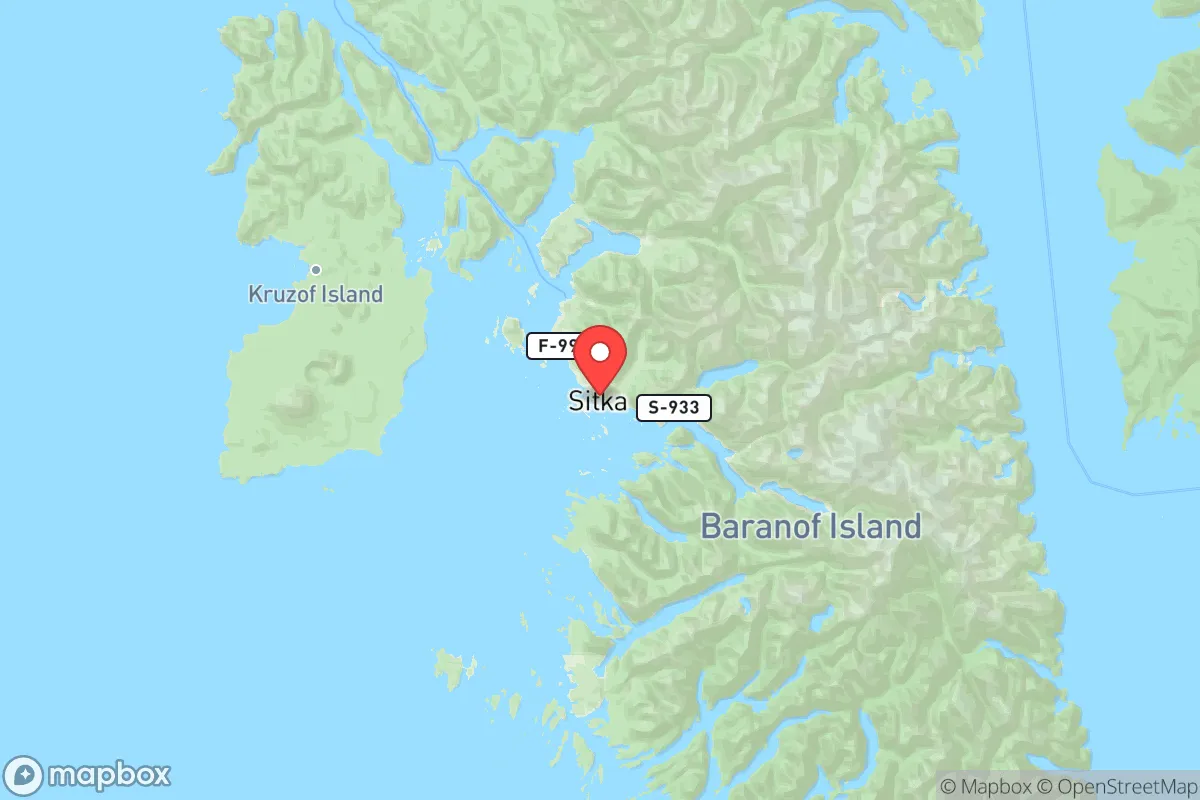
Sitka City and Borough, located on Baranof Island in the Alexander Archipelago, offers a resilience profile that is as unique as its geography—defined by extreme isolation, a temperate rainforest climate, and a complete absence of road connections to the mainland. For a relocator prioritizing strategic depth and self-sufficiency, Sitka presents a compelling case: it is far removed from the continental grid, has no direct highway access to any major population center, and sits over 600 miles northwest of Seattle, the nearest major metropolitan hub. This remoteness, combined with a working waterfront and a population of roughly 8,500, creates a community that is inherently practiced in logistical independence, though it comes with distinct trade-offs in supply chain fragility and exposure to Pacific weather systems.
Geographic position and natural advantages for strategic depth
Sitka’s location on the west coast of Baranof Island, facing the Gulf of Alaska, provides a natural buffer that few other U.S. communities can claim. The borough is surrounded by Tongass National Forest and is accessible only by air or sea—there are no roads connecting Sitka to the rest of Alaska or North America. This isolation is a double-edged sword but serves as a powerful deterrent to the kind of cascading disruptions that affect grid-tied, road-accessible towns. The nearest city of comparable size, Juneau, is roughly 95 miles northeast as the crow flies but requires a plane or boat to reach. Anchorage, the state’s largest city, is over 600 miles away by air. For a reader concerned with fallout-related risks or large-scale societal disruption, Sitka’s lack of proximity to high-value targets—such as military installations, major ports, or refinery corridors—is a significant advantage. There are no strategic bombing targets, nuclear power plants, or major industrial complexes within the borough. The nearest U.S. military installation of note is Joint Base Elmendorf-Richardson near Anchorage, over 600 miles distant, placing Sitka well outside any plausible blast or fallout zone from a continental-scale event.
Risks, exposures, and proximity to fallout-relevant landmarks
While Sitka is far from continental targets, it is not without its own risk profile. The borough sits within the Pacific Ring of Fire and experiences frequent seismic activity; the 1964 Good Friday earthquake, the most powerful ever recorded in North America, caused significant damage in Sitka from a resulting tsunami. The community lies in a tsunami hazard zone, with inundation maps showing risk along the waterfront and low-lying areas. Volcanic ashfall from eruptions in the Aleutian arc or the Wrangell Volcanic Field is an occasional but real concern, capable of disrupting air travel and contaminating water supplies. For a relocator thinking about man-made risks, Sitka’s distance from the Lower 48’s refinery corridor (e.g., the Houston Ship Channel or the Mississippi River chemical belt) and from major nuclear facilities (the nearest commercial reactor is over 1,000 miles away in Washington state) means that fallout from a continental industrial or nuclear event is unlikely to reach the borough in hazardous concentrations. However, Sitka’s reliance on marine fuel deliveries and a single airport means that a disruption to global shipping or aviation—whether from a pandemic, conflict, or fuel shortage—would hit the community hard and fast. The borough’s strategic vulnerability is not proximity to targets, but dependence on a thin logistical tether to the outside world.
Practical resilience for a relocator: food, water, energy, and defensibility
Sitka’s practical resilience is a mixed picture. The community draws its drinking water from Blue Lake and Sawmill Creek, both surface water sources fed by abundant rainfall—Sitka averages over 120 inches of precipitation annually. This water supply is gravity-fed, meaning it does not rely on electric pumps, a significant advantage in a grid-down scenario. Food resilience is moderate: the ocean provides salmon, halibut, rockfish, and shellfish, and the rainforest supports deer and berry foraging. Sitka has a strong subsistence tradition, and the Sitka Local Foods Network supports community gardens and farmers markets, but the borough imports the vast majority of its staple goods—grains, dairy, produce, and fuel—by barge and air. Energy comes primarily from hydroelectric power via the Blue Lake and Green Lake dams, supplemented by diesel generators. This gives Sitka a relatively stable, renewable-heavy grid, but the system is not redundant against a catastrophic dam failure or extended drought. Defensibility is high: the town is compact, surrounded by dense forest and ocean, with limited entry points by sea and air. A small population and strong community ties make it easier to organize and secure than a sprawling suburban area. However, the same geography that provides defensibility also makes evacuation or resupply difficult in a crisis. For a relocator, Sitka rewards those who arrive with stored supplies, marine skills, and a willingness to participate in the local subsistence economy.
Overall, Sitka City and Borough offers a strategic profile that prioritizes isolation and natural resource access over connectivity and convenience. It is one of the few places in the United States where a relocator can be genuinely far from the risks associated with large cities, industrial corridors, and military targets, while still having access to modern infrastructure like reliable electricity and clean water. The trade-offs are real: high cost of living, limited medical services (the nearest hospital with advanced trauma care is in Anchorage or Seattle), and a climate that demands constant moisture management. For the single individual or family willing to invest in marine transportation, food storage, and community integration, Sitka represents a defensible, low-fallout-risk location with a proven track record of weathering both natural and economic storms. It is not a bug-out location for the unprepared, but a long-term home for those who treat resilience as a daily practice rather than a weekend project.

* Values derived from national, state, county, city and local statistics and may differ in a specific area. Last updated: 2026-07-22T11:40:03.000Z
Narrative content on this page is AI-generated and may contain mistakes. Verify any details that matter before acting on them.
ReloMaps may earn a commission from affiliate links at no extra cost to you.

