Personal Sovereignty in Sitka City And County
Viable for self-reliance. Generally workable, though some barriers may limit total independence.
What does Personal Sovereignty tell us?
Personal Sovereignty measures your capacity for self-reliance and independence with minimal government friction. Higher scores mean fewer barriers between you and the way you want to live... but it assumes you have the space you need and good neighbors.
What does this tell us?
Personal Sovereignty measures your capacity for self-reliance and independence with minimal government friction. Higher scores mean fewer barriers between you and the way you want to live... but it assumes you have the space you need and good neighbors.
State Policy
Energy independence: Net exporter (350% of energy produced in-state)
Personal Liberty
Homesteading

Personal Liberty Analysis
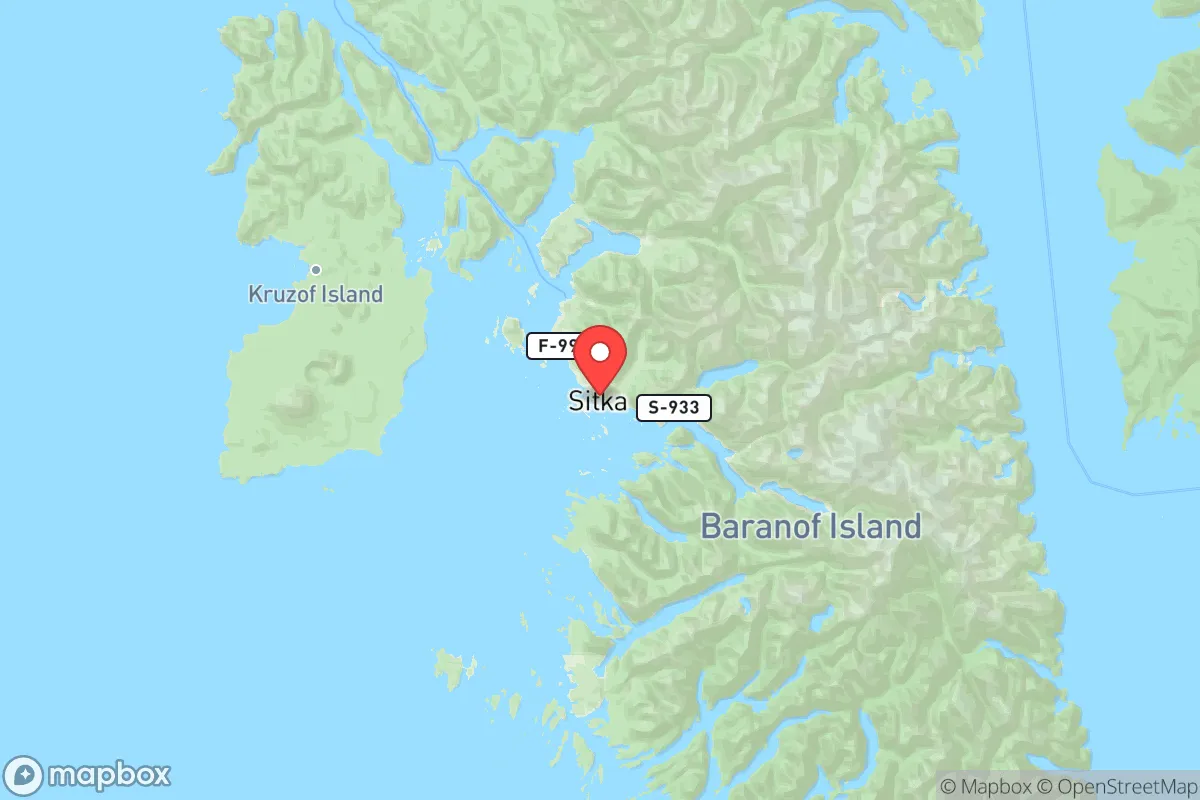
Sitka City and County, Alaska, presents a unique sovereignty environment shaped by its remote island geography, a strong commercial fishing and tourism economy, and the overarching legal framework of the State of Alaska. While Alaska is constitutionally a high-personal-freedom state with no state income or sales tax, Sitka’s local governance and geographic isolation create a distinct blend of autonomy and regulatory oversight that differs markedly from mainland Alaska or the Lower 48. For a relocation-minded individual or family prioritizing personal independence, Sitka offers a high degree of self-reliance in daily life, but with specific constraints around land use, self-defense, and regulatory posture that require careful consideration.
Tax burden and regulatory posture in Sitka compared to mainland Alaska
Sitka City and County operates under a unified municipal government that levies a 5% sales tax (one of the higher rates in Alaska) and a moderate property tax of roughly 9.5 mills, which is lower than Anchorage but higher than many unorganized borough areas. There is no state income tax and no state sales tax, keeping the overall tax burden relatively light compared to most U.S. jurisdictions. However, Sitka’s regulatory posture is more hands-on than in unincorporated areas like Tenakee Springs or Port Alexander, where zoning and building codes are minimal. Within Sitka proper, the city enforces building permits, coastal zone management restrictions, and a land-use code that limits development on steep slopes and near salmon streams. The Starrigavan Valley area, just north of town, has more relaxed subdivision rules than the densely built downtown core, but still falls under city jurisdiction. For a reader accustomed to rural Texas or Idaho, Sitka’s regulatory environment feels moderately engaged but not oppressive, with the key friction point being the cost and timeline of permitting for new construction or major renovations.
Self-defense and gun law specifics in Sitka and across Southeast Alaska
Alaska is a constitutional carry state, and Sitka fully reflects that: no permit is required to carry a concealed firearm for anyone 21 or older who can legally possess a firearm. The city has no local gun ordinances beyond state law, meaning no magazine capacity limits, no assault weapon bans, and no waiting periods. Open carry is legal without a permit. Sitka’s remote location means that firearms are a practical tool for wildlife defense, particularly against brown bears, which are common on the island and in the Indian River Valley and Gavan Hill trails. The local gun culture is pragmatic rather than political; most households own at least one firearm, and the Sitka Gun Club on Japonski Island offers a rifle and pistol range. There are no gun-free zones beyond federal restrictions (schools, post offices). For a self-defense-minded individual, Sitka offers one of the most permissive legal environments in the U.S., with the caveat that the small-town social fabric means most residents know each other, and confrontational scenarios are rare. The outlying community of Port Alexander, accessible only by boat or seaplane, has an even more informal approach to firearms, with virtually no law enforcement presence and a strong expectation of personal responsibility.
Self-reliance and homesteading viability: lot sizes, zoning, and off-grid feasibility
Sitka’s geography—a narrow strip of land between the Pacific Ocean and steep coastal mountains—severely limits the availability of large, affordable homesteading parcels. Within the city limits, most residential lots are 5,000 to 10,000 square feet, with zoning that requires connection to municipal water and sewer in most neighborhoods. True off-grid living is difficult inside the city because the code mandates utility hookups for new dwellings. However, areas like Sawmill Creek Road and Halibut Point Road have some larger lots (1–5 acres) where septic systems and well water are permitted, and a few properties operate on solar or generator power. The Kruzof Island area, accessible only by boat, has no municipal services and allows complete off-grid homesteading, but land there is rarely on the open market and is typically passed down through families. For a family seeking a self-reliant lifestyle with a large garden, small livestock, and wood heat, the Starrigavan Valley offers the best balance of road access and acreage, though prices are high (often $100,000–$200,000 for a raw 5-acre lot). The regulatory posture on homesteading is light-touch: no county-level animal ordinances restrict chickens, goats, or bees, and there are no homeowners’ associations in most areas. The main constraint is the physical environment—heavy rainfall (over 90 inches annually), steep terrain, and shallow soils—rather than government rules.
Personal liberties: parental rights, medical autonomy, speech, and property
Alaska law strongly protects parental rights in education and healthcare. Sitka has no local ordinances that override state-level parental autonomy; parents can homeschool without excessive reporting requirements, and the Sitka School District offers a correspondence program for families who want a hybrid approach. Medical autonomy is high: Alaska allows direct primary care agreements, and Sitka’s Southeast Alaska Regional Health Consortium (SEARHC) provides care without the bureaucratic hurdles common in urban systems. There are no local vaccine mandates beyond state school requirements, and religious or philosophical exemptions are available. Free speech is robustly protected under the Alaska Constitution, which provides stronger protections than the First Amendment in some areas, and Sitka has no local noise or signage ordinances that would chill political expression. Property rights are generally respected, but the city’s coastal zone management plan imposes restrictions on shoreline development, and the Alaska Department of Natural Resources holds significant subsurface rights even on private land. For a property owner in Silver Bay or Katlan Bay, the main limitation is the inability to build within 50 feet of the mean high-water line without a permit, which can be a multi-year process. Overall, Sitka’s personal liberties environment is strong by national standards, with the primary friction points being environmental permitting and the high cost of land rather than intrusive governance.
Relative to other parts of Alaska, Sitka offers a moderate-to-high sovereignty profile—less autonomous than the truly unincorporated areas like the Yukon-Kuskokwim Delta or the remote Aleutian Islands, but significantly freer than Anchorage or Juneau in terms of gun laws, tax burden, and parental rights. For a conservative-leaning individual or family who values self-reliance and is willing to accept the logistical challenges of island life—high shipping costs, limited road network, and a wet climate—Sitka provides a legal and cultural environment where personal sovereignty is the default rather than the exception. The key trade-off is that the same geography that enables autonomy also limits the scale of homesteading and off-grid living, making Sitka a better fit for those who prioritize freedom within a small-town community framework than for those seeking vast, unregulated acreage.

* Values derived from national, state, county, city and local statistics and may differ in a specific area. Last updated: 2026-07-22T11:40:03.000Z
Narrative content on this page is AI-generated and may contain mistakes. Verify any details that matter before acting on them.
ReloMaps may earn a commission from affiliate links at no extra cost to you.

