Political ClimatePolitical Climate in Sitka City And County
Showing state-level results — no local-only data available.
Local Political AnalysisPolitical Analysis of Sitka City And County
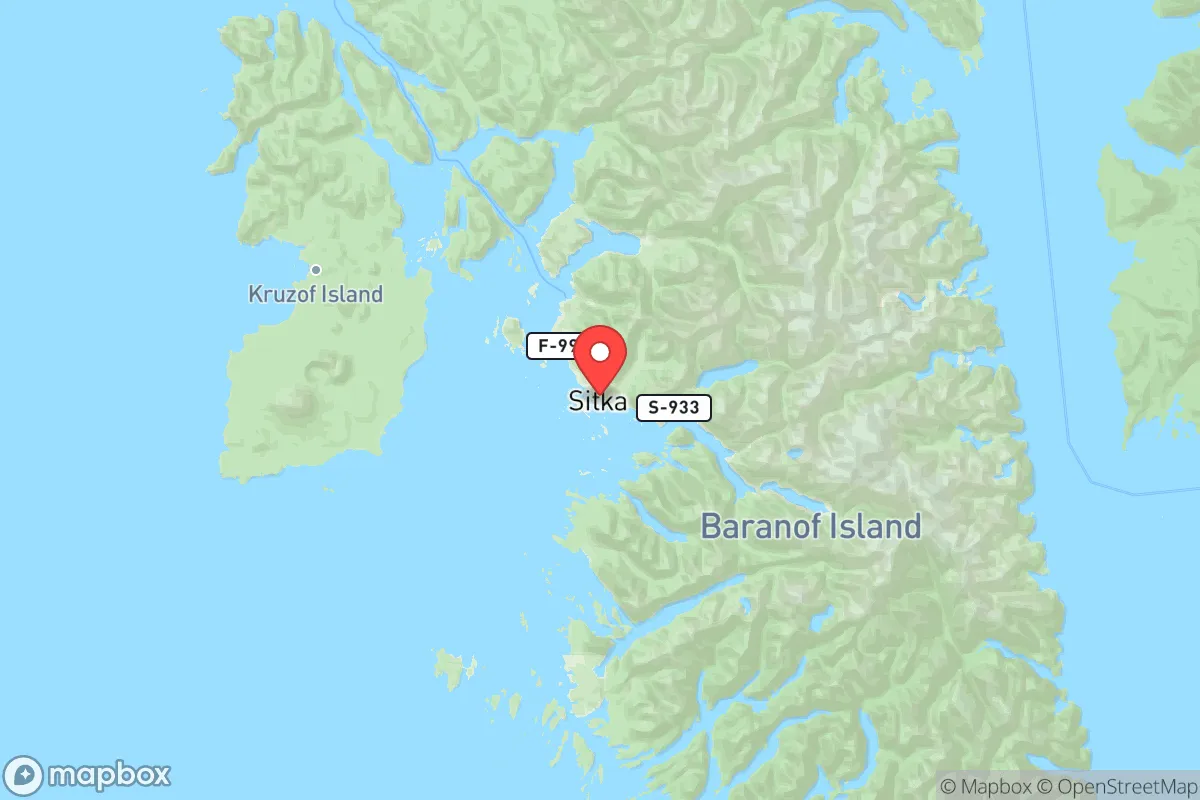
Sitka City and County, Alaska, carries a Cook Partisan Voting Index (PVI) of R+6, meaning it votes about six points more Republican than the national average. This puts it squarely in line with the state of Alaska as a whole, which also holds a PVI of R+6. However, that single number masks a more nuanced reality: Sitka is a moderate, independent-minded community where the local political culture often diverges from the hardline partisan trends seen in other parts of the state, particularly the Mat-Su Valley. The city itself has a strong libertarian streak, with a significant number of voters who register as nonpartisan or undeclared, and local elections frequently hinge on personality and local issues rather than party labels.
How it compares
While the PVI matches the state average, the character of that Republican vote is different. In the 2022 gubernatorial election, Sitka gave moderate Republican Mike Dunleavy a smaller margin than he received statewide, while independent candidate Bill Walker—a former governor and Sitka resident—pulled a disproportionately high share of the vote here. This reflects a local preference for pragmatic, fiscally conservative but socially moderate candidates. Compare this to the heavily Republican precincts in the Mat-Su Borough or the reliably Democratic strongholds in Juneau and Anchorage's midtown. Within Sitka City and County itself, the political geography is fairly uniform; there aren't distinct "red" or "blue" towns like you'd find in a larger county. The entire borough is essentially the city of Sitka and its immediate surroundings, so the political variation is more about neighborhood-level trends—the older, more established neighborhoods near downtown tend to lean slightly more Democratic, while the newer subdivisions on the outskirts of town show a stronger Republican tilt. The swing precincts are the ones covering the central part of town and the area around the University of Alaska Southeast campus, where student and faculty influence can shift an election.
What this means for residents
For conservative residents, the R+6 lean means that Republican candidates generally win local and state races, and the local government tends to be fiscally conservative. Property taxes are relatively low, and there's strong support for resource development, particularly in the fishing and timber industries. However, the local Republican party is not as dominant as in other parts of Alaska; a conservative here will find their views on guns and taxes are mainstream, but they may need to be more accommodating on social issues like LGBTQ+ rights or environmental protections. For liberal residents, the political climate can feel frustrating at the state level, but locally, there's a strong tradition of progressive activism, especially around environmental conservation, public education, and tribal sovereignty. The Sitka Tribe of Alaska is a significant political force, and issues like marine habitat protection and sustainable tourism often see bipartisan support. Neither side feels completely at home, which is actually the point—Sitka's politics are a constant negotiation between competing values, not a rubber stamp for either party.
Culturally, Sitka stands apart from much of Alaska. The town's history as the capital of Russian America and its strong Tlingit heritage create a unique political identity. There's a palpable resistance to outside corporate influence, whether from large fishing fleets or cruise ship conglomerates, and a deep-seated belief in local control. This manifests in policies like the city's strict limits on cruise ship passenger numbers and a strong push for local food sovereignty. The result is a political climate that is conservative in its distrust of big government, but liberal in its embrace of community and environmental stewardship. It's a place where a hunter and a marine biologist can find common ground on protecting salmon habitat, even if they disagree on everything else. That's the real Sitka: a small, isolated community where politics is personal, and the bottom line is always about what works for the people who live here year-round.

State Political ClimatePolitical Climate in Alaska
State Political AnalysisPolitical Environment in the State
Alaska is a fascinating political outlier: a state that votes reliably Republican in presidential elections (Cook PVI R+6) but has a deeply independent, libertarian streak that makes its politics far less predictable than the label suggests. Over the past 20 years, the state has shifted from a moderate, cross-party consensus driven by oil wealth and federal ties to a more polarized, populist-conservative posture, though it still elects centrists like Senator Lisa Murkowski via write-in campaigns. For a relocator, this means a place where conservative values on resource development and self-reliance dominate, but where government overreach—whether from Juneau or Washington D.C.—is met with fierce skepticism from both sides.
Urban vs. rural divide
The political map of Alaska is a study in contrasts. Anchorage, home to 40% of the state’s population, is the swing region: its more liberal-leaning districts (especially around midtown and the Hillside) often vote Democratic, while the Chugiak-Eagle River area is a conservative stronghold. Fairbanks leans right, driven by military families at Fort Wainwright and a strong resource-extraction workforce, but its university community keeps it from being a lock. Juneau, the capital, is the most reliably Democratic city, powered by state employees and a tourism economy. The real story is the Bush—the vast, rural Native Alaska regions like the Yukon-Kuskokwim Delta and Nome. These areas vote overwhelmingly Democratic in state races due to tribal solidarity and support for subsistence rights, but they often split tickets on social issues. The Mat-Su Borough, anchored by Wasilla and Palmer, is the state’s most conservative bloc—a fast-growing exurban region where gun rights, low taxes, and opposition to federal land control are near-religious tenets.
Policy environment
Alaska’s policy environment is defined by its unique fiscal structure. There is no state income tax and no statewide sales tax, making it one of the most tax-friendly states in the country. Revenue comes overwhelmingly from oil production taxes and the Permanent Fund, which also pays an annual dividend (the PFD) to every resident—a check that in good years exceeds $1,500. This creates a powerful pro-development consensus: both parties generally support resource extraction. Education policy is locally controlled, with no statewide school choice program, though charter schools and homeschooling are common, especially in the Mat-Su. Healthcare is a mixed bag: the state expanded Medicaid under the ACA in 2015, but rural access remains poor, and many residents rely on the federal Indian Health Service. Election laws are among the most accessible in the nation: Alaska uses a top-four primary system and ranked-choice voting for general elections, a reform passed by ballot initiative in 2020 that has frustrated some conservatives who see it as diluting partisan power.
Recent policy direction
Recent legislation shows a state pulling in multiple directions. On gun rights, Alaska is among the most permissive: no permit required for concealed carry, no magazine limits, and a 2013 law explicitly nullifying any future federal gun restrictions. Parental and education rights saw a flashpoint in 2023 when Governor Mike Dunleavy vetoed a bipartisan education funding bill over a provision requiring school districts to notify parents of curriculum changes—a move that stalled the bill but signaled a pro-parental-rights stance. On medical and bodily autonomy, Alaska has no trigger law on abortion; the state Supreme Court has repeatedly upheld abortion access under the state constitution’s privacy clause, making it a relative safe haven in the region. Property rights are a constant battleground: the state aggressively fights federal land designations, with the Dunleavy administration suing the Biden administration over the “no new roads” rule in the Tongass National Forest. Voting and ballot access remain expansive: same-day registration, no-excuse absentee voting, and the ranked-choice system are all in place, though a 2024 ballot measure to repeal ranked-choice voting failed narrowly, indicating the issue remains unsettled.
Civil unrest & political movements
Alaska’s political movements are less about street protests and more about organized resistance to federal authority. The Alaska Independence Party, a secessionist group that once elected Governor Wally Hickel, still has a small but vocal presence, advocating for a vote on leaving the Union. The Pebble Mine controversy in the Bristol Bay region has been a decade-long flashpoint, pitting pro-development conservatives against a coalition of Native tribes, commercial fishermen, and environmentalists—a rare issue where rural Democrats and urban liberals align. Election integrity controversies flared after 2020, with the Alaska Republican Party formally censuring Senator Murkowski for voting to convict Trump in his second impeachment trial, but no major fraud allegations have taken root. Immigration politics are muted—Alaska has a tiny foreign-born population—but the state has no sanctuary policies, and law enforcement cooperates with federal immigration authorities. The most visible political movement is the “Don’t California My Alaska” sentiment, a grassroots pushback against perceived liberal transplants, which manifests in local zoning fights and opposition to bike lanes or density in Anchorage.
Projection
Over the next 5-10 years, Alaska’s politics will likely become more conservative, but in a populist, anti-establishment vein rather than a traditional Republican one. In-migration is heavily skewed toward the Mat-Su Borough and other exurban areas, where families from California and Washington are drawn by low taxes and space—but these newcomers often bring a more libertarian, less socially conservative bent. The state’s demographic decline (population has shrunk since 2016) means the political power of the Native Bush will grow proportionally, potentially keeping the state competitive in state legislative races. The ranked-choice voting system is likely here to stay, which will continue to empower centrists and independents. The big wildcard is oil: if production declines further, the state will face a fiscal crisis that could force a sales tax or income tax, which would fundamentally reshape the political landscape. For now, expect more of the same: a Republican-leaning state that occasionally elects a Democrat to a statewide office, where the real fights are over land use and the size of the PFD check.
For a new resident, the bottom line is this: Alaska offers a high degree of personal freedom—low taxes, strong gun rights, and minimal government intrusion into daily life—but that freedom comes with a trade-off. Public services are thin, especially outside Anchorage, and the political climate is one of constant tension between resource development and conservation. Conservatives will find a welcoming environment in the Mat-Su or Fairbanks, with like-minded neighbors and a state government that generally shares their priorities. Liberals will find safe harbor in Juneau or parts of Anchorage, but should expect to be in the minority. The key is to understand that Alaska’s politics are less about left vs. right and more about local vs. federal control—a sentiment that unites most Alaskans, regardless of party.
* Values derived from national, state, county, city and local statistics and may differ in a specific area. Last updated: 2026-07-22T11:40:03.000Z
Narrative content on this page is AI-generated and may contain mistakes. Verify any details that matter before acting on them.
ReloMaps may earn a commission from affiliate links at no extra cost to you.

