
Photo: Wikipedia
Demographics of Alaska
Affluence Level in Alaska
An upper-middle-class area. Household wealth, education levels, and homeownership run ahead of national benchmarks.
People of Alaska
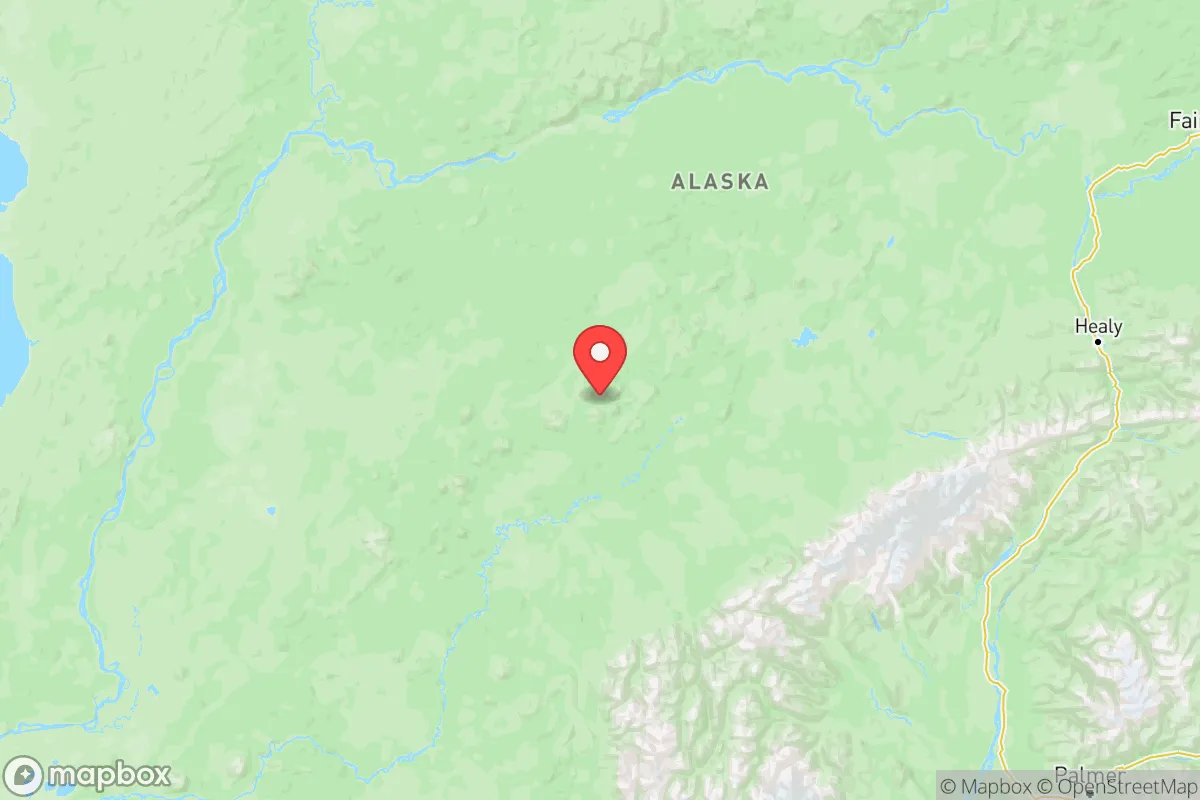
Alaska’s 733,971 residents are a sparse, resilient population spread across a vast landscape, with nearly half concentrated in Anchorage and its suburbs. The state is defined by its indigenous heritage—the highest proportion of any U.S. state—alongside a predominantly white population (58.3%) and small but growing Hispanic (7.1%) and East/Southeast Asian (6.1%) communities. Only 3.0% of residents are foreign-born, reflecting Alaska’s unique draw as a destination for domestic migrants seeking opportunity, isolation, or adventure rather than a traditional immigrant gateway. The people of Alaska today are a blend of Native nations, military families, resource-industry workers, and independent-minded individuals who value self-reliance and wide-open spaces.
Settlement & growth (pre-1960)
Alaska’s human history begins with its indigenous peoples, who arrived across the Bering Land Bridge thousands of years ago and diversified into distinct cultural groups. The Iñupiat and Yup’ik settled along the Arctic and western coasts, the Aleut (Unangax) inhabited the Aleutian Islands, and the Athabascan peoples spread across the interior. The Tlingit, Haida, and Tsimshian established complex societies in the Southeast, with permanent villages like Sitka and Ketchikan serving as centers of trade and art. These nations remain a vital presence today, with 15.2% of Alaska’s population identifying as American Indian or Alaska Native—the highest percentage of any state.
Russian colonization began in the 1740s, driven by the fur trade, with the first permanent settlement at Kodiak in 1784. The Russian-American Company established Sitka (then New Archangel) as the colonial capital, bringing Russian Orthodox missionaries and a small number of Russian settlers. The indigenous population was devastated by disease and exploitation, but Russian influence persists in place names, Orthodox churches, and a small Russian Creole community in Ninilchik on the Kenai Peninsula. The United States purchased Alaska in 1867, but settlement remained sparse for decades, limited to a few trading posts, whaling stations, and gold prospectors.
The first major population wave came with the Klondike Gold Rush of 1896-1899, which funneled tens of thousands of stampeders through Skagway and Dyea into the Yukon. While most moved on, some stayed, founding Fairbanks in 1901 after gold was discovered nearby. The 1900s saw the growth of the fishing industry, with canneries in Ketchikan, Cordova, and Bristol Bay drawing Scandinavian, Filipino, and Italian immigrants. World War II brought a massive military buildup, with bases built in Anchorage, Fairbanks, and the Aleutian Islands, permanently transforming the economy and population. The Cold War continued this trend, with the construction of the DEW Line radar stations and the 1970s oil pipeline boom drawing workers from across the Lower 48—many of whom stayed. By 1960, Alaska’s population had reached 226,167, still heavily white and male, with Anchorage emerging as the dominant urban center.
Modern era (post-1965)
The 1965 Hart-Cellar Act had a limited direct impact on Alaska, given its small foreign-born population (3.0% today). Instead, the state’s modern demographic story is one of domestic migration driven by resource booms and military presence. The 1970s Trans-Alaska Pipeline construction brought a surge of workers from Texas, Oklahoma, and the Gulf Coast, many of whom settled permanently in Anchorage and the Matanuska-Susitna Valley. This wave reinforced the state’s conservative, blue-collar character, with a strong libertarian streak.
East/Southeast Asian communities grew modestly, primarily through Filipino and Korean immigrants drawn to the fishing industry and military connections. Anchorage has a visible Filipino community, centered around the Muldoon neighborhood, and a smaller Korean enclave near the Joint Base Elmendorf-Richardson. The Hispanic population, now 7.1%, is largely composed of Mexican and Central American workers in the seafood processing plants of Bristol Bay, Dutch Harbor, and Kodiak, as well as construction and service jobs in Anchorage. The Black population (3.0%) is concentrated in Anchorage and Fairbanks, tied to military service and, to a lesser extent, the oil industry.
Suburbanization has reshaped the Anchorage region since the 1980s, with the Matanuska-Susitna Borough—including Wasilla and Palmer—growing from a farming outpost into a sprawling exurban bedroom community. This area has attracted families seeking lower housing costs and a more rural lifestyle, while commuting to Anchorage for work. The population is overwhelmingly white and politically conservative, with a strong evangelical Christian presence. Meanwhile, Southeast Alaska’s Juneau, Sitka, and Ketchikan have seen slower growth, with economies tied to government, fishing, and tourism, and a more liberal, environmentally conscious culture.
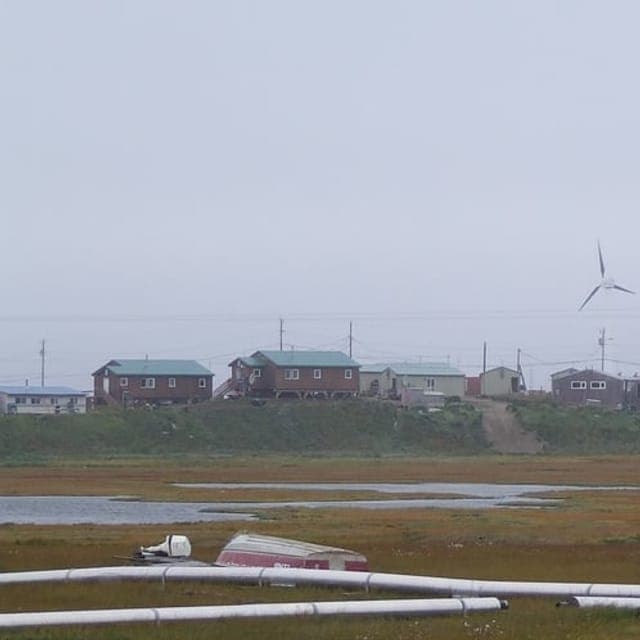
Rural Alaska remains predominantly Alaska Native, with villages like Barrow (Utqiaġvik), Nome, and Bethel facing challenges of poverty, limited infrastructure, and climate change. The Indian subcontinent population is negligible (0.2%), with only a handful of professionals in Anchorage and Fairbanks. The state’s college-educated share (31.2%) is slightly below the national average, concentrated in Anchorage, Juneau, and Fairbanks, where the University of Alaska system anchors a modest professional class.
The future
Alaska’s population is projected to grow slowly, if at all, with the state losing residents to the Lower 48 in recent years due to high costs, limited job diversity, and harsh winters. The population is aging, with a median age of 35.2, and the Native youth population is growing faster than the white population, particularly in rural areas. The Matanuska-Susitna Borough will likely continue its suburban expansion, drawing more conservative families from Anchorage and the Lower 48, while Anchorage itself becomes more diverse and urbanized.
Immigrant communities are small and plateauing, with little new immigration due to Alaska’s geographic isolation and lack of traditional ethnic networks. The Hispanic population may grow slowly through natural increase and continued labor migration to seafood processing, but it will remain a small minority. The East/Southeast Asian population is stable, with second-generation Filipinos and Koreans assimilating into the broader Anchorage culture. The state is not tribalizing into distinct enclaves; rather, it is becoming more polarized between the urban/suburban Anchorage region and the rural Native villages, with the former growing more diverse and the latter remaining culturally distinct.
Climate change is an existential threat to many Native villages, with coastal erosion and permafrost thaw forcing relocations that will reshape rural demographics. The state’s economy remains tied to oil, but declining production and the transition to renewable energy may reduce the flow of domestic migrants from the Lower 48. The cultural identity of Alaska—self-reliant, outdoorsy, and politically independent—will likely persist, but the population will become slightly more diverse, older, and concentrated in the Anchorage region.
For someone moving in now, Alaska offers a place where community is defined by shared values and a love of the outdoors rather than ethnic background. The state is not a melting pot but a collection of distinct communities—Native villages, military towns, resource boomtowns, and suburban enclaves—each with its own character. The future is one of slow change, with the population becoming slightly more diverse and urban, but the core identity of Alaska as a frontier for the independent-minded will endure.

Most Diverse Cities in Alaska
Most Homogenous Cities in Alaska
* Values derived from national, state, county, city and local statistics and may differ in a specific area. Last updated: 2026-04-18T22:14:51.000Z
Narrative content on this page is AI-generated and may contain mistakes. Verify any details that matter before acting on them.
ReloMaps may earn a commission from affiliate links at no extra cost to you.

