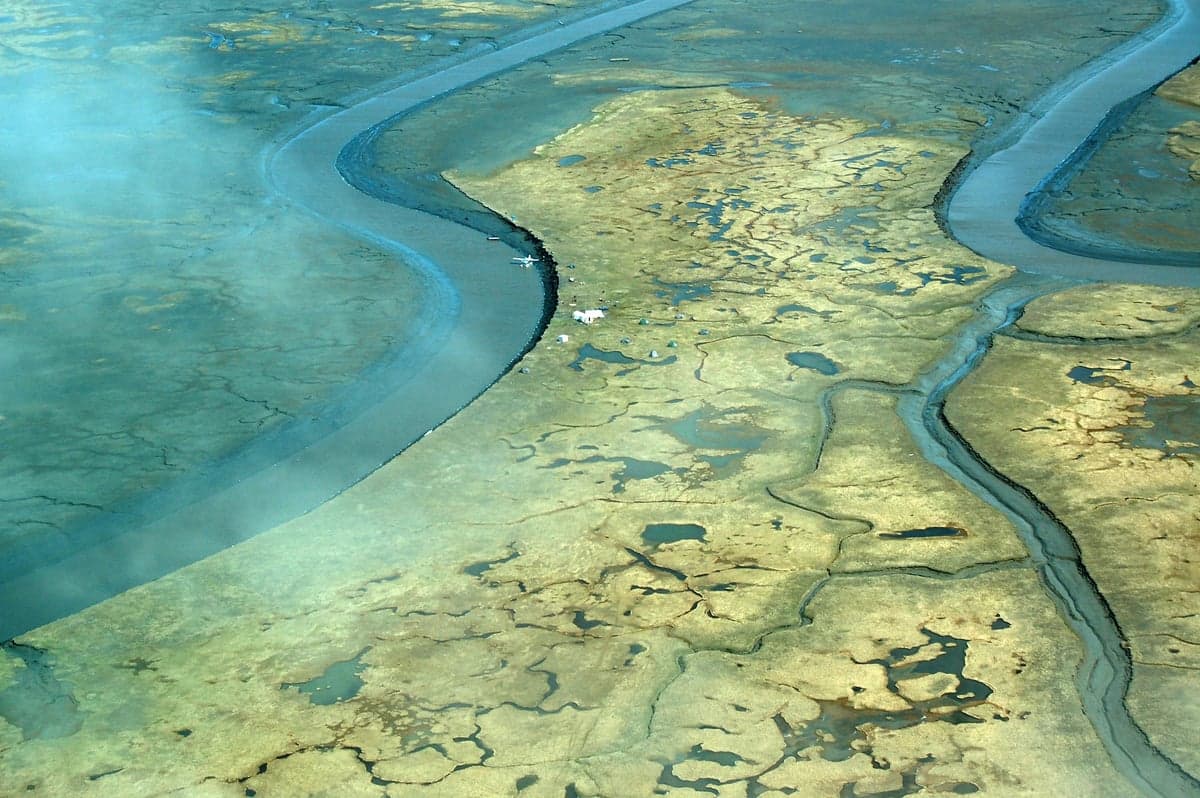
Photo: Wikipedia
Demographics of Kusilvak County
Historical data isn't available for Kusilvak County. Trends shown are for Alaska.
Affluence Level in Kusilvak County
A low-income area with significant economic hardship. Household wealth and educational attainment are well below national averages.
People of Kusilvak County
Kusilvak County, Alaska, is one of the most remote and demographically distinctive counties in the United States, home to roughly 8,277 people who are overwhelmingly Alaska Native. The population is 96.9% non-White, with the vast majority being Yup’ik and Cup’ik peoples, making it a place where Indigenous culture, language, and subsistence traditions remain the dominant forces in daily life. With a foreign-born population of just 0.5% and a college attainment rate of only 5.8%, Kusilvak County stands apart from nearly every other American county — a place shaped not by immigration or suburbanization, but by deep, continuous Indigenous habitation and the modern challenges of rural Alaska.
Settlement & growth (pre-1960)
The human history of Kusilvak County begins thousands of years ago with the Yup’ik and Cup’ik peoples, who have inhabited the Yukon-Kuskokwim Delta for millennia. These groups lived in semi-permanent villages along the region’s vast network of rivers and coastal inlets, relying on salmon, seal, caribou, and berries. Unlike much of Alaska, this area saw no permanent Russian settlement during the colonial period (1741–1867); Russian Orthodox missionaries did visit and establish some influence, but the region remained largely outside the fur trade economy that transformed coastal Alaska. The United States purchased Alaska in 1867, but for decades, Kusilvak County remained virtually untouched by Euro-American settlement.
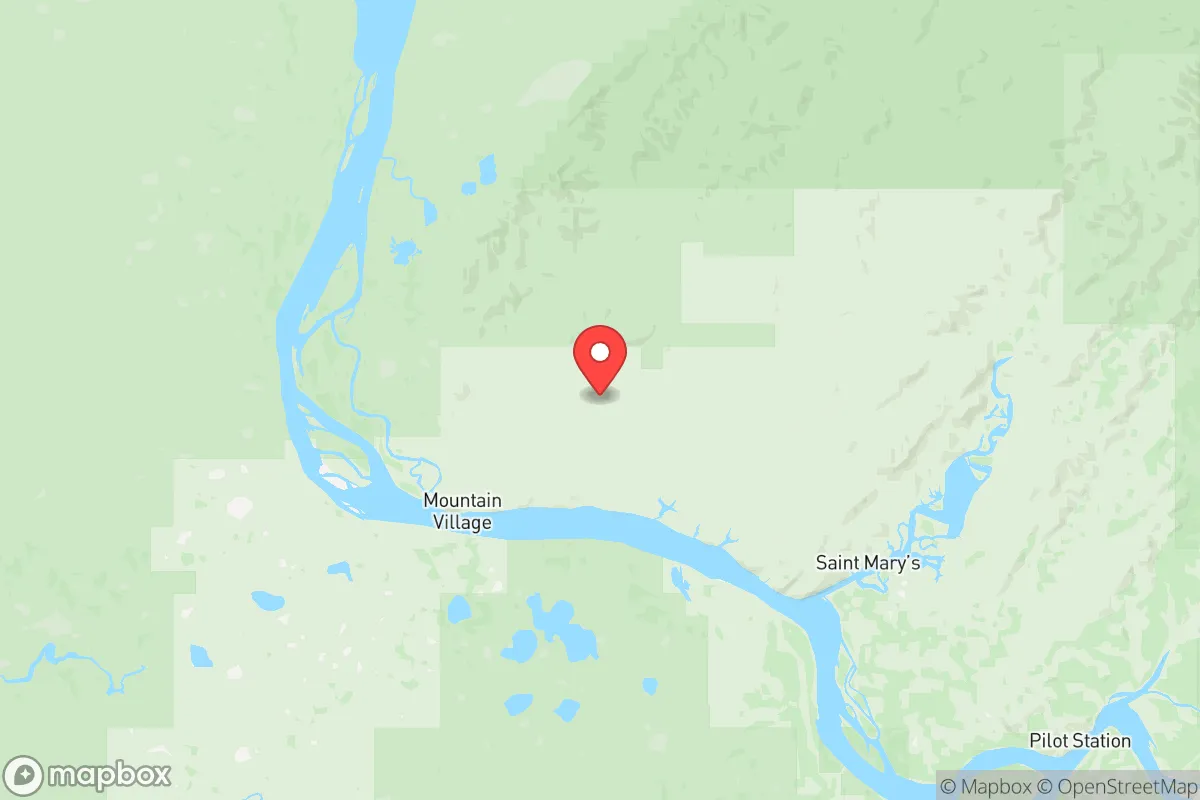
The first significant non-Native presence came with the arrival of Jesuit and Moravian missionaries in the late 19th and early 20th centuries, who established schools and churches in villages such as St. Mary’s, Mountain Village, and Pilot Station. These missions introduced formal education and Christianity, but they did not trigger large-scale immigration. The U.S. government built a few schools and post offices, but the region’s isolation — no roads connect Kusilvak County to the rest of Alaska — meant that the population remained almost entirely Yup’ik and Cup’ik through the 1950s. The 1940 census recorded fewer than 200 non-Native residents in the entire Yukon-Kuskokwim Delta. The Alaska Native Claims Settlement Act (ANCSA) of 1971 would later reshape land ownership, but the pre-1960 period was defined by continuity: the people of Kusilvak County were, and largely remained, the descendants of the region’s original inhabitants.
Modern era (post-1965)
The 1965 Hart-Cellar Act, which transformed immigration patterns across the United States, had virtually no effect on Kusilvak County. The foreign-born population today is just 0.5%, and the county’s racial composition remains overwhelmingly Alaska Native. What changed in the modern era was not immigration but infrastructure, governance, and economic pressure. The Alaska Native Claims Settlement Act of 1971 created village and regional corporations, including the Calista Corporation, which now holds title to vast tracts of land in Kusilvak County. This shift introduced a formal corporate structure to what had been a subsistence-based economy, and it brought new jobs in administration, health care, and education to villages like Bethel (the regional hub, though technically just outside Kusilvak County) and Emmonak, the county’s largest community.
Domestic migration into Kusilvak County has been minimal. The county has no road connections to the rest of Alaska, and its harsh climate — long, brutal winters and short, muddy summers — discourages all but the most determined outsiders. The small non-Native population that does exist consists primarily of teachers, health care workers, and public safety officers who rotate in and out on short-term contracts. These workers concentrate in the larger villages: Emmonak (pop. ~800), Hooper Bay (pop. ~1,200), and St. Mary’s (pop. ~600). The county’s White population has declined from roughly 5% in 2000 to 3.1% today, as state budget cuts have reduced the number of government positions in rural Alaska. Meanwhile, the Alaska Native population has grown through natural increase — high birth rates and relatively young median age — even as out-migration to Anchorage and other urban centers has accelerated among younger adults seeking education and employment.
The county’s Hispanic population (1.6%), Black population (0.9%), and East/Southeast Asian population (0.3%) are negligible and consist almost entirely of transient professionals rather than settled communities. There is no Indian-subcontinent population. Kusilvak County remains, in 2026, one of the most ethnically homogeneous counties in the United States — but that homogeneity is Indigenous, not White, a fact that sets it apart from nearly every other rural American region.
The future
The population of Kusilvak County is heading in two contradictory directions. On one hand, the Alaska Native population continues to grow through natural increase: the county’s median age is roughly 25, and birth rates are among the highest in Alaska. Villages like Alakanuk, Kotlik, and Scammon Bay are seeing steady, if slow, population growth. On the other hand, out-migration is significant. Young people leave for high school and college in Anchorage, Fairbanks, or the Lower 48, and many do not return. The county’s total population has hovered around 8,000 for two decades, suggesting that natural increase is being offset by net out-migration.
The cultural identity of Kusilvak County is evolving, but not toward diversity in the conventional American sense. The Yup’ik language remains widely spoken — roughly 70% of residents speak it at home — and subsistence hunting and fishing remain central to village life. However, internet access (limited but improving), satellite television, and social media are connecting younger generations to global culture in ways that were impossible a generation ago. The tension between tradition and modernity is the defining demographic story of Kusilvak County, not the arrival of new ethnic groups.
For the foreseeable future, Kusilvak County will remain what it has been for centuries: a place where Indigenous people live on ancestral land, practicing a way of life that is increasingly rare in the 21st century. The non-Native population will likely continue to shrink as state and federal budgets tighten, and the county will not become more diverse through immigration. The future is one of slow population decline, cultural preservation, and the ongoing challenge of maintaining a subsistence-based society in a rapidly changing world.
For someone moving into Kusilvak County now, the reality is clear: this is not a place of demographic change or suburban growth. It is a place where the population is almost entirely Alaska Native, where English is often a second language, and where the rhythms of life are dictated by salmon runs, moose seasons, and winter weather. The kind of person who thrives here is someone who respects Indigenous culture, is comfortable with extreme isolation, and is coming to serve a specific purpose — teaching, nursing, public safety — rather than seeking a typical American community. Kusilvak County is not becoming more like the rest of America; it is remaining distinctly, resiliently itself.

* Values derived from national, state, county, city and local statistics and may differ in a specific area. Last updated: 2026-06-16T18:25:19.000Z
Narrative content on this page is AI-generated and may contain mistakes. Verify any details that matter before acting on them.
ReloMaps may earn a commission from affiliate links at no extra cost to you.

