Political ClimatePolitical Climate in Juneau City And County
Showing state-level results — no local-only data available.
Local Political AnalysisPolitical Analysis of Juneau City And County
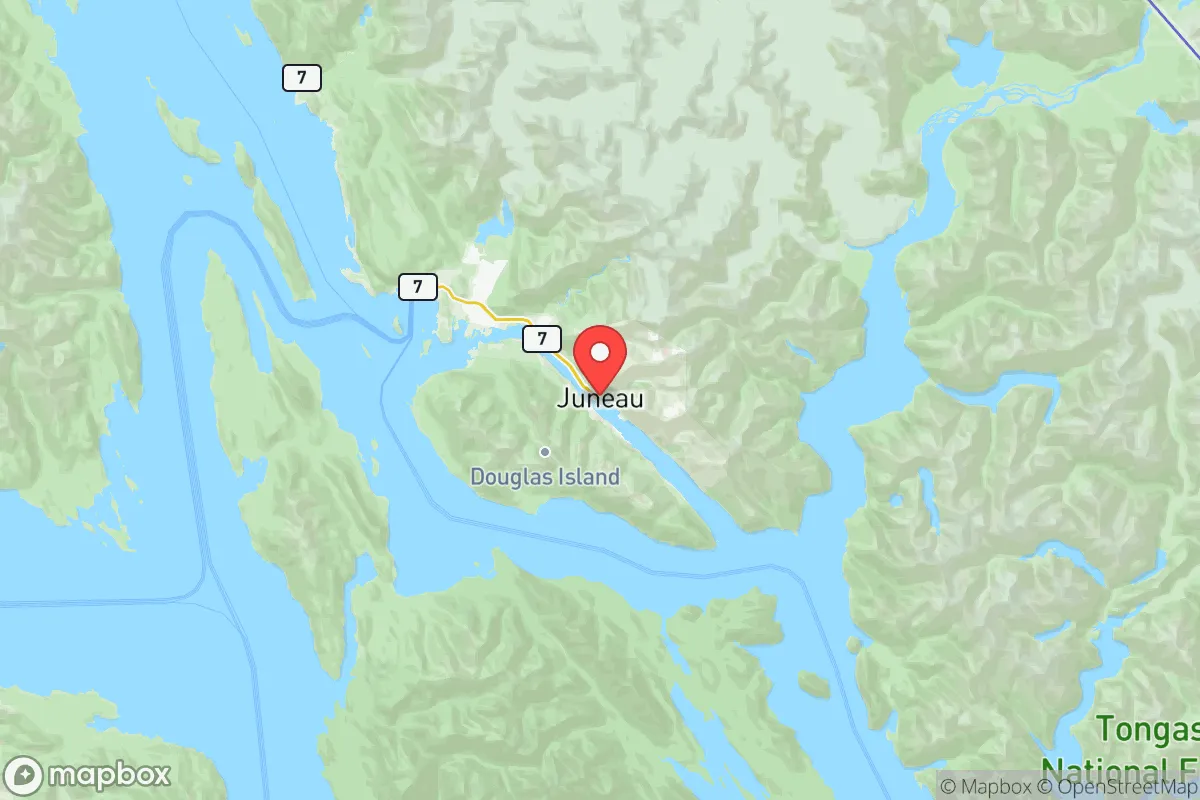
Juneau City and Borough, Alaska, is a fascinating political outlier within a state that leans reliably Republican. While Alaska as a whole carries a Cook PVI of R+6, Juneau itself is a Democratic stronghold in a sea of red, consistently voting for Democratic presidential candidates by double-digit margins. The city's political identity is shaped by its role as the state capital, a hub for government employees, and its relatively diverse economy compared to the resource-extraction towns of the Interior and North Slope. Over the past decade, Juneau has shifted slightly leftward, mirroring national trends in urban areas, but its politics remain pragmatic and less ideologically rigid than in many Lower 48 cities.
How it compares
Juneau's political landscape is a sharp contrast to the rest of Alaska. While the state's PVI is R+6, Juneau's local PVI is estimated to be around D+8 to D+10, making it one of the most Democratic areas in the state alongside Anchorage's liberal precincts and the rural Southeast Alaska villages. Within the borough, the political divide is geographic. The downtown core and the Mendenhall Valley area lean heavily blue, with precincts like Douglas (the island community) and Lemon Creek consistently voting Democratic. Conversely, the more rural and suburban neighborhoods, such as Auke Bay and Out the Road (the area beyond the Mendenhall Glacier), show more Republican leanings, though they are rarely enough to flip the borough. The swing precincts are often in the Mendenhall Valley itself, where a mix of state workers, fishermen, and small business owners create a volatile middle ground. In the 2024 presidential election, Juneau voted for Joe Biden by about 20 points, while the rest of the state went for Donald Trump by a similar margin.
What this means for residents
For conservative residents, Juneau can feel like a blue island. They are outnumbered in local elections, but their votes still matter in statewide races, where the city's moderate Republican candidates often win. For liberal residents, the city is a comfortable bubble, but they must contend with a state government that is often at odds with their values, particularly on resource development and social issues. The practical effect is a politics of compromise. Juneau's delegation to the Alaska Legislature is typically a mix of moderate Democrats and independents, who often hold the balance of power in a divided statehouse. This means that on issues like the Permanent Fund dividend, oil taxes, and education funding, Juneau's representatives are key players in forging the deals that keep the state running.
Culturally, Juneau is distinct from the rest of Alaska in its emphasis on government and services rather than resource extraction. The city's economy is anchored by the state capitol complex, the University of Alaska Southeast, and a robust tourism industry. This creates a more cosmopolitan, environmentally conscious atmosphere than in places like Fairbanks or the Mat-Su Valley. Policy-wise, Juneau has been a leader in Alaska on issues like LGBTQ+ rights, with a strong non-discrimination ordinance, and on climate action, with the city adopting a comprehensive climate plan. At the same time, the city's reliance on cruise ship tourism and its proximity to the Tongass National Forest means that debates over logging, mining, and cruise ship emissions are constant and heated. The result is a political climate that is engaged, often contentious, but ultimately grounded in the practical realities of living in a remote, expensive, and beautiful place. It's a place where a Republican fisherman and a Democratic state worker can find common ground on the need for good schools and reliable ferry service, even if they disagree on almost everything else.

State Political ClimatePolitical Climate in Alaska
State Political AnalysisPolitical Environment in the State
Alaska has long been a reliably Republican state at the presidential level, with a Cook PVI of R+6, but its political reality is far more independent and libertarian than a simple partisan label suggests. The state hasn’t voted for a Democratic presidential candidate since Lyndon B. Johnson in 1964, yet it has a long history of electing moderate Republicans, independents, and even a Democrat (Senator Mark Begich, 2008-2014) to statewide office. Over the last 10-20 years, the dominant coalition has shifted from a pragmatic, resource-extraction-focused Republicanism toward a more populist, Trump-aligned conservatism, though the state’s unique open primary and ranked-choice voting system has kept the political center surprisingly competitive.
Urban vs. rural divide
The political map of Alaska is starkly divided between a few urban centers and the vast, sparsely populated rural and bush regions. Anchorage, home to roughly 40% of the state’s population, is the key battleground. The city itself leans slightly left of the state as a whole, with its more liberal precincts in the downtown core and the Hillside area, while the conservative strongholds are in the Eagle River and Chugiak neighborhoods. Fairbanks, the second-largest city, is more reliably Republican, driven by a strong military presence at Fort Wainwright and a resource-extraction economy. Juneau, the capital, is the most liberal city in the state, anchored by state government workers and a strong environmentalist streak. The Mat-Su Borough (Palmer and Wasilla) is the state’s conservative heartland—a fast-growing exurban area where Trump won by 30+ points in 2020. Rural villages in the Bush, particularly in the Yukon-Kuskokwim Delta, often vote Democratic due to strong support for tribal sovereignty and federal subsistence programs, though turnout is low. The divide isn’t just urban vs. rural; it’s also coastal vs. interior, with the Southeast panhandle (Juneau, Sitka, Ketchikan) trending more liberal than the interior and North Slope.
Policy environment
Alaska’s policy environment is defined by its unique resource wealth and libertarian streak. There is no state income tax and no statewide sales tax, though many municipalities levy local sales taxes (e.g., Anchorage at 0%, Juneau at 5%, Fairbanks at 4%). The state’s budget is heavily dependent on oil revenue and the Permanent Fund Dividend (PFD), an annual check paid to every resident from oil royalties—a policy that creates a powerful pro-development constituency. The regulatory posture is generally pro-business, especially for oil, gas, mining, and fishing, but environmental permitting can be slow and contentious due to federal land ownership (roughly 60% of Alaska is federal land). Education policy is decentralized; there is no statewide school choice program, but homeschooling is popular and lightly regulated. Healthcare is a mixed bag: the state expanded Medicaid under the Affordable Care Act in 2015, but rural access remains poor. Election laws are notably liberal: Alaska has automatic voter registration, no-excuse absentee voting, and a top-four open primary system with ranked-choice voting (adopted by ballot measure in 2020). This system has produced moderate winners like Senator Lisa Murkowski and Representative Mary Peltola, a Democrat, in a red state.
Recent policy direction
Recent legislation points in a broadly conservative direction, but with notable exceptions. On gun and self-defense law, Alaska is one of the most permissive states: no permit required for concealed carry, no waiting periods, and a strong “stand your ground” law. In 2023, the legislature passed a bill prohibiting state and local enforcement of federal gun laws that violate the state constitution. On parental and education rights, the state has not passed a universal school choice bill, but a 2024 law expanded charter school access and created a small education savings account program for special needs students. Speech and privacy are broadly protected, with no state-level “hate speech” laws and a strong public records act. On medical and bodily autonomy, Alaska is a notable outlier: abortion remains legal up to viability, with no waiting period or mandatory counseling, and the state constitution’s privacy clause has been interpreted to protect it. In 2024, a ballot measure to require parental notification for minors’ abortions failed. Property rights are strong, but the vast federal land presence creates tension—the state frequently sues the federal government over land use restrictions. Taxation remains low, but the PFD has been cut or delayed in recent years due to budget shortfalls, a major political flashpoint. Voting and ballot access are expansive, but ranked-choice voting remains controversial among conservatives, with a repeal effort likely for the 2026 ballot.
Civil unrest & political movements
Alaska has a low level of visible civil unrest compared to the Lower 48, but political movements are active. The Alaska Independence Party, a secessionist group that advocates for Alaskan sovereignty, has been a minor but persistent force since the 1970s, though it has never won major office. The PFD fight is the most consistent political flashpoint—annual protests at the state capitol over the size of the dividend draw large crowds from both left (who want to preserve the fund for services) and right (who want the full statutory payout). Immigration politics are muted, as Alaska has a small foreign-born population (about 7%), but there is no sanctuary city policy. Election integrity controversies have been mild compared to other states, though the 2022 ranked-choice election that saw Democrat Mary Peltola win the House seat sparked calls for repeal from the state GOP. The Pebble Mine controversy (a proposed copper and gold mine in Bristol Bay) has been a long-running flashpoint, pitting pro-development conservatives against environmentalists and the fishing industry, with the Biden administration blocking the project in 2023. A new resident would notice the strong presence of “Don’t Tread on Me” libertarian sentiment, especially in the Mat-Su and Fairbanks areas, and a general distrust of federal authority.
Projection
Over the next 5-10 years, Alaska’s political trajectory is likely to remain Republican-leaning but with a strong independent streak. In-migration is a wild card: the state has been losing population since 2016 (down about 3%), but the remote work boom and climate migration could bring new residents from liberal states, particularly to Anchorage and Juneau. The Mat-Su Borough will continue to grow and become more conservative, while Anchorage’s urban core may drift left. The ranked-choice voting system is likely to survive a repeal attempt, keeping the state competitive for moderate candidates. The PFD will remain the central political issue—if oil revenues decline, expect a push for a state income tax, which would be a seismic shift. Climate change will reshape the political landscape: coastal erosion and permafrost thaw are already forcing village relocations, which will increase federal dependency and likely push rural areas toward Democrats. A new resident moving in now should expect a state that remains red on paper but is politically unpredictable in practice, with a strong libertarian ethos that resists easy categorization.
For a new resident, the bottom line is that Alaska offers a unique blend of low taxes, strong gun rights, and personal freedom, but with a surprisingly liberal social safety net (Medicaid expansion, abortion access) and a voting system that rewards moderation. Conservatives will find a welcoming environment in the Mat-Su and Fairbanks, while liberals will feel at home in Juneau and parts of Anchorage. The key practical takeaway: your vote will matter more here than in a deep red or blue state, thanks to ranked-choice voting, and the annual PFD check is a tangible reminder that Alaska’s politics are driven by resource wealth, not ideology.
* Values derived from national, state, county, city and local statistics and may differ in a specific area. Last updated: 2026-07-06T10:54:11.000Z
Narrative content on this page is AI-generated and may contain mistakes. Verify any details that matter before acting on them.
ReloMaps may earn a commission from affiliate links at no extra cost to you.

