Demographics of Juneau City And County
Affluence Level in Juneau City And County
An upper-middle-class area. Household wealth, education levels, and homeownership run ahead of national benchmarks.
People of Juneau City And County
The people of Juneau City and Borough are a predominantly white, highly educated population of roughly 32,000, grounded in a lineage of Tlingit heritage and Gold Rush-era migration. With a foreign-born rate of just 2.4% and a college attainment rate of 40.5%, the community is characterized by its professional workforce in government and tourism, and a demographic stability that sets it apart from Alaska’s more transient regions. The population is older and less ethnically diverse than the national average, but contains concentrated pockets of East and Southeast Asian residents who trace their roots to early 20th-century labor and post-1965 family reunification.
Settlement & growth (pre-1960)
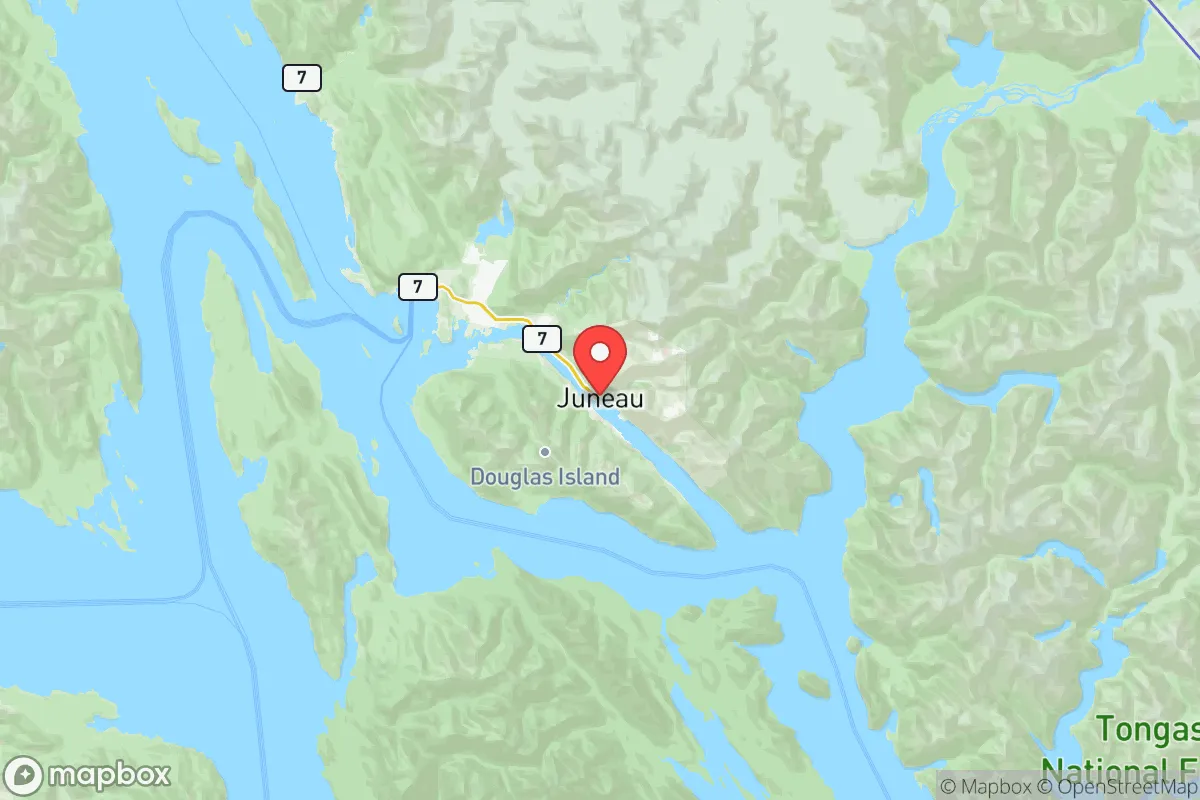
The region’s human history begins with the Auke and Taku peoples of the Tlingit nation, who inhabited the Gastineau Channel and surrounding islands for thousands of years before European contact. Their seasonal villages—such as the Auke village at present-day Auke Bay—provided a stable fishing and trading economy that would later shape Alaska Native claims. Russian colonization in the 18th and early 19th centuries was minimal here, as the Russian American Company focused its efforts on Sitka and Kodiak; the Tlingit successfully resisted Russian incursion along the mainland coast.
The first major non-Native settlement wave arrived with the discovery of gold in 1880 by Richard Harris and Joe Juneau, which pulled in a flood of prospectors from the Lower 48, Canada, and Europe. By 1900, the incorporated city of Juneau had become a bustling mining camp, drawing a mix of white American miners, Scandinavian and German immigrants, and a small number of Chinese laborers who stayed in the area after transcontinental railroad construction. Douglas Island, connected by bridge to downtown Juneau, saw a parallel boom with the Treadwell Mine, which employed hundreds of miners and their families in the community of Douglas. A significant Chinese enclave formed in the Douglas and downtown Juneau waterfronts, providing laundry, restaurant, and domestic services to the mining camps.
The 1920s through the 1950s brought a second major domestic wave: federal employees and their families relocated to Juneau when it became Alaska’s territorial capital in 1906, and then state capital in 1959. This group was overwhelmingly white and college-educated, settling in the downtown neighborhoods and the expanding suburbs of Lemon Creek and Mendenhall Valley. A smaller wave of Filipino laborers arrived during this period, working in the fishing canneries and the local salmon industry, with families establing a small but visible community in the Lemon Creek area. By 1960, the population had reached roughly 7,000, with a demographic profile that was 85% white, a small Alaska Native minority, and the residual Chinese and Filipino populations concentrated in service roles.
Modern era (post-1965)
The 1965 Hart-Cellar Act did not dramatically reshape Juneau’s demographics the way it did urban centers in the Lower 48, but it did enable significant family reunification for the existing Chinese and Filipino communities. Starting in the 1970s, these families sponsored relatives from East and Southeast Asia, particularly from the Philippines and Taiwan, who settled in the Lemon Creek and Mendenhall Valley neighborhoods. Though the foreign-born population remains low at 2.4%, the East and Southeast Asian share of the population stands at 6.8%, concentrated in these areas and visible through community organizations and the Juneau Chinese-Amerian Association.
The most transformative domestic migration of the modern era has been the steady influx of state government workers and their families, drawn by Juneau’s status as the capital. Beginning in the 1960s and accelerating in the 1970s, this group has been primarily white, highly educated, and politically moderate to liberal, creating a distinct cultural split from the more conservative mining and fishing families who predate statehood. The Mendenhall Valley and the newer suburban developments of Statter Harbor and the Mendenhall Peninsula have absorbed this wave, with those areas today having some of the highest proportions of college graduates and professional households in the borough. Meanwhile, the Alaska Native population, while not dominant in numbers, has maintained cultural and political influence through the Central Council of Tlingit and Haida Indian Tribes of Alaska, headquartered in Juneau.
The Hispanic population at 7.0% is small but growing, driven by service industry and construction workers from Central America and Mexico, who have settled in the Mendenhall Valley and Lemon Creek. The Black population remains negligible at 0.7%, and the Indian subcontinent population is below 0.1%, reflecting Juneau’s limited appeal for non-Asian immigrant groups and its distance from global migration corridors.
The future
Juneau’s population is projected to remain stable or decline slightly over the next 20 years, constrained by high housing costs, limited economic diversification, and an aging population. The largest demographic shift underway is the gradual aging of the white population, with out-migration of younger adults seeking lower-cost areas, balanced by in-migration of state government retirees and second-home buyers from the Lower 48. East and Southeast Asian communities are likely to persist but not grow significantly, as family reunification slows and younger generations move to Anchorage or Seattle for education and employment. The Hispanic share may continue to rise modestly, but will remain a minor demographic force.
Culturally, Juneau is becoming not more diverse but more bifurcated: a professional, government-oriented white population in the Mendenhall Valley and downtown, and a smaller but enduring Alaska Native and early-Asian heritage population concentrated in the older neighborhoods and Douglas Island. The borough’s identity is increasingly shaped by its role as a state capital and its proximity to the Tongass National Forest, drawing residents who prioritize public sector employment and outdoor recreation over ethnic diversity or economic dynamism.
For someone moving in now, Juneau offers a stable, low-diversity community with strong public institutions, a high concentration of college-educated neighbors, and deep roots in Tlingit and Gold Rush history. The population is not on the cusp of rapid change; it is a place where demographic trends move slowly, shaped more by state budgets than by global migration. New arrivals should expect a reserved, civic-minded population that values nature and stability over change, and a community where the history of its Tlingit and mining past is still palpable in neighborhoods like Auke Bay and Douglas Island.

* Values derived from national, state, county, city and local statistics and may differ in a specific area. Last updated: 2026-07-06T10:54:11.000Z
Narrative content on this page is AI-generated and may contain mistakes. Verify any details that matter before acting on them.
ReloMaps may earn a commission from affiliate links at no extra cost to you.

