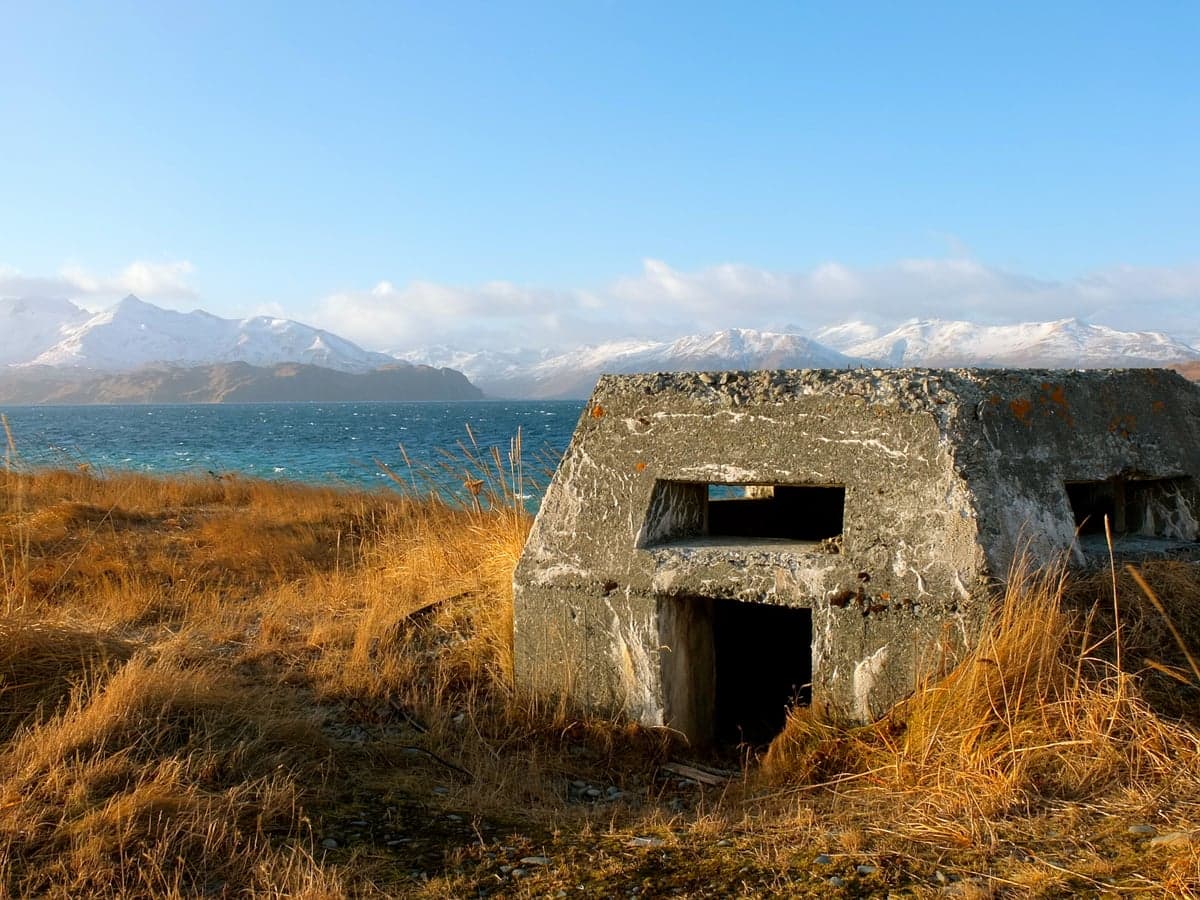
Photo: Wikipedia
Strategic Assessment of Aleutians West County
Strong survivability profile. Good buffer from population centers, with manageable environmental and tactical risks.
What does the Strategic Assessment tell us?
Our Strategic Assessment grades tactical survivability of an area. Major population centers, military targets, fallout zones, natural disasters, and border exposure all drive risk — lower exposure means a more defensible position in a crisis.
This is heavily inspired by Joel Skousen's Strategic Relocation book. Highly recommended you checkout the book ($)What does this tell us?
Our Strategic Assessment grades tactical survivability of an area. Major population centers, military targets, fallout zones, natural disasters, and border exposure all drive risk — lower exposure means a more defensible position in a crisis.
This is heavily inspired by Joel Skousen's Strategic Relocation book. Highly recommended you checkout the book ($)Strategic Pillars

Key Distances
Strategic Assessment Analysis
Aleutians West County, Alaska, offers a relocation profile defined by extreme remoteness and strategic significance, making it one of the most resilient locations in the United States for those prioritizing disaster readiness and self-sufficiency. Its position along the Great Circle Route places it far from continental population centers, major industrial targets, and the fallout corridors that would affect the Lower 48. For a conservative-leaning individual or family seeking a defensible, low-exposure base, this county presents a unique combination of natural barriers and logistical challenges that demand serious preparation.
Geographic position and natural advantages for self-sufficiency
Aleutians West County spans the westernmost Aleutian Islands, with its population centers in Unalaska (home to the port of Dutch Harbor) and the smaller communities of Atka, Nikolski, and St. George. The county's location, roughly 800 miles southwest of Anchorage and over 2,000 miles from Seattle, places it far from any plausible ground-zero targets in a major conflict. The surrounding Bering Sea and North Pacific Ocean create a natural moat, making overland approach impossible and sea/air access highly monitorable. The Aleutian Islands' volcanic terrain provides numerous sheltered coves and high ground, offering defensible positions for a prepared homestead. The region's maritime climate—cool, wet, and windy—limits agricultural potential but supports abundant marine life, including salmon, halibut, crab, and seabird colonies, which can supplement food supplies. The Dutch Harbor port is a critical infrastructure node for the fishing industry, but its isolation means it is not a primary target for strategic strikes, unlike major container ports in the Lower 48.
Risks, exposures, and proximity to fallout-relevant landmarks
While Aleutians West County is far from the typical fallout dangers of the continental U.S., it is not without its own risk profile. The county lies within the Aleutian volcanic arc, with active volcanoes like Mount Makushin on Unalaska Island and Mount Vsevidof on Umnak Island. A major eruption could disrupt air travel and deposit ash over local communities, but the prevailing westerly winds typically blow ash away from populated areas. The primary man-made risk is the Dutch Harbor fuel storage facility, a major transshipment point for petroleum products serving the fishing fleet and remote communities. A catastrophic spill or fire at this facility could contaminate local water sources and disrupt fuel supplies for months. However, the county's distance from any nuclear power plants, major military bases (the nearest is Joint Base Elmendorf-Richardson near Anchorage), or strategic industrial corridors means it would be largely unaffected by fallout from a continental-scale event. The Adak Naval Air Facility, now largely decommissioned, is a former military site that could be a secondary target in a conflict, but it is currently unstaffed and poses minimal risk. For a relocator, the primary exposure is natural—earthquakes and tsunamis—rather than man-made fallout.
Practical resilience for a relocator: food, water, energy, and defensibility
Practical resilience in Aleutians West County requires a shift in mindset from suburban self-sufficiency to maritime survival. Food security is the strongest asset: the Bering Sea is one of the world's richest fisheries, and residents with fishing gear, smokehouses, and freezer capacity can harvest salmon, halibut, and crab year-round. However, the growing season is virtually nonexistent—frost-free days are rare—so gardening is limited to cold-tolerant greens in hoop houses. Water is abundant from rainfall and snowmelt, but must be collected and stored; most homes rely on rainwater catchment or trucked water from municipal systems. Energy is the critical vulnerability: the county is not connected to any road or power grid, and electricity comes from diesel generators or small wind turbines. Fuel must be barged in, making it expensive and subject to supply disruptions. A relocator should plan for solar panels with battery storage (though winter daylight is minimal) and a backup diesel generator with a year's supply of fuel. Defensibility is excellent: the islands' rugged terrain, limited road networks (only a few miles of paved road in Unalaska), and small population (under 6,000) make it easy to monitor and control access. The community is tight-knit and self-reliant, with a strong hunting and fishing culture that aligns with conservative values of preparedness. However, medical care is limited to a small clinic in Unalaska; serious emergencies require medevac to Anchorage, which is a significant risk for families with children or elderly members.
Overall, Aleutians West County offers a strategic relocation option for those willing to trade modern conveniences for extreme geographic isolation and natural resource abundance. Its distance from continental targets, combined with the defensibility of the island terrain and the bounty of the Bering Sea, makes it one of the most fallout-resistant locations in the United States. The trade-offs are real: high energy costs, limited medical access, and a harsh climate that demands serious preparation. For a single individual or family committed to self-sufficiency and willing to invest in marine skills, diesel storage, and cold-weather gear, this county provides a resilient base that few other locations can match. The key is to treat it as a long-term outpost, not a quick escape—preparation must be thorough, and the community's existing infrastructure should be leveraged rather than ignored.

* Values derived from national, state, county, city and local statistics and may differ in a specific area. Last updated: 2026-07-25T20:06:40.000Z
Narrative content on this page is AI-generated and may contain mistakes. Verify any details that matter before acting on them.
ReloMaps may earn a commission from affiliate links at no extra cost to you.

