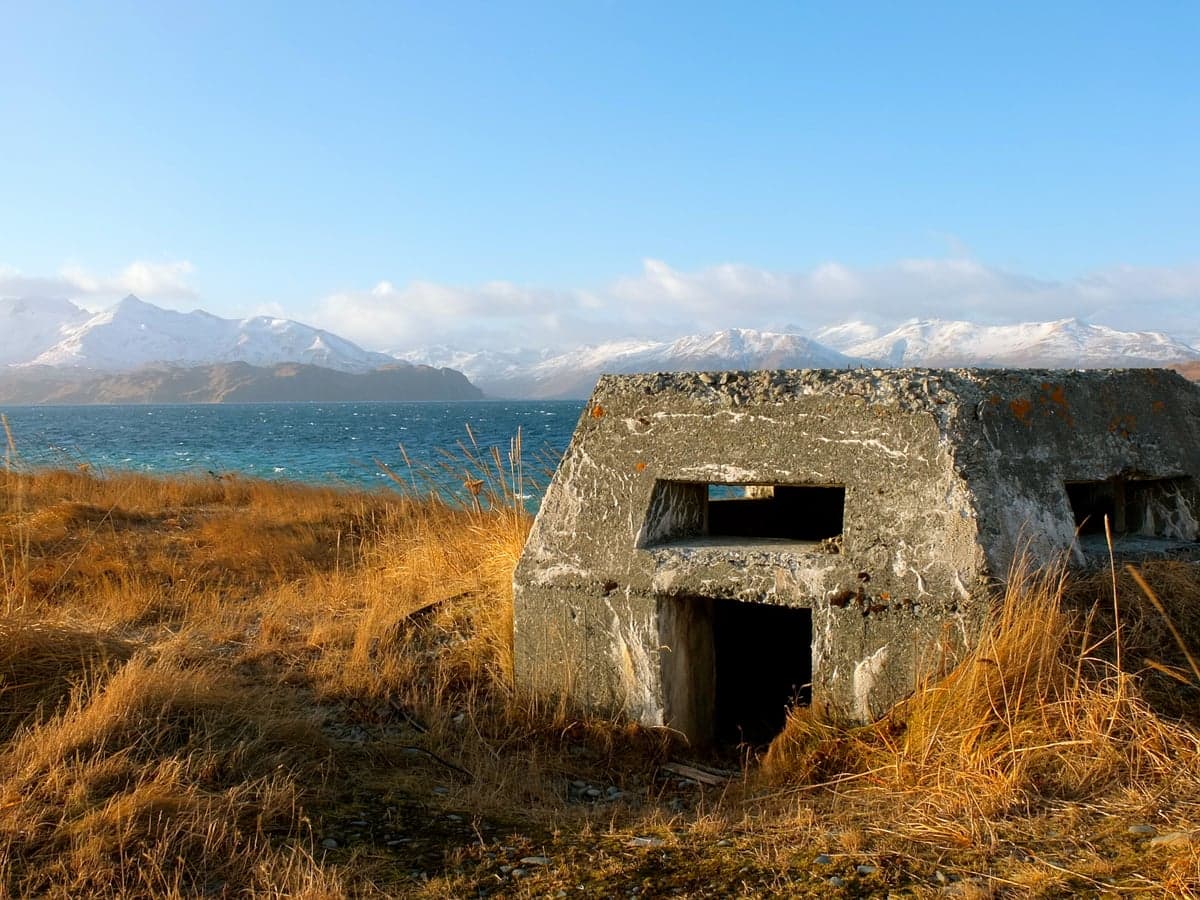
Photo: Wikipedia
Quality of Life in Aleutians West County
A livable area that tracks near national norms for affordability, walkability, and neighborhood health.
What does Quality of Life tell us?
Quality of Life measures an area by evaluating factors like cost of living, nearby amenities, country club access, airport proximity, socioeconomic signals and neighborhood character. For large states, this is a general average — quality of life can vary dramatically between metro areas, suburbs, and rural communities within the same state.
What does this tell us?
Quality of Life measures an area by evaluating factors like cost of living, nearby amenities, country club access, airport proximity, socioeconomic signals and neighborhood character. For large states, this is a general average — quality of life can vary dramatically between metro areas, suburbs, and rural communities within the same state.
Cost of Living
57% above national average
90%
The Real Cost of Living in Aleutians West County for 2026
| Tier | Individual | Family (4) |
|---|---|---|
| Survival | $30k | $57k |
| Comfortable | $81k | $120k |
| Luxury | $135k+ | $210k+ |
| Elite (Top 5%) | $159k+ | $247k+ |
Quality-of-Life Analysis
Aleutians West County, Alaska, offers a quality-of-life spectrum that ranges from the industrial hub of Unalaska/Dutch Harbor to remote, subsistence-based villages like Atka and Adak, attracting everyone from seafood processing workers and maritime professionals to federal employees and those seeking profound isolation. The county’s character is defined by the Bering Sea, the Alaska Maritime National Wildlife Refuge, and a deep reliance on commercial fishing, with daily life varying dramatically between the relative bustle of the Aleutian Chain’s largest port and the quiet, self-sufficient rhythms of its smaller communities. This analysis breaks down the distinct lifestyle options across the county’s inhabited areas.
Largest town(s) & population centers
Unalaska (including the adjacent port of Dutch Harbor) is the county’s sole population center of any size, housing roughly 4,300 of the county’s 5,200 residents. Daily life here revolves around the largest commercial fishing port in the United States by volume, with a workforce split between onshore seafood processing plants (e.g., UniSea, Westward Seafoods) and the fishing fleet. The town offers a surprisingly full set of amenities for its remote location: a modern hospital (Iliuliuk Family & Health Services), a K-12 school system, a public library, multiple grocery stores (including a Safeway), restaurants, and a small airport with daily jet service to Anchorage. Housing is extremely tight and expensive, with a median home value of $419,100 and median rent of $1,886, reflecting the high demand from transient workers. The average commute is a short 19.5 minutes, but many workers live in company-provided bunkhouses or shared housing near the docks. The social scene is heavily influenced by the fishing industry’s seasonal rhythms, with a mix of long-time Aleut families, transient fishermen, and federal workers from the National Marine Fisheries Service and Coast Guard.
Smaller towns & rural pockets
Beyond Unalaska, the county’s inhabited communities are small, remote, and offer a fundamentally different lifestyle. Atka (population ~50) is a traditional Unangax̂ village where subsistence hunting and fishing (halibut, seal, berries) remain central to daily life, supplemented by a small commercial fishing sector. There is no road connection to Unalaska; travel is by small plane or boat. Adak (population ~300) is a former naval air station that now functions as a tiny, isolated town with a unique character: it has a paved runway, a small grocery store, and a school, but most housing is former military housing, and the economy relies on a small fishing plant, a few federal jobs, and a growing sport-fishing tourism industry. Nikolski (population ~15) and False Pass (population ~35) are even smaller, with populations that fluctuate seasonally. These communities lack the medical and retail infrastructure of Unalaska; residents must order supplies by barge or air, and medical emergencies require medevac to Anchorage. The lifestyle is one of extreme self-reliance, deep connection to the land and sea, and a pace dictated by weather and subsistence cycles.
Cost & lifestyle range
The cost of living across Aleutians West County is uniformly high, with a county-wide COL index of 157 (57% above the US average), but the nature of those costs varies sharply. In Unalaska, the high cost is driven by housing and imported goods; a gallon of milk can cost $8–$10, and a modest apartment rents for well over $1,800. However, wages in the fishing and processing sectors are correspondingly high, and the town offers a dense, walkable core with restaurants, a gym, and social clubs. At the opposite end of the spectrum, in Atka or Nikolski, the cost of store-bought goods is even higher (due to barge shipping), but many residents offset this through subsistence harvests. Housing in these villages is often subsidized or provided by tribal housing authorities, and the median home value of $419,100 is misleading because few homes are sold on the open market. The lifestyle range is thus not a simple urban-to-rural gradient but a choice between a high-wage, amenity-rich, but crowded industrial port and a low-cash, subsistence-oriented, deeply quiet village life. Adak occupies a middle ground: lower housing costs than Unalaska (some homes sell for under $100,000), but with far fewer services and a ghost-town atmosphere from its military past.
Who thrives in Aleutians West County? The county suits those who are drawn to the raw power of the Bering Sea and the economic opportunity of the fishing industry, as well as those who value extreme solitude and a subsistence lifestyle. Unalaska is ideal for workers who can tolerate high housing costs and seasonal intensity for strong wages and a tight-knit, hardworking community. The smaller villages are best for individuals or families with deep ties to Unangax̂ culture, or for federal employees (e.g., wildlife biologists, Coast Guard) who appreciate isolation and purpose. It is not a place for those seeking suburban comfort, low costs, or diverse urban amenities—the trade-offs for life on the Aleutian Chain are profound, but for the right person, the rewards are unmatched.

Crime in Aleutians West County
Higher crime rates than 66% of comparable U.S. locations.
Violent CrimeViolent Crime Analysis
Property CrimeProperty Crime Analysis
Crime Analysis
Aleutians West County, Alaska, presents a complex safety picture shaped by its remote island geography and the concentrated population of its primary city, Unalaska. With a violent crime rate of 732.6 per 100,000 residents and a property crime rate of 1,918.7 per 100,000, the county’s overall crime statistics significantly exceed both the Alaska state average and national benchmarks. These figures are heavily influenced by conditions in the county's sole incorporated city, Unalaska, and the smaller, unincorporated community of Dutch Harbor, which together form the economic and social hub of the Aleutian Chain.
Crime in context
To understand the severity of crime in Aleutians West County, it is essential to compare its rates to broader averages. The national violent crime rate in 2023 was approximately 380 per 100,000, meaning Aleutians West County’s rate of 732.6 is nearly double the national figure. Similarly, the national property crime rate of roughly 1,954 per 100,000 is slightly below the county’s 1,918.7, though Alaska’s statewide property crime rate is already elevated. The county’s violent crime rate is also well above the Alaska state average of about 650 per 100,000. The high rates are driven by a combination of factors unique to the region: a transient workforce in the fishing industry, high rates of alcohol-related incidents, and limited law enforcement resources spread across vast distances. The Unalaska/ Dutch Harbor area, which handles the nation’s largest volume of seafood landings, sees seasonal spikes in assaults and thefts tied to the influx of temporary workers.
What residents experience
For the roughly 5,000 residents of Aleutians West County, daily life involves navigating a community where property crime is the most common threat. Theft from vehicles and burglaries are frequent, particularly in the more densely populated areas of Unalaska near the port and processing plants. Violent crime, while less common than property crime, is disproportionately concentrated in incidents of aggravated assault, often fueled by alcohol. The county’s judicial system operates under the Third Judicial District, with cases heard in Unalaska. While the local district attorney’s office generally takes a firm stance on violent offenses, the transient nature of the population can complicate prosecution and witness cooperation. Residents in the outlying communities—such as Atka, Adak, and Nikolski—experience a markedly different safety environment. These villages, accessible only by air or sea, have much lower crime rates due to their small, tight-knit populations and the strong presence of tribal governance, though they also face challenges with limited law enforcement presence and long response times.
Neighborhood-level variation within Aleutians West County is stark. The Unalaska Bay area, particularly the neighborhoods near the processing plants and the Grand Aleutian Hotel, see the highest concentration of police calls and reported incidents. In contrast, the residential areas on the hillsides above Unalaska, such as the Ballyhoo Road corridor, are generally considered safer, with lower rates of property crime. The former naval base on Adak Island, now a small community of fewer than 100 year-round residents, has a very low crime rate but struggles with abandoned infrastructure and a lack of local policing. The village of Atka, with a population under 60, is one of the safest places in the county, where serious crime is virtually nonexistent. For those considering a move to the region, the choice of community is the single most important factor in determining personal safety, with the remote villages offering a far lower risk profile than the industrial hub of Unalaska and Dutch Harbor.
* Values derived from national, state, county, city and local statistics and may differ in a specific area. Last updated: 2026-07-25T20:06:40.000Z
Narrative content on this page is AI-generated and may contain mistakes. Verify any details that matter before acting on them.
ReloMaps may earn a commission from affiliate links at no extra cost to you.

