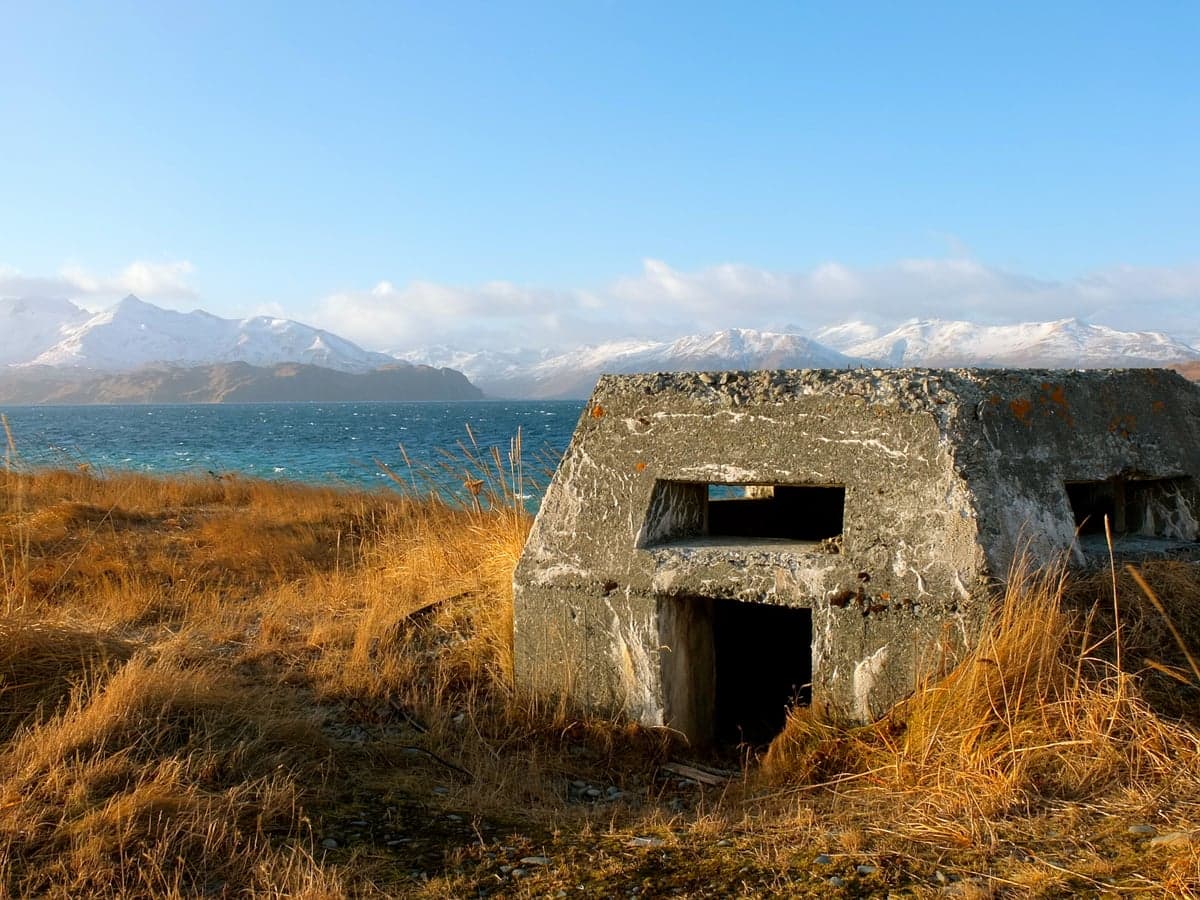

Photo: Wikipedia
Political ClimatePolitical Climate in Aleutians West County
Showing state-level results — no local-only data available.
Local Political AnalysisPolitical Analysis of Aleutians West County
Aleutians West County, Alaska, is a political outlier within a state that already leans Republican, with Alaska holding a Cook PVI of R+6. The county itself, however, has a distinct Democratic lean, driven largely by the federal workforce and union presence in its main population center, Unalaska. While the state as a whole has trended more conservative in recent cycles, Aleutians West has remained reliably blue in presidential elections, with the 2020 results showing Joe Biden winning the county by a comfortable margin. This creates a fascinating dynamic where a resident of Unalaska lives in a very different political ecosystem than someone in, say, Anchorage or Wasilla.
How it compares
The contrast between Aleutians West and the rest of Alaska is stark. The county's Democratic tilt is almost entirely concentrated in Unalaska, home to the massive Dutch Harbor fishing port and its associated processing plants. Here, the workforce is heavily unionized, and many residents are employed by federal agencies like NOAA and the Coast Guard, which tend to lean left. In the 2020 election, Unalaska precincts voted for Biden by a margin of roughly 20 points. Meanwhile, the county's other populated areas, such as Atka, Nikolski, and Saint Paul, are small, predominantly Alaska Native villages that often vote more conservatively on social issues but can swing left on economic and subsistence rights. The swing precincts are really in the smaller villages—places like Akutan and False Pass—where local issues like fishing quotas and fuel costs often override national party lines. In a statewide context, Aleutians West is a blue island in a red sea, but its influence is muted by its small population.
What this means for residents
For conservative residents, especially in the smaller villages, the political climate means they often feel their voices are drowned out by the more liberal Unalaska majority. They may find their views on gun rights or resource development at odds with the county's official stance, but they also benefit from the federal funding and infrastructure that comes with a Democratic-leaning delegation. For liberal residents in Unalaska, the county provides a comfortable echo chamber where progressive policies on labor, environment, and social services are the norm. However, they must contend with state-level policies from Juneau that often feel hostile, such as restrictions on abortion access or cuts to the state ferry system. Practically, this means local elections in Unalaska are fiercely contested, while village elections are often decided on subsistence and tribal sovereignty issues. The county's political reality is one of constant negotiation between the urban liberal hub and the rural conservative villages.
Culturally, the county is defined by its isolation and its reliance on the Bering Sea. The fishing industry is the economic and political engine, and it creates a unique set of priorities that don't always align with mainland Alaska. For instance, debates over the Pebble Mine in Bristol Bay feel distant here; the real fight is over halibut bycatch and crab quotas. The county also has a strong Alaska Native presence, with the Aleut Corporation and tribal councils wielding significant influence. This leads to a policy landscape where subsistence rights and corporate fishing interests often clash, creating a political culture that is pragmatic, resource-focused, and deeply skeptical of outside control—whether from Anchorage or Washington D.C. It's a place where a Republican fisherman and a Democratic processor can agree on one thing: the federal government needs to stay out of their fishing grounds.

State Political ClimatePolitical Climate in Alaska
State Political AnalysisPolitical Environment in the State
Alaska has long been a politically independent-minded state, with a Cook PVI of R+8, but its brand of conservatism is libertarian-leaning and fiercely individualistic rather than culturally traditionalist. The state has voted Republican in every presidential election since 1968 except for 1964, yet it has also elected independent governors, sent a Democrat to the U.S. Senate for decades, and legalized recreational marijuana before many blue states. Over the last 10-20 years, the dominant coalition has shifted from a pragmatic, resource-driven centrism toward a more polarized, Trump-aligned Republicanism, though the state’s small population and unique geography mean local dynamics often override national party labels.
Urban vs. rural divide
The political map of Alaska is defined by the stark contrast between Anchorage, the state’s only major city, and the vast, sparsely populated rural and bush regions. Anchorage, home to about 40% of the state’s population, is a swing area that has trended left in recent cycles, with its more diverse and younger neighborhoods like Mountain View and Spenard voting reliably Democratic. The Mat-Su Borough, just north of Anchorage, is the state’s conservative heartland—Wasilla and Palmer are packed with Trump flags and gun shops, and the area has grown rapidly with families fleeing Anchorage’s higher costs and perceived crime. Fairbanks, the second-largest city, leans Republican but has a strong military and university presence that keeps it competitive. The Southeast panhandle, including Juneau and Ketchikan, is more moderate and environmentally conscious, often voting for Democrats or independents. The rural bush—villages like Barrow (Utqiaġvik) and Nome—votes overwhelmingly Democratic due to strong tribal ties and reliance on federal programs, but turnout is low and issues like subsistence hunting and fishing cross party lines.
Policy environment
Alaska’s policy environment is shaped by its unique status as an energy-producing state with no state income tax or statewide sales tax, funded largely by oil revenue and the Permanent Fund dividend. The regulatory posture is generally light-touch, especially for resource extraction, but the state has a robust regulatory framework for fish and game management. Education policy is decentralized, with local school boards holding significant power, though the state has seen debates over funding formulas and the role of charter schools. Healthcare is a major issue, with high costs and limited access in rural areas; the state expanded Medicaid under the Affordable Care Act in 2015, a move that was controversial among conservatives. Election laws are relatively open—Alaska uses a top-four primary system and ranked-choice voting for general elections, implemented by ballot initiative in 2020, which has been a flashpoint between establishment Republicans and more populist factions. The state also has some of the strongest privacy protections in the U.S., with a constitutional right to privacy that has been interpreted to protect abortion access and marijuana use.
Recent policy direction
Recent legislation in Alaska reflects a state grappling with its libertarian roots and national partisan pressures. In 2024, the legislature passed a bill expanding gun rights by allowing permitless carry for residents 21 and older, aligning with a national trend. On education, the state saw a bitter fight over parental rights in 2023, with a bill requiring schools to notify parents of curriculum changes and allowing them to opt their children out of certain materials—it passed but was vetoed by Governor Mike Dunleavy, a Republican, who cited concerns about overreach. Property rights remain strong, with no statewide zoning and minimal eminent domain use, though local governments in Anchorage and Juneau have imposed stricter land-use rules. On taxation, the state has resisted a state income tax for decades, but the declining oil revenue has led to debates over a potential sales tax or a draw on the Permanent Fund earnings. Voting access has been a major battleground: the 2020 ranked-choice voting initiative was upheld by the Alaska Supreme Court in 2022, but a 2024 legislative effort to repeal it failed, leaving the system in place for the 2026 elections. Medical and bodily autonomy is protected by the state constitution’s privacy clause, which the Alaska Supreme Court has used to strike down abortion restrictions, though a 2023 ballot measure to enshrine abortion rights failed narrowly. Surveillance and privacy are generally respected, with the state having no broad warrantless surveillance programs, though local police in Anchorage have faced scrutiny over the use of automated license plate readers.
Civil unrest & political movements
Political movements in Alaska are often tied to resource extraction and land use. The state has a history of secessionist rhetoric, with the Alaska Independence Party still active, though it has little electoral success. In 2020, the state saw protests over the proposed Pebble Mine in Bristol Bay, drawing national environmental groups and local fishermen, while conservative groups held counter-protests in support of mining jobs. Immigration politics are less visible than in the Lower 48, but the state has a small but vocal movement against sanctuary policies, though no major city has adopted them. Election integrity has been a hot topic since the 2020 ranked-choice voting system was implemented, with some Republican activists alleging fraud, though no evidence has been found. The 2022 gubernatorial election saw a competitive three-way race, with Dunleavy winning under the new system, which has led to ongoing calls for repeal from the state GOP. Visible flashpoints include the annual Iditarod race, which has become a cultural battleground between animal rights activists and traditional mushers, and the debate over the Trans-Alaska Pipeline’s future, which pits environmentalists against oil workers.
Projection
Over the next 5-10 years, Alaska’s political trajectory will be shaped by demographic shifts and economic pressures. In-migration from the Lower 48, particularly to the Mat-Su Borough and Fairbanks, is bringing more conservative voters, while Anchorage continues to diversify and lean left. The state’s population is aging and slowly declining, which could reduce the influence of the rural Democratic vote. The ranked-choice voting system is likely to remain in place, favoring moderate candidates and independents, which may frustrate hardline conservatives but keep the state from swinging as far right as other R+8 states. The oil revenue decline will force tough choices on taxes and the Permanent Fund dividend, which could realign party coalitions. A new resident moving in now should expect a state that remains politically independent, with a strong libertarian streak, but where national partisan divisions are increasingly visible in local elections. The practical takeaway is that Alaska rewards self-reliance and local engagement—your vote matters more here than in most states, but you’ll need to navigate a system that values pragmatism over party loyalty.
For a new resident, the bottom line is that Alaska offers a unique political environment where your personal freedoms are generally respected, but you’ll need to be prepared for a state that is fiscally strained and geographically divided. Conservatives will find a welcoming home in the Mat-Su and Fairbanks, with low taxes and strong gun rights, but may chafe at the ranked-choice voting system and the state’s constitutional privacy protections. Liberals will appreciate the privacy and abortion protections, but will face a conservative majority in the legislature and a resource-driven economy. The key is to understand that Alaska’s politics are less about red vs. blue and more about the tension between individual liberty and community survival in a harsh, beautiful, and increasingly expensive place.
* Values derived from national, state, county, city and local statistics and may differ in a specific area. Last updated: 2026-07-25T20:06:40.000Z
Narrative content on this page is AI-generated and may contain mistakes. Verify any details that matter before acting on them.
ReloMaps may earn a commission from affiliate links at no extra cost to you.

