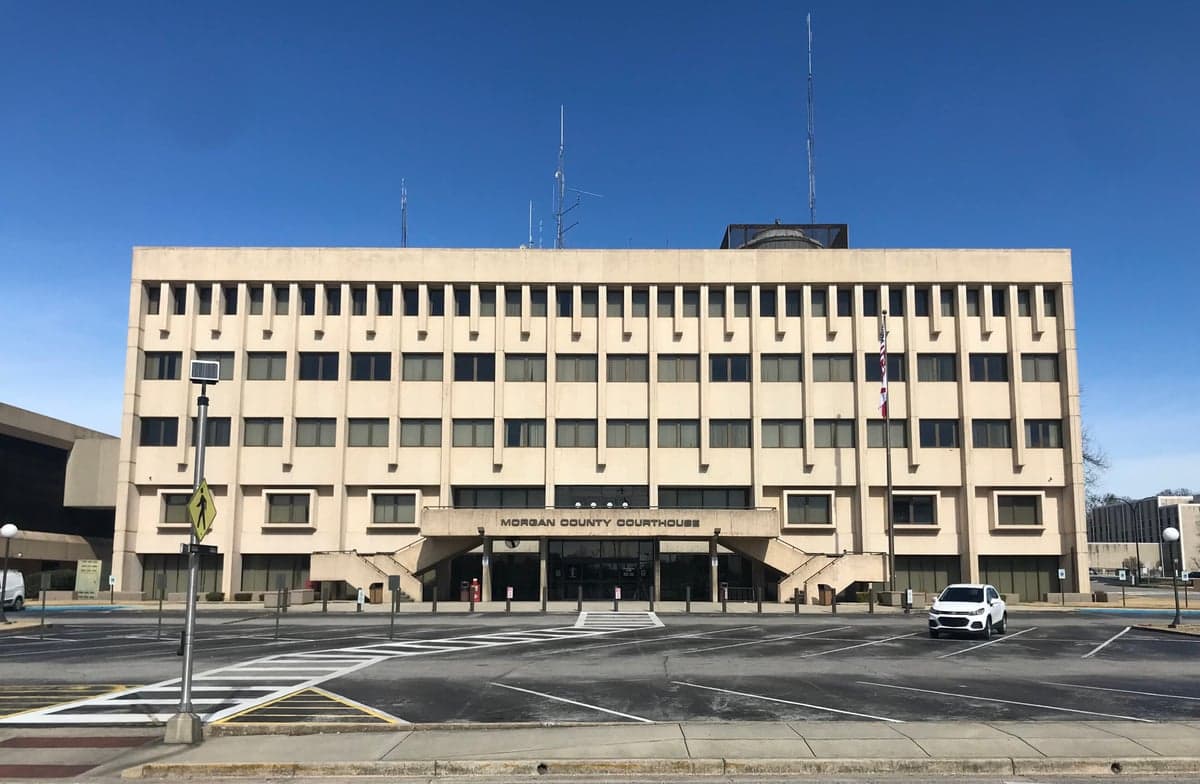
Photo: Wikipedia
Quality of Life in Morgan County
A livable area that tracks near national norms for affordability, walkability, and neighborhood health.
What does Quality of Life tell us?
Quality of Life measures an area by evaluating factors like cost of living, nearby amenities, country club access, airport proximity, socioeconomic signals and neighborhood character. For large states, this is a general average — quality of life can vary dramatically between metro areas, suburbs, and rural communities within the same state.
What does this tell us?
Quality of Life measures an area by evaluating factors like cost of living, nearby amenities, country club access, airport proximity, socioeconomic signals and neighborhood character. For large states, this is a general average — quality of life can vary dramatically between metro areas, suburbs, and rural communities within the same state.
Cost of Living
30% below national average
118%
The Real Cost of Living in Morgan County for 2026
| Tier | Individual | Family (4) |
|---|---|---|
| Survival | $13k | $25k |
| Comfortable | $37k | $55k |
| Luxury | $114k+ | $176k+ |
| Elite (Top 5%) | $134k+ | $207k+ |
Quality-of-Life Analysis
Morgan County, Alabama offers a broad spectrum of quality-of-life options that range from the classic small-city convenience of Decatur to the rural quiet of unincorporated communities like Falkville and Lacey’s Spring. The county’s cost of living index of 70 — well below the national average of 100 — attracts residents seeking affordability without sacrificing access to jobs, schools, and outdoor amenities. The area’s demographic mix includes young families drawn by Decatur’s industrial and healthcare employment, retirees seeking low property taxes, and commuters who work in Huntsville but prefer the slower pace and lower home prices of southern Morgan County.
Largest town(s) & population centers
Decatur, the county seat and largest city, anchors the county with a population of roughly 56,000. Daily life here centers on the Tennessee River waterfront, with the Point Mallard Park aquatic center and the Cook Museum of Natural Science serving as major draws. Decatur’s economy is driven by manufacturing giants like United Launch Alliance and 3M, as well as healthcare at Decatur Morgan Hospital. The city offers a mix of historic neighborhoods (e.g., the Old Decatur district) and newer subdivisions, with an average commute of under 24 minutes — notably shorter than in nearby Huntsville. While Decatur provides the most extensive retail and dining options in the county, it also faces challenges with older housing stock and some higher-crime pockets near the downtown core.
Smaller towns & rural pockets
Beyond Decatur, Morgan County’s smaller towns and unincorporated communities offer distinctly different lifestyles. Hartselle (pop. ~14,000) functions as a self-contained bedroom community with its own school system and a charming historic square, drawing families who want a walkable small town with a sense of community. Priceville, located just south of Decatur along I-65, has experienced rapid suburban-style growth with new subdivisions and commercial strips, appealing to commuters who work in Huntsville or Decatur. Further south, Falkville (pop. ~1,200) retains a genuine rural character with wide-open farmland and a slower pace, while Lacey’s Spring offers remote, wooded settings near the Morgan-Madison county line that appeal to those seeking acreage and privacy. Valhermoso Springs, a historic unincorporated community, is known for its mineral springs and horse-friendly properties.
Cost & lifestyle range
The financial spread across Morgan County is notable. Decatur’s newer suburbs (e.g., the Burningtree Mountain area) push home values above the county median of $193,000, sometimes exceeding $350,000 for lakefront properties, while median rent in Decatur proper sits at $835. At the opposite end, rural Falkville and parts of southwest Morgan County offer homes below $150,000 and land parcels under $3,000 per acre, making them some of the most affordable options in the Huntsville-Decatur metro region. Utility costs tend to be lower in smaller towns due to municipal electric companies like the City of Falkville Electric, which often undercut investor-owned utility rates. Amenity access also varies: Decatur residents have grocery stores, hospitals, and entertainment within a 10-minute drive, while residents in rural pockets may need 25-30 minutes to reach a supermarket or urgent care. Property taxes in Morgan County average around 0.42% of assessed value, among the lowest in Alabama, which benefits retirees and landowners throughout the county.
Morgan County suits a wide range of residents, from those who need daily urban conveniences to those who prioritize land, privacy, and a quiet rural life. Families with school-age children often gravitate to Hartselle or Priceville for their strong school systems, while retirees and remote workers find value in Falkville’s low costs and open space. The county’s central location — within 30 minutes of Huntsville’s tech economy but with a cost of living 30% below the national average — makes it a practical choice for anyone seeking Alabama’s version of the Goldilocks lifestyle: not too urban, not too remote, and affordable enough to allow financial breathing room.

Crime in Morgan County
Crime rates similar to the national median for U.S. locations.
Violent CrimeViolent Crime Analysis
Property CrimeProperty Crime Analysis
Crime Analysis
Morgan County, Alabama, presents a mixed safety picture with violent crime rates slightly below the national average but property crime rates that exceed both state and national benchmarks. The county’s overall violent crime rate of 348.1 per 100,000 residents is lower than the U.S. average of approximately 380 per 100,000, while its property crime rate of 1,479.9 per 100,000 is notably higher than both the Alabama state average (around 1,200 per 100,000) and the national figure (roughly 1,950 per 100,000). This disparity means residents in communities like Decatur, Hartselle, and Priceville experience different levels of risk depending on where they live and work.
Crime in context
When compared to Alabama’s statewide violent crime rate of roughly 450 per 100,000, Morgan County’s 348.1 per 100,000 is a meaningful improvement, placing it among the safer counties in the northern part of the state. However, the property crime rate of 1,479.9 per 100,000 is significantly above the state average, driven largely by thefts and burglaries in more urbanized areas. Decatur, the county seat and largest city, accounts for a disproportionate share of both violent and property offenses, while smaller towns like Hartselle and Falkville report substantially lower incident rates. The presence of a progressive-leaning district attorney in Morgan County’s judicial circuit has raised concerns among some residents, as lenient sentencing policies in nearby urban jurisdictions—such as those seen in Birmingham and Huntsville—have been linked to higher recidivism and reduced public safety. Property crime in Morgan County is roughly 24% higher than the national average, a figure that should give pause to potential movers, especially those considering neighborhoods near major highways or commercial corridors.
What residents experience
Daily life in Morgan County varies sharply by location. In Decatur, residents frequently report vehicle break-ins and package thefts, particularly in areas near the Tennessee River and along Highway 31. The city’s police department has responded with targeted patrols, but property crime remains a persistent issue. Hartselle, by contrast, is widely regarded as one of the safest communities in the county, with violent crime rates roughly half the county average and property crime rates that are among the lowest in North Alabama. Priceville, a growing suburb south of Decatur, also benefits from lower crime rates, though its proximity to Interstate 65 has led to occasional thefts from vehicles. Residents in rural areas like Somerville and Trinity generally report feeling safe, but they note that response times from law enforcement can be longer due to the county’s spread-out geography. The Morgan County Sheriff’s Office maintains a visible presence in unincorporated areas, and community watch programs are active in several subdivisions, which helps mitigate some of the risks associated with higher property crime rates.
Neighborhood-level variation is significant in Morgan County. The safest areas tend to be in the southern and eastern parts of the county, including Hartselle, Priceville, and the rural communities around Falkville. These areas benefit from lower population density, stronger homeowner associations, and more conservative local governance that prioritizes law enforcement funding. Conversely, parts of Decatur near the city center and along the riverfront experience higher crime concentrations, particularly in rental-heavy neighborhoods and near public housing complexes. Prospective residents should research specific census tracts and block-level data before choosing a home, as a few blocks can separate a low-crime street from one with frequent police calls. Overall, Morgan County offers a viable option for those seeking lower violent crime rates than the national average, but the elevated property crime numbers and the influence of progressive judicial policies in the region warrant careful consideration of where exactly one settles.
* Values derived from national, state, county, city and local statistics and may differ in a specific area. Last updated: 2026-07-06T09:23:55.000Z
Narrative content on this page is AI-generated and may contain mistakes. Verify any details that matter before acting on them.
ReloMaps may earn a commission from affiliate links at no extra cost to you.

