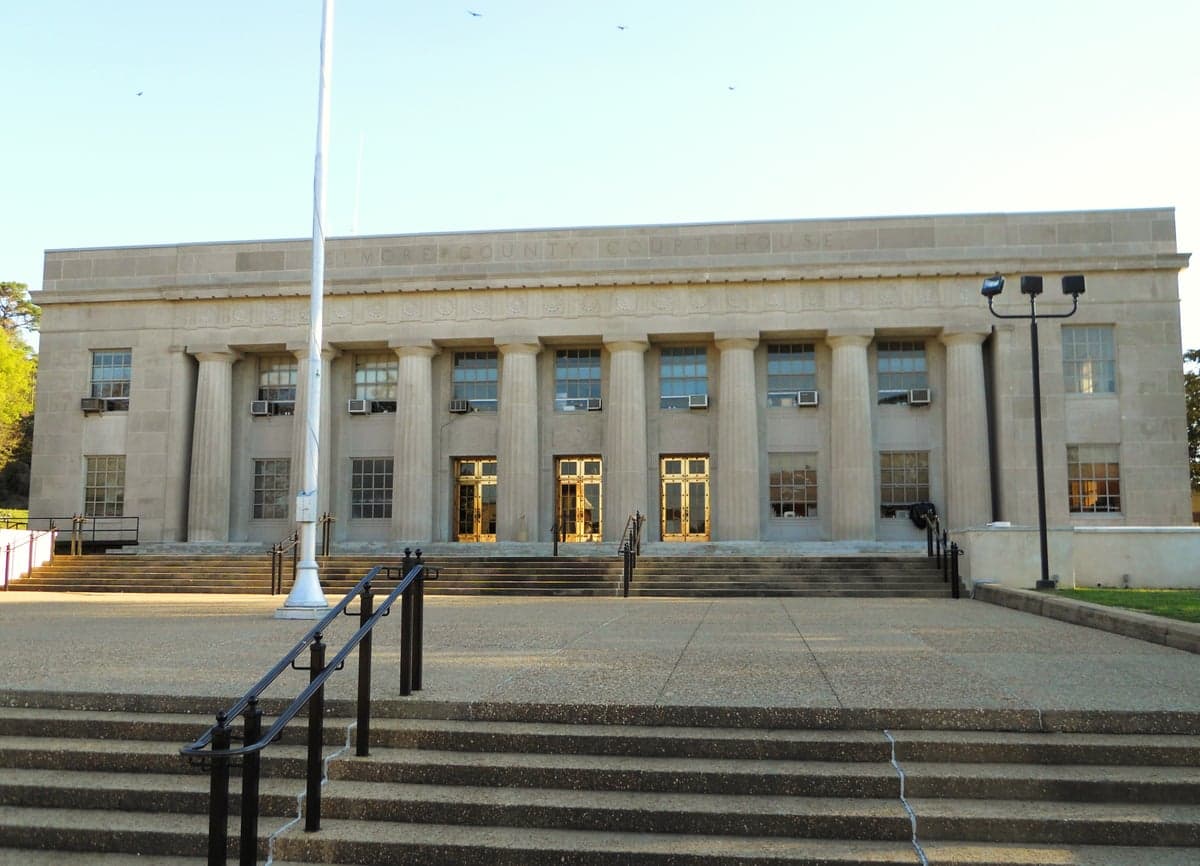
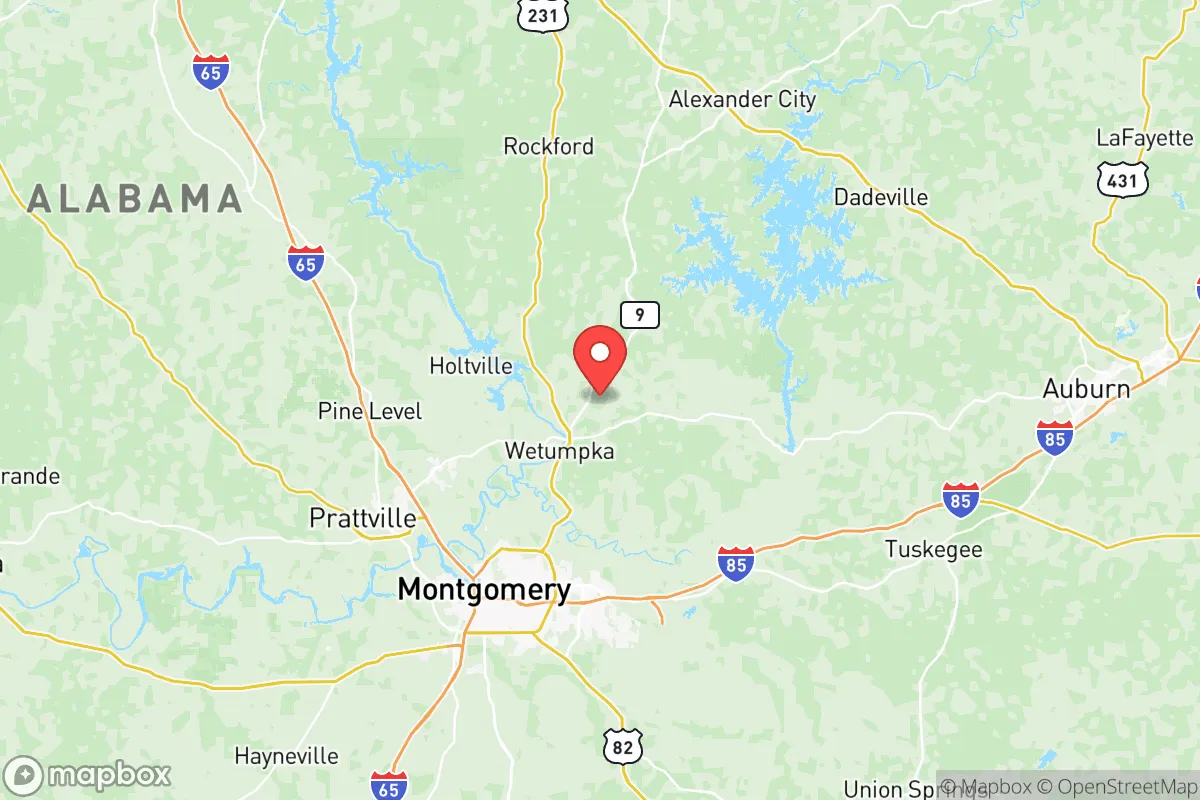
Photo: Wikipedia
Personal Sovereignty in Elmore County
Viable for self-reliance. Generally workable, though some barriers may limit total independence.
What does Personal Sovereignty tell us?
Personal Sovereignty measures your capacity for self-reliance and independence with minimal government friction. Higher scores mean fewer barriers between you and the way you want to live... but it assumes you have the space you need and good neighbors.
What does this tell us?
Personal Sovereignty measures your capacity for self-reliance and independence with minimal government friction. Higher scores mean fewer barriers between you and the way you want to live... but it assumes you have the space you need and good neighbors.
State Policy
Energy independence: Importer (45% of energy produced in-state)
Personal Liberty
Homesteading

Personal Liberty Analysis
Elmore County, Alabama, offers a notably high degree of personal sovereignty, grounded in Alabama’s strong constitutional protections and a local culture that prizes self-reliance. The county’s regulatory environment is light-touch compared to many urban and suburban areas, with low taxes, permissive gun laws, and a legal framework that generally defers to individual decision-making in areas like property use, medical choice, and family matters. For single individuals and families seeking to maximize personal autonomy, Elmore County presents a compelling option, though the specific experience varies between its more rural eastern stretches and the growing suburban corridor along the I-65/US 231 spine.
Tax burden and regulatory posture: How Alabama’s low-tax framework shapes daily life
Alabama’s state-level tax structure is among the most favorable in the country for those prioritizing financial sovereignty. There is no state income tax on wages, and the state’s combined state and local sales tax rate averages around 9.2% in Elmore County, with the city of Wetumpka levying a 4% city sales tax on top of the county’s 2% and the state’s 4%. Property taxes are exceptionally low: the effective rate in Elmore County is roughly 0.33% of assessed home value, meaning a $250,000 home carries an annual tax bill of about $825. This low property tax burden directly supports long-term wealth retention and reduces the financial pressure to sell or develop land. The county’s regulatory posture is similarly light. There is no county-wide zoning ordinance in unincorporated areas, which means property owners in places like Titus, Holtville, or the rural stretches near the Coosa River have broad latitude to build, park RVs, operate home-based businesses, or keep livestock without seeking variances. However, the city of Wetumpka and the town of Eclectic do have zoning codes and building permit requirements, so buyers should verify local rules before purchasing. The county’s planning department is small and generally responsive, with permit fees that are a fraction of what one would encounter in metro Atlanta or Nashville. For those who value minimal government interference in property use, the unincorporated areas of Elmore County are a clear advantage.
Self-defense and gun law specifics: Constitutional carry and castle doctrine in practice
Alabama is a constitutional carry state, meaning no permit is required to carry a concealed or open firearm for anyone legally allowed to possess one. Elmore County Sheriff’s Office issues permits for reciprocity purposes, but there is no local ordinance that restricts carry in parks, businesses, or public spaces beyond state law. The county’s culture is strongly pro-Second Amendment; gun ranges and firearm retailers are common, and the annual Wetumpka Gun Show draws regional attendance. The state’s Stand Your Ground law is codified in Alabama Code § 13A-3-23, which removes any duty to retreat before using deadly force in any place where the individual has a legal right to be. Castle doctrine protections extend to occupied vehicles and workplaces, not just dwellings. In practice, this means a homeowner in Deatsville or Elmore who encounters a threat on their property has broad legal latitude to defend themselves without fear of civil liability. The county’s district attorney’s office has a track record of not prosecuting lawful self-defense cases, and local law enforcement generally respects the rights of gun owners. For those moving from states with magazine capacity restrictions or firearm registration requirements, Elmore County offers a complete absence of such burdens. The only notable local nuance is that discharging a firearm within city limits of Wetumpka or Eclectic is prohibited except at approved ranges, so rural property is strongly recommended for those who want to shoot on their own land.
Self-reliance and homesteading viability: Lot sizes, zoning, and off-grid feasibility
Elmore County is one of the more viable areas in central Alabama for homesteading and off-grid living, particularly in its eastern and southern rural precincts. Unincorporated land parcels of 5 to 40 acres are common and affordable, with prices ranging from $3,000 to $8,000 per acre depending on proximity to water and paved roads. There is no county-wide minimum lot size for residential use, though the health department requires a minimum of 1 acre for a conventional septic system. In areas like Titus, Robinson Springs, and the rural parts of the 36066 zip code, residents commonly keep chickens, goats, and even cattle without needing a permit. Off-grid solar is legal and increasingly common; Alabama has no net metering requirement, but the state’s 2023 solar access law prevents HOAs from banning solar panels outright. Rainwater collection is unrestricted, and wells are permitted with a standard application to the Alabama Department of Public Health. The county does not enforce building codes in unincorporated areas, though lenders and insurers may require compliance for financing. For those seeking true self-sufficiency, the area around the Coosa River near the Elmore-Autauga county line offers deep soil, abundant water, and minimal light pollution. The main constraint is that the county’s fire marshal may require a burn permit for open burning, and the Alabama Department of Environmental Management regulates waste disposal, but these are minor compared to the regulatory hurdles in more densely populated states.
Personal liberties: Parental rights, medical autonomy, speech, and property
Alabama law provides strong protections for parental rights, including the Parental Rights Protection Act (2022), which affirms that parents have the fundamental right to direct the upbringing, education, and healthcare of their children. Elmore County Public Schools, which serves the majority of the county including Wetumpka, Holtville, and Eclectic, does not have a mask mandate or vaccine requirement for students, and parents can opt their children out of any sex education or health curriculum. The state’s medical freedom laws are among the strongest in the South: Alabama does not require COVID-19 vaccination for any public service or school attendance, and the 2023 law prohibiting vaccine passports remains in effect. Medical autonomy extends to the choice of treatment; the state does not have a prescription drug monitoring program that restricts patient access, and compounding pharmacies are common in Wetumpka and Millbrook. Free speech protections are robust, with no local hate speech ordinances or social media content restrictions beyond state and federal law. Property rights are constitutionally protected, and Elmore County has no county-wide rent control or short-term rental bans, though the city of Wetumpka does require a business license for Airbnb operators. The county’s probate court handles property disputes with a general presumption in favor of the landowner. For those who prioritize the ability to live, speak, and raise their family without government overreach, Elmore County’s legal environment is permissive and predictable.
Overall, Elmore County ranks among the more sovereignty-friendly areas in the Southeast, comparable to rural counties in Tennessee or Georgia but with lower property taxes and no state income tax. The combination of constitutional carry, minimal zoning, low taxes, and strong parental rights creates an environment where individuals and families can exercise a high degree of personal autonomy. The primary trade-off is that the county’s growing suburban corridor along US 231—particularly around Millbrook and the northern edge of Wetumpka—is seeing increased development pressure and some homeowners’ association restrictions, so those seeking maximum freedom should target the unincorporated rural areas east of the Coosa River or south of Holtville. For a relocation researcher advising a conservative-leaning audience, Elmore County offers a clear, data-backed case for personal sovereignty that is difficult to match in most of the urbanized South.

* Values derived from national, state, county, city and local statistics and may differ in a specific area. Last updated: 2026-07-03T04:07:25.000Z
Narrative content on this page is AI-generated and may contain mistakes. Verify any details that matter before acting on them.
ReloMaps may earn a commission from affiliate links at no extra cost to you.

