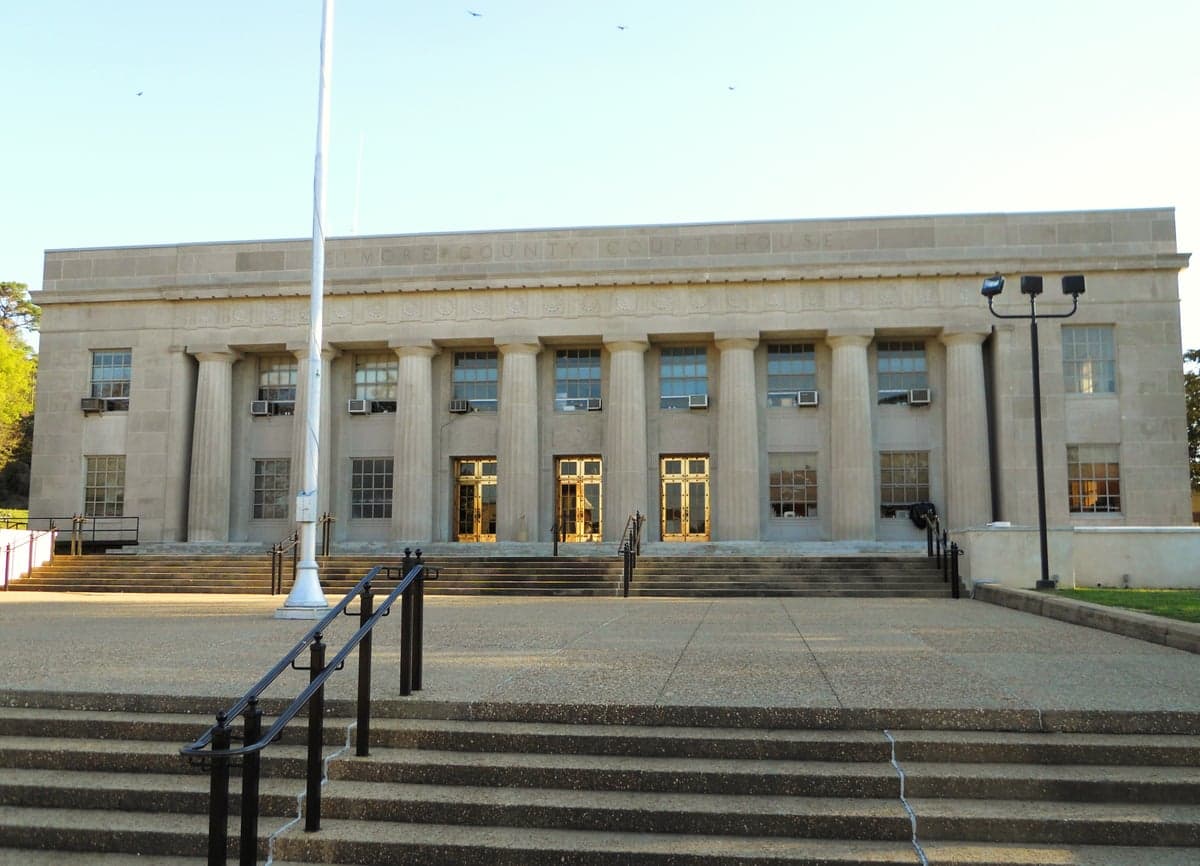
Photo: Wikipedia
Demographics of Elmore County
Affluence Level in Elmore County
A middle-class area roughly in line with national averages across income, home values, education, and employment.
People of Elmore County
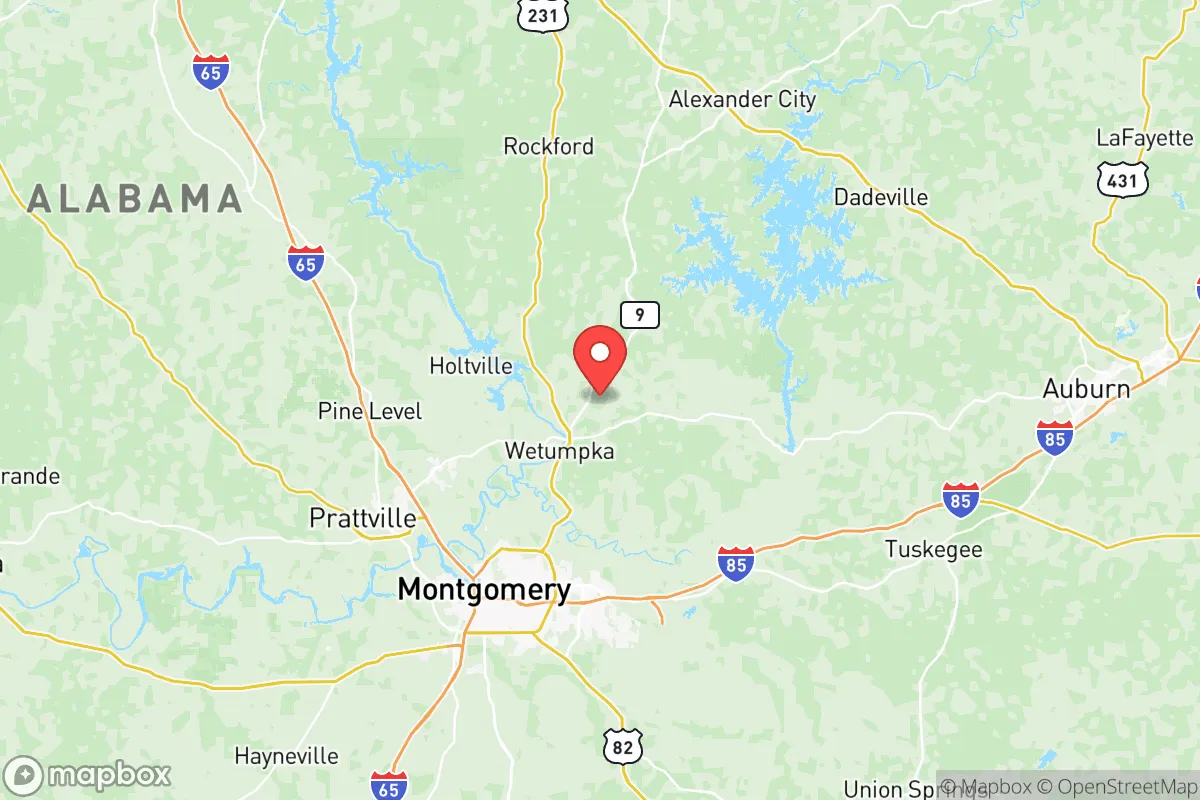
Elmore County, Alabama, is home to 88,669 residents who live in a crescent of communities stretching from the outskirts of Montgomery northeastward along the Coosa and Tallapoosa rivers. The county is predominantly white (72.1%) with a significant Black population (21.0%) and a very small foreign-born share (1.2%), reflecting a deeply rooted, native-born character. Its identity is shaped by a mix of rural tradition, suburban growth tied to Maxwell Air Force Base and Montgomery’s economy, and a strong sense of local independence. The people here are largely a product of generations of Southern settlement, with modern growth driven by domestic migration rather than international immigration.
Settlement & growth (pre-1960)
Before European contact, the area now known as Elmore County was part of the ancestral homeland of the Creek (Muscogee) Nation, with major towns along the Coosa and Tallapoosa rivers. The Creeks were forcibly removed in the 1830s under the Indian Removal Act, opening the land to white settlers from Georgia, the Carolinas, and Virginia. These early settlers were primarily of Scots-Irish and English descent, drawn by the fertile river bottoms and the promise of cotton agriculture. They established small farming communities such as Wetumpka, the county seat, and Eclectic, both of which remain population centers today.
Cotton cultivation and the plantation system brought enslaved Black people into the region in large numbers before the Civil War. After emancipation, many freedmen remained in the county as sharecroppers and tenant farmers, forming the foundation of Elmore’s Black population. The post-Reconstruction era saw the rise of small, self-sufficient Black communities like Coosada and Elmore, where families built churches, schools, and businesses despite Jim Crow segregation. The county’s population remained overwhelmingly rural and agricultural through the early 20th century, with cotton as the economic backbone.
The Great Depression and the boll weevil infestation devastated cotton farming, prompting many residents—both Black and white—to leave for industrial jobs in the North and Midwest during the Great Migration. However, the construction of Maxwell Air Force Base in Montgomery and the opening of the Alabama River in the 1930s brought some economic diversification. The town of Tallassee, already home to a textile mill since the 1840s, continued to anchor industrial employment. By 1950, Elmore County’s population was still under 30,000, and its racial composition was roughly 60% white and 40% Black, a ratio that would shift in the coming decades.
Modern era (post-1965)
The post-1965 period in Elmore County was shaped less by the Hart-Cellar Act than by domestic migration and suburbanization. Unlike many parts of the Sun Belt, Elmore County did not experience a large influx of international immigrants; its foreign-born population remains just 1.2% today. Instead, the county’s growth came from white and Black families moving outward from Montgomery, seeking lower taxes, larger lots, and a slower pace of life. This suburban wave accelerated in the 1990s and 2000s, with Wetumpka and Millbrook emerging as the primary destinations for new housing developments.
The racial composition shifted notably during this period. The white share of the population rose from roughly 60% in 1960 to 72.1% today, while the Black share declined from about 40% to 21.0%. This change reflects both white flight from Montgomery and the out-migration of some Black families to larger cities. The Hispanic population, though small at 3.3%, grew modestly after 2000, largely concentrated in construction and service jobs in Wetumpka and Millbrook. East/Southeast Asian residents (0.6%) and Indian-subcontinent residents (0.1%) are present in very small numbers, often connected to professional roles at Maxwell Air Force Base or in Montgomery’s healthcare sector.
Suburbanization also reshaped the county’s geography. Millbrook, once a small crossroads, grew into a bedroom community of over 15,000 residents, with new subdivisions and retail corridors. Wetumpka retained its historic downtown but expanded outward with golf-course communities and riverfront homes. The town of Elmore remained more rural, while Eclectic and Tallassee saw slower growth, preserving their small-town character. The county’s college-educated share (24.4%) is below the national average, reflecting a workforce still heavily oriented toward trades, manufacturing, and service jobs rather than professional services.
The future
Elmore County’s population is projected to continue growing, driven by ongoing suburban expansion from Montgomery and the broader trend of domestic migration to the Sun Belt. The county is likely to become slightly more diverse, but the pace will be slow. The Hispanic share may rise from 3.3% to 5-6% over the next decade, as families settle in Millbrook and Wetumpka for construction and service jobs. The Black population share may stabilize or increase modestly as some Black families return from larger cities seeking lower housing costs. The white share will likely remain dominant, though it may edge down to around 70%.
New communities are concentrating in the southern part of the county, closer to Montgomery, particularly along the I-65 corridor near Millbrook and Coosada. These areas are seeing new subdivisions, schools, and retail centers. The northern towns like Eclectic and Tallassee will likely grow more slowly, retaining their rural character. The county’s cultural identity is evolving from a purely agricultural and small-town feel to a more suburban, commuter-oriented one, but it remains distinctly Southern in its politics, religion, and social norms. The foreign-born population is expected to remain very low, meaning the county will stay overwhelmingly native-born and English-speaking.
For someone moving in now, Elmore County offers a place where growth is steady but not overwhelming, where community ties remain strong, and where the cost of living is low. The county is becoming more connected to Montgomery’s economy while preserving its own identity as a quieter, more conservative alternative. The people here are largely the descendants of the Scots-Irish, English, and African American families who settled the land two centuries ago, and that continuity is likely to remain the defining feature of Elmore County for the foreseeable future.

* Values derived from national, state, county, city and local statistics and may differ in a specific area. Last updated: 2026-07-03T04:07:25.000Z
Narrative content on this page is AI-generated and may contain mistakes. Verify any details that matter before acting on them.
ReloMaps may earn a commission from affiliate links at no extra cost to you.

