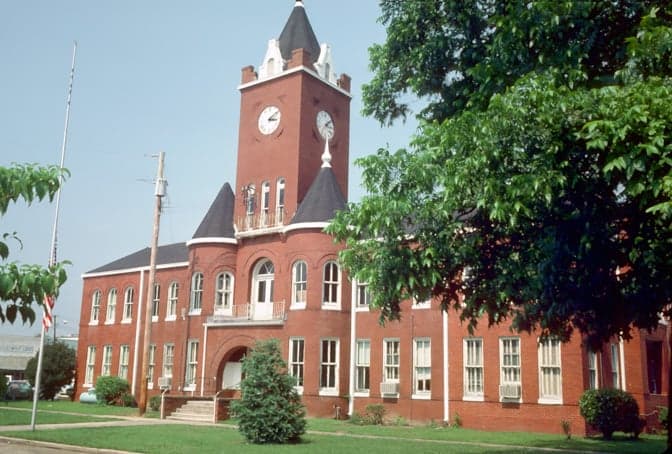
Photo: Wikipedia
Quality of Life in Coffee County
A livable area that tracks near national norms for affordability, walkability, and neighborhood health.
What does Quality of Life tell us?
Quality of Life measures an area by evaluating factors like cost of living, nearby amenities, country club access, airport proximity, socioeconomic signals and neighborhood character. For large states, this is a general average — quality of life can vary dramatically between metro areas, suburbs, and rural communities within the same state.
What does this tell us?
Quality of Life measures an area by evaluating factors like cost of living, nearby amenities, country club access, airport proximity, socioeconomic signals and neighborhood character. For large states, this is a general average — quality of life can vary dramatically between metro areas, suburbs, and rural communities within the same state.
Cost of Living
24% below national average
126%
The Real Cost of Living in Coffee County for 2026
| Tier | Individual | Family (4) |
|---|---|---|
| Survival | $15k | $29k |
| Comfortable | $35k | $51k |
| Luxury | $105k+ | $163k+ |
| Elite (Top 5%) | $123k+ | $191k+ |
Quality-of-Life Analysis
Coffee County, Alabama offers a broad spectrum of quality-of-life options that range from the bustling county seat of Enterprise to the quiet, unincorporated crossroads of Victoria and the rural farmlands surrounding Kinston. The county attracts a mix of military-affiliated families connected to nearby Fort Novosel, retirees seeking low property taxes, and agricultural workers tied to the region's peanut and cotton industries. With a cost of living index of 76 — well below the national average of 100 — and a median home value of $180,300, the county provides affordable entry points across its urban, suburban, and rural tiers.
Largest town(s) & population centers
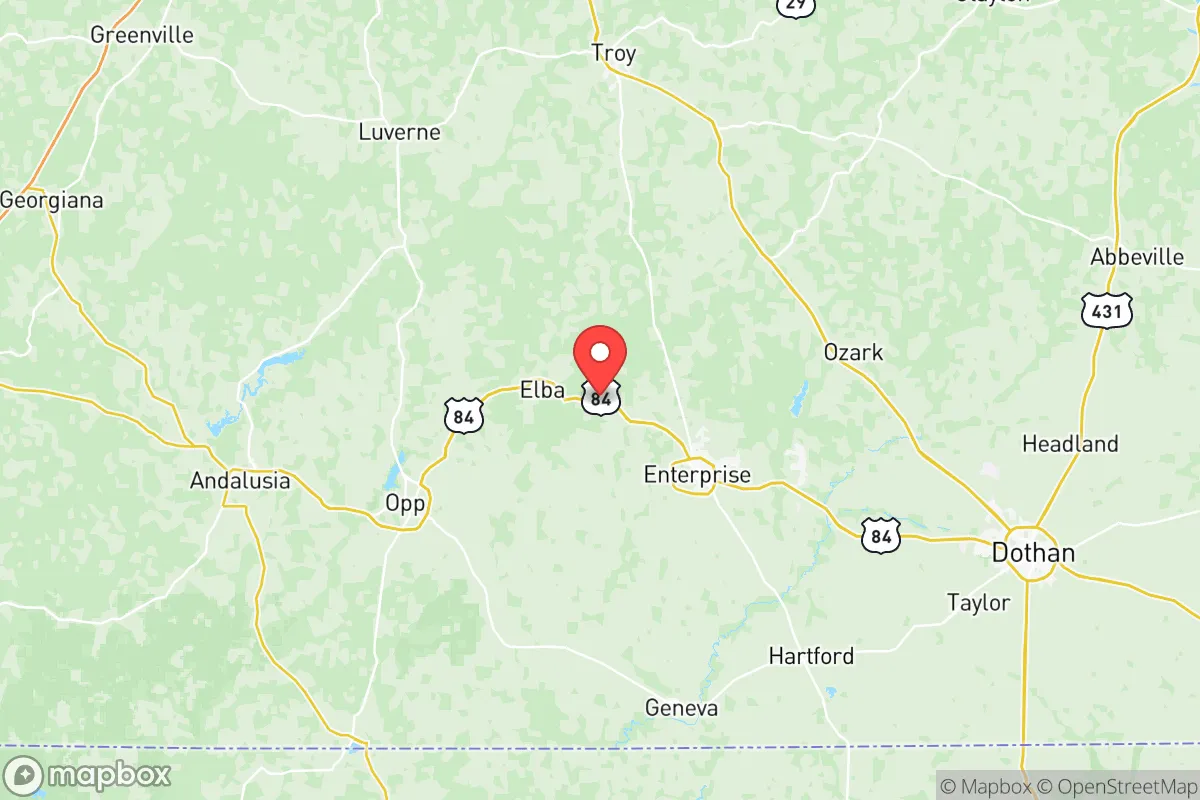
Enterprise is the county's largest city and primary economic hub, home to about 30,000 residents and the headquarters of major employers like the Flowers Hospital system and the Walmart distribution center. Daily life here revolves around the Enterprise-Ozark Combined Statistical Area, with a downtown anchored by the iconic Boll Weevil Monument and a growing retail corridor along US-84. The city offers the widest range of amenities in the county, including multiple grocery chains, a regional medical center, and the Enterprise City Schools system, which consistently ranks among the top in the Wiregrass region. Elba, the county's second-largest town with roughly 3,900 residents, sits along the Pea River and serves as the county's western anchor. Life in Elba is quieter and more traditional, centered on the Elba City Schools district and local manufacturing plants like Shaw Industries. The average commute across the county is just 22.7 minutes, meaning even residents in outlying areas can reach Enterprise or Elba for work within a half-hour drive.
Smaller towns & rural pockets
New Brockton, with a population near 1,100, sits just north of Enterprise along AL-167 and offers a small-town feel with its own K-12 school system and a handful of locally owned businesses. Kinston, home to about 540 people, is a deeply rural community in the county's southeastern corner where agriculture dominates the landscape and the nearest grocery store is a 15-minute drive into Enterprise. Victoria, an unincorporated community near the Geneva County line, consists largely of scattered homes, churches, and farmland with no formal downtown. These smaller communities attract residents who prioritize land, privacy, and lower housing costs over proximity to retail and entertainment. The trade-off is limited access to healthcare, dining, and public services — residents in these pockets typically commute to Enterprise for most errands and medical appointments.
Cost & lifestyle range
At the higher end of the cost spectrum, Enterprise offers the county's most expensive housing stock, with newer subdivisions like those off Boll Weevil Circle featuring homes in the $250,000–$350,000 range, though the countywide median remains at $180,300. Median rent in the county is $970, with Enterprise apartments commanding the highest rates, particularly near the Fort Novosel gate. At the lower end, rural areas around Kinston and Victoria offer older manufactured homes and fixer-upper houses on acreage for under $100,000, with property taxes among the lowest in Alabama due to the county's agricultural exemptions. Lifestyle differences are stark: Enterprise residents have access to chain restaurants, a multiplex cinema, and the Enterprise Country Club, while rural residents rely on hunting, fishing, and church-based social life. The county's overall cost of living index of 76 means a household earning $50,000 in Enterprise enjoys purchasing power roughly equivalent to $65,000 in a national-average-cost area.
Coffee County works best for those who value low costs, short commutes, and the ability to choose between walkable small-city life and genuine rural seclusion. Military families and medical professionals gravitate toward Enterprise for its schools and amenities, while farmers, retirees on fixed incomes, and remote workers seeking acreage find the rural pockets around Kinston and Victoria to be among the most affordable places in Alabama to own land outright. The county's compact geography — roughly 30 miles from end to end — means no resident is ever more than a 30-minute drive from a Walmart or a hospital, a convenience that distinguishes Coffee County from more isolated rural areas in the Black Belt to the north.

Crime in Coffee County
Crime rates similar to the national median for U.S. locations.
Violent CrimeViolent Crime Analysis
Property CrimeProperty Crime Analysis
Crime Analysis
Coffee County, Alabama, reports a violent crime rate of 345.7 per 100,000 residents and a property crime rate of 1,479.9 per 100,000, placing it in a moderate tier for safety within the state. These figures suggest that while the county is not among Alabama’s most dangerous, it also does not rank among its safest, with crime levels that warrant careful neighborhood selection. The county’s two primary population centers—Enterprise and Elba—drive much of the statistical picture, while smaller communities like New Brockton and Kinston generally see lower incident counts.
Crime in context
Coffee County’s violent crime rate of 345.7 per 100,000 sits slightly above the national average of roughly 380 per 100,000 but below the Alabama state average of approximately 450 per 100,000. Property crime in the county, at 1,479.9 per 100,000, is notably higher than the national average of about 1,950 per 100,000 but remains below the Alabama state average of roughly 2,200 per 100,000. The county benefits from being outside the orbit of any large, high-crime metro area; it is not adjacent to Birmingham, Montgomery, or Mobile, which tend to pull regional crime averages upward. However, the presence of Fort Novosel (formerly Fort Rucker) in neighboring Dale County introduces transient population dynamics that can affect crime patterns in Enterprise, the largest city in Coffee County. Enterprise, with roughly 30,000 residents, accounts for a disproportionate share of the county’s reported incidents, particularly property crimes like theft and vehicle break-ins tied to the military base’s rotational population.
What residents experience
Residents of Coffee County most frequently encounter property crime—burglary, larceny, and motor vehicle theft—rather than violent offenses. The Enterprise Police Department handles the bulk of calls, with property crime concentrated around the downtown commercial corridor and areas near the base’s main gate. Elba, the county seat, reports lower overall crime volume but has experienced periodic spikes in drug-related offenses tied to the broader Wiregrass region’s opioid and methamphetamine issues. New Brockton and Kinston are consistently cited by local law enforcement as the safest communities within the county, with violent incidents rare and property crime limited to occasional unlocked-vehicle thefts. The Coffee County Sheriff’s Office patrols unincorporated areas, where response times can be longer but incident density is low. Residents in rural stretches between Enterprise and Elba generally report feeling safe walking their properties at night, though they remain vigilant about outbuildings and equipment theft.
Neighborhood-level variation and judicial climate
Neighborhood-level safety varies significantly within Enterprise. The area around the Enterprise Country Club and the newer subdivisions along Highway 84 East see very few violent incidents, while rental-heavy zones near the base’s gate—particularly along Boll Weevil Circle and Rucker Boulevard—experience higher rates of car break-ins and petty theft. Elba’s historic district, centered around the Pea River, is considered safe, but the city’s public housing areas have seen occasional violent disputes. Progressive judicial policies in Alabama’s 12th Judicial Circuit, which covers Coffee and Pike counties, are a concern for residents prioritizing public safety. District Attorney Tom Anderson, elected as a conservative reformer, has faced criticism for plea-bargaining violent offenses in Coffee County to reduce case backlogs, a practice that critics argue puts repeat offenders back on the street sooner. The circuit’s judges, appointed under a system that has historically favored the state’s Democratic minority, have issued sentences that some residents view as lenient for drug trafficking and property crime recidivists. This judicial philosophy directly impacts Coffee County by reducing the deterrent effect of incarceration, particularly for property criminals who cycle through the county jail in Elba. For families and retirees considering relocation, the safest strategy is to choose established neighborhoods in Enterprise’s west side or the rural outskirts near Kinston, where proximity to the county’s conservative sheriff’s office and lower population density provide a meaningful buffer against the region’s crime trends.
* Values derived from national, state, county, city and local statistics and may differ in a specific area. Last updated: 2026-06-24T16:04:30.000Z
Narrative content on this page is AI-generated and may contain mistakes. Verify any details that matter before acting on them.
ReloMaps may earn a commission from affiliate links at no extra cost to you.

