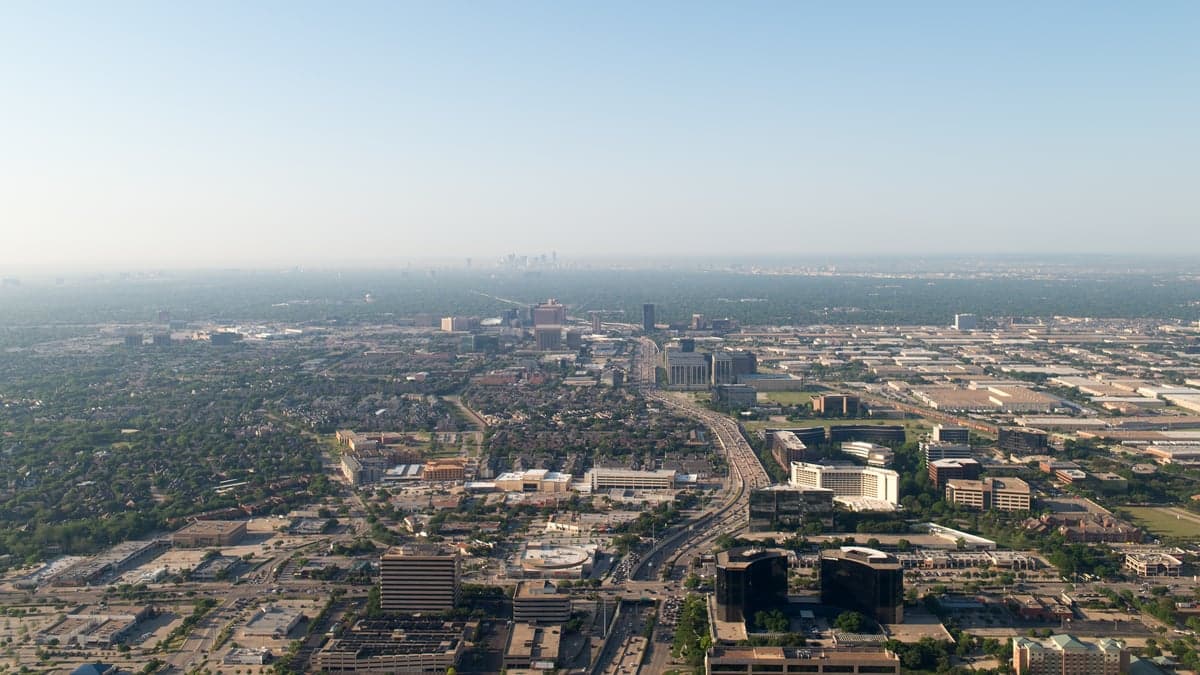
Photo: Wikipedia
Strategic Assessment of Addison, TX
Multiple tactical vulnerabilities. Population density, target proximity, or disaster risk are likely compounding. A retreat property and exit planning is required.
What does the Strategic Assessment tell us?
Our Strategic Assessment grades tactical survivability of an area. Major population centers, military targets, fallout zones, natural disasters, and border exposure all drive risk — lower exposure means a more defensible position in a crisis.
This is heavily inspired by Joel Skousen's Strategic Relocation book. Highly recommended you checkout the book ($)What does this tell us?
Our Strategic Assessment grades tactical survivability of an area. Major population centers, military targets, fallout zones, natural disasters, and border exposure all drive risk — lower exposure means a more defensible position in a crisis.
This is heavily inspired by Joel Skousen's Strategic Relocation book. Highly recommended you checkout the book ($)Strategic Pillars

Key Distances
Regional Safe Places
Below is our recommended "safe zones" in Texas and the surrounding area based on our strategic heuristics. For most people, it's unrealistic to live in a “safe zone” full-time due to work, family or other personal reasons. They tend to be more rural. However, many of these areas are perfect for second homes and retreat properties that double as a vacation home or even a short-term rental.

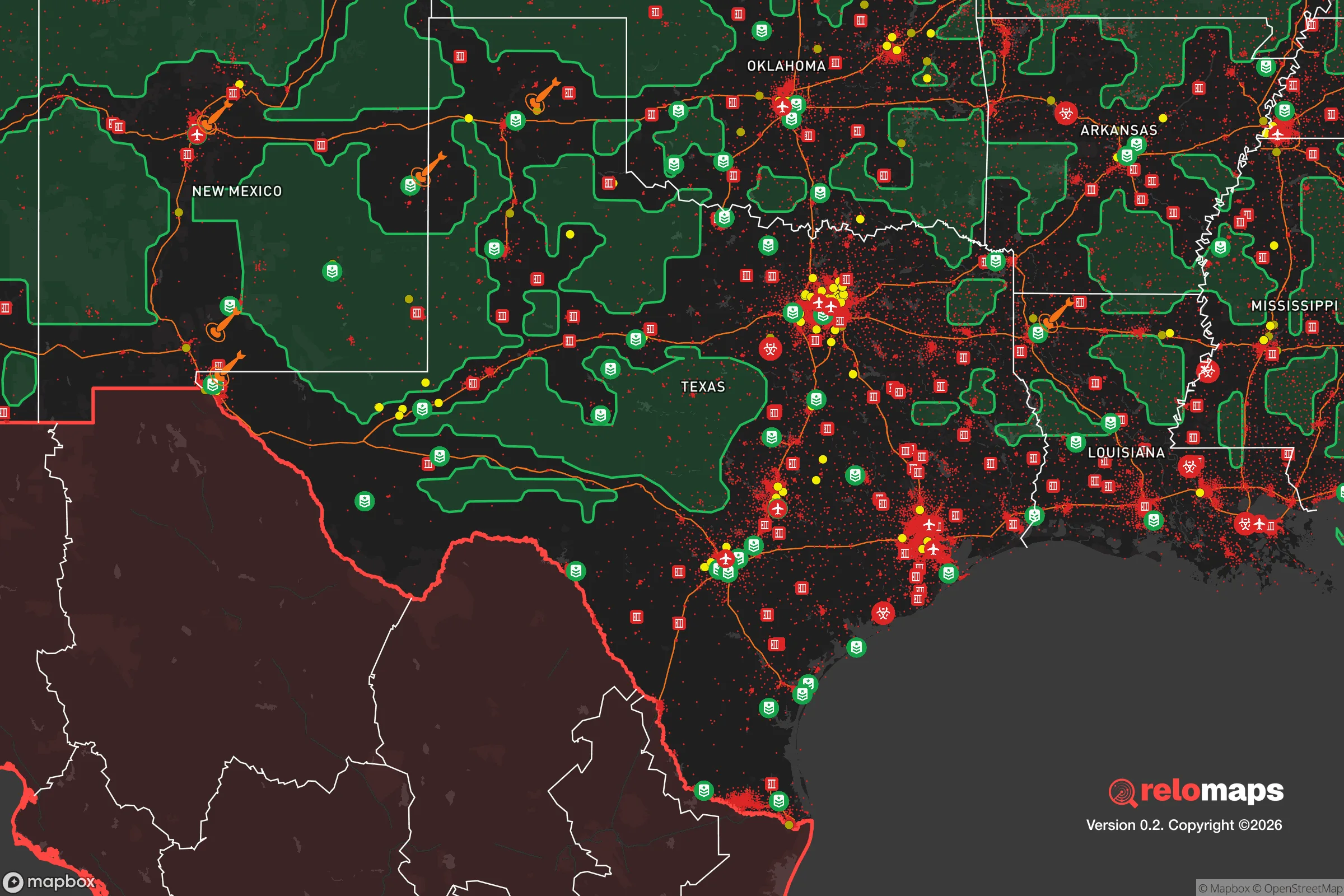


Important Note: For informational purposes only. This does not mean nothing bad ever happens in the green zones. Please use common sense. This is based on public data and modeled with AI. We tried to take a conservative approach but mistakes happen. We update this regularly as new information becomes available.
Solar Generator Recommendations
Backup power matters more here than in safer locations. We've picked three solar generators across budgets and capacity tiers — start with the budget unit if you only need a few essentials, or step up if you want to run a fridge and HVAC for days at a time.

Jackery Portable Power Station Explorer 300
Budget OptionPower on the Go: Weighing only 11 lbs, it's convenient to set up and store with book-sized foldable solar panels

BLUETTI Portable Power Station AC180
Designed for both indoor and outdoor scenarios, AC180 is highly capable as it has a robost capacity and continuous output power.

EF ECOFLOW DELTA Pro Ultra Power Station
Upgraded PickEcoFlow DELTA Pro Ultra is a whole-home energy system designed to grow with your family. Integrated with the Smart Home Panel 2, it scales to meet your evolving energy needs — keeping your home powered, intelligent, and secure through every stage of life.
We earn a commission, at no additional cost to you.
Strategic Assessment Analysis
Addison, Texas, presents a mixed picture for the relocation-minded reader focused on disaster readiness and self-sufficiency. While its location within the Dallas-Fort Worth metroplex offers economic opportunity and infrastructure, that same proximity to a major urban center introduces significant vulnerabilities in a serious strategic assessment. The town’s resilience is heavily dependent on its ability to leverage its own resources and navigate the risks inherent in being a small, dense suburb surrounded by a massive population and logistical hub.
Geographic position and natural advantages in the North Texas corridor
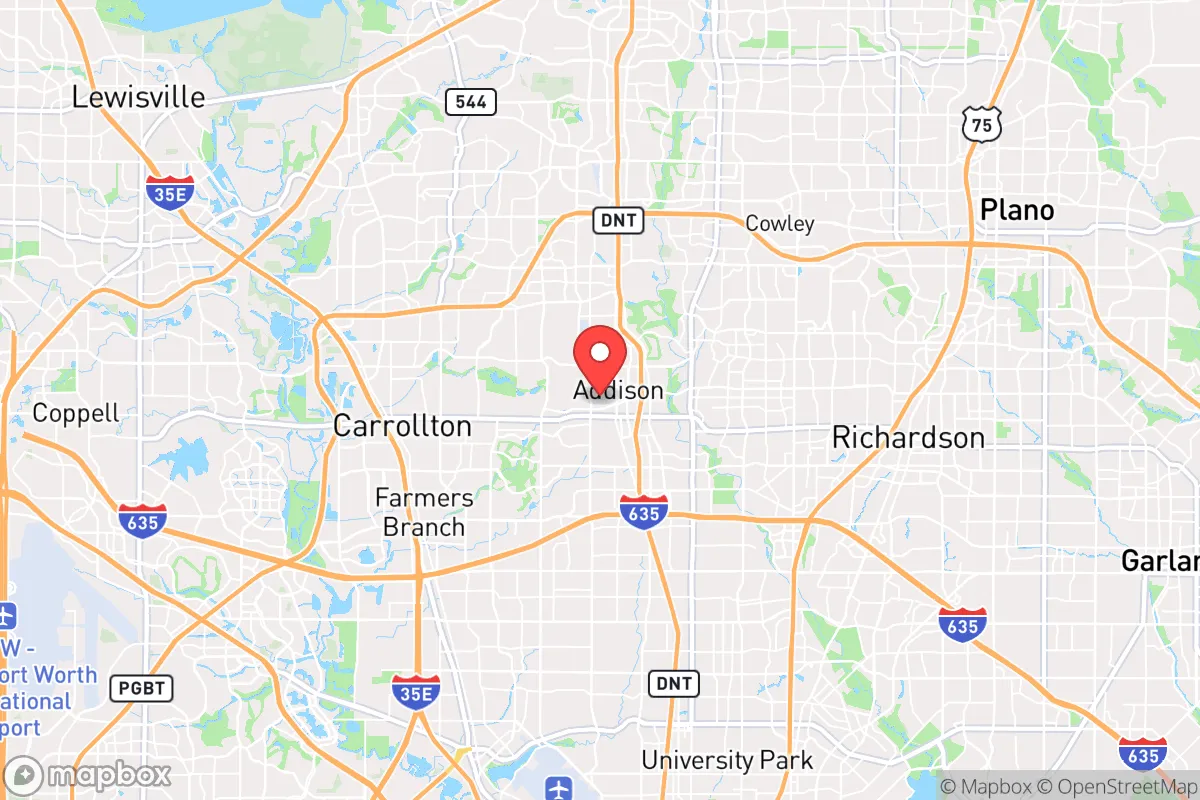
Addison sits in the heart of North Texas, roughly 15 miles north of downtown Dallas, within the Blackland Prairie region. Its geographic advantages are primarily logistical. The town is adjacent to the Dallas North Tollway and within a short drive of Interstates 635 and 35E, providing rapid access to regional supply chains and evacuation routes. The terrain is flat to gently rolling, with no significant floodplains within the town’s core, though the nearby Trinity River and its tributaries can pose flood risks to the broader region. The climate is continental, with hot summers and occasional severe thunderstorms, but the area is not prone to hurricanes, earthquakes, or wildfires in the same way as coastal or mountainous regions. The primary natural threat is tornadoes, which are a recurring risk across North Texas. Addison’s position in the metroplex means it benefits from the region’s robust emergency management infrastructure, but it also means that any large-scale natural disaster affecting the Dallas-Fort Worth area will directly impact the town. The lack of natural barriers—no mountains, large forests, or coastlines—means that Addison is essentially a flat, open grid, which is a disadvantage for defensibility or isolation in a crisis.
Risks, exposures, and proximity to fallout-relevant landmarks
The most significant strategic risk for Addison is its location within the Dallas-Fort Worth metroplex, a major population center and economic hub. In a scenario involving a large-scale disaster—whether natural, industrial, or geopolitical—Addison’s proximity to Dallas Love Field Airport (5 miles south), DFW International Airport (12 miles west), and the region’s major transportation corridors makes it a potential secondary target or chokepoint. The town is also near the Dallas CBD, which houses corporate headquarters, financial institutions, and critical infrastructure. For a reader concerned about fallout from a nuclear event, Addison’s position within the blast and fallout zone of a strike on Dallas or Fort Worth would be a serious liability. The town itself has no major military installations or nuclear facilities, but its location in the metroplex means it would be affected by any event targeting the region. Additionally, the area’s dense suburban development—with strip malls, office parks, and residential subdivisions—offers limited natural cover or defensible terrain. The primary man-made risk is a transportation accident involving hazardous materials on the nearby highways or rail lines, which are common in the region. The town’s emergency services are well-funded and professional, but they are designed for a suburban environment, not for prolonged crisis management.
Practical resilience for a relocator: food, water, energy, and defensibility
For a relocator focused on self-sufficiency, Addison presents significant challenges. The town is almost entirely built out, with no agricultural land, limited green space, and a high population density (roughly 4,000 people per square mile). Food security is a major concern: the town has no local farms, community gardens, or significant food production capacity. Residents rely entirely on grocery stores and supply chains that could be disrupted in a crisis. Water is supplied by the North Texas Municipal Water District, which draws from reservoirs like Lake Lavon and Lake Ray Hubbard. While the system is generally reliable, it is vulnerable to drought, contamination, or infrastructure failure. A private well is not feasible in this suburban environment. Energy comes from the ERCOT grid, which has shown vulnerability to extreme weather events, such as the 2021 winter storm. Solar panels and battery backup are viable options, but homeowners’ associations and local codes may impose restrictions. Natural gas is widely available for heating and cooking, but the distribution network is centralized. Defensibility is poor: Addison is a grid of streets with no natural chokepoints, and the town’s police force is small (around 60 officers) relative to the population. In a prolonged crisis, the town would likely be overwhelmed by refugees from Dallas and surrounding areas. The best practical resilience strategy for a relocator here is to invest in a well-stocked emergency kit, a backup power source, and a plan to evacuate to a more rural location if needed. The town’s strengths are its access to medical facilities (including Texas Health Presbyterian Hospital Dallas nearby) and its strong local government, which has a history of effective disaster response.
The overall strategic picture for Addison is one of trade-offs. The town offers excellent economic opportunity, strong infrastructure, and a high quality of life in normal times. But for a reader prioritizing disaster readiness and self-sufficiency, it falls short. Its location within the Dallas-Fort Worth metroplex exposes it to the risks of a major urban center—including potential fallout from a strike on the region—while its dense suburban layout limits options for food production, water independence, and defensibility. The town is best suited for someone who values proximity to jobs and amenities and is willing to accept the risks of being in a high-population area, with a plan to evacuate if a major crisis occurs. For those seeking a more resilient, self-sufficient lifestyle, a rural property in the Texas Hill Country or the Piney Woods would be a better fit. Addison is a place to live well, not a place to ride out a collapse.

* Values derived from national, state, county, city and local statistics and may differ in a specific area. Last updated: 2026-10-06T01:25:23.000Z
Narrative content on this page is AI-generated and may contain mistakes. Verify any details that matter before acting on them.
ReloMaps may earn a commission from affiliate links at no extra cost to you.

