Photo: Wikipedia
Demographics of Addison, TX
Affluence Level in Addison, TX
An upper-middle-class area. Household wealth, education levels, and homeownership run ahead of national benchmarks.
People of Addison, TX
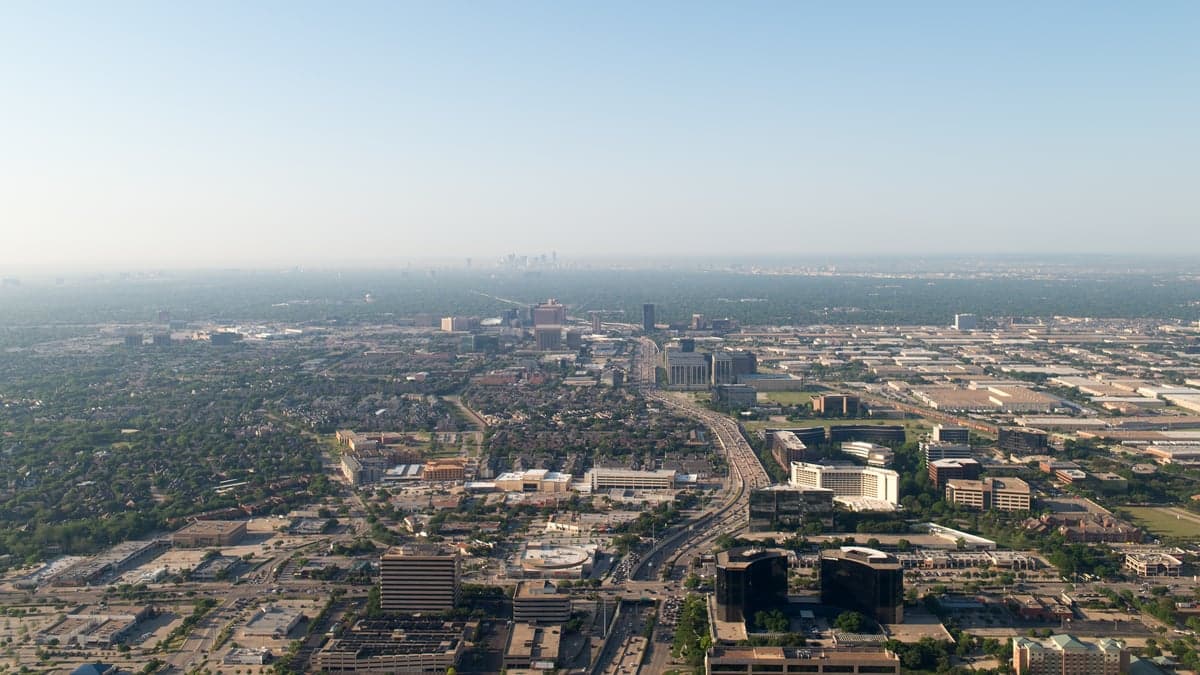
The people of Addison, Texas, are a densely packed, highly educated, and ethnically diverse population of 17,128, living within just 4.4 square miles. Distinctive for its blend of corporate transplants and long-term residents, the city boasts a 61.5% college-educated rate and a foreign-born population of 15.3%, creating a character that is both professional and cosmopolitan. Unlike many North Texas suburbs, Addison’s identity is less about single-family homes and more about its urban-style apartment complexes, thriving restaurant scene, and a demographic mix that includes significant White (43.1%), Hispanic (26.1%), and Black (18.0%) communities.
How the city was settled and grew
Addison is a purely post-war, Sun Belt suburb with no pioneer-era settlement. The area was originally part of the Peters Colony land grant, but remained sparsely populated ranchland until the mid-20th century. The city was officially incorporated in 1953 with just a few hundred residents, driven by a small group of local businessmen and farmers who wanted to control their own zoning and avoid annexation by Dallas. The original population was almost entirely White, drawn by cheap land and the promise of light industrial development along what would become the Dallas North Tollway. The historic core, centered around the intersection of Belt Line Road and Addison Road, was home to the families who ran the dairy farms and feed stores that defined the early economy. This area, now known as Old Addison, retains a handful of mid-century ranch-style homes and remains a quiet, established pocket of the city.
Modern era (post-1965)
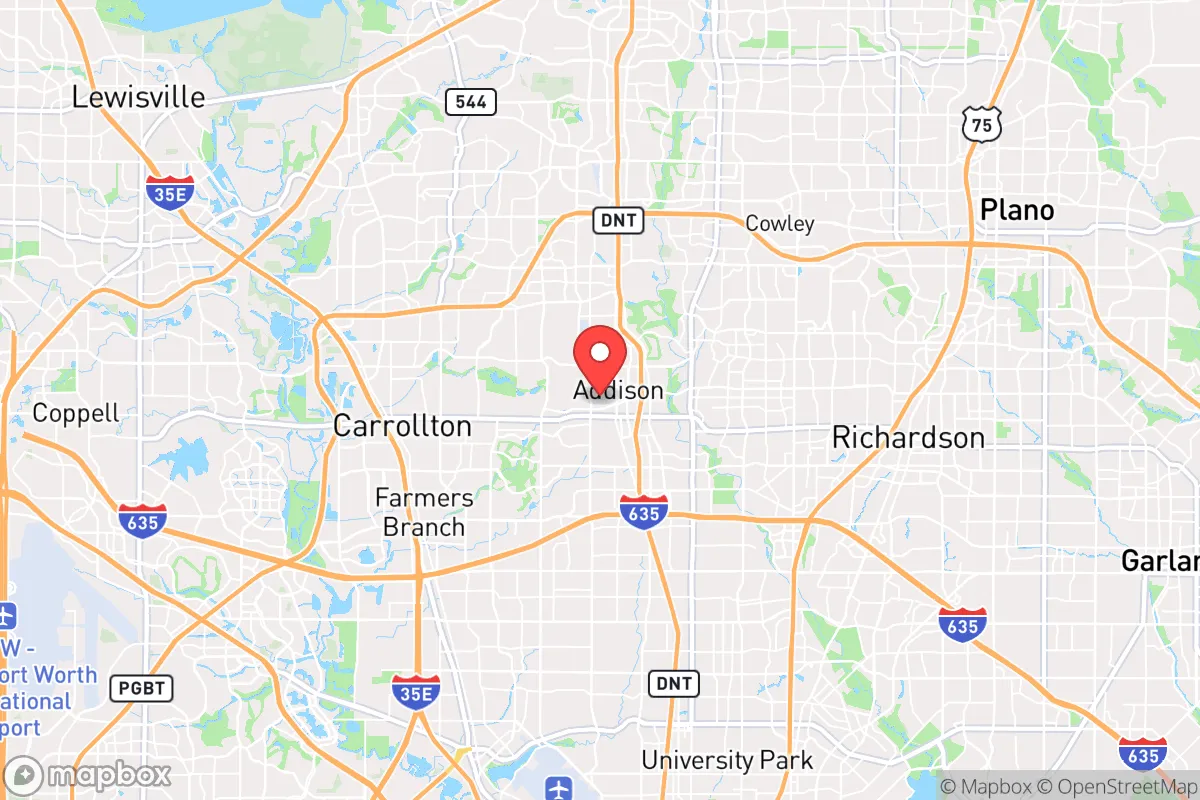
The 1965 Hart-Cellar Act and the subsequent construction of the Dallas North Tollway in the 1970s transformed Addison. The tollway made the city a prime location for corporate headquarters and regional offices, drawing a wave of white-collar professionals from across the country. This domestic in-migration was followed by a surge of international arrivals, particularly after the 1980s. The city’s apartment-heavy housing stock—over 80% of residents are renters—allowed for rapid demographic turnover. Today, the Village on the Parkway and Addison Circle neighborhoods, both built in the 1990s and 2000s, are the primary landing points for new arrivals. Addison Circle, a master-planned, walkable district, is home to a high concentration of young professionals and East/Southeast Asian residents (3.7% of the city), many of whom work in nearby tech and finance firms. The Bent Tree area, straddling the Addison-Far North Dallas border, has a more established, family-oriented feel and a notable Black population (18.0% citywide), reflecting the broader suburbanization of Dallas’s African American middle class since the 1990s. The Hispanic community (26.1%) is more dispersed but has a visible presence in the older apartment complexes along Midway Road and Belt Line, often working in the city’s extensive hospitality and restaurant sector. The Indian subcontinent community (3.5%) is a smaller but growing presence, concentrated in newer luxury apartments near the tollway, drawn by the city’s proximity to the Telecom Corridor and DFW Airport.
The future
Addison’s population is trending toward greater diversity, though the pace of change is slowing as the city reaches its physical build-out limit. The White share (43.1%) is declining gradually, while the Hispanic and Black shares are stable or slightly increasing. The East/Southeast Asian and Indian subcontinent communities are growing from a small base, driven by high-skilled immigration and the city’s appeal to tech workers. New development is almost exclusively infill—luxury apartments and mixed-use projects—concentrated in the Addison Transit Center district and along the Quorum Drive corridor. These areas are attracting a younger, more transient population, while older neighborhoods like Old Addison and the single-family homes near Greenhill School retain a more stable, longer-term demographic. The city’s cultural identity is evolving from a purely business-and-dining hub into a more residential, family-friendly environment, though its small size means it will always be a niche community within the larger Dallas metroplex.
For someone moving in now, Addison offers a dense, diverse, and highly educated environment where professional opportunity and urban convenience outweigh traditional suburban space. The population is becoming more varied by origin and ethnicity, but the city’s small footprint and rental-heavy housing stock mean that neighborhoods are defined more by building type and price point than by ethnic enclaves. It is a place for those who value walkability, a vibrant food scene, and a demographic mix that reflects the future of North Texas, all within a tightly packed, efficiently managed city.

* Values derived from national, state, county, city and local statistics and may differ in a specific area. Last updated: 2026-10-06T01:25:23.000Z
Narrative content on this page is AI-generated and may contain mistakes. Verify any details that matter before acting on them.
ReloMaps may earn a commission from affiliate links at no extra cost to you.

