 Popular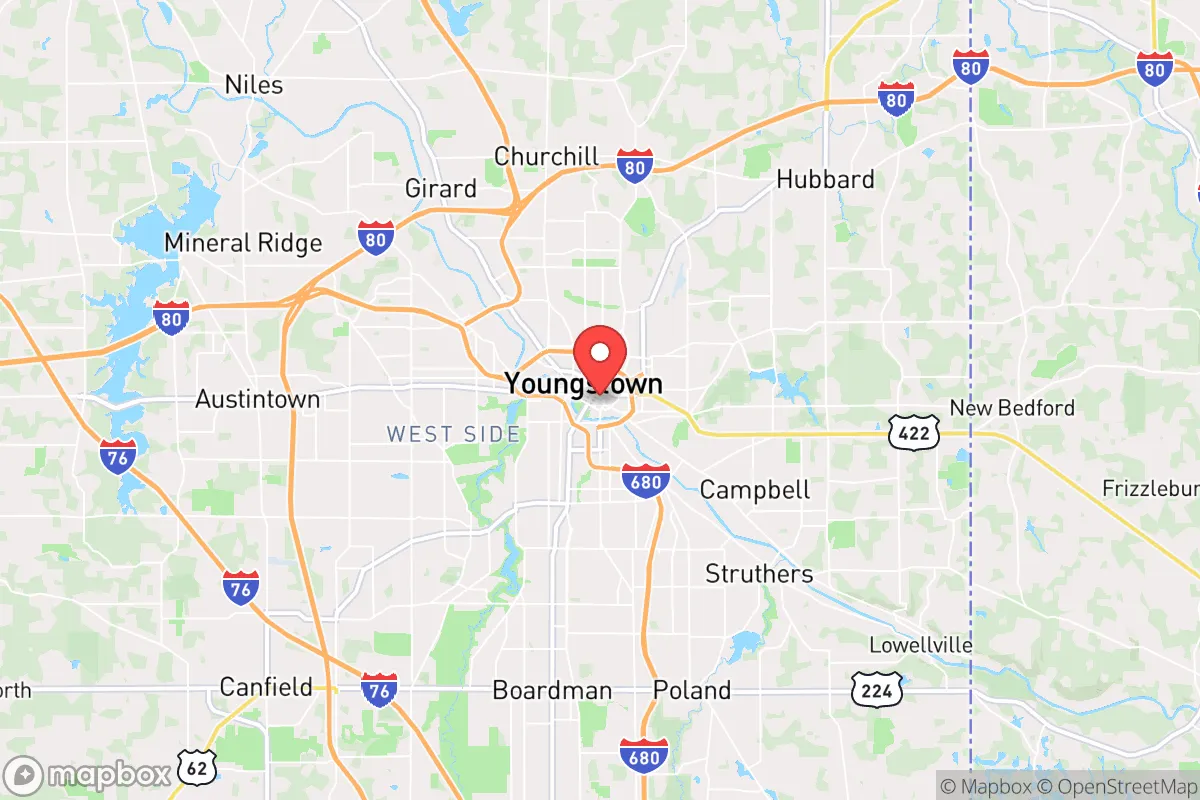
Photo: Wikipedia
Strategic Assessment of Youngstown, OH
Meaningful friction. Expect exposure to either population pressure, blast zones, or natural disaster risk. Consider buying a retreat property.
What does the Strategic Assessment tell us?
Our Strategic Assessment grades tactical survivability of an area. Major population centers, military targets, fallout zones, natural disasters, and border exposure all drive risk — lower exposure means a more defensible position in a crisis.
This is heavily inspired by Joel Skousen's Strategic Relocation book. Highly recommended you checkout the book ($)What does this tell us?
Our Strategic Assessment grades tactical survivability of an area. Major population centers, military targets, fallout zones, natural disasters, and border exposure all drive risk — lower exposure means a more defensible position in a crisis.
This is heavily inspired by Joel Skousen's Strategic Relocation book. Highly recommended you checkout the book ($)Strategic Pillars

Key Distances
Regional Safe Places
Below is our recommended "safe zones" in Ohio and the surrounding area based on our strategic heuristics. For most people, it's unrealistic to live in a “safe zone” full-time due to work, family or other personal reasons. They tend to be more rural. However, many of these areas are perfect for second homes and retreat properties that double as a vacation home or even a short-term rental.

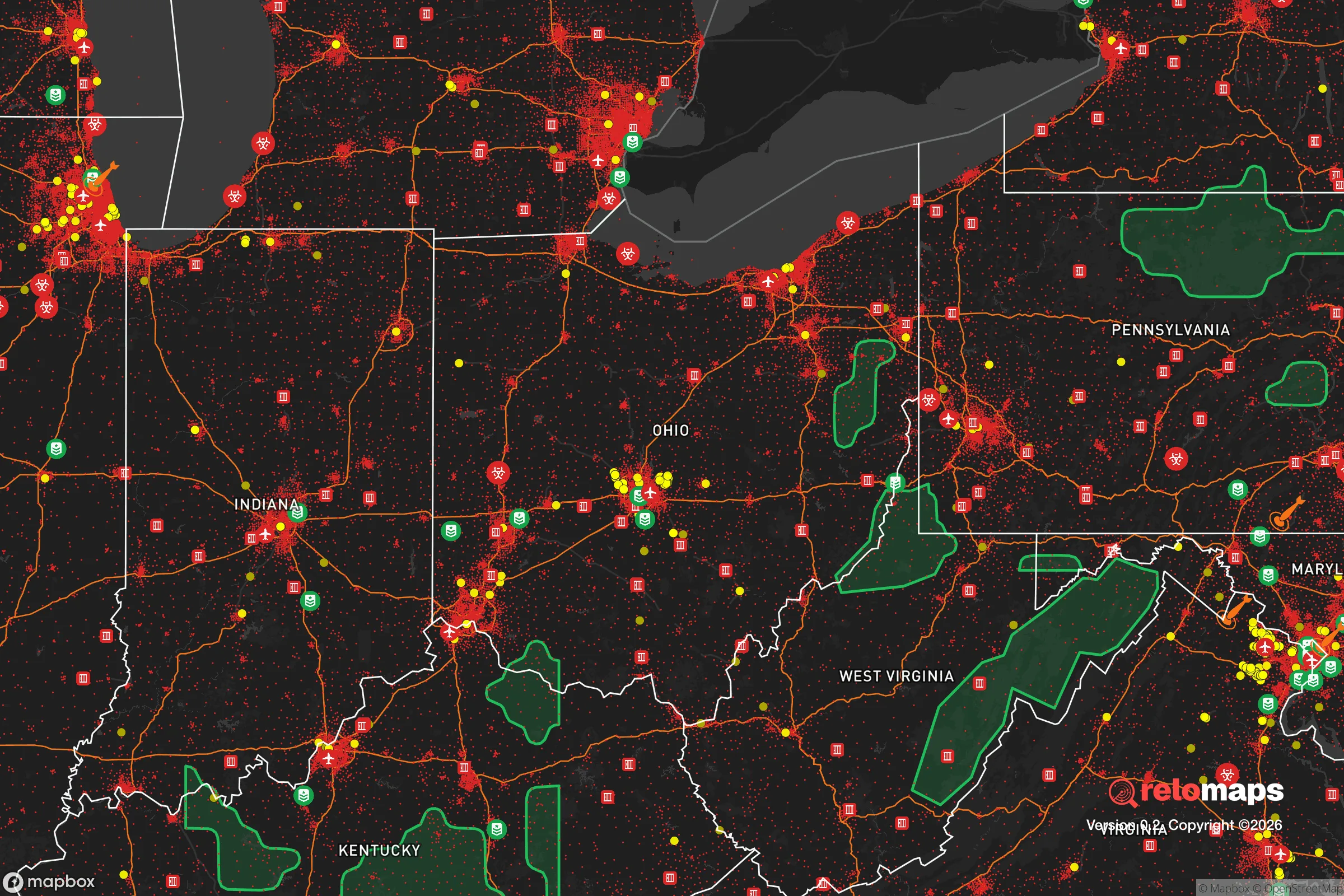


Important Note: For informational purposes only. This does not mean nothing bad ever happens in the green zones. Please use common sense. This is based on public data and modeled with AI. We tried to take a conservative approach but mistakes happen. We update this regularly as new information becomes available.
Solar Generator Recommendations
Backup power matters more here than in safer locations. We've picked three solar generators across budgets and capacity tiers — start with the budget unit if you only need a few essentials, or step up if you want to run a fridge and HVAC for days at a time.

Jackery Portable Power Station Explorer 300
Budget OptionPower on the Go: Weighing only 11 lbs, it's convenient to set up and store with book-sized foldable solar panels

BLUETTI Portable Power Station AC180
Designed for both indoor and outdoor scenarios, AC180 is highly capable as it has a robost capacity and continuous output power.

EF ECOFLOW DELTA Pro Ultra Power Station
Upgraded PickEcoFlow DELTA Pro Ultra is a whole-home energy system designed to grow with your family. Integrated with the Smart Home Panel 2, it scales to meet your evolving energy needs — keeping your home powered, intelligent, and secure through every stage of life.
We earn a commission, at no additional cost to you.
Strategic Assessment Analysis
Youngstown, Ohio, offers a compelling strategic position for those prioritizing resilience and self-sufficiency, sitting at the intersection of the Rust Belt's industrial past and a future defined by decentralization. Its location in the Mahoning Valley provides a buffer from the immediate blast zones of major metropolitan targets while still offering access to regional resources and infrastructure. For a relocator with a prepper mindset, Youngstown represents a calculated trade-off: proximity to legacy industrial risks balanced against affordable land, abundant freshwater, and a depopulated landscape that allows for low-profile living.
Geographic position and natural advantages for long-term security
Youngstown's geography is its primary strategic asset. Situated roughly 65 miles from Cleveland and 60 miles from Pittsburgh, it sits outside the likely high-casualty zones of a major urban event—whether a nuclear detonation, EMP attack, or widespread civil unrest. The city lies in the Appalachian foothills, offering varied terrain that provides natural cover and defensible positions, particularly in the surrounding rural townships like Canfield, Poland, and Boardman. The Mahoning River runs through the area, and the region sits atop the Mahoning Aquifer, ensuring a reliable freshwater source even if municipal systems fail. The area's clay-heavy soil, while challenging for large-scale agriculture, supports hardy crops like potatoes, squash, and apples, and the moderate climate (average 35 inches of rain annually) reduces drought risk compared to the Southwest. The proximity to Lake Erie, about 60 miles north, offers a secondary water and food source via fishing, though the lake's industrial pollution history requires careful treatment.
Risks, exposures, and proximity to fallout-relevant landmarks
The most significant risk in Youngstown is its industrial legacy and current infrastructure. The city is within 30 miles of the Beaver Valley Nuclear Power Station in Shippingport, Pennsylvania, and about 50 miles from the Perry Nuclear Power Plant near Cleveland. A catastrophic failure at either would put Youngstown in a moderate fallout zone, though prevailing winds typically carry contamination eastward. The area also hosts numerous brownfield sites and abandoned industrial facilities—former steel mills, chemical plants, and rail yards—that could release toxic materials during a disaster. The Mahoning River itself carries legacy PCB and heavy metal contamination from decades of steel production, meaning any post-event water sourcing must account for this. Proximity to the Ohio Turnpike (I-80) and I-76 creates a double-edged sword: these arteries enable rapid evacuation but also serve as chokepoints for refugee flows and military movement during unrest. The Youngstown-Warren Regional Airport, a former Air Force base, could become a FEMA or military staging ground, drawing unwanted attention. The city's population decline (from 170,000 in 1950 to roughly 60,000 today) means fewer eyes on your activities, but also fewer skilled tradespeople and medical professionals in a crisis.
Practical resilience for a relocator: food, water, energy, and defensibility
For a relocator focused on practical prepping, Youngstown offers several concrete advantages. Water security is strong: the Mahoning Aquifer provides consistent groundwater at depths of 50-150 feet, and many older homes already have private wells. The Mahoning River, while requiring filtration and boiling, is a year-round surface water source. Energy resilience is moderate: the region's cloudy winters limit solar efficiency, but the area has abundant natural gas from the Utica Shale, and many rural properties can install propane tanks or small wind turbines. The local power grid is aging but stable, with fewer blackout risks than coastal areas. Food production is feasible: the growing season runs from April to October, and the area's Amish and Mennonite communities (concentrated in nearby Columbiana and Holmes counties) provide a network of seed, livestock, and farming knowledge. Land prices remain low—undeveloped acreage can be found for $3,000-$8,000 per acre, and a modest three-bedroom home on five acres often sells for under $200,000. Defensibility is situational: the flat valley floor offers limited cover, but the surrounding hills and wooded ravines provide natural chokepoints. Many older homes have basements and stone foundations that double as storm shelters and fallback positions. The depopulated downtown and abandoned industrial zones offer potential cache sites, though they also attract vagrancy and drug activity. Medical access is a concern: the closure of several hospitals has left Mercy Health St. Elizabeth as the primary trauma center, and rural ambulance response times can exceed 20 minutes. A relocator should plan for self-sufficient medical care and stockpile antibiotics and trauma supplies.
The overall strategic picture for a conservative relocator
Youngstown presents a mixed but workable strategic picture for the survivalist-minded relocator. Its greatest strengths are low population density, affordable land, and abundant freshwater—factors that become critical during prolonged grid-down scenarios or civil unrest. The region's conservative lean (Mahoning County voted +3 R in 2024, with surrounding Trumbull and Columbiana counties going +15 to +25 R) means a higher likelihood of like-minded neighbors and a culture of self-reliance, though the city itself remains Democratic-leaning and carries urban crime issues. The primary weaknesses are industrial contamination, proximity to nuclear power plants, and a degraded medical infrastructure. For a single individual or family willing to invest in well drilling, solar backup, and a defensible rural property within 20-30 minutes of the city core, Youngstown offers a viable base of operations. It is not a bug-out paradise—the winters are harsh, the economy is weak, and the legacy pollution requires vigilance. But for those who see the current trajectory of the country as unstable and want a low-cost, low-profile position with access to the Great Lakes and Appalachian resources, Youngstown deserves serious consideration. The key is to buy outside the city limits, establish a self-sufficient homestead, and treat the urban area as a resource zone rather than a residence.

* Values derived from national, state, county, city and local statistics and may differ in a specific area. Last updated: 2026-04-21T19:48:35.000Z
Narrative content on this page is AI-generated and may contain mistakes. Verify any details that matter before acting on them.
ReloMaps may earn a commission from affiliate links at no extra cost to you.

