Photo: Wikipedia
Political ClimatePolitical Climate in Washakie County
Showing state-level results — no local-only data available.
Local Political AnalysisPolitical Analysis of Washakie County
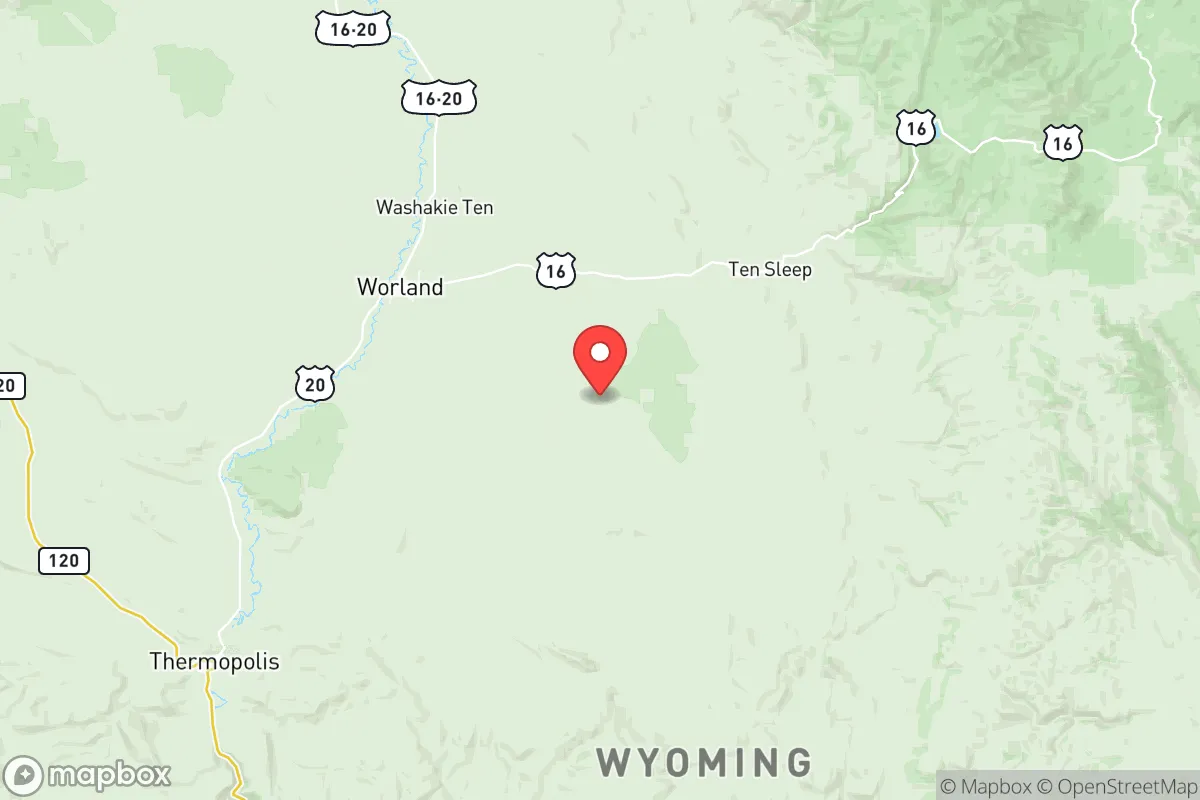
Washakie County's political climate leans solidly Republican, matching the state's Cook PVI of R+23, but the surface numbers hide real internal currents. Look at the county seat, Worland – it's the economic and civic hub, where you'll find a mix of long-time ranchers and folks employed by the county or the Big Horn Hospital. That gives Worland a slightly more moderate, establishment-Republican feel, especially when it comes to local budgets and infrastructure. Head west to the small town of Ten Sleep, and the politics flip hard – it's deeply red, libertarian-leaning, where talk of government overreach on land use or water rights gets fierce. The trajectory here is stable but under pressure: the core values are still conservative, but I'm seeing a creeping influence from outside progressive ideology, especially through federal environmental mandates and school curricula that don't match what we grew up with.
How it compares
Compared to the state of Wyoming as a whole, Washakie County isn't an outlier in its overall vote share, but it's culturally distinct. While Teton County (Jackson) is a blue island and Laramie County (Cheyenne) has more partisan split due to state government jobs, Washakie County is more uniformly conservative in daily life. You won't find a single precinct here that leans blue – even in Worland, the swing precincts are between standard Republican and more hardline conservative. Ten Sleep and the rural areas vote +35 to +40 red in most elections. The difference with Wyoming's average R+23 is that Washakie County's conservatism is less about party loyalty and more about personal freedom from government – folks here care more about property rights, gun rights, and keeping the federal bureaucracy out of our hunting and grazing lands than about any national platform.
What this means for residents
For someone moving here, the political climate means low government overreach in most daily matters – we have minimal zoning, no income tax to speak of, and a county commission that generally trusts locals to manage their own land. That's the upside. The concern, and it's a real one for long-time residents like me, is that progressive ideology is seeping in through federal policy – things like BLM land-use restrictions and climate-focused grant requirements that trickle down to local schools and conservation districts. There's a growing worry that if the state shifts even slightly, we'll see mandates on energy development or school content that Ban the values we've held for generations. For now, it's safe, but I'd keep an eye on any ballot initiatives coming out of Cheyenne – they tend to test the waters for bigger moves.
Culturally, Washakie County still prizes self-reliance and neighborly accountability. You don't see much of the coastal transplants or "ranching influencers" you hear about in other parts of the West. Policy-wise, we're distinct in our strong local control over education and land – for example, Washakie County School District #1 has resisted some state reading and science frameworks that felt too prescriptive. That's what you get here: a place where the political climate is still rooted in the idea that the best government is the one closest to home, and where any drift toward progressivism is met with serious skepticism.

State Political ClimatePolitical Climate in Wyoming
State Political AnalysisPolitical Environment in the State
Wyoming is about as rock-ribbed Republican as it gets—Cook PVI of R+23, meaning it's 23 points more Republican than the national average. The dominant coalition is a mix of rural libertarians, energy-industry workers, and ranching families who view the federal government as more hindrance than help. Over the last two decades, the partisan lean has actually deepened: in 2004, George W. Bush won it by 39 points; in 2020, Trump carried it by 43. But don't let the uniform red fool you—there are real internal divides, with Jackson and Laramie feeling more like Colorado outposts, while the rest of the state remains a bastion of old-school Western independence.
Urban vs. rural divide
Geographically, the political map mirrors the landscape: wide-open red with small blue islands. Laramie, home to the University of Wyoming, is the most liberal pocket—Albany County went +5 for Biden in 2020, a massive outlier in a state where many counties give Republicans 80% of the vote. Jackson (Teton County) is similarly isolated, driven by wealthy transplants from California and Colorado who love the scenery but often bring progressive voting habits. In contrast, the energy hubs of Gillette (Campbell County) and Rock Springs (Sweetwater County) are deep red, fueled by coal, oil, and gas workers who see every environmental regulation as a direct threat to their livelihood. The capital, Cheyenne, leans Republican but is more moderate, shaped by state government and F.E. Warren Air Force Base. The rural "cowboy" counties—Sheridan, Cody, Buffalo—are where the real GOP supermajority lives, often pushing the legislature further right than Cheyenne's establishment Republicans prefer.
Policy environment
The policy landscape matches the conservative voter base. There's no state income tax, no corporate income tax, and property taxes are among the lowest in the nation—though a recent boom in assessed values (especially in Teton County) has forced the legislature to pass SF 66, a property tax relief bill capping annual increases for homeowners. Regulation is minimal: Wyoming is a "right-to-work" state, with no state-level OSHA, and land-use rules are left almost entirely to counties. On education, the state has resisted Common Core pushback and passed HB 93, the "Parental Bill of Rights," which codifies that parents have ultimate authority over their child's education and medical decisions. Election laws are tight: voter ID is required, and same-day registration was eliminated years ago. Abortion is effectively banned under the Life is a Human Right Act, with no exceptions for rape or incest—only to save the mother's life. Medical marijuana and recreational cannabis remain illegal; attempts to decriminalize have died in committee for years. Healthcare is a mixed bag: the state expanded Medicaid in 2014 under a conservative compromise, but insurance options in rural counties remain thin, and the state-run "Wyoming Health Insurance Pool" is the safety net.
Trajectory & freedom
On personal liberty, the trajectory is mixed but mostly positive for those who value gun rights and limited government. Constitutional carry was already law before most states adopted it, and recent bills have further expanded firearm rights—including SF 5, which prohibits any federal enforcement of gun control within state borders (a nullification-type measure). The legislature also passed HB 190 in 2023, banning transgender girls from female sports, and HB 108, which restricts gender-affirming care for minors—both seen by conservatives as protecting parental rights and biological reality. On the "less free" side, the state has aggressively asserted control over local governments: a 2022 law preempts county and city zoning that restricts energy development, and another preempts local mask mandates (passed during COVID). The Wyoming Freedom Caucus has grown powerful, often pushing the state GOP farther right on election integrity, school choice, and anti-ESG legislation (the state recently blacklisted banks that boycott fossil fuels). For a resident wanting maximum autonomy in their personal life, Wyoming still delivers—but the growing influence of out-of-state money in Jackson and Laramie is a warning sign that the freedom balance could tip if in-migration accelerates.
Civil unrest & political movements
Wyoming doesn't do much civil unrest—it's too spread out, and the culture is more "pickup truck and county commission" than "street protest." That said, there have been flashpoints. The 2020 BLM protests were small and mostly limited to Cheyenne and Laramie, with far more counter-protests from local bikers and ranching groups. The most organized movement on the right is the Wyoming Republican Party's "free as the wind" faction, which has successfully censured several moderate GOP lawmakers for voting with Democrats on budget issues. On the left, the Sierra Club and Wyoming Outdoor Council are active in fighting new coal mines and oil leases, but their power is limited—the legislature passed a law in 2021 making it harder to sue energy projects. Immigration politics are quiet; there are no sanctuary cities, and the state legislature passed HB 221 requiring law enforcement to check immigration status on arrests. The most visible political tension is around public land: "land grab" rhetoric about federal ownership flares up every few years, but the state ultimately depends on BLM and Forest Service for grazing and recreation. Election integrity isn't a major flashpoint here—turnout is low, mail-in ballots are limited, and there's a general trust in the system, though the legislature tightened absentee ballot rules in 2022.
Projection
Over the next 5–10 years, Wyoming will likely stay very red, but become more polarized internally. The biggest demographic force is the influx of remote workers and wealthy retirees, mostly landing in Jackson and Teton Valley (around Driggs, just over the Idaho border), or in nice smaller towns like Sheridan and Lander. These newcomers often bring left-of-center politics, especially on environmental and social issues. Meanwhile, the energy economy is in long-term decline—coal is dying, oil and gas are volatile—so the rural conservative base is shrinking economically. The state legislature is becoming more aggressive on cultural issues (school choice, vaccine mandates, ESG bans) to reinforce the red identity. Expect more preemption of local ordinances (especially in Teton County), more anti-federal bills, and continued tax fights as property values climb in the hot spots. A new resident moving into, say, Buffalo or Pinedale will find a community that feels little changed from 1990. A newcomer in Jackson will feel like they're in a very different country—cosmopolitan, expensive, and increasingly progressive. The state's challenge is whether it can keep its liberty ethos alive while its most beautiful areas get California-ized.
For someone considering a move to Wyoming, the bottom-line takeaway is this: if you want low taxes, minimal government, and a culture of personal responsibility, Wyoming delivers—but only in the right zip codes. Stick to the Cowboy State's rural heartland—Wheatland, Rawlins, Douglas
* Values derived from national, state, county, city and local statistics and may differ in a specific area. Last updated: 2026-05-21T00:56:08.000Z
Narrative content on this page is AI-generated and may contain mistakes. Verify any details that matter before acting on them.
ReloMaps may earn a commission from affiliate links at no extra cost to you.

