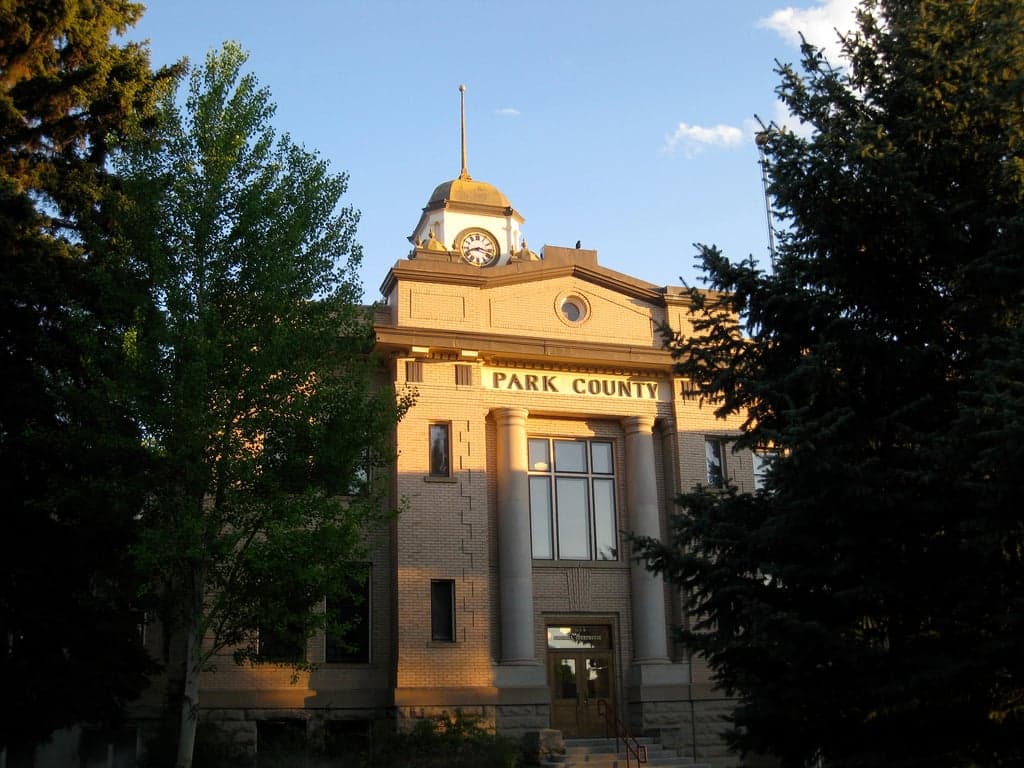
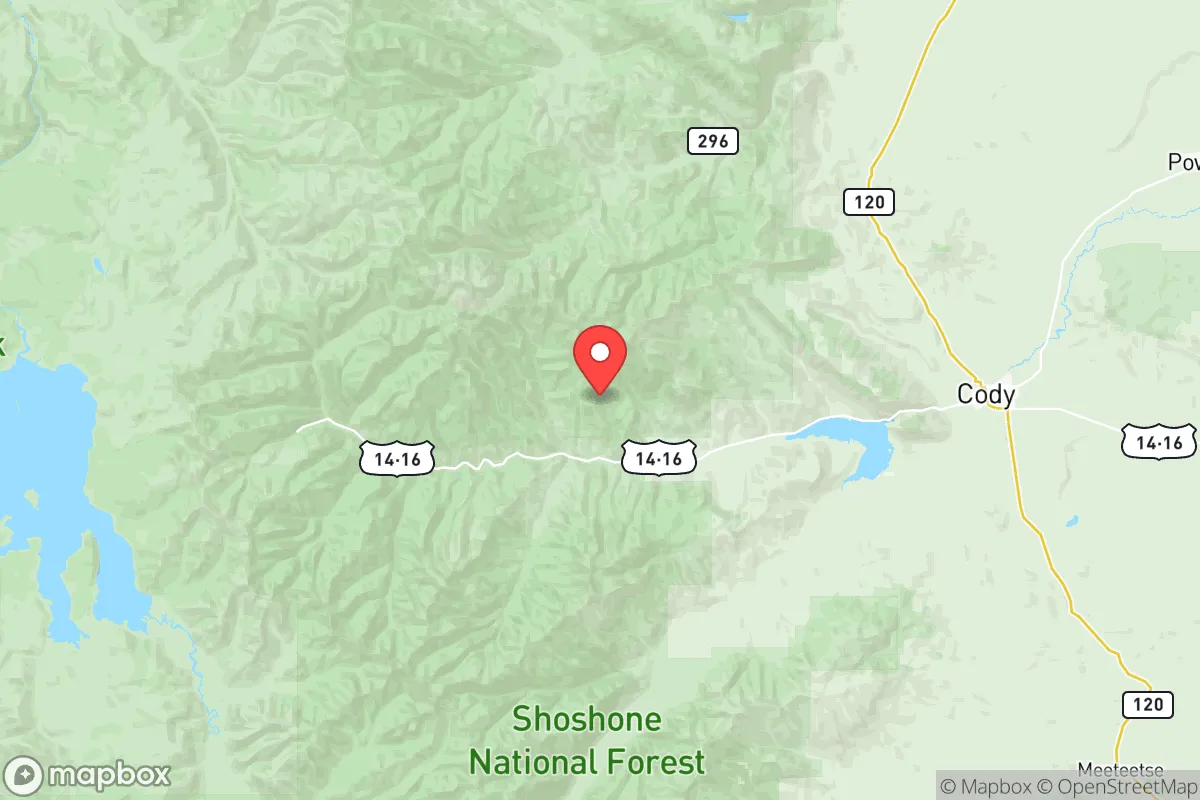
Photo: Wikipedia
Political ClimatePolitical Climate in Park County
Showing state-level results — no local-only data available.
Local Political AnalysisPolitical Analysis of Park County
Park County, Wyoming, is one of the most reliably Republican counties in the state, carrying a Cook Partisan Voting Index (PVI) of R+23, meaning it votes about 23 points more Republican than the national average. In the 2024 presidential election, Donald Trump won the county with roughly 78% of the vote, a margin that has held steady or widened slightly since 2020. While the state of Wyoming as a whole is also deeply red—with no official PVI but consistently voting R+25 or higher in recent cycles—Park County sits slightly to the left of the state's most conservative areas like Sublette or Fremont counties, thanks to a small but persistent liberal pocket in the town of Cody and a more moderate streak in Powell.
How it compares
Compared to the rest of Wyoming, Park County is a bit of a mixed bag. The county seat, Cody, is the economic and cultural hub, and while it votes overwhelmingly Republican, its precincts near the Buffalo Bill Center of the West and the historic downtown show a noticeable tilt toward the center. In 2024, Cody's precinct 5 (around the hospital and college) went about 60% Republican, a full 18 points lower than the county average. Powell, home to Northwest College, is the county's most liberal town—its precinct 2, near the campus, has voted Democratic in local races as recently as 2022, and in 2024 it was the only precinct in the county where Trump won by less than 10 points. Meanwhile, the rural precincts around Meeteetse, Wapiti, and the South Fork of the Shoshone River are deep red, often hitting 85-90% Republican. The swing precincts are few and far between, but they exist in the unincorporated areas around Ralston and Garland, where a mix of ranchers and younger families have created a more competitive environment in county commission races.
What this means for residents
For conservative residents, Park County is a comfortable place to live. The county commission is solidly Republican, and local policy reflects that—property taxes are low, gun rights are broadly protected, and there's little appetite for zoning or land-use restrictions. The county's Republican Party is active and well-organized, with regular meetings in Cody and Powell. For liberal residents, the reality is more nuanced. While they are a clear minority, they are not invisible. The Cody Democratic Party has a small but dedicated group that meets monthly, and in Powell, the college community provides a social and political counterweight. That said, liberal residents often report feeling politically isolated, especially in rural areas, and local elections can feel like a foregone conclusion. The county's trajectory is toward further polarization: younger, more educated residents moving to Cody and Powell are slightly more moderate, but the overall population is aging and becoming more conservative as retirees from out of state settle in the area.
Culturally, Park County is distinct from the rest of Wyoming in a few key ways. The county's economy is heavily tied to tourism—Yellowstone National Park draws millions of visitors annually—which has created a more service-oriented, transient population than in the state's energy-dependent counties. This has led to a slightly more cosmopolitan feel in Cody, with a downtown that supports art galleries, breweries, and a growing food scene. Politically, this translates into a more pragmatic conservatism: local Republicans are often more focused on infrastructure and tourism promotion than on cultural wars. The county's school board, for example, has avoided the kind of book-banning debates seen in other parts of the state. For residents, this means that while the politics are deeply red, the day-to-day reality is less about partisan conflict and more about the practical challenges of living in a high-desert, tourist-driven community. The long-term trend is toward a slow, steady shift to the right, but with enough local variation to keep things interesting for those who pay attention.

State Political ClimatePolitical Climate in Wyoming
State Political AnalysisPolitical Environment in the State
Wyoming is one of the most reliably Republican states in the nation, with a partisan lean that has only deepened over the past two decades. In the 2024 presidential election, Donald Trump carried the state by roughly 46 points, a margin that has held steady or widened since 2016. The dominant coalition is a mix of rural ranchers, energy-sector workers, and conservative retirees, with the state’s small population amplifying the influence of its most conservative counties. Over the last 10-20 years, the trajectory has been toward even greater Republican dominance, as Democratic-leaning pockets in Teton County and parts of Laramie have become more isolated, while the rest of the state has consolidated around a hard-right, libertarian-leaning conservatism.
Urban vs. rural divide
The political map of Wyoming is starkly divided between a few small urban centers and vast rural expanses. Cheyenne, the state capital and largest city, leans Republican but is more moderate than the rest of the state, often electing pragmatic conservatives who focus on state government efficiency and military base issues (F.E. Warren Air Force Base is a major employer). Casper, the second-largest city, is a conservative stronghold, driven by the energy industry and a strong ranching culture. Laramie, home to the University of Wyoming, is the most liberal-leaning town in the state, with a younger, more educated population that occasionally votes Democratic in local races, though it still votes Republican in statewide contests. Jackson (Teton County) is the outlier: a wealthy resort town that votes reliably Democratic, driven by environmental concerns and a high-income, transplant-heavy population. The rest of the state—places like Gillette (coal country), Rock Springs, and Riverton—vote overwhelmingly Republican, with margins often exceeding 70%. The rural-urban divide here is less about city vs. country and more about the handful of towns that are slightly less conservative versus the vast, deeply red countryside.
Policy environment
Wyoming’s policy environment is defined by low taxes, minimal regulation, and a strong emphasis on individual liberty. There is no state income tax, and property taxes are among the lowest in the nation, with a 2024 effective rate of roughly 0.6% of home value. The state’s sales tax is 4%, with local options pushing it to 6% in some counties. Education policy is locally controlled, with school choice limited to charter schools and homeschooling, which is popular and lightly regulated. Healthcare is a perennial issue: Wyoming has not expanded Medicaid under the Affordable Care Act, leaving a coverage gap for low-income adults, and the state has a shortage of providers, especially in rural areas. Election laws are conservative: voter ID is required, same-day registration is not available, and absentee voting is allowed but not widespread. The state has a strong gun culture, with permitless carry (constitutional carry) enacted in 2021, and no state-level red flag law. Property rights are heavily protected, with a strong tradition of mineral rights ownership and resistance to federal land control—about 48% of Wyoming is federally owned, a constant source of tension.
Recent policy direction
Wyoming’s recent legislative sessions have pushed the state further right on a broad range of issues. In 2023, the legislature passed a near-total abortion ban (the "Life is a Human Right Act"), with exceptions only for rape, incest, and medical emergencies, and no exceptions for fetal anomalies. Gun laws have been loosened: in 2021, the state enacted permitless carry, and in 2023, it passed a law prohibiting local governments from enforcing federal gun regulations (a "Second Amendment Sanctuary" measure). On education, the state passed a 2022 law allowing parents to challenge school library materials and curricula, and in 2024, it expanded a school voucher-like program using state funds for private school tuition. On speech and privacy, Wyoming has no broad surveillance law, but it has resisted federal data collection mandates. On property rights, the state has aggressively fought federal land management, with a 2023 law authorizing the state to sue the federal government over land-use restrictions. On voting, the state tightened absentee ballot rules in 2022 and requires a photo ID to vote. On medical and bodily autonomy, the state has restricted gender-affirming care for minors (2024) and banned transgender athletes from female sports (2023). The overall direction is toward maximizing individual liberty in the traditional conservative sense—gun rights, property rights, and parental rights—while restricting abortion and transgender rights.
Civil unrest & political movements
Wyoming is not a hotbed of civil unrest, but it has a strong tradition of libertarian and anti-government activism. The most visible flashpoint is the ongoing conflict over federal land management, particularly in the Bridger-Teton National Forest and the Red Desert region. Local ranchers and energy companies have clashed with environmental groups and federal agencies over grazing rights, oil and gas leasing, and off-road vehicle access. In 2022, a protest in Kemmerer over a proposed wind farm drew hundreds of residents who argued it would disrupt wildlife and viewsheds. The state has a small but vocal secessionist movement, with periodic calls for Wyoming to leave the Union, though it has never gained mainstream traction. Immigration politics are muted—Wyoming has a very small foreign-born population (about 3%)—but the state has passed laws requiring local law enforcement to cooperate with federal immigration authorities. Election integrity controversies are minimal; the state uses paper ballots and has a strong track record of clean elections. A new resident would notice the prevalence of "Don't Tread on Me" flags and bumper stickers, and a general distrust of federal authority, but actual protests are rare and usually small.
Projection
Over the next 5-10 years, Wyoming is likely to become even more conservative, driven by two demographic trends: the continued out-migration of young, educated residents (the "brain drain" to Colorado and the Front Range) and the in-migration of conservative retirees and remote workers seeking low taxes and wide-open spaces. The liberal enclaves in Teton County and Laramie will remain isolated, but their influence will shrink as the rest of the state grows more homogeneous. The energy transition will be a wildcard: if coal and oil decline, the state’s economy could struggle, potentially fueling more anti-federal sentiment and a push for even lower taxes and fewer regulations. The state’s population is projected to grow slowly, with most growth in the I-25 corridor from Cheyenne to Casper. A relocator moving in now should expect a state that is deeply conservative, with a strong libertarian streak, and that will likely become more so—especially on issues of gun rights, property rights, and resistance to federal authority. The political climate will remain stable, but the state’s small size means that a few thousand new residents could shift the balance in local races, particularly in the more moderate towns.
For a new resident, the bottom line is this: Wyoming offers a political environment that is exceptionally friendly to traditional conservative values—low taxes, strong gun rights, minimal regulation, and a hands-off approach to personal liberty in many areas. For liberal residents, the state can feel isolating, with few political allies outside of Jackson and Laramie, and a policy environment that is actively hostile to abortion access, transgender rights, and public-sector unions. The state’s small population means that individual voices can matter more than in larger states, but the political consensus is overwhelmingly conservative. If you value independence, self-reliance, and a government that stays out of your way (on most issues), Wyoming will feel like home. If you prefer a more active, progressive government, you’ll likely find yourself frustrated and outnumbered.
* Values derived from national, state, county, city and local statistics and may differ in a specific area. Last updated: 2026-07-24T05:59:17.000Z
Narrative content on this page is AI-generated and may contain mistakes. Verify any details that matter before acting on them.
ReloMaps may earn a commission from affiliate links at no extra cost to you.

