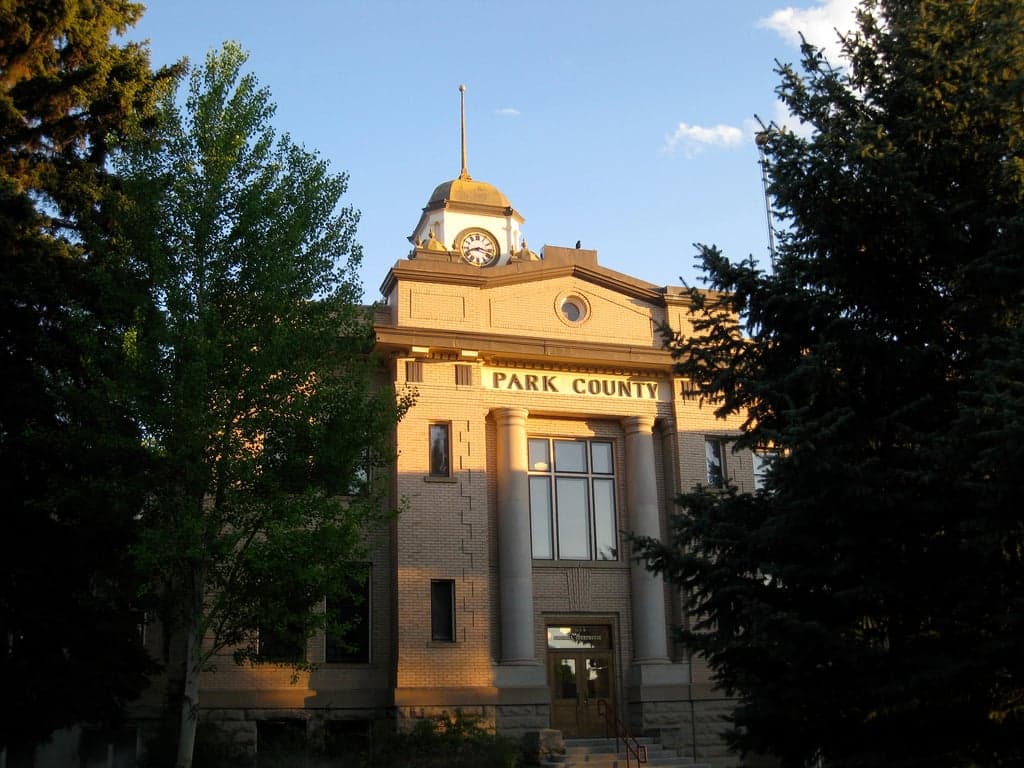
Photo: Wikipedia
Demographics of Park County
Affluence Level in Park County
An upper-middle-class area. Household wealth, education levels, and homeownership run ahead of national benchmarks.
People of Park County
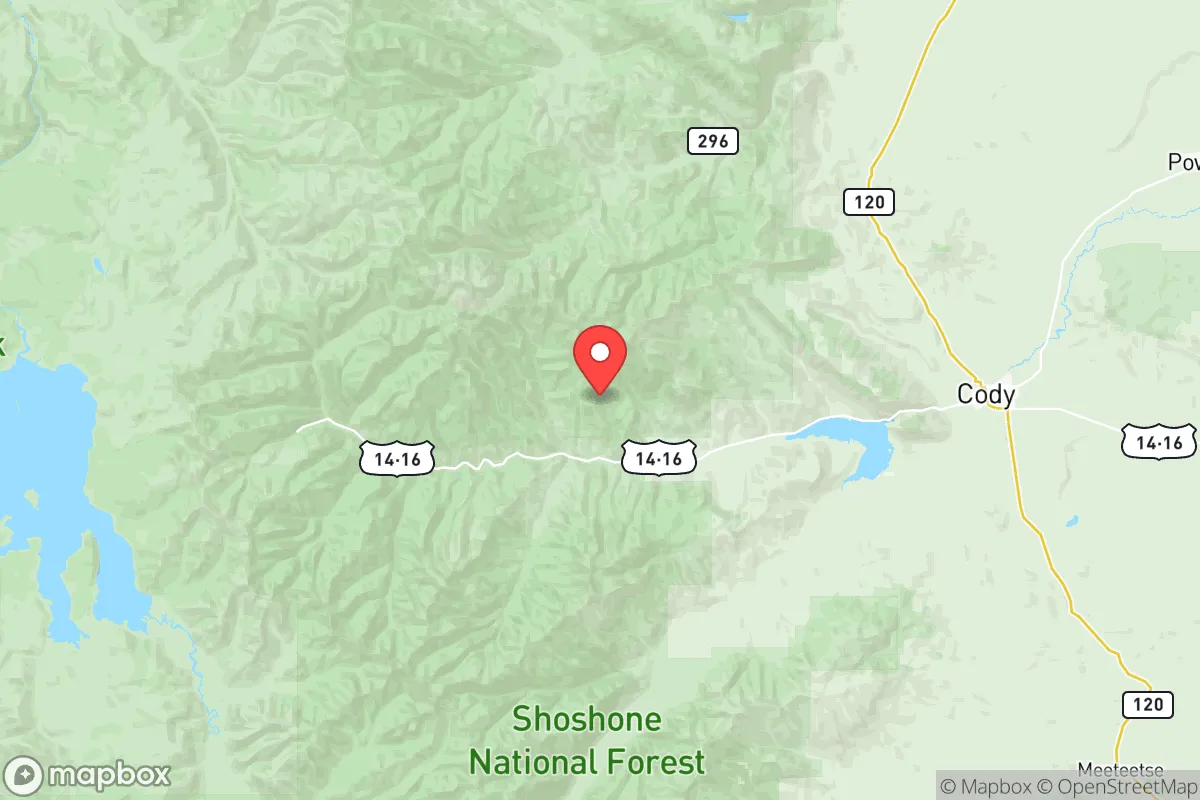
Park County, Wyoming, is home to 30,109 residents who are overwhelmingly white (88.3%) and native-born (foreign-born population is just 0.7%), giving it one of the least ethnically diverse profiles in the Mountain West. The county’s population is concentrated in the tourist hub of Cody, the historic railroad town of Powell, and the smaller communities of Meeteetse and Clark, with a character shaped by ranching, energy extraction, and gateway access to Yellowstone National Park. Residents tend to be politically conservative, self-reliant, and deeply connected to the outdoors, with a median age of 42.5 and a college attainment rate of 35.0% that slightly exceeds the national average. The county’s human history is a story of successive waves — Native peoples, early Anglo-American settlers, homesteaders, and energy boom workers — each leaving a distinct imprint on the land and its communities.
Settlement & growth (pre-1960)
Long before European contact, the area now known as Park County was home to the Crow, Shoshone, and Blackfeet nations, who used the Bighorn Basin for seasonal hunting and travel. The Crow in particular held the region as part of their ancestral territory, with their presence centered along the Shoshone River and the foothills of the Absaroka Range. The first recorded non-Native visitors were French-Canadian trappers and fur traders in the early 1800s, but they left no permanent settlements. The U.S. government formally acquired the area through the Louisiana Purchase (1803) and subsequent treaties with the Crow, though significant American settlement did not begin until after the 1860s.
The first major wave of Anglo-American settlers arrived in the 1870s and 1880s, drawn by the promise of open range for cattle ranching and the discovery of gold in the nearby Absaroka Mountains. Buffalo Bill Cody, the showman and scout, founded the town of Cody in 1896 as the gateway to the Yellowstone region, and his promotional efforts attracted a mix of ranchers, merchants, and speculators from the Midwest and East Coast. The completion of the Chicago, Burlington & Quincy Railroad to Cody in 1901 and to Powell in 1906 triggered a second wave: homesteaders from the Great Plains and the Upper Midwest, many of them of German, Scandinavian, and British Isles descent, who took up land under the Carey Act and the Homestead Act. The town of Powell was laid out in 1909 as a planned agricultural community, and the Shoshone Project — one of the first federal irrigation projects — brought water to the Bighorn Basin, turning dry sagebrush into productive farmland. Meeteetse, founded in the 1880s as a stage stop and ranching center, attracted a smaller but steady stream of cattlemen and their families.
By 1930, Park County’s population had reached roughly 10,000, with the economy split between ranching, irrigated farming (sugar beets, beans, alfalfa), and tourism tied to Yellowstone. The Dust Bowl and Great Depression of the 1930s brought a modest influx of displaced farmers from Oklahoma and the Southern Plains, but the county’s remote location and harsh winters limited large-scale migration. World War II and the postwar era saw a gradual shift: the discovery of oil and natural gas in the Bighorn Basin in the 1940s and 1950s drew workers from Texas, Oklahoma, and the Rocky Mountain states, settling primarily in Cody and Powell. The population grew to 17,000 by 1960, still overwhelmingly white and native-born, with a strong ranching and energy identity that persists today.
Modern era (post-1965)
The 1965 Hart-Cellar Act, which reshaped U.S. immigration, had almost no direct effect on Park County. The foreign-born share has remained below 1% for decades, and the county did not experience the post-1965 waves of immigration from Latin America, Asia, or the Middle East that transformed many urban and suburban areas. Instead, the county’s modern demographic story is one of domestic migration and natural increase. The Hispanic population, which stands at 5.9% today, grew slowly from the 1970s onward as a small number of Mexican-American families moved into the region for agricultural work — particularly in the sugar beet and bean fields around Powell — and for service jobs in Cody’s growing tourism sector. These families are dispersed across the county rather than concentrated in a single enclave, with small clusters in Powell and Cody.
The 1970s energy crisis brought a boom in oil, gas, and coal mining across the Bighorn Basin, drawing workers from Texas, Colorado, and the Gulf Coast. This wave was largely white and native-born, and it reinforced the county’s existing cultural character. The population jumped from 17,000 in 1970 to 25,000 by 1990, with most growth occurring in Cody and along the Highway 14 corridor. The 1990s and 2000s saw a slowdown, as energy prices fluctuated and the ranching economy faced consolidation. The Asian population (East/Southeast Asian) remains tiny at 0.4%, and the Indian-subcontinent population is effectively zero. The Black population is 0.3%, concentrated in Cody and tied to a handful of families who moved in for professional or military-related jobs. The county’s racial and ethnic homogeneity is a direct result of its geography — remote, cold, and with limited economic diversity — which has not attracted the immigrant streams that have diversified other parts of Wyoming, such as Sweetwater County (energy) or Teton County (tourism).
Suburbanization in Park County has been modest. The town of Cody has expanded its footprint with new subdivisions on the south and west sides, while Powell has grown more slowly, retaining its agricultural character. The unincorporated area of Clark, near the Montana border, has seen a small influx of retirees and second-home buyers drawn by the proximity to Yellowstone and the Bighorn Mountains. Meeteetse has remained a ranching hamlet of roughly 400 people, with little new development. The county’s population density is just 3.5 people per square mile, one of the lowest in the contiguous United States.
The future
Park County’s population is projected to grow slowly, reaching roughly 32,000–33,000 by 2040, driven primarily by domestic migration of retirees, remote workers, and outdoor recreation enthusiasts from Colorado, California, and the Pacific Northwest. This inflow is already visible in Cody, where new housing developments and a rising median home price (now above $400,000) signal a shift from the county’s historic working-class character toward a more amenity-driven economy. The Hispanic share is likely to increase modestly, perhaps to 8–10%, as service-sector jobs in tourism and construction attract a small but steady stream of workers from the Southwest. The county will remain overwhelmingly white and native-born, however, with no major immigrant gateway expected. The East/Southeast Asian and Indian populations are unlikely to grow beyond 1% combined, given the lack of urban job markets or ethnic infrastructure.
The cultural identity of the county is evolving in subtle ways. The traditional ranching and energy ethos is being supplemented — not replaced — by a newer conservation and recreation ethos, as Yellowstone tourism and outdoor recreation (hunting, fishing, snowmobiling) become the dominant economic drivers. This has created some tension between long-time residents and newcomers, but the county’s conservative political leanings remain solid. The population is aging slightly, with the median age rising from 40 in 2010 to 42.5 in 2024, and the school-age population in Cody and Powell is stable but not growing rapidly.
Park County is becoming a quieter, more expensive version of its former self — still deeply conservative, still overwhelmingly white, but increasingly shaped by retirees and remote workers who value the landscape over the extractive economy. For someone moving in now, the county offers a tight-knit, low-crime, outdoor-oriented lifestyle, but with limited ethnic diversity, a small dating pool for singles, and a housing market that is pricing out the younger workers who once formed the backbone of the community. The people of Park County are resilient, independent, and rooted in a history that stretches back to the Crow and the homesteaders, and that character is likely to endure even as the economy shifts from cattle and oil to cameras and coffee shops.

* Values derived from national, state, county, city and local statistics and may differ in a specific area. Last updated: 2026-07-24T05:59:17.000Z
Narrative content on this page is AI-generated and may contain mistakes. Verify any details that matter before acting on them.
ReloMaps may earn a commission from affiliate links at no extra cost to you.

