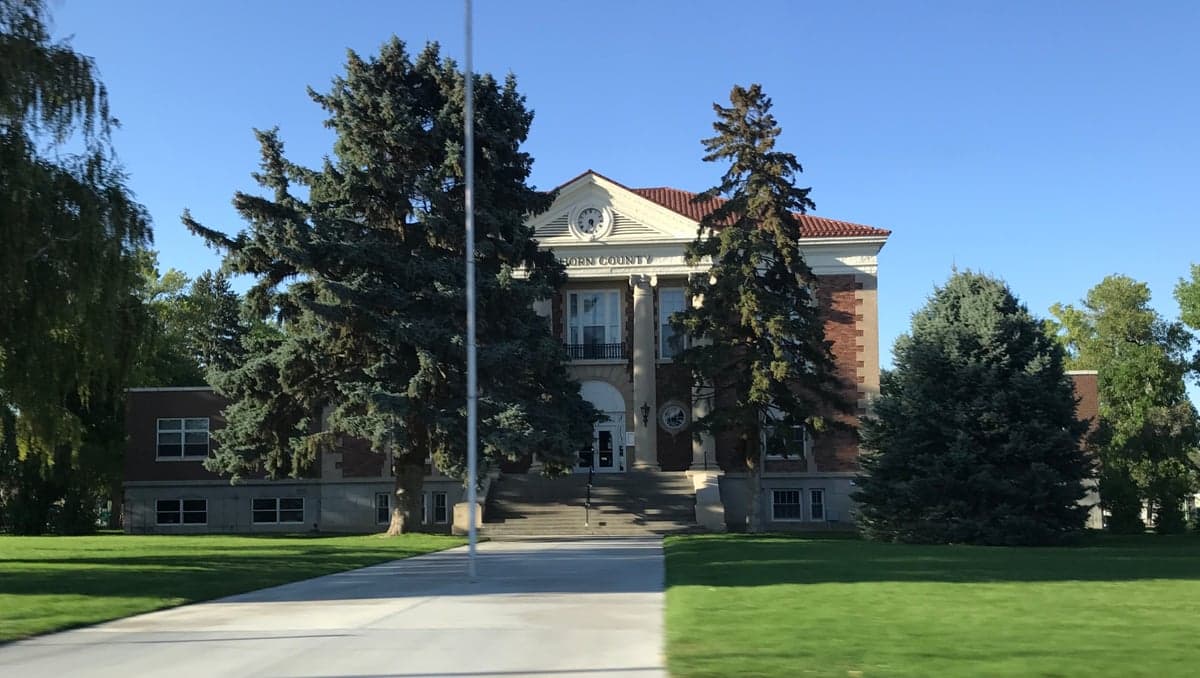
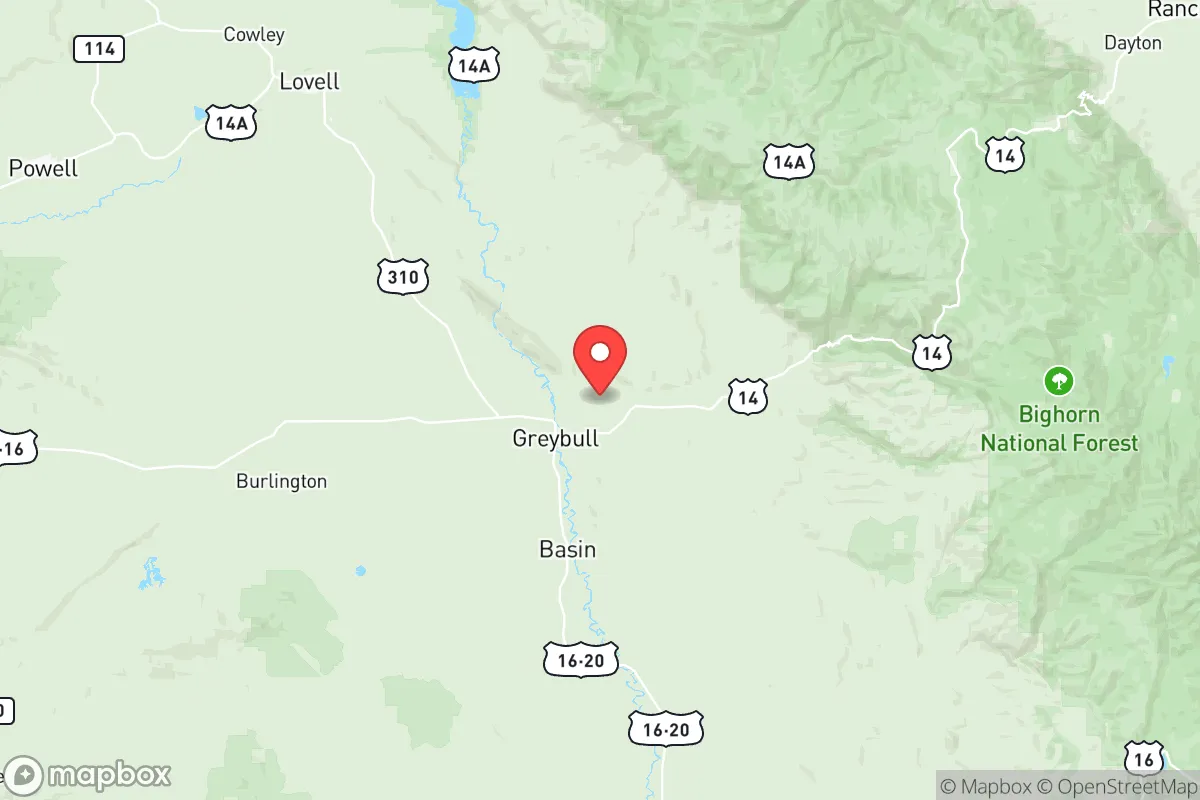
Photo: Wikipedia
Political ClimatePolitical Climate in Big Horn County
Showing state-level results — no local-only data available.
Local Political AnalysisPolitical Analysis of Big Horn County
Big Horn County, Wyoming, is about as solidly conservative as it gets, with a Cook Partisan Voting Index (PVI) of R+23, meaning it votes 23 points more Republican than the national average. That puts it right in line with the rest of Wyoming, which also carries an R+23 PVI, so you’re not looking at any major political divergence here. The county has been reliably red for decades, and while there’s been a slight uptick in Democratic votes in some precincts around Lovell and Greybull over the last few cycles, the overall trajectory is still firmly conservative. If you’re worried about government overreach or progressive ideology creeping in, Big Horn County is one of those places where the local culture and voting patterns push back hard against that kind of thing.
How it compares
When you stack Big Horn County up against the rest of Wyoming, the numbers are almost identical—both are R+23, so there’s no real statistical difference in partisan lean. But the devil’s in the details when you look at the towns. Cody, just west of the county line in Park County, is a deep-red stronghold, but inside Big Horn County itself, you’ve got Basin and Greybull that lean even more Republican, often hitting 80% or higher for GOP candidates in presidential races. Lovell and Byron are a bit more moderate, with a small but noticeable Democratic presence—maybe 15-20% in local elections—thanks to some union ties from the sugar beet and railroad industries. Manderson and Deaver are swing precincts where you’ll see a few more split-ticket voters, but they still break red overall. The key difference from the state as a whole is that Big Horn County lacks the kind of urban or resort-town influence you see in places like Jackson or Laramie, so it’s more uniformly conservative without any real progressive pockets.
What this means for residents
For folks living here, the political climate means you’re not dealing with the kind of progressive policy pushes that are common in blue states or even in some parts of Wyoming like Teton County. Property taxes are low, there’s no state income tax, and the local government tends to keep its nose out of your business—whether that’s on gun rights, land use, or homeschooling. The county commission and school board are reliably conservative, so you won’t see things like critical race theory or DEI initiatives making their way into local schools. That said, there’s been a bit of a shift in the last five years with more folks moving in from out of state, especially around the Bighorn Mountains, and some of them bring a more moderate or even libertarian streak. It’s not a big deal yet, but if you’re paying attention, you can see it in local zoning debates and a few more contested primaries. The long-term outlook is still solidly red, but I’d keep an eye on those newcomers—they might start pushing for more government involvement in things like land use or environmental regulations.
Culturally, Big Horn County is a place where the Second Amendment is a given, the local economy runs on agriculture and energy, and people value self-reliance over government programs. You won’t find the kind of coastal-style politics here, and that’s a big part of why folks stay. The biggest policy distinction from the rest of Wyoming is probably the county’s strong opposition to federal land management—there’s a lot of tension around BLM and Forest Service rules, especially for ranchers and outfitters. If you’re looking for a place where the government stays out of your life and the voting patterns back that up, Big Horn County is about as good as it gets in the Lower 48.

State Political ClimatePolitical Climate in Wyoming
State Political AnalysisPolitical Environment in the State
Wyoming is a rock-ribbed Republican stronghold with a Cook PVI of R+23, making it one of the most conservative states in the nation. The dominant coalition is a mix of rural ranchers, energy workers, and libertarian-leaning independents who value low taxes, gun rights, and minimal government interference. Over the past 10-20 years, the state has actually shifted further right, driven by an exodus of progressive-leaning residents from places like Jackson and a steady influx of conservatives fleeing blue states, though a growing libertarian streak has also pushed back against some traditional GOP establishment positions.
Urban vs. rural divide
The political map is starkly split between a few small, liberal-leaning enclaves and the vast, deeply conservative countryside. Jackson (Teton County) is the state's most liberal pocket, voting reliably Democratic due to its wealthy, amenity-driven population and reliance on tourism. Laramie (Albany County), home to the University of Wyoming, also leans left, though not as dramatically. In contrast, Casper (Natrona County), Gillette (Campbell County), and Rock Springs (Sweetwater County) are conservative strongholds, powered by energy extraction, ranching, and a blue-collar ethos. The rural-urban divide is so pronounced that in 2024, Teton County voted +30 Democratic while Campbell County voted +70 Republican. The state's legislative districts are drawn to amplify rural voices, meaning the conservative agenda dominates Cheyenne even as Jackson's politics make national headlines.
Policy environment
Wyoming's policy environment is a dream for limited-government advocates. There is no state income tax, and the sales tax is a low 4% (with local options pushing it to around 6%). Property taxes are among the lowest in the nation, though a recent 2024 legislative session saw a modest property tax relief bill for homeowners. The regulatory posture is aggressively pro-business, especially for energy, mining, and agriculture. Education policy is a mixed bag: the state funds schools well per pupil, but curriculum battles are heating up, with a 2023 law requiring schools to post all instructional materials online for parental review. Healthcare is a weak spot—Wyoming has not expanded Medicaid, and the state has the highest uninsured rate in the country. Election laws are solid: voter ID is required, same-day registration is not allowed, and the state uses paper ballots with post-election audits. There is no mail-in voting without an excuse, a policy that remains popular with conservatives.
Trajectory & freedom
Wyoming is becoming more free in many respects, but not without internal fights. The 2021 "Second Amendment Preservation Act" (SF 102) prohibits state enforcement of any future federal gun bans, a clear assertion of state sovereignty. In 2023, the legislature passed a near-total abortion ban (HB 152), with exceptions only for rape, incest, and life of the mother—a major expansion of what many conservatives see as a fundamental freedom. Parental rights were strengthened in 2024 with a law requiring schools to notify parents of any "sexually explicit" instructional materials. However, there are concerning trends: a 2023 data privacy law (SF 41) was watered down after corporate lobbying, and a 2024 attempt to ban vaccine mandates for private employers failed. The biggest freedom fight is over property rights—a 2022 law restricting counties from regulating short-term rentals like Airbnb was a win for owners, but a 2024 bill to ban local rent control died in committee. On balance, the trajectory is positive for conservatives, but the influence of the energy industry sometimes creates tension between corporate interests and individual liberty.
Civil unrest & political movements
Wyoming is not a hotbed of street protests, but there are organized movements worth noting. The Wyoming Liberty Group and local chapters of the Tea Party are active, pushing for lower taxes and school choice. In 2020, there were small but visible Black Lives Matter protests in Cheyenne and Laramie, but they were met with heavy counter-protests from armed groups. Immigration politics are relatively quiet—Wyoming has no sanctuary cities, and a 2023 law (HB 81) requires law enforcement to cooperate with federal immigration authorities. Election integrity is a live issue: after the 2020 election, the state conducted a forensic audit of its voting machines (finding no irregularities), and a 2024 law (SF 104) now requires all ballots to be hand-counted in counties with fewer than 1,000 voters. The most visible flashpoint is the Meadowood subdivision in Laramie, where a 2023 dispute over a proposed homeless shelter turned into a months-long standoff between city officials and residents, with accusations of government overreach on both sides. A new resident would notice a general distrust of federal authority, but also a pragmatic, live-and-let-live attitude among neighbors.
Projection
Over the next 5-10 years, Wyoming will likely become even more conservative, but with a growing libertarian faction that could challenge the GOP establishment. In-migration is accelerating, particularly from Colorado and California, with many newcomers drawn to the state's freedom-friendly policies. However, this influx is concentrated in places like Sheridan and Laramie County, where housing prices are rising and local politics are becoming more contentious. The energy transition is the wild card: as coal declines, the state is leaning into crypto mining and data centers, which could bring a new, more tech-libertarian population. Expect continued fights over property rights, school curriculum, and the role of local government. The biggest threat to freedom is the potential for a state sales tax increase or a new property tax to fund infrastructure, which would be a betrayal of Wyoming's low-tax tradition. A person moving in now should expect a state that is fiercely independent, but also one where the definition of "freedom" is being actively contested between traditional conservatives and a new wave of libertarians.
Bottom line for a new resident: Wyoming offers a rare combination of low taxes, strong gun rights, and a government that mostly stays out of your life. You'll find a welcoming community in places like Buffalo or Powell, but be prepared for a political landscape that is deeply skeptical of federal power and increasingly wary of corporate influence. If you value personal autonomy and are willing to tolerate harsh winters and limited amenities, this is one of the last places in America where you can truly live free. Just keep an eye on Cheyenne—the fight over what freedom means is far from over.
* Values derived from national, state, county, city and local statistics and may differ in a specific area. Last updated: 2026-05-12T12:21:12.000Z
Narrative content on this page is AI-generated and may contain mistakes. Verify any details that matter before acting on them.
ReloMaps may earn a commission from affiliate links at no extra cost to you.

