Photo: Wikipedia
Demographics of Big Horn County
Affluence Level in Big Horn County
A below-average socioeconomic profile. Incomes, home values, and educational attainment trail the U.S., with higher poverty and unemployment.
People of Big Horn County
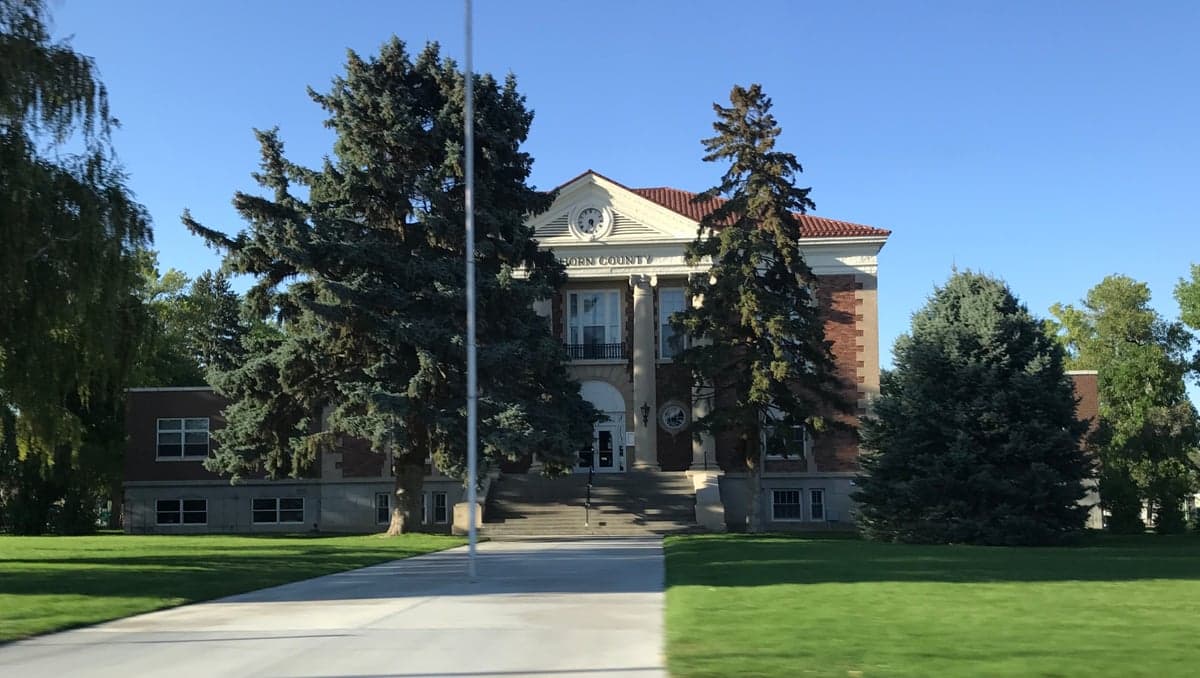
Big Horn County, Wyoming, is home to 11,737 residents, a population that is 85.6% White and 9.6% Hispanic, with a foreign-born share of just 2.0%. The county’s identity is rooted in its rural, agricultural character and a history shaped by Native American presence, homesteading, and resource extraction. With a low college attainment rate of 20.9%, the population is predominantly working-class, concentrated in small towns like Basin, Greybull, and Lovell, and retains a distinctive Western independence that appeals to conservative-leaning individuals and families seeking space and traditional values.
Settlement & growth (pre-1960)
Long before European settlement, the area now known as Big Horn County was home to the Crow Nation, who controlled the Bighorn Basin and surrounding plains. The Crow, known as the "Apsáalooke," were semi-nomadic buffalo hunters who maintained a strong presence until the late 19th century. The 1868 Fort Laramie Treaty established the Crow Reservation to the north, but the Bighorn Basin remained contested ground, with the U.S. Army establishing Fort C. F. Smith in 1866 to protect the Bozeman Trail. The Crow were eventually confined to the reservation, and the land was opened to non-Native settlement.
The first major wave of American settlement began in the 1870s and 1880s, driven by the cattle industry. Ranchers from Texas and the Midwest drove herds into the lush grasslands of the Bighorn Basin, founding early ranches near what would become Basin, the county seat after its establishment in 1896. The arrival of the Chicago, Burlington and Quincy Railroad in 1901 transformed the region, enabling homesteaders to ship cattle, sheep, and later crops to national markets. Towns like Greybull (founded 1901) and Lovell (founded 1906) sprang up along the rail line, attracting a mix of Midwestern farmers, Scandinavian immigrants, and German-Russian families seeking land under the Homestead Act. These groups were predominantly Protestant and brought with them a strong work ethic, community-oriented churches, and a distrust of distant government—traits that still define the county’s political culture.
Irrigation projects in the early 1900s, including the Shoshone Project and the Big Horn Canal, opened dry land to sugar beet farming and alfalfa production. This drew a smaller but significant wave of Mexican and Mexican-American laborers to work the fields, particularly around Lovell and Cowley. These workers formed the early roots of the county’s Hispanic community, which remains concentrated in those agricultural towns today. By 1930, the county’s population had peaked at around 12,000, driven by farming and the oil boom in the nearby Elk Basin field. The Great Depression and Dust Bowl years saw a modest outflow, but the county’s agricultural base proved resilient, and the population stabilized around 10,000 through the 1940s and 1950s.
Modern era (post-1965)
The 1965 Hart-Cellar Act had minimal direct impact on Big Horn County, as the region never attracted large numbers of post-1965 immigrants. The foreign-born population remains at just 2.0%, far below the national average. Instead, the county’s demographic story since the 1970s has been one of domestic out-migration and aging. Young adults have left for college and jobs in larger cities like Billings, Montana, or Casper, Wyoming, leading to a gradual population decline from a peak of 12,000 in the 1930s to the current 11,737.
The most notable modern shift has been the growth of the Hispanic population, which now stands at 9.6%. This is largely driven by natural increase and continued in-migration of Mexican-American families drawn to agricultural work, particularly in sugar beet and hay farming around Lovell and Greybull. These families are often multi-generational, with roots stretching back to the early 20th century, and they have integrated into the county’s social fabric while maintaining distinct cultural traditions, including Spanish-language church services and community celebrations. The Black population remains negligible at 0.5%, and East/Southeast Asian communities account for just 0.7%, with no significant enclaves forming. The Indian subcontinent population is effectively zero.
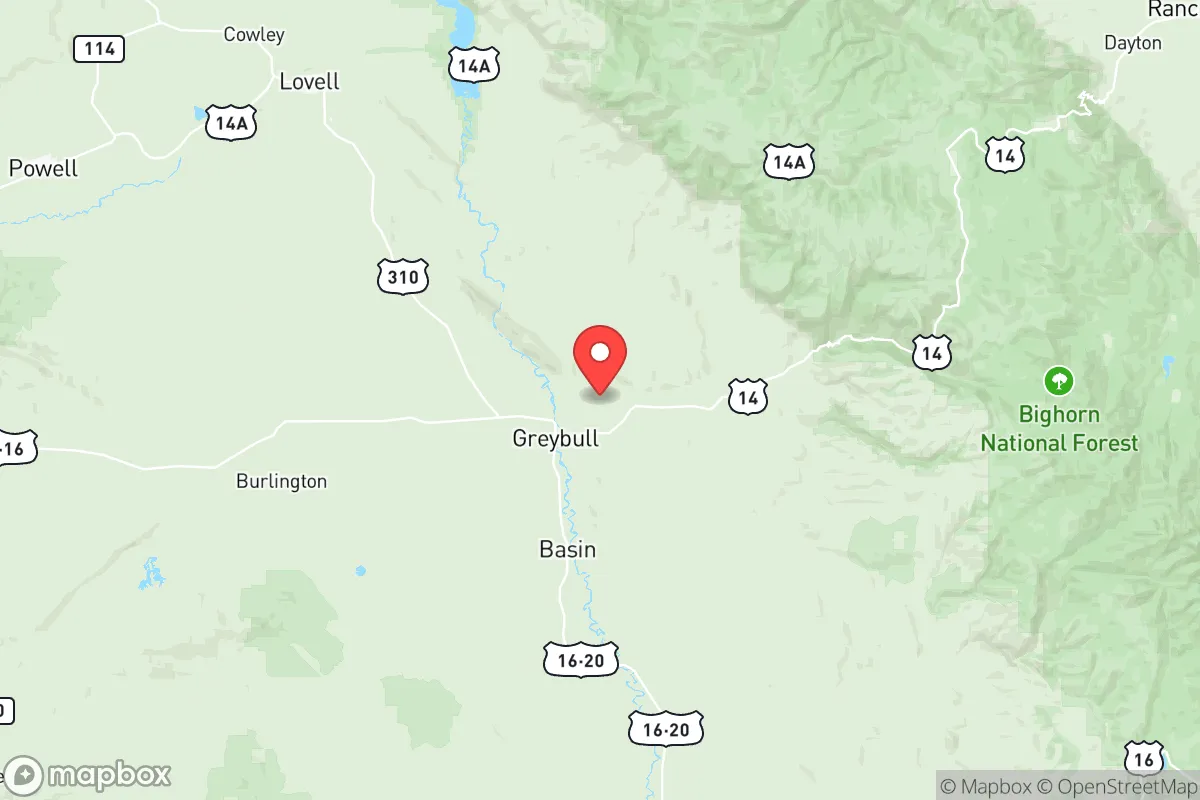
Suburbanization has not reshaped Big Horn County as it has in more urban parts of Wyoming. The county’s towns—Basin, Greybull, Lovell, and Manderson—remain small, with populations under 3,000 each. There has been no significant exurban sprawl from larger cities, as the county is remote, with the nearest major city, Billings, Montana, being 90 miles north. Instead, the county has seen a modest influx of retirees and remote workers seeking affordable land and a slower pace of life, particularly around Shell and Burlington. These newcomers are predominantly White and conservative, reinforcing the county’s existing cultural and political character.
The future
Big Horn County’s population is projected to remain stable or decline slightly over the next 10-20 years. The Hispanic share is likely to grow gradually, potentially reaching 12-15% by 2040, driven by higher birth rates and continued agricultural labor demand. However, the county is not experiencing the rapid diversification seen in other parts of the Mountain West. The White population, while aging, remains the overwhelming majority, and the county’s cultural identity—rooted in ranching, farming, and conservative values—shows little sign of fundamental change.
The biggest demographic challenge is out-migration of young adults. Without a major economic shift—such as a new energy boom or significant remote-work infrastructure—the county will continue to age. The school-age population has already declined, leading to school consolidations in recent years. In-migration of retirees and lifestyle migrants may offset some losses, but these groups tend to be older and less likely to have children, further skewing the age structure. The county is not tribalizing into distinct ethnic enclaves; rather, it is slowly homogenizing as the small Hispanic community integrates and the non-Hispanic White population ages in place.
For someone moving in now, Big Horn County offers a stable, culturally homogeneous environment where traditional values and self-reliance are the norm. The population is not growing, but it is not shrinking rapidly either. The county will likely remain a predominantly White, rural, and conservative community for the foreseeable future, with a small but established Hispanic minority. Newcomers should expect a place where community ties are strong, change is slow, and the pace of life is dictated by the seasons and the land rather than by urban trends.

* Values derived from national, state, county, city and local statistics and may differ in a specific area. Last updated: 2026-05-12T12:21:12.000Z
Narrative content on this page is AI-generated and may contain mistakes. Verify any details that matter before acting on them.
ReloMaps may earn a commission from affiliate links at no extra cost to you.

