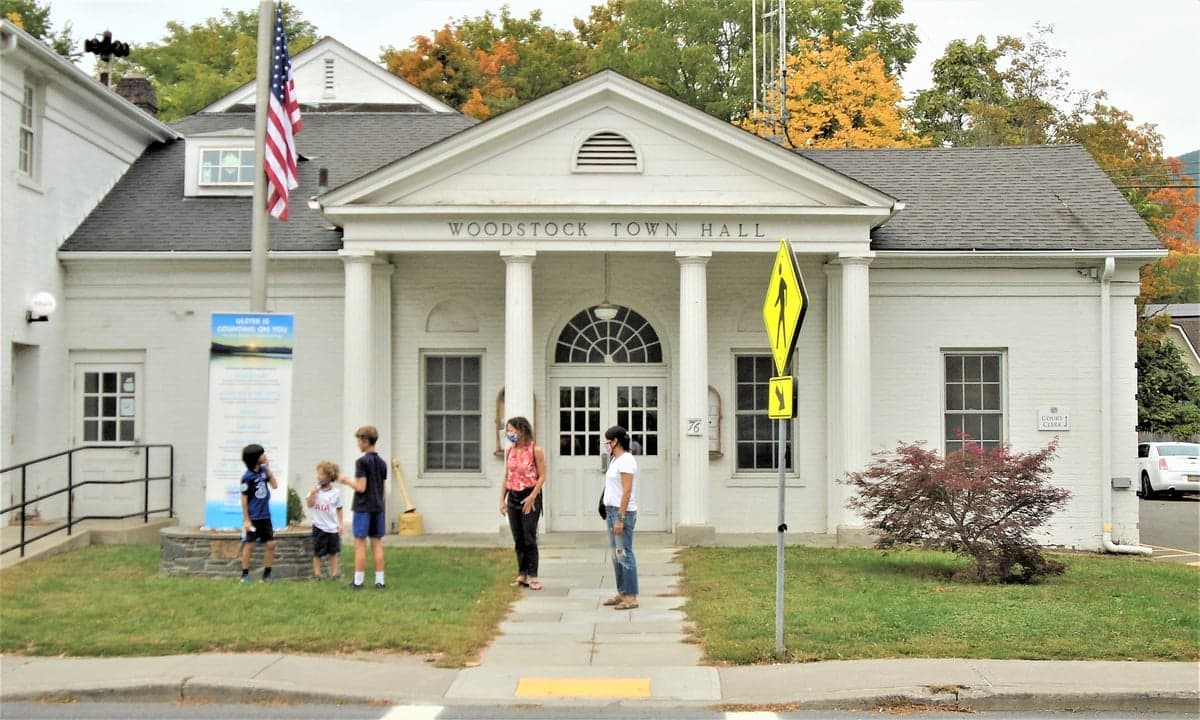
Photo: Wikipedia
Strategic Assessment of Woodstock, NY
Workable tactical position. Some exposure to population density or targets, but generally defensible in a crisis.
What does the Strategic Assessment tell us?
Our Strategic Assessment grades tactical survivability of an area. Major population centers, military targets, fallout zones, natural disasters, and border exposure all drive risk — lower exposure means a more defensible position in a crisis.
This is heavily inspired by Joel Skousen's Strategic Relocation book. Highly recommended you checkout the book ($)What does this tell us?
Our Strategic Assessment grades tactical survivability of an area. Major population centers, military targets, fallout zones, natural disasters, and border exposure all drive risk — lower exposure means a more defensible position in a crisis.
This is heavily inspired by Joel Skousen's Strategic Relocation book. Highly recommended you checkout the book ($)Strategic Pillars

Key Distances
Regional Safe Places
Below is our recommended "safe zones" in New York and the surrounding area based on our strategic heuristics. For most people, it's unrealistic to live in a “safe zone” full-time due to work, family or other personal reasons. They tend to be more rural. However, many of these areas are perfect for second homes and retreat properties that double as a vacation home or even a short-term rental.
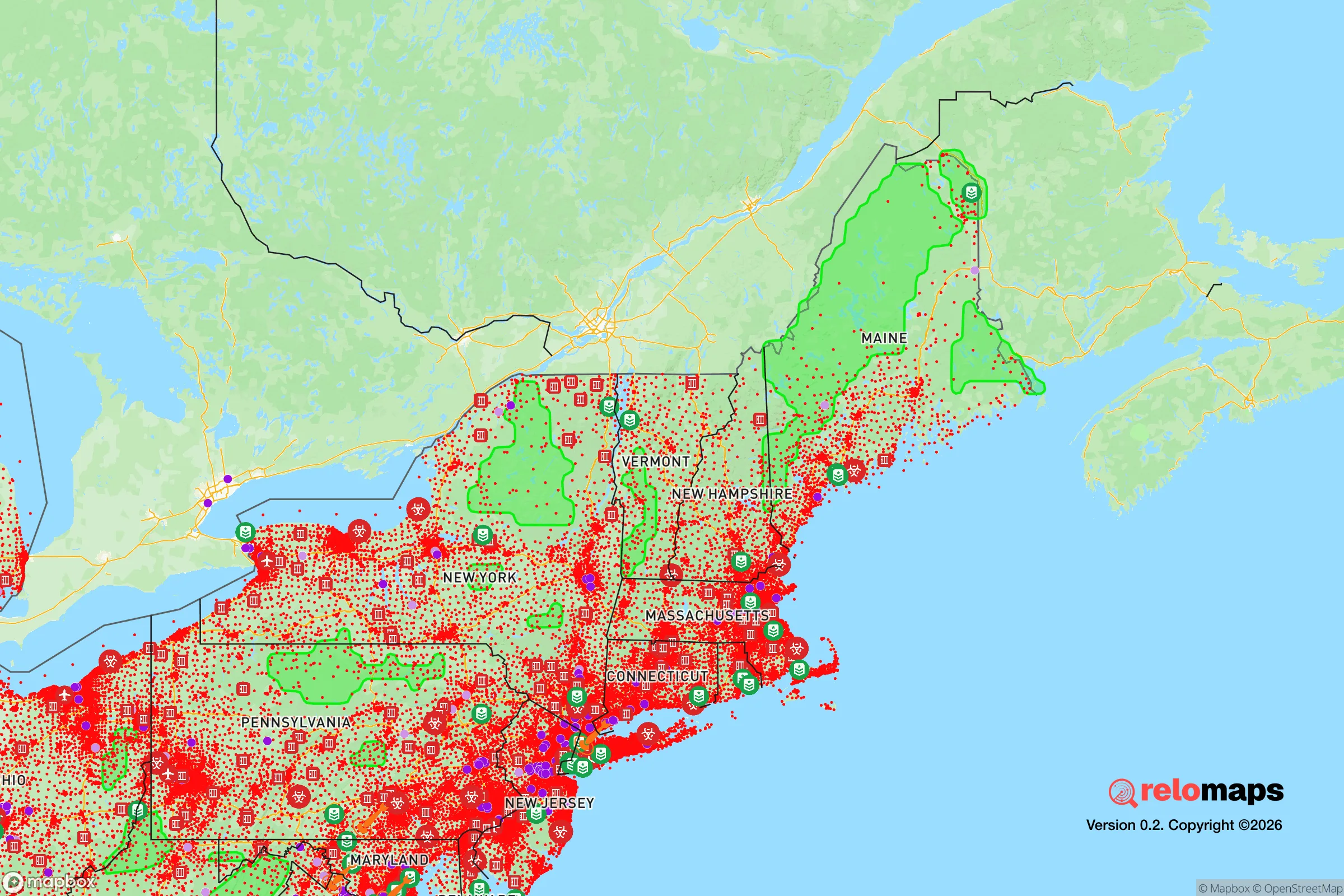
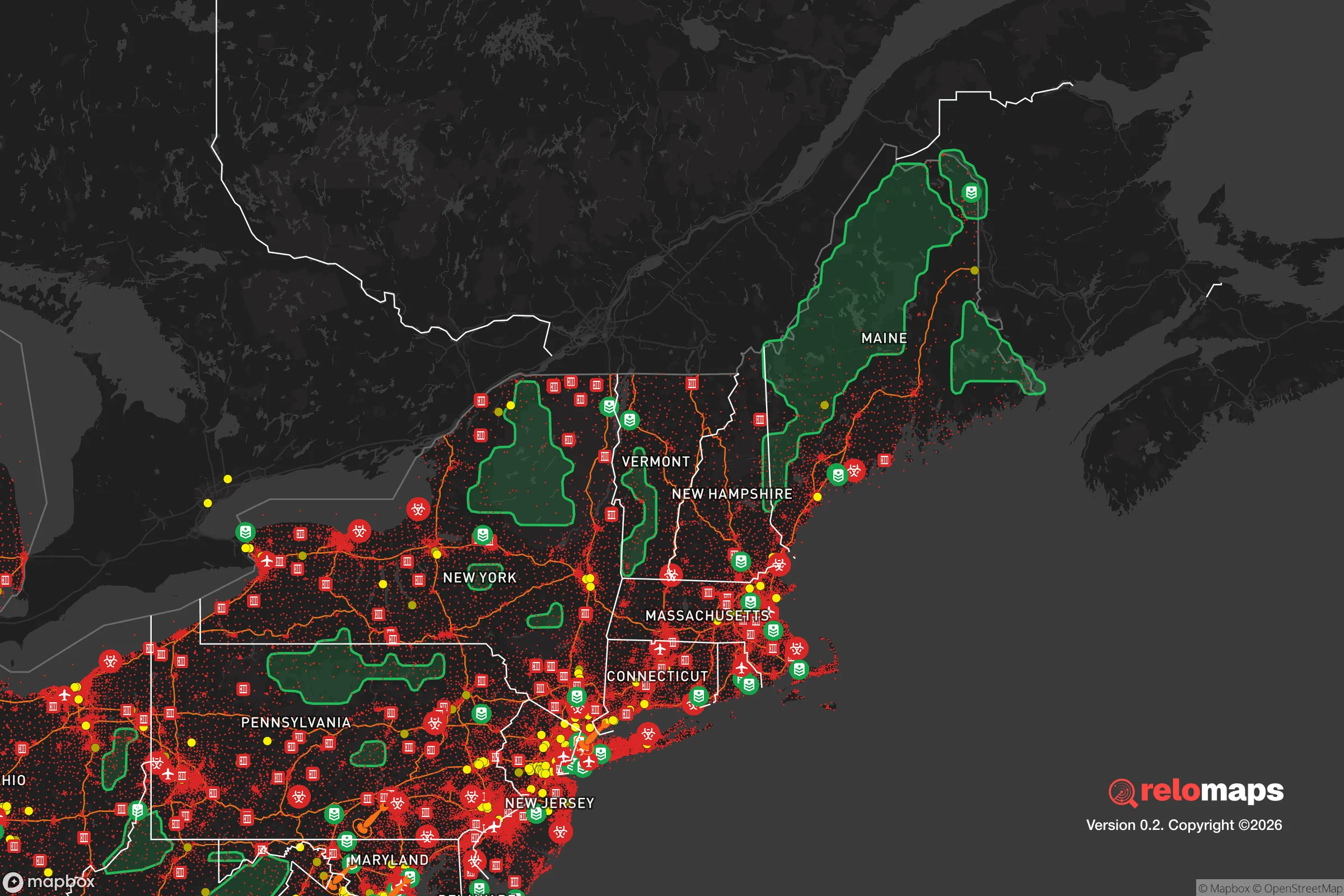


Important Note: For informational purposes only. This does not mean nothing bad ever happens in the green zones. Please use common sense. This is based on public data and modeled with AI. We tried to take a conservative approach but mistakes happen. We update this regularly as new information becomes available.
Solar Generator Recommendations
Backup power matters more here than in safer locations. We've picked three solar generators across budgets and capacity tiers — start with the budget unit if you only need a few essentials, or step up if you want to run a fridge and HVAC for days at a time.

Jackery Portable Power Station Explorer 300
Budget OptionPower on the Go: Weighing only 11 lbs, it's convenient to set up and store with book-sized foldable solar panels

BLUETTI Portable Power Station AC180
Designed for both indoor and outdoor scenarios, AC180 is highly capable as it has a robost capacity and continuous output power.

EF ECOFLOW DELTA Pro Ultra Power Station
Upgraded PickEcoFlow DELTA Pro Ultra is a whole-home energy system designed to grow with your family. Integrated with the Smart Home Panel 2, it scales to meet your evolving energy needs — keeping your home powered, intelligent, and secure through every stage of life.
We earn a commission, at no additional cost to you.
Strategic Assessment Analysis
Woodstock, New York, offers a compelling mix of strategic depth and practical vulnerability for the disaster-conscious relocator. Its position in the Catskill Mountains provides a natural buffer against the densest population centers, while its historical reputation as a haven for self-reliant communities hints at a local culture that values preparedness. However, the same geography that grants isolation also creates logistical challenges, and proximity to major infrastructure corridors introduces risks that a serious assessor cannot ignore. For a single individual or family weighing long-term security, Woodstock represents a moderate-to-high resilience option, provided you understand its specific trade-offs.
Geographic position and natural advantages for self-sufficiency
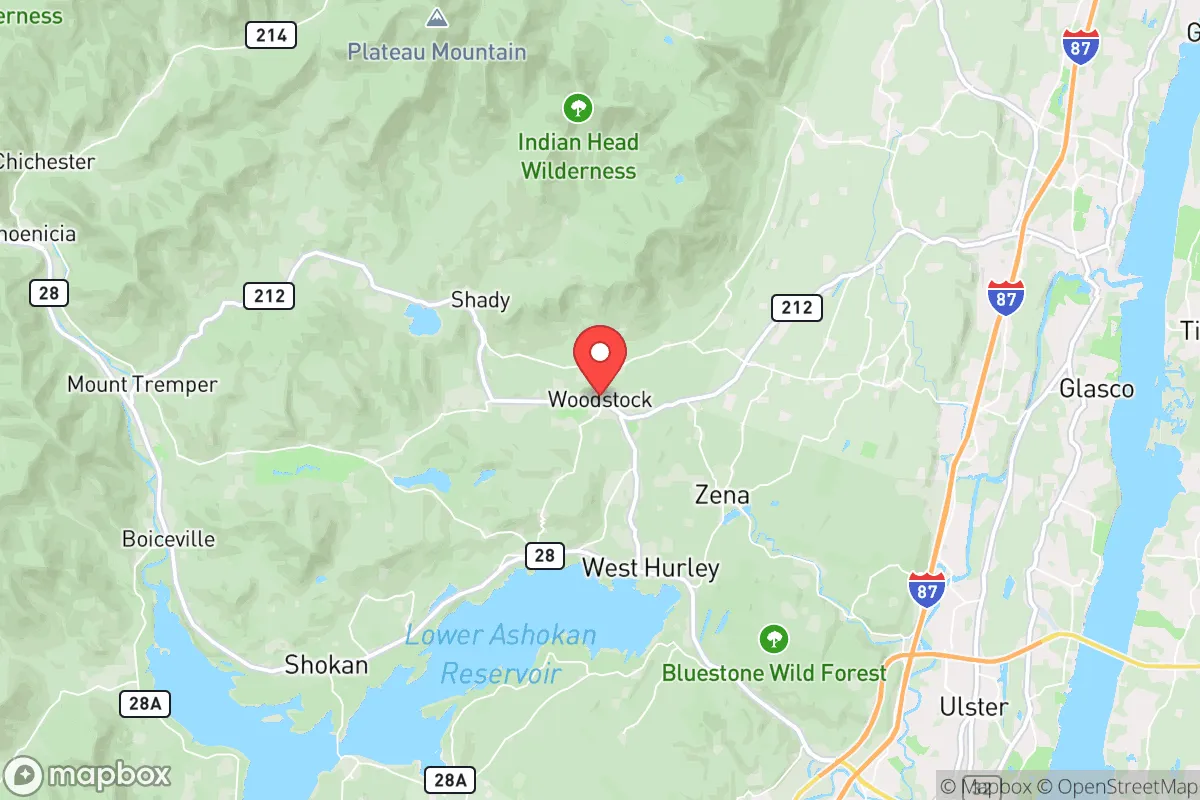
Woodstock sits in Ulster County, roughly 100 miles north of New York City, placing it beyond the immediate blast and fallout zones of a major metropolitan event. The surrounding Catskill Mountains create a natural defensive perimeter: steep terrain, dense forests, and limited major road access funnel traffic through a handful of choke points, most notably Route 28 and the New York State Thruway (I-87) corridor. This topography makes the area inherently more defensible than flat, open farmland or suburban sprawl. The region’s elevation—averaging around 1,500 feet—also reduces the risk of storm surge and coastal flooding, a significant advantage over Hudson Valley towns closer to the river. The Ashokan Reservoir, a massive 12-mile-long water body just south of Woodstock, provides a reliable, high-quality freshwater source that is gravity-fed to New York City but also serves local needs. The surrounding forests offer abundant timber for fuel and construction, and the soil, while rocky in places, supports small-scale agriculture in the valley bottoms. For a relocator, the key takeaway is that Woodstock’s geography buys you time and distance from the worst immediate threats, but it does not eliminate them.
Risks, exposures, and proximity to fallout-relevant landmarks
The most significant man-made risk for Woodstock is its position within the broader New York City watershed and its proximity to critical infrastructure. The Ashokan Reservoir, while a water asset, is also a high-value target for sabotage or contamination. A deliberate attack on the reservoir’s dams or treatment facilities could disrupt water supply for millions downstream and create localized flooding in the immediate area. More concerning for the strategic thinker is Woodstock’s location roughly 60 miles from the Indian Point Energy Center (now decommissioned, but spent fuel remains on site) and within 100 miles of multiple nuclear power plants along the Hudson River corridor. While the prevailing winds generally carry fallout eastward, a major release from any of these sites could deposit radioactive material across the Catskills depending on weather patterns. Additionally, the New York State Thruway (I-87) and the CSX rail line running through the nearby Hudson Valley are primary arteries for hazardous materials, including crude oil and chemicals. A derailment or truck accident in the Kingston area—just 10 miles east—could force evacuations or contaminate local water sources. Natural risks are more manageable but real: the region sits in a moderate seismic zone (small earthquakes are recorded annually), and heavy snowstorms can isolate the town for days. Wildfire risk is low compared to the West, but dry summers have increased the threat in recent years. The bottom line: Woodstock is not a fallout-free zone, but its risks are largely manageable with proper planning, unlike the immediate existential threats of a coastal city.
Practical resilience for a relocator: food, water, energy, and defensibility
For the relocator serious about self-sufficiency, Woodstock’s practical resilience is a mixed bag. Water is the strongest asset: the Ashokan Reservoir and numerous smaller streams and springs provide ample surface water. However, most residential properties rely on private wells, which can fail during prolonged power outages or drought. A hand pump or generator-backed well system is a wise investment. Food security is moderate. The area has a strong local food culture—farmers’ markets, community-supported agriculture (CSA) programs, and small organic farms are common—but the growing season is short (roughly May to October) and the soil is thin and acidic in many places. A serious gardener will need raised beds, soil amendments, and season-extending structures like hoop houses. Hunting and fishing are viable: white-tailed deer are abundant, and the Esopus Creek and Ashokan Reservoir offer trout and bass. But game pressure is high, and a family cannot rely solely on wild protein without significant skill and time. Energy resilience is a weak point. The grid is aging and prone to outages during winter storms and summer heatwaves. Solar adoption is growing but still below the state average, and many homes lack battery backup. Wood heat is common—most older homes have a fireplace or wood stove—but firewood supply chains can be disrupted. A relocator should plan for a minimum of two weeks of backup power and heat. Defensibility is decent but not fortress-like. The town itself is a small, walkable village with a tight-knit community, which aids mutual aid and neighborhood watch dynamics. The surrounding forested hills provide cover and concealment, but the same roads that limit access also limit escape. A determined group could block the main routes in or out, but that also traps residents inside. The local police force is small (about 15 officers), and the nearest state police barracks is in Kingston. For a family, the best strategy is to build relationships with neighbors and establish a cache of supplies at a secondary location deeper in the Catskills, such as near the Pepacton Reservoir or the town of Margaretville, which offers even greater isolation.
Overall, Woodstock presents a strategic picture of moderate-to-high resilience with clear, manageable weaknesses. Its geographic isolation and natural water supply are genuine advantages, and the local culture of self-reliance and community cooperation is a real asset for a relocator willing to integrate. The primary downsides are its proximity to high-value infrastructure targets (the reservoir, the Thruway, and the nuclear corridor) and the logistical challenges of a short growing season and an aging energy grid. For a single individual or family who is prepared to invest in backup power, water storage, and food production, Woodstock offers a defensible, livable base that balances access to wilderness with the practical amenities of a small town. It is not a bug-out location for the prepper seeking total isolation, but it is a solid, realistic choice for the strategic relocator who values community and natural resources over absolute security.

* Values derived from national, state, county, city and local statistics and may differ in a specific area. Last updated: 2026-08-03T15:47:55.000Z
Narrative content on this page is AI-generated and may contain mistakes. Verify any details that matter before acting on them.
ReloMaps may earn a commission from affiliate links at no extra cost to you.

