 Popular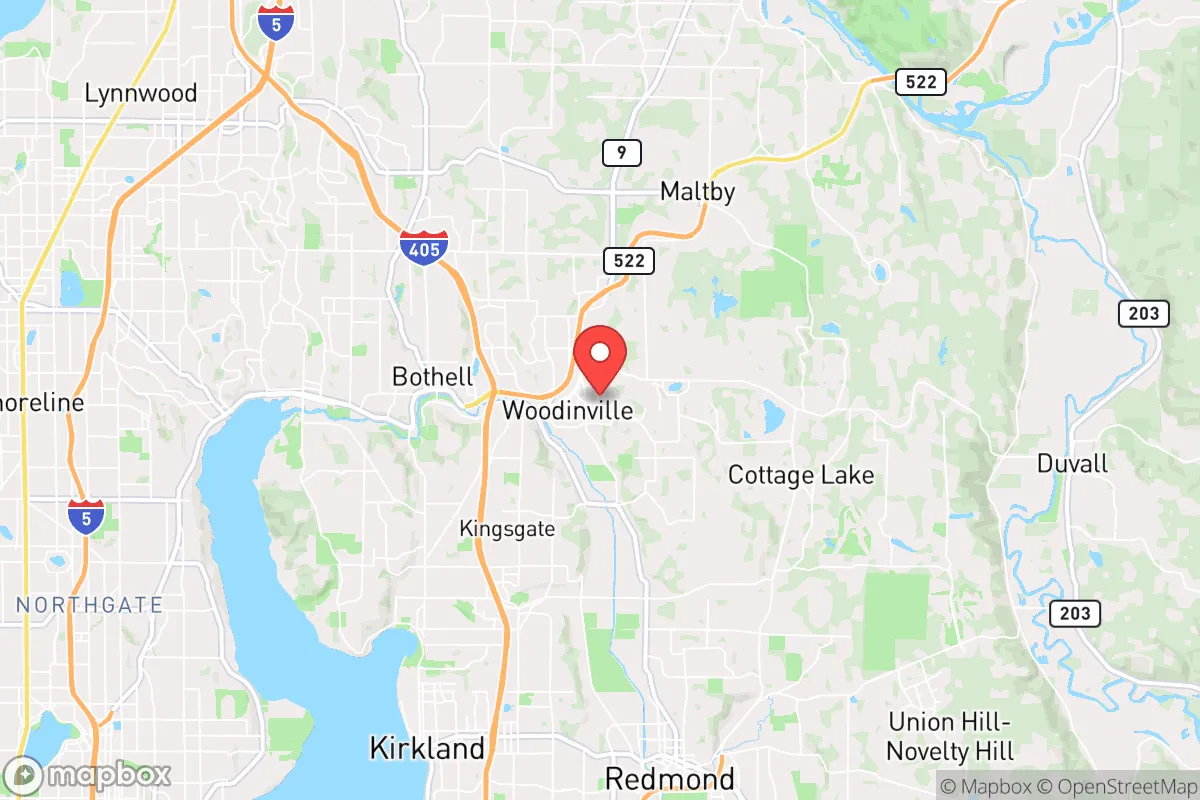
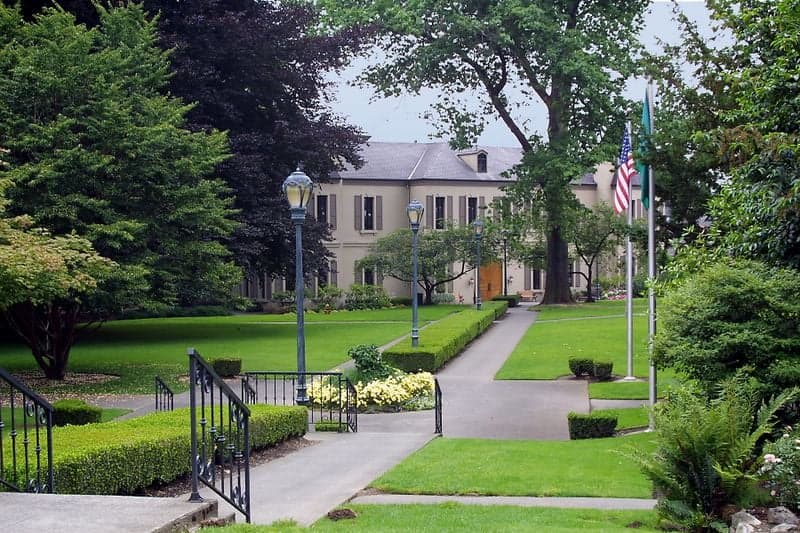
Photo: Wikipedia
Political ClimatePolitical Climate in Woodinville, WA
District shown is the primary district for this city’s centroid. Cities may span multiple districts.
Local Political AnalysisPolitical Analysis of Woodinville, WA
Woodinville has shifted noticeably to the left over the past decade, and the numbers back that up. The Cook Partisan Voting Index (PVI) for the area sits at D+15, meaning it votes about 15 points more Democratic than the national average. That’s a significant jump from even ten years ago, when the area was more of a purple suburb. The 2024 presidential election saw King County as a whole go for the Democratic candidate by a wide margin, and Woodinville’s precincts followed suit, with many precincts reporting 60-65% Democratic votes. The real story, though, is how this compares to the rest of Washington state, which is a much more mixed bag politically.
How it compares
Woodinville is a deep blue island in a state that’s only moderately blue overall. While Washington state as a whole has a Cook PVI that’s also Democratic-leaning (roughly D+8 to D+10 depending on the year), the difference is stark when you look at the surrounding areas. Drive 20 minutes east to Duvall or Carnation, and you’ll find precincts that are much more competitive, often leaning Republican by 5-10 points. Head north to Snohomish County’s rural parts, like Maltby or Monroe, and the shift is even more dramatic—those areas can go +15 to +20 Republican. Woodinville’s D+15 lean is actually closer to Seattle’s core (D+30+) than to its immediate neighbors. The contrast is most visible in local elections: Woodinville’s city council and school board races are dominated by progressive candidates, while nearby towns like Redmond (also blue but more moderate) and Kirkland (similar to Woodinville) show a more tempered version of the same trend. The key takeaway: Woodinville is not representative of Washington state as a whole. It’s a liberal enclave in a state that has a strong conservative rural vote, especially east of the Cascades.
What this means for residents
For liberal residents, Woodinville is a comfortable place to live. You’ll find strong support for environmental policies, public transit expansion, and progressive social initiatives. The city’s zoning and housing policies reflect this, with a push for more density and affordable housing. For conservative residents, it’s not hostile, but it can feel like you’re in the minority. You won’t see many Trump signs in yards, and local political conversations tend to lean left. That said, the area is still relatively moderate compared to Seattle proper—you’ll find a mix of political views in the local coffee shops and wineries. The practical impact is that local policy tends to favor bike lanes, parks, and sustainability projects over, say, tax cuts or deregulation. Property taxes are higher than in neighboring rural areas, but services like schools and parks are well-funded. The political climate also means that Woodinville is a safe bet for progressive candidates in state and federal races, but it also means that conservative voters have to travel to nearby towns like Duvall or Monroe to find a more politically aligned community.
Culturally, Woodinville’s political lean has shaped its identity. The city’s focus on local food, wine, and outdoor recreation aligns with a progressive, environmentally conscious ethos. You’ll see more Teslas than pickup trucks, and the local farmers market is a hub for organic and sustainable products. Policy-wise, the city has been proactive on climate action, with a goal of carbon neutrality by 2050. This contrasts sharply with the more libertarian or conservative approach in nearby rural areas, where property rights and low taxes are prioritized. For a newcomer, the political climate means you’ll find a community that values inclusivity and sustainability, but you’ll also pay for it in higher cost of living and taxes. It’s a trade-off that most residents here seem to accept, and the area’s continued growth suggests that the political trajectory is likely to stay blue for the foreseeable future.

State Political ClimatePolitical Climate in Washington
State Political AnalysisPolitical Environment in the State
Washington state has been a reliably blue stronghold for over a decade, but its politics are far more complex than a simple "liberal state" label suggests. The state’s overall lean is driven by the massive, rapidly growing population of King County (Seattle) and its surrounding suburbs, which deliver a crushing Democratic margin statewide. However, the rest of the state—eastern Washington, the Olympic Peninsula, and many rural exurbs—votes just as reliably Republican. The 10-20 year trajectory has been a steady march leftward on social and environmental policy, driven by tech-industry in-migration and a shrinking rural population share, though the 2024 election showed a slight tightening in some suburban areas that hints at a potential plateau.
Urban vs. rural divide
The political map of Washington is a textbook study in geographic polarization. The entire political gravity of the state is centered on Seattle and its immediate suburbs—Bellevue, Redmond, and Kirkland—which together form a Democratic super-majority. King County alone casts roughly a third of all votes in the state and consistently delivers a 70-75% Democratic margin. The I-5 corridor south to Olympia and north to Bellingham is similarly blue, anchored by state government and university towns. In contrast, the vast agricultural and ranchlands east of the Cascades—places like Spokane, Yakima, and the Tri-Cities (Kennewick, Pasco, Richland)—vote heavily Republican. Spokane County, once a swing area, has trended redder in recent cycles, while the Tri-Cities remain a conservative stronghold. The real battlegrounds are the "collar counties" like Pierce (Tacoma) and Snohomish (Everett), which have shifted from purple to light blue over the past decade, driven by Seattle commuters and military families. A relocator looking for a conservative environment should focus on the eastern side of the state or the more rural parts of southwest Washington, like Clark County (Vancouver), which is a perennial swing area that has trended slightly redder in recent cycles.
Policy environment
Washington’s policy environment is defined by a few key structural features. First, there is no state income tax—a major draw for conservative relocators. The state relies heavily on a high sales tax (state rate 6.5%, with local add-ons pushing it to 10%+ in Seattle) and a steep property tax that varies by county. The regulatory posture is among the most aggressive in the nation on environmental and labor issues. The state has a strict plastic bag ban, a cap-and-trade program (the Climate Commitment Act), and a long-term care payroll tax (WA Cares) that is mandatory for most workers. Education policy is a mixed bag: the state funds K-12 at a high level per pupil, but school choice is limited, with no voucher program and a weak charter school system. Healthcare is heavily regulated, with a state-based insurance exchange and a public option (Cascade Care) that has seen low enrollment. Election laws are among the most accessible in the country: all-mail voting is universal, same-day registration is available, and ballots are automatically sent to every registered voter. This system has been in place for over a decade and is widely accepted, even by most Republicans, though it has been a flashpoint for election integrity concerns.
Recent policy direction
The last five years have seen a flurry of legislation that paints a clear picture of the state’s direction. On gun and self-defense law, Washington passed a ban on "assault weapons" (HB 1240) in 2023, a ban on high-capacity magazines, and a requirement for a 10-day waiting period and safety training for all handgun purchases. A permit-to-purchase law is also in effect. These laws are currently being challenged in court, but they are in force. On parental and education rights, the state has moved strongly in the opposite direction from many red states: it mandates LGBTQ+ inclusive curriculum in public schools, and a 2023 law (SB 5599) allows minors to receive shelter and certain medical care without parental consent if they are homeless or at risk. On speech and privacy, Washington has a strong data privacy law (the Washington My Health My Data Act) that restricts the use of health data, including for targeted advertising, and has a broad shield law for journalists. On medical and bodily autonomy, the state has codified abortion rights into law, protects providers from out-of-state lawsuits, and has a shield law for gender-affirming care. On property rights, the state’s Growth Management Act heavily restricts development in rural areas, and recent laws have preempted local zoning to allow more density near transit, which has angered some suburban homeowners. On taxation, the state has a new capital gains tax (7% on gains over $250,000) that was upheld by the state Supreme Court as an excise tax, not an income tax. A wealth tax is being debated. On voting and ballot access, the system remains all-mail, with no voter ID requirement beyond a signature check, which has been a source of controversy.
Civil unrest & political movements
Washington has a history of visible political activism, particularly in Seattle. The 2020 CHOP (Capitol Hill Occupied Protest) zone was a national flashpoint, and the city saw months of protests over racial justice and police funding. On the right, the state has a smaller but active conservative movement, with groups like the Washington State Republican Party and the "Moms for Liberty" chapter in Clark County gaining traction. The sanctuary state status is a major issue: Washington has a 2019 law (SB 5497) that limits state and local cooperation with federal immigration enforcement, and a 2023 law (HB 1440) that extends driver’s licenses to undocumented residents. This has led to tensions with federal authorities and is a frequent topic in local elections. There have been secessionist murmurs in eastern Washington, with proposals for a "Liberty State" or "Cascadia" movement, but these remain fringe. Election integrity has been a persistent issue since 2020, with Republican activists challenging the all-mail system and ballot drop boxes, though no widespread fraud has been proven. A new resident would notice the ubiquity of political yard signs, bumper stickers, and the presence of activist groups at farmers markets and community events, particularly in the more polarized suburbs.
Projection
Over the next 5-10 years, Washington is likely to remain a solidly blue state, but the margin may narrow slightly. The key demographic driver is the continued in-migration of tech workers to the Seattle metro area, which reinforces the Democratic base. However, there is a counter-trend: a growing number of remote workers and retirees are moving to more affordable, conservative-leaning areas like Spokane and the Tri-Cities, which could shift those areas even redder. The state’s high cost of living, particularly in King County, may also push some moderate Democrats to the suburbs of Pierce and Snohomish counties, potentially making those areas more competitive. The biggest wildcard is the state’s tax structure: if the capital gains tax is expanded or a wealth tax is passed, it could trigger an exodus of high-net-worth individuals, which would disproportionately affect the Democratic donor base. For a relocator, the expectation should be that the state’s policy direction will continue to lean left on social and environmental issues, but with a growing conservative counterweight in the eastern half of the state that will make state-level politics more contentious, not less.
For a new resident, the bottom line is that Washington offers a stark choice depending on where you land. If you move to Seattle or its immediate suburbs, you will live in a deeply progressive environment with high taxes, heavy regulation, and a strong social safety net. If you choose eastern Washington or a rural exurb, you will find a more conservative, lower-cost lifestyle with a different set of local priorities. The state’s lack of an income tax is a genuine advantage for all residents, but it comes with high sales and property taxes. The all-mail voting system is convenient but controversial. The gun laws are among the strictest in the nation. The best advice is to visit the specific city or county you are considering, talk to locals, and understand that the political climate in Bellingham is a world away from Walla Walla. Washington is not a monolith, and your experience will be defined by your zip code.
* Values derived from national, state, county, city and local statistics and may differ in a specific area. Last updated: 2026-07-24T08:58:38.000Z
Narrative content on this page is AI-generated and may contain mistakes. Verify any details that matter before acting on them.
ReloMaps may earn a commission from affiliate links at no extra cost to you.

