 Popular
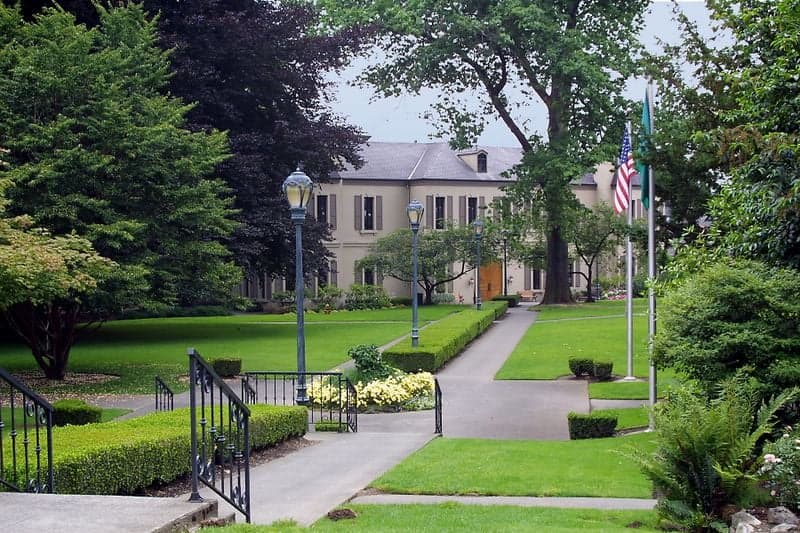
Photo: Wikipedia
Demographics of Woodinville, WA
Affluence Level in Woodinville, WA
A wealthy area with high-earning, well-educated households. Incomes, home values, and educational attainment meaningfully outpace national averages.
People of Woodinville, WA
The people of Woodinville, Washington, today number roughly 13,440, forming a compact, highly educated community where 70.7% of adults hold a college degree. The city is predominantly white (64.4%), but its population is notably diverse for a suburban city of its size, with significant East/Southeast Asian (12.6%), Hispanic (10.4%), and Indian-subcontinent (5.0%) communities. Woodinville’s identity is shaped by its dual character as a historic mill town turned wine-country destination, where longtime families live alongside recent tech-industry transplants drawn by the region’s job market and quality of life.
How the city was settled and grew
Woodinville’s human history begins with the Sammamish people, who used the area’s rivers and forests for fishing and hunting before European settlement. The first permanent white settlers arrived in the 1870s, led by Ira Woodin, who purchased land along the Sammamish River and built a shingle mill in 1871. The mill, powered by the river, drew a small workforce of loggers and mill hands, many of them Scandinavian immigrants—Swedes, Norwegians, and Finns—who settled in what is now Old Town Woodinville around the mill site. By the 1880s, the railroad reached the area, and the town grew as a logging and agricultural hub. The Hollywood District, originally a separate settlement, developed as a farming community where Italian and German families grew berries and vegetables for Seattle markets. The population remained small and overwhelmingly white through the early 20th century, with the 1940 census recording just 1,200 residents. The post-war period brought modest growth as returning veterans and their families moved into new subdivisions like North Woodinville, but the city remained a rural outpost until the 1980s.
Modern era (post-1965)
The 1965 Hart-Cellar Act had little immediate effect on Woodinville, but the 1980s and 1990s transformed the city as Seattle’s tech boom pushed development eastward. Microsoft’s rise in nearby Redmond drew a wave of domestic in-migration from across the United States, and Woodinville’s affordable land and good schools attracted young families. The Wine Country district, centered on the former dairy farms along Highway 202, began attracting wineries in the 1990s, turning the area into a regional tourism draw. The 2000s and 2010s saw a surge in Asian immigration, particularly from China, Taiwan, and Korea, as tech workers and their families settled in newer subdivisions like East Woodinville and the Woodinville Heights area. The Indian-subcontinent community grew rapidly during the same period, concentrated in the same neighborhoods, drawn by engineering and IT jobs at Amazon, Microsoft, and Google. The Hispanic population, historically smaller, expanded through service-sector employment in construction, landscaping, and hospitality, with families settling in the Hollywood District and along the 140th Avenue corridor. The Black population remains small at 2.1%, reflecting the broader Eastside’s demographic pattern. The foreign-born share of 13.2% is lower than nearby Redmond (35%) but higher than the national average, and the population is now majority non-white when all minority groups are combined.
The future
Woodinville’s population is projected to continue growing slowly, constrained by limited undeveloped land and strict zoning. The city’s 2024 comprehensive plan anticipates adding roughly 2,000 new residents by 2044, mostly through infill development and redevelopment of commercial corridors. The population is likely to become more diverse, with East/Southeast Asian and Indian-subcontinent communities continuing to grow as tech employment expands in the region. The Hispanic share may also rise modestly, driven by service-sector demand. However, the city’s high housing costs—median home prices exceed $1 million—will limit in-migration to higher-income households, reinforcing the area’s professional character. New development is concentrated in the Woodinville Town Center area, a mixed-use district planned around the future light-rail station, which is expected to attract younger, more diverse residents. The wine-tourism economy will continue to shape the city’s cultural identity, but the demographic center of gravity is shifting toward a more cosmopolitan, tech-oriented population that values the area’s schools, safety, and proximity to Seattle.
For someone moving in now, Woodinville offers a stable, well-educated community with a strong sense of place and a growing diversity that is still relatively contained. The city is becoming more urban and more diverse, but it remains a family-oriented suburb where the wine-country charm and the tech-worker influx coexist. The key trade-off is cost: the high price of entry buys access to top-rated schools, low crime, and a community that is both rooted and evolving.

* Values derived from national, state, county, city and local statistics and may differ in a specific area. Last updated: 2026-07-24T08:58:38.000Z
Narrative content on this page is AI-generated and may contain mistakes. Verify any details that matter before acting on them.
ReloMaps may earn a commission from affiliate links at no extra cost to you.

