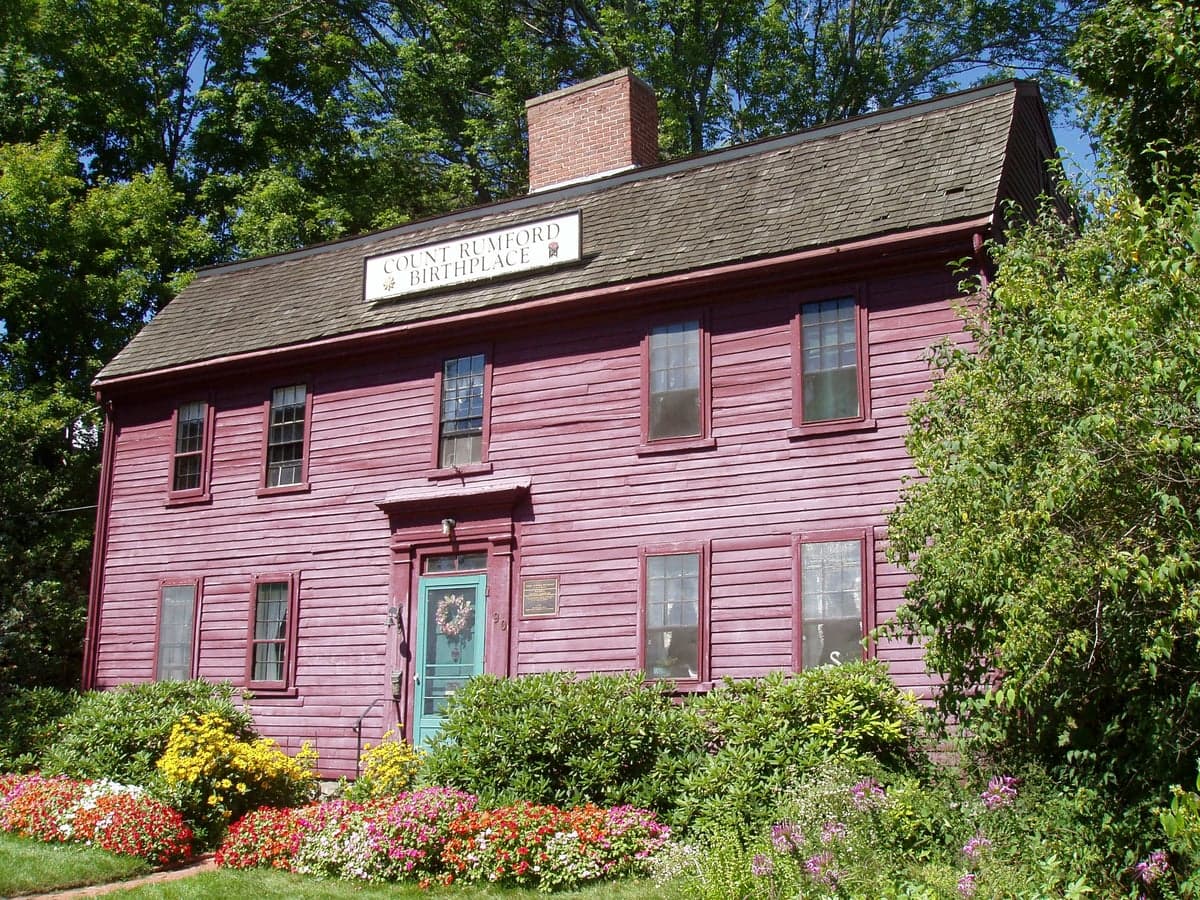
Photo: Wikipedia
Political ClimatePolitical Climate in Woburn, MA
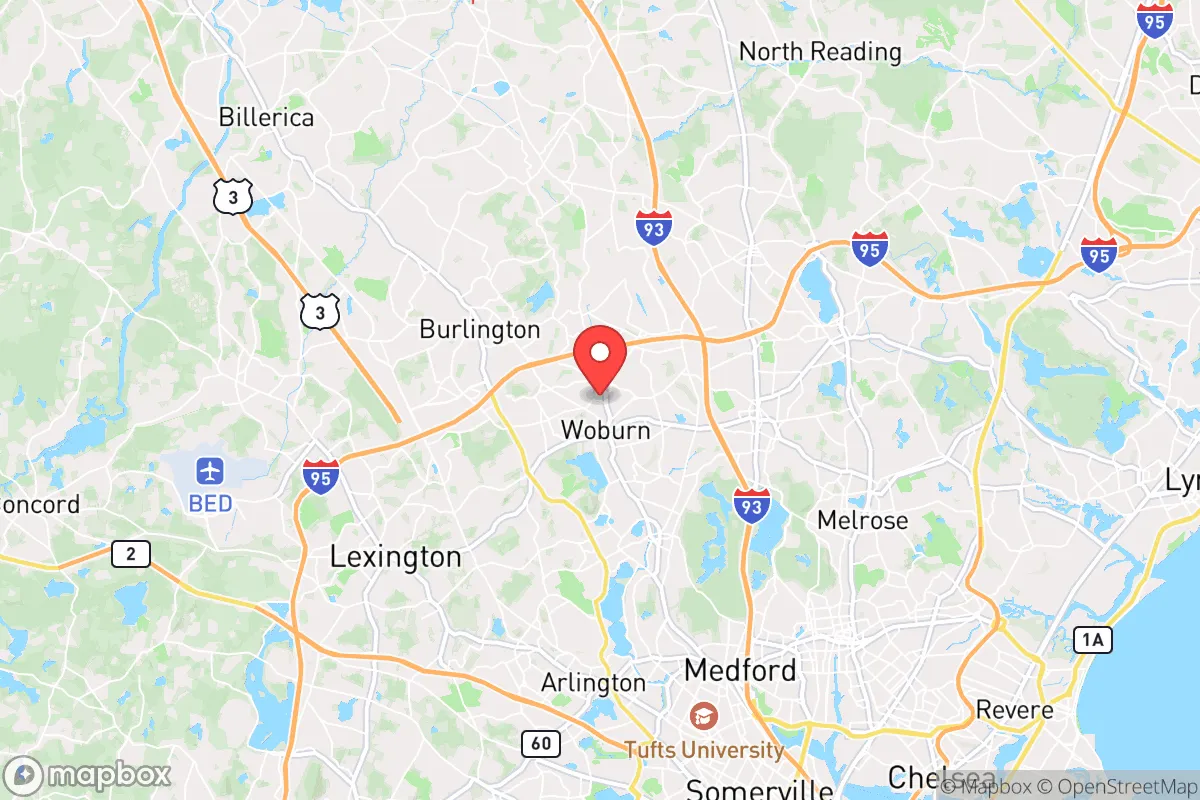
District shown is the primary district for this city’s centroid. Cities may span multiple districts.
Local Political AnalysisPolitical Analysis of Woburn, MA
Woburn, Massachusetts, has a Cook Partisan Voting Index of D+24, meaning it votes about 24 points more Democratic than the national average. That’s a pretty strong blue lean, and it’s been getting bluer over the last decade. Back in the 2000s, you’d still see a decent number of Reagan Democrats and independent-minded folks around town, but the last few election cycles have shifted hard left. The 2020 presidential race saw Joe Biden take about 65% of the vote here, and local races rarely have a Republican candidate who can break 35%. It’s not quite Cambridge or Somerville levels of progressive intensity, but the trajectory is unmistakable.
How it compares
Woburn sits in a kind of political buffer zone. Drive a few miles north to Reading or Wilmington, and you’ll find towns that still vote more moderately—Reading went about 55% for Biden, with a noticeable Republican presence on the school board and town meeting. Head south into Lexington or Arlington, and you’re in deep-blue territory, where D+30 or higher is the norm. Woburn used to be closer to the Reading end of that spectrum, but it’s been drifting southward politically. The old Italian and Irish working-class neighborhoods that once voted for split tickets have been replaced by younger professionals commuting to Boston biotech jobs, and they bring a much more uniform progressive voting pattern. The contrast is stark when you look at state representative races: Woburn’s rep, Richard Haggerty, ran unopposed in 2024, while Reading’s rep still faces credible GOP challengers.
What this means for residents
For someone who values personal freedoms and limited government, the trend in Woburn is concerning. The local school committee has pushed through curriculum changes that emphasize social-emotional learning and DEI initiatives, with little public debate. The city council has been quick to adopt state mandates on everything from plastic bag bans to zoning overlays that prioritize multi-family housing, often overriding neighborhood input. Property taxes have climbed steadily—up about 18% over the last five years—to fund expanded municipal programs, including a new diversity office. If you’re a small business owner or a homeowner who just wants to be left alone, you’ll find the regulatory environment getting tighter. The city’s response to the 2024 MBTA Communities Act, which forced Woburn to rezone for higher density near transit, was met with almost no pushback from elected officials, which tells you how one-sided the local political conversation has become.
On the cultural side, Woburn still has a few holdouts from its more independent past. The annual Feast of the Three Saints in August draws a crowd that’s less politically uniform than the town’s voting patterns suggest. But the long-term outlook is clear: as the old-timers move out or pass on, and the new arrivals keep coming from the urban core, the political center of gravity will keep shifting left. If you’re looking for a place where your vote might actually balance things out, you’d be better off in a town like Burlington or Woburn’s own Ward 4, which still has a few precincts that vote closer to 50-50. But overall, the ship has sailed. Woburn is a D+24 town, and it’s not turning back.

State Political ClimatePolitical Climate in Massachusetts
State Political AnalysisPolitical Environment in the State
Massachusetts has long been one of the most reliably Democratic states in the nation, but don’t let the blue veneer fool you—there’s a deep and often overlooked conservative undercurrent, especially once you leave the Boston metro. Over the past 20 years, the state has shifted further left on social issues and taxation, but the 2024 election showed cracks in the monolith: while Kamala Harris won the state by a comfortable 25 points, Donald Trump actually improved his margin in working-class cities like Fall River and New Bedford, and rural counties like Franklin and Berkshire saw smaller Democratic margins than a decade ago. The dominant coalition remains a mix of coastal liberals, academic elites, and union households, but the old-school “Taxachusetts” label is fading as property taxes and regulatory costs push families toward the exits.
Urban vs. rural divide
The political map of Massachusetts is a tale of two worlds. The Greater Boston area—including Cambridge, Somerville, and Brookline—is the engine of progressive power, where single-party rule is so entrenched that Republican candidates rarely crack 20% in state legislative races. These suburbs and urban cores drive the state’s leftward tilt on everything from rent control to sanctuary city policies. But drive 45 minutes west, and you hit a different reality. Worcester County, once a Democratic stronghold, has been trending redder: in 2024, Trump won the city of Worcester’s surrounding towns like Holden and Paxton by double digits, while the city itself stayed blue. Further west, Springfield and Holyoke remain Democratic but with a more moderate, working-class flavor—these are places where union members and Catholic voters still bristle at the party’s cultural leftward drift. The Cape and Islands (Barnstable, Nantucket) are purple-ish, with wealthy retirees and second-home owners voting Republican in local races but splitting tickets on state questions. The real conservative strongholds are the rural hill towns of the Berkshires and the North Quabbin region—places like Charlemont and Wendell—where gun rights, property rights, and low taxes are the gospel, even if they’re outnumbered at the ballot box.
Policy environment
Massachusetts’ policy environment is a mixed bag that leans heavily interventionist. The state income tax is a flat 5% (down from 5.15% after a 2022 ballot question), but property taxes are among the highest in the nation, averaging 1.2% of home value—and in places like Boston and Cambridge, effective rates can be double that due to high assessments. The regulatory climate is dense: the state has some of the strictest environmental rules in the country, a near-total ban on new gas stations in many towns, and a “right to shelter” law that guarantees housing to homeless families, which has strained budgets. On education, Massachusetts spends more per pupil than almost any state, but the curriculum leans heavily into DEI and critical race theory frameworks, especially in districts like Lexington and Newton. School choice is limited—charter schools are capped, and homeschooling faces more bureaucratic hurdles than in neighboring New Hampshire. Healthcare is dominated by MassHealth (the state’s Medicaid expansion), which covers over 2 million residents, and the state has a mandate requiring all residents to have insurance. Election laws are among the most liberal: no-excuse mail-in voting, same-day registration, and automatic voter registration are all law, which critics argue erodes ballot security. The state also has a strict assault weapons ban and a new “red flag” law that allows family members or police to petition for temporary firearm removal without a criminal conviction.
Trajectory & freedom
On the freedom index, Massachusetts is moving in the wrong direction for conservatives. The 2024 “Parental Bill of Rights” ballot question—which would have required schools to notify parents about curriculum changes and medical decisions—was defeated by a 60-40 margin, a clear sign that the state’s political class prioritizes government authority over family autonomy. Gun rights have been steadily eroded: the 2023 “H. 4885” law expanded the state’s ban on “assault weapons” to include many common semi-automatic rifles, required safe storage, and created a state-run firearm licensing database that critics say could be used for future confiscation. On medical freedom, the state’s COVID-era mandates were among the longest-lasting in the country—Massachusetts kept its school mask mandate until February 2023, and the state still requires healthcare workers to be vaccinated. Property rights are under pressure from the MBTA Communities Act, which forces towns near transit lines to rezone for high-density housing, overriding local zoning boards. The state’s tax burden remains high, though the 2022 “Millionaire’s Tax” (a 4% surcharge on income over $1 million) was approved by voters, signaling that the electorate is willing to soak the wealthy rather than cut spending. On the plus side, the state has no sales tax on groceries or clothing, and the income tax rate is lower than in neighboring New York or Connecticut.
Civil unrest & political movements
Massachusetts has a long history of political activism, but the flashpoints have shifted. The 2020 George Floyd protests in Boston turned violent, with looting in Downtown Crossing and clashes with police, leading to a lasting distrust between law enforcement and progressive activists. The state’s sanctuary policy is among the strongest: the 2017 “Safe Communities Act” limits local police cooperation with ICE, and Boston, Cambridge, and Somerville have all declared themselves “sanctuary cities.” This has created tension in smaller towns like Methuen and Haverhill, where residents have protested the arrival of migrant families housed in local hotels. On the right, the “Massachusetts Fiscal Alliance” and “Massachusetts Gun Rights” groups have organized rallies at the State House, but they remain a minority voice. The 2022 Supreme Court decision overturning Roe v. Wade sparked massive counter-protests in Boston, but also energized pro-life activists who have pushed for parental notification laws. Election integrity is a live issue: the state’s use of drop boxes and no-excuse mail-in voting has led to calls for reform from conservative groups, though no major fraud has been proven. The most visible flashpoint for a new resident might be the constant presence of political signage—in blue towns, you’ll see “Black Lives Matter” and “Trans Rights” signs in every yard; in red towns, it’s “Don’t Tread on Me” and “Defend the Second Amendment.”
Projection
Over the next 5-10 years, Massachusetts is likely to become even more progressive on social issues, but the economic pressures may force a moderation on taxes. The state is losing population to lower-cost, lower-regulation states like New Hampshire, Florida, and Texas—net domestic migration has been negative for a decade, with an estimated 100,000 residents leaving between 2020 and 2024. Those who stay are increasingly concentrated in the Boston metro, while rural and western counties are aging and shrinking. This demographic shift will likely entrench progressive dominance in the legislature, but it also creates a growing tension between the state’s high cost of living and its generous social programs. The MBTA Communities Act will force denser development in suburbs, which could change the character of towns like Arlington and Medford, but it may also ease housing costs slightly. On freedom issues, expect more gun control, more mandates on businesses (like paid family leave and a potential “right to repair” expansion), and continued erosion of local control. The wild card is the state’s reliance on federal funding—if the federal government cuts Medicaid or education grants, Massachusetts will face a fiscal crisis that could force tax hikes or service cuts. For a conservative moving in, the next decade looks like a slow-motion squeeze: more regulation, higher costs, and less personal autonomy, but with the consolation of world-class schools and infrastructure.
Bottom line for a new resident: If you’re a conservative considering Massachusetts, you’re signing up for a high-tax, high-regulation environment where your vote will rarely matter in statewide races. But if you can afford it, you get excellent public schools, top-tier healthcare, and a state that’s safe from natural disasters. The practical takeaway: live in a red town like Wrentham or Sturbridge to maximize your property rights and local control, avoid the Boston suburbs if you value school choice, and be prepared to fight for your Second Amendment rights at the ballot box every election cycle. It’s not an easy place for a conservative, but it’s not impossible—just know what you’re getting into.
* Values derived from national, state, county, city and local statistics and may differ in a specific area. Last updated: 2026-05-01T10:25:36.000Z
Narrative content on this page is AI-generated and may contain mistakes. Verify any details that matter before acting on them.
ReloMaps may earn a commission from affiliate links at no extra cost to you.

