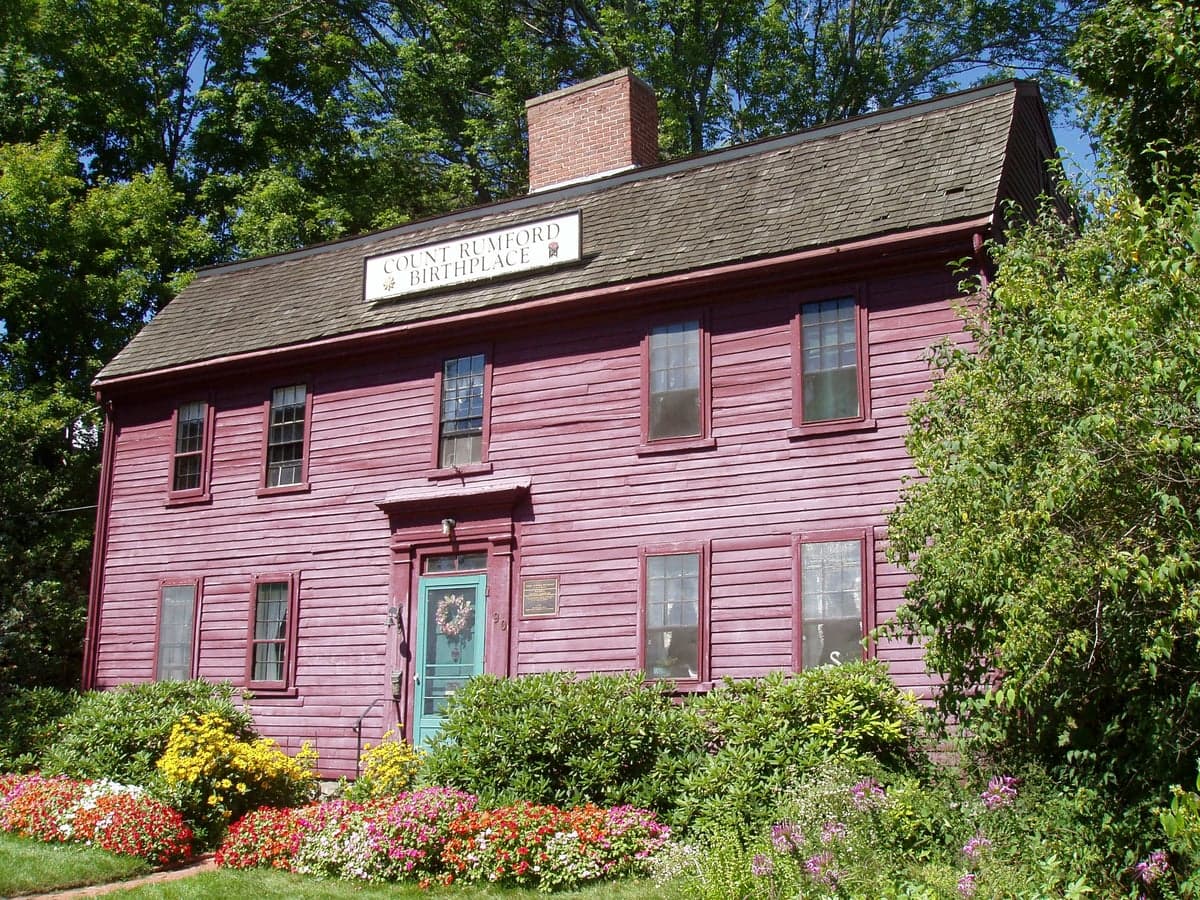
Photo: Wikipedia
Personal Sovereignty in Woburn, MA
Viable for self-reliance. Generally workable, though some barriers may limit total independence.
What does Personal Sovereignty tell us?
Personal Sovereignty measures your capacity for self-reliance and independence with minimal government friction. Higher scores mean fewer barriers between you and the way you want to live... but it assumes you have the space you need and good neighbors.
What does this tell us?
Personal Sovereignty measures your capacity for self-reliance and independence with minimal government friction. Higher scores mean fewer barriers between you and the way you want to live... but it assumes you have the space you need and good neighbors.
State Policy
Energy independence: Importer (5% of energy produced in-state)
Personal Liberty
Homesteading

Personal Liberty Analysis
Woburn, Massachusetts, presents a complex sovereignty picture for the conservative-leaning individualist or prepper. While the city itself offers a dense, walkable core and proximity to Boston’s job market, the overarching state-level legal and tax environment imposes significant constraints on personal autonomy. The Commonwealth of Massachusetts consistently ranks among the most restrictive states in the nation for gun rights, property freedom, and medical choice, meaning that any relocation here requires a clear-eyed acceptance of limited personal sovereignty in exchange for economic opportunity and infrastructure resilience.
Tax burden and regulatory posture in Massachusetts
Massachusetts carries a heavy tax load that directly impacts a prepper’s ability to build wealth and self-reliance. The state’s income tax is a flat 5.0% on all earned income, with no standard deduction for most filers, and a separate 12% tax on short-term capital gains that punishes active trading or side hustles. Property taxes in Woburn run around $14.50 per $1,000 of assessed value, which is above the national average and can strain a fixed-income or homesteading budget. Sales tax is 6.25%, and the state imposes a 0.5% surtax on income over $1 million (the “Millionaire’s Tax”), signaling a progressive appetite that may expand. Regulatory burdens are equally heavy: Massachusetts has a strict building code that often requires permits for minor structural changes, and the Massachusetts Environmental Policy Act (MEPA) can delay or block property modifications near wetlands or conservation areas. For the prepper, this means that any off-grid or self-sufficient project—rainwater catchment, solar panel installation, or even a large garden shed—may require municipal approval and inspections, eroding the ability to act quickly without government oversight.
Self-defense and gun law specifics in Woburn
Gun rights in Massachusetts are among the most restricted in the country, and Woburn residents must navigate a dense web of state-level controls. The Commonwealth requires a License to Carry (LTC) for both open and concealed carry, which is issued by the local police chief with significant discretion. In practice, Woburn’s police department is considered moderately restrictive—applicants must complete a state-approved safety course, pass a background check, and provide references, and the chief can deny a license for “suitability” reasons, including past restraining orders or even a history of mental health treatment. The state bans “assault weapons” by name and feature, including many common AR-15 and AK-pattern rifles, and magazines are capped at 10 rounds. There is no “stand your ground” law; instead, Massachusetts imposes a duty to retreat in public spaces before using deadly force, and self-defense claims are evaluated under a “reasonable person” standard that often favors prosecution. For the prepper, this means that home defense is legally viable only if the intruder is inside the dwelling and poses an immediate threat, and even then, the burden of proof falls on the homeowner. Stockpiling ammunition or firearms for long-term preparedness is legal but subject to record-keeping and storage requirements, and any transfer between individuals must go through a licensed dealer. This environment effectively discourages the kind of robust, independent self-defense posture that many conservatives seek.
Self-reliance and homesteading viability in Woburn
Woburn’s suburban density and zoning codes make traditional homesteading difficult. The typical residential lot size is 0.25 to 0.5 acres, with many homes on quarter-acre parcels in older neighborhoods. Zoning is predominantly single-family residential (R-1 and R-2), with strict prohibitions on keeping livestock—chickens are allowed only with a permit and limited to six hens, no roosters, and only on lots of at least 10,000 square feet. Larger animals like goats or pigs are outright banned in most residential zones. Off-grid living is effectively impossible: the city requires connection to municipal water and sewer, and solar panels must be grid-tied with a net-metering agreement. Rainwater collection is legal but limited to two 55-gallon barrels per property under state water rights laws, and any larger system requires a permit from the Department of Environmental Protection. Gardening is unrestricted, but soil contamination from Woburn’s industrial past (the city was the site of a notorious EPA Superfund cleanup in the 1980s) means that raised beds or soil testing are advisable. For the prepper, the takeaway is clear: Woburn offers limited space for food production, no real off-grid potential, and a regulatory framework that discourages self-sufficient infrastructure. The city is better suited for those who prioritize urban resilience—stockpiling supplies, building community networks, and maintaining a low profile—rather than rural homesteading.
Personal liberties in Massachusetts: parental rights, medical autonomy, speech, and property
Massachusetts generally respects free speech and assembly, but other personal liberties face notable restrictions. Parental rights are under pressure: the state’s Chapter 119, Section 51B allows the Department of Children and Families to investigate parents for “educational neglect” if children are homeschooled without an approved curriculum, and the state mandates that homeschooled students receive instruction “in the same subjects as public schools,” including health education that may cover topics some parents find objectionable. Medical autonomy is heavily constrained: Massachusetts has some of the strictest vaccine mandates in the country, requiring all schoolchildren to be vaccinated against 12 diseases with no philosophical exemption, and only a narrow religious exemption that has been challenged in court. The state also requires health insurance for all residents under the Massachusetts Health Connector, and failure to maintain coverage can result in a tax penalty. Property rights are limited by strong eminent domain powers and the Community Preservation Act, which imposes a surcharge on property taxes (typically 1-3%) to fund open space, historic preservation, and affordable housing projects—a policy that can feel like a forced contribution to government priorities. On the positive side, free speech is robustly protected under the state constitution, and there are no “hate speech” laws that criminalize political expression. For the conservative individualist, the trade-off is clear: you can say what you want, but your ability to make medical decisions for your family or control your property without government input is sharply limited.
Overall, Woburn offers a low sovereignty environment compared to states like New Hampshire, Texas, or Idaho. The city itself is safe, well-maintained, and economically stable, but the state-level legal framework imposes heavy taxes, strict gun control, limited homesteading potential, and constrained parental and medical autonomy. For the prepper or survivalist who prioritizes personal freedom above all else, Woburn is a compromise location—one where you can build a comfortable life and maintain a low profile, but where you must accept that the government will have a significant say in your property, your healthcare, and your self-defense. If you are willing to work within those constraints and focus on urban preparedness—community building, supply stockpiling, and financial resilience—Woburn can be a viable base. But for those seeking true self-reliance, the answer is to look north to New Hampshire or west to the free states.

* Values derived from national, state, county, city and local statistics and may differ in a specific area. Last updated: 2026-05-01T10:25:36.000Z
Narrative content on this page is AI-generated and may contain mistakes. Verify any details that matter before acting on them.
ReloMaps may earn a commission from affiliate links at no extra cost to you.

